Time for a closing summary.
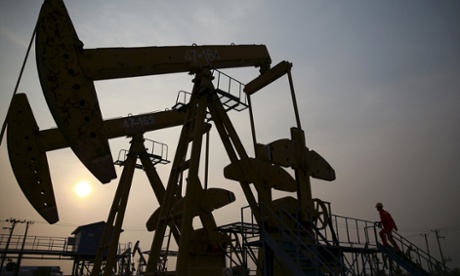
- Oil prices have declined after Goldman Sachs suggested that prices could fall as low as $20 because of a global glut of crude. Investors ignored a report from the International Energy Agency that said supply was tightening, as expensive oil producers left the market, in an apparent win for the Opec cartel.
- Germany’s finance minister has stepped up warnings that economies cannot rely on central banks alone and must undertake difficult structural reforms. Although he didn’t mention the European Central Bank and its €1 trillion bond-buying programme, most people knew the bank he had in mind.
- Meanwhile a senior ECB policymaker warned that the eurozone was still not creating enough jobs.
- Greek politicians traded ideas ahead of (yet more) critical elections on 20 September. The leader of the centre-right New Democracy party said he could work with leftist Syriza. But the head of Syriza, Alexis Tsipras, ruled out a grand coalition, as his party rebounded in the polls.
- In the UK, housebuilding slipped to its slowest rate in two years, doing nothing to abate anxiety about sky-high house prices.
- US markets have opened lower, following the lead of Europe. The Nasdaq is down 0.52%, the Dow Jones is down 0.25%, while the S&P 500 has slipped 0.29%.
- The FTSE100 is currently down 0.6% on the day at 6,120 points, defying earlier optimistic expectations. The German DAX is off 0.4%.
That’s all from me. The Guardian business live blog will be back on Monday.
Thank you for following and have a good weekend.
Tsipras rules out grand coalition with centre-right
Over in Greece former prime minister Alexis Tsipras has derided any suggestion of his entering a ‘grand coalition’ as propaganda, Guardian correspondent Helena Smith reports from Athens.
With a mere nine days left before Greeks go to the polls, Alexis Tsipras has ratcheted up the rhetoric, emphatically ruling out forming any coalition with the centre right New Democracy.
Speaking to supporters in the north western city of Ioannina, the Syriza leader denounced the very idea as “propaganda” – propaganda he said was being deliberately promulgated by Brussels which wanted to see the conservatives back in power.
Referring to New Democracy’s leader, he told the crowd:
What they are saying is that they won’t restructure out debt if we don’t embrace [Vangelis] Meimarakis.
The former prime minister, who has been campaigning on a platform that only the left can bring real change to Greece by ousting the old establishment, said the 63-year-old Meimarakis represented everything that was rotten with Greece.
He himself and his party are not only representatives of the most conservative lobby in Europe but representatives of regression, of the old, of decay, of corruption and scandals.
Since Tsipras’ surprise move to call the snap polls last month, Meimarakis has played up the need for consensus politics, saying he would be more than willing to enter a power-sharing arrangement with the leftists to meet the challenges that lie ahead enforcing the country’s third bailout.
The approach appears to have paid off with New Democracy rebounding in the polls. But today Syriza, for the first time, was shown to have a substantial lead over the conservative party with a nationwide survey produced by Pro Rata putting support for the two parties at 28.5 % and 23.5 % respectively.
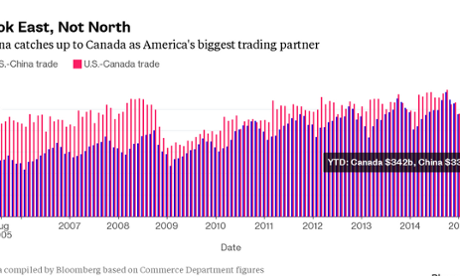
China no longer has such powerful economic leverage over the United States, according to analysis by Bloomberg business.
Bloomberg has put together four charts showing how China has a weaker hand over the US, ahead of President Xi Jinping’s visit to Washington in October.
As the first shows, China is on course to become the US’s largest trading partner, making it increasingly dependent on American consumers.
So Xi needs to ensure that America remains a happy customer, while President Barack Obama can rest easier from a trade standpoint, given that U.S. exports to China are a proportionally much smaller slice of the U.S. economy.
You can read the full article here.
Updated
US producer prices flat in August
US producer prices were flat in August, pointing to benign inflation pressures that could weigh on the Federal Reserve’s decision whether to hike interest rates next week, reports Reuters from Washington.
It continues
The unchanged reading in the producer price index last month followed a 0.2% gain in July, the Labor Department said on Friday. The drag on producer prices from lower crude oil prices and a strong dollar was offset by an increase in profit margins for apparel, footwear and accessories retailing.
In the 12 months through August, the PPI fell 0.8% after a similar decline in July. It was the seventh straight 12-month decrease in the index.
Tame inflation adds to the dilemma for the US Federal Reserve, who are contemplating raising rates for the first time in nearly a decade.
This is the first image of Robert De Niro playing Bernie Madoff, the fraudster who cheated investors out of $65bn in the world’s biggest ponzi scheme.
Michelle Pfeiffer plays Ruth Madoff in the HBO film Wizard of Lies.
And here is the original...
Strong pound may not have lasting impact on inflation - BoE
What has Shakespeare’s comedy Much Ado about Nothing got to do with exchange rates?
To find the answer you will have to read this speech* by Kristin Forbes, a member of the bank’s monetary policy-setting committee.

The American economist said that the Bank may have to raise interest rates sooner than its models suggest, if the strong pound has a weaker impact on inflation than previously thought.
My comments propose a new approach that puts more emphasis on the underlying reasons why the exchange rate moves.
Most economists have a “surprisingly poor understanding” of exactly how exchange rate movements affect inflation, she said.
Here are three main points
- First, contrary to common belief, exchange rate movements don’t seem to consistently have larger effects on prices in sectors with a higher share of imported content.
- Second, exchange rates don’t seem to consistently have larger effects on prices in the most tradable and internationally-competitive sectors.
- Third, the effects of exchange rates on inflation – and even just on import prices – do not seem to be consistent across time. Most of what I learned in grad school on this topic no longer seems to apply.
And the Shakespeare connection?
In Shakespeare’s play “Much Ado about Nothing”, the word “nothing” was not only a reference to the tremendous fuss made about events which should have had no import, but also a play on the terms “noting” or “noticing” (which were pronounced as “nothing” in old English)....
...This insight on the importance of “noting” is also critically important when analysing how exchange rate movements affect inflation – and therefore monetary policy.
So there you have it.
Updated
Oil price forecasts cut as glut persists
Another group of analysts have put a red line through their oil price forecasts.
This time it is Commerzbank that is lowering its forecast: the German bank is expecting the average price of Brent crude to be $56 in 2015 and $62 in 2016. West Texas Intermediate, the other global benchmark, is forecast at $51 a barrel in 2015 and $59 in 2016.
The bank said:
The oversupply of crude oil is only dwindling slowly and is likely to depress oil prices until far into next year.
Updated
Former Standard Chartered boss could become UK gov adviser
The former boss of Standard Chartered, Peter Sands, could become an informal adviser to the British government, reports the Financial Times (£).
A Number 10 source said no formal appointment had been made, but according to the FT:
It is understood that the role is informal and unpaid, and that Mr Sands will not have a direct role in regulation of the financial industry.
Peter Sands, stood down from Standard Chartered in the summer, with mixed views on his record. Although Standard Chartered emerged from the financial crisis in better shape than any of its UK competitors, in the past three years it has suffered falling profits and been fined by the US authorities for infringing sanctions against Iran.
Goldman Sachs think there is an outside chance that oil could fall to $20 a barrel. But the Economist Intelligence Unit is forecasting a small price rise for oil in 2016.
Meanwhile Russia’s central bank is counting on an average price of $50 over the next three years.
Wanted: bank regulators. Economic training essential, languages desirable. Helpful to know the difference between the BRRD and the CRR/CRD. Remuneration: competitive, but don’t expect to earn a British banker’s salary.
The European Central Bank is recruiting 230 staff to its bank watchdog division, increasing headcount by a fifth.
Reuters has the story:
The hiring plan underscores the ECB’s ambition to get to grips with an industry that triggered a financial crisis, hammering national finances and even threatening the euro currency.
The ECB has already carried out stress tests of top banks across the 19 countries in the euro zone and wants to delve deeper into their businesses to uncover further hidden risks.
“The plan is to add about 230 staff,” the person said. The extra people, two thirds of whom will be hired next year with the remainder in 2017, comes as the supervisory agency takes more banks under its watch.
The latest fall in output in the UK construction industry ( see 09.32) is seen as bad news by analysts.
Howard Archer, chief UK and European economist at IHS, concludes that the “disappointing news” on the construction sector adds to signs that the economy is seeing “a softer third quarter”.
Of course, the data could be adjusted...
Admittedly, construction output can be highly volatile from month to month...
But all the same...
The 2.7% month-on-month drop in housebuilding in July coupled with a 2.4% quarter-on-quarter drop in new orders for housebuilding in the second quarter is particularly disappointing news for the government which is currently prioritising the sector to deal with the UK’s serious housing shortage – and many more houses need to be built.
Michael Thirkettle, chief executive of construction and property consultancy McBains Cooper, also described the fall in construction output as worrying news.
There is a chronic housing shortage and although we welcome government plans to build 200,000 new homes by 2020, there is no chance of that number being built unless desperate skills shortages in the industry are addressed.
The head of JD Weatherspoon is only the latest business leader to criticise the government’s decision to increase the minimum wage.
Tim Martin’s attack on the so-called ‘National Living Wage’ follows complaints from the association of convenience stores, carehome employers and the CBI.
In view of these responses, the Daily Telegraph has an interesting comment piece by Jeremy Warner, who describes himself as someone “who broadly believes in as little government as possible”.
He argues that the government has a powerful macroeconomic case for what it is doing.
The over-arching reason can, however, be expressed in a single word – globalisation. One of the effects has been substantially to depress, through migration and emerging market competition, the costs of labour. This has not been a happy experience for advanced economies, many of which have attempted to keep the natives happy by force feeding them with debt.
As we have learned, debt makes a poor, and potentially highly toxic, substitute, giving the illusion of rising living standards but not the substance.
He goes on to say that “the relatively low minimum wage” introduced by Labour, put little pressure on employers to pay more
Too often, cheap labour is used as a lazy alternative to productivity enhancing capital spending. A much higher minimum wage might shift the balance by better aligning the incentives for investment.
The full article is well worth reading.
Further reading: Next boss serves up some sober analysis of wage policy
Updated
Schäuble warns central banks cannot solve economic problems alone
Germany’s finance minister, Wolfgang Schäuble, has warned against over reliance on central bank money at the expense of difficult economic reforms.
It should not serve as a way out of, or to neglect, what is necessary -- that is structural reforms.
Reuters has a summary:
Schäuble avoided any mention of the European Central Bank, but he has repeatedly warned against an excessive reliance on central bank stimulus at a time when the ECB is paving the way to expand its already massive 1 trillion-euro asset-buying plan.
Last week, the ECB cut its growth and inflation forecasts and the bank’s president, Mario Draghi, said explicitly the bond-buying programme may run beyond September 2016 and the bank may adjust its size and composition.
“We should take on board the lessons of the last crisis,” Schaeuble told the Atlantik-Bruecke association in Berlin, which aims to promote friendship between Germany and the United States.
Earlier this week, Schäuble hit out at his critics, claiming he was “the better Keynesian”.
Rising expectations of UK interest-rate rise
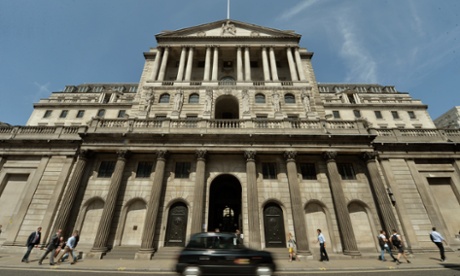
The governor of the Bank of England Mark Carney has said interest rates will go up and it seems people are getting the message.
According to the latest Bank survey on public expectations around inflation, 46% of the population expect a rate rise over the next year, compared to only 33% in May.
The bank said this was highest level of expectation about a rate hike since May 2011.
The UK has been put on notice to expect a rate rise around the turn of the year, bringing an end to a long period when rates have been lodged at 0.5%.
The survey also showed that public perceptions of inflation were out of tune with official statistics. The average person thinks that inflation is around 2.1%, although the official consumer price index for July stood at just 0.1%.
Updated
Oil cartel's defence strategy is working, say energy analysts
Just as analysts at Goldman Sachs predict the world could see a $20 barrel of oil because of oversupply, another set of energy experts have concluded that producers of expensive crude are beginning to cut production in response to the price collapse.
Oil that is expensive to produce is being driven out of the market according to the latest oil market report from the International Energy Agency. This means the strategy of the Opec oil cartel of not reducing supply in order to defend their market share, appears to be working, the IEA concludes.
Oil’s price collapse is closing down high-cost production from Eagle Ford in Texas to Russia and the North Sea.
But so far investors are paying more attention to Goldman Sachs’ bearish predictions: Brent crude has continued its fall and is currently trading at around $47.87.
Updated
Biggest fall in UK housebuilding for two years
There isn’t much cheer for anyone looking for relief from sky-high house prices in London and the south east of England.
Housebuilding in the UK saw its biggest annual fall in more than two years, according to the latest data from the Office for National statistics.
Here are some of the details:
- In July 2015, output in the construction industry decreased by 1% on the previous month, after increasing by 0.9% in June. All new work decreased by 1.5% while repair and maintenance showed no growth.
- Public new housing, private new housing, public other new work and private commercial work decreased by 5.8%, 2.0%, 4.5% and 2.9% respectively.
Michael Dall from the Barbour ABI consultancy blamed the general election for leaving developers in an uncertain mood.
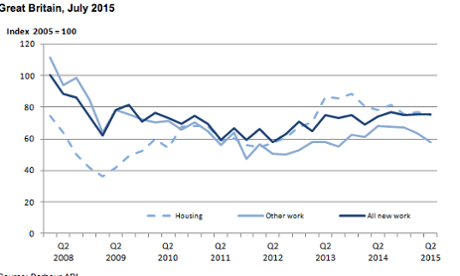
Construction new orders dipped slightly overall in the second quarter of 2015 compared to the previous quarter and this was primarily driven by a decline in new private housing orders and private commercial orders. A general slowdown in contract award activity in the housing sector can be attributed in part to the uncertainty surrounding the UK General Election where developers adopted a ‘wait and see’ approach for new schemes.
So is this just a temporary blip? Dall is forecasting “a positive outlook for the construction industry over the near term”.
Updated
UK housebuilding fell in July
Breaking news: UK construction output declined in July, as a result of a fall in housebuilding.
Oil prices could fall to $20 a barrel, says Goldman Sachs
How low could oil prices go? Much lower, according to analysts at Goldman Sachs, who suggest oil could slide to just $20 a barrel.
Goldman analysts said:
The oil market is even more oversupplied than we had expected and we now forecast this surplus to persist in 2016 on further OPEC production growth, resilient non-OPEC supply and slowing demand growth, with risks skewed to even weaker demand given China’s slowdown and its negative EM feedback loop... While not our base case, the potential for oil prices to fall to such levels, which we estimate near $20/bbl, is becoming greater as storage continues to fill.
As Fast FT points out, Goldman Sachs once predicted that oil prices would touch $200 a barrel by 2010.
A barrel of Brent crude is currently changing hands for $48.27, a 1.27% fall in today’s trading session, but still above recent lows. Goldman is forecasting that Brent will remain under pressure: it expects prices to be $49.50 in 2016, down from earlier forecasts of $62.
Goldman cut its 2016 estimate for West Texas Intermediate oil to $45 a barrel from an earlier projection of $57.
In their latest report, the bank writes:
Operational stress is a growing downside risk to our forecast. This further creates the risk that a slowdown in production takes place too gradually forcing oil markets to clear as they historically have, through a collapse to production costs once the surplus breaches logistical and storage capacity. While not our base case, the potential for oil prices to fall to such levels, which we estimate near $20/bbl, is becoming greater as storage continues to fill.
Sources: Fast FT, Bloomberg and UK Business Insider
Updated
Greece’s elections later this month raise the intriguing possibility of a coalition between the traditional conservative party New Democracy and leftist former governing party Syriza.
Opinion polls have put Syriza and New Democracy neck and neck – far from the easy victory Syriza leader Alexis Tsipras imagined when he called the election to shore up support for the controversial bailout agreement.
In an interview with Reuters New Democracy leader Vangelis Meimarakis said he is ready to work with Syriza, if his party finishes in first place. But he would turn to other European parties if Syriza rejected a coalition.
This is the country’s last chance...I am mature. I’m ready, with a plan, with the party’s top brass and a united parliamentary group, to pull the country out of the crisis.
But Tsipras will be hoping that he gets to choose his coalition partner -and a poll published today puts Syriza ahead.
Updated
Economic growth in the eurozone 'not enough' for new jobs
Economic growth in the euro zone is still too weak to create enough jobs, according to a senior figure at the European Central Bank.
Benoît Coeuré, a member of the bank’s executive board, told French newspaper group EBRA on Friday that growth was not sufficient for job creation.
He said:
Growth is still not strong enough to create a sufficient number of jobs.
Europe will first have to demonstrate its usefulness by creating more growth and more jobs.
He also gave a defence of the latest Greek bailout deal, saying that it struck a balance between two legitimate concerns – the mandate of then Greek prime minister Alexis Tsipras and taxpayers in other eurozone countries.
And there was a hint of more breathing room in the programme, as long as Greece is meeting the main objectives of its creditors.
The important thing is that Greece and its partners trust each other again. On this basis, there will be room for manoeuvre when it comes to adapting the programme after the elections, for example in terms of labour market reforms and tackling vested interests, provided that the objectives of the programme are met.
The full interview can be read in its original French and English on the European Central Bank’s website.
Updated
Summary
Good morning, and welcome to our rolling coverage of the world economy, the financial markets, the eurozone and the business world.
European stocks are set to make their biggest weekly gain since July, amid ongoing volatility on global markets.
Some stock markets in Asia rose on Friday, amid fleeting hopes that the Federal Reserve will delay an interest-rate rise when it meets next week.
The MSCI broad index of Asia-Pacific shares outside Japan was only up about 0.2% today, but is still on course to have gained 3% this week. Japan’s Nikkei index closed down 0.2%, but was still up on the week by 2.6%.
The pan-European FTSEurofirst 300 is up 1.6% so far this week and is expected to make its biggest weekly gain since July, despite chalking up a loss on Thursday.
Also on our agenda: at 9.30 BST we will get the latest output figures for the UK construction industry and the Bank of England’s regular attitudes to inflation report.
At 12.30 BoE policymaker Kristin Forbes is due to speak at the Macro and Finance Research Group’s annual conference in Cardiff.
I will be following those events and all the latest economic news.