Among the 28 countries of the European Union, there are vast differences in welfare and social security provision and in their systems. Would you rather be drawing welfare payments in Hungary or Sweden?
Tuesday’s European court of justice ruling pertains to the peculiarities of the German system known as Hartz IV, the overhaul of the welfare regime introduced not by the current chancellor, Angela Merkel, but by the preceding coalition of Social Democrats and Greens led by Gerhard Schröder.
Welfare systems in the EU are a matter for national governments, not for Brussels. But the freedom of movement rules, enabling all EU citizens to work and reside anywhere in the union, also mean that national systems will occasionally be scrutinised by Brussels to make sure they are non-discriminatory.
The case of the Romanian woman in Leipzig saw the Luxembourg court examine German law as well as EU directives and regulations. It would be rash to extrapolate from that any automatic application to Britain or other EU countries chafing at so-called benefits tourism. It was details of the German rules that were examined.
But the fact that the ruling triggered headlines across Europe testifies to how freedom of movement has become a toxic and highly-charged issue in many countries.
For far-right nationalist parties in France, the Netherlands, Austria and Britain, anti-immigration is a central rallying point. Free movement within the EU as well as immigration from outside Europe are conflated as a single issue.
Such parties will all use Tuesday’s verdict to demand further curbs on welfare payments for non-natives. As will the mainstream centre-right in the hope of winning back defectors from the radical right.
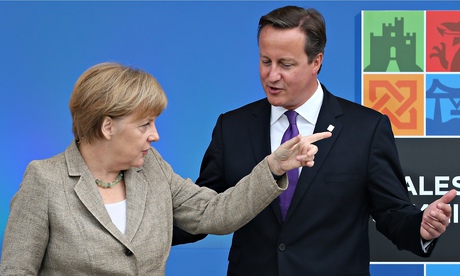
Merkel’s Christian Democrats in Germany had already tightened the welfare rules for non-German EU nationals, as had David Cameron. They will both take the ruling as vindication and as a spur to narrow the scope further for so-called welfare abuse – meaning no non-contributory benefits to anyone “not economically active” or not seeking work, but moving from a poorer to a wealthier country for the express purpose of enjoying better levels of social security.
The difference between Merkel and Cameron is that the German leader is quite committed to Europe’s freedom of movement regime in general and in principle, while the prime minister continually calls it into question by talking about immigration caps or quotas.
The Tories may claim vindication from the unloved quarters of a European court. But the ruling circumscribes quite severely the scope for any more fundamental revision of free movement.
Welfare abuse is effectively outlawed and the European commission may have problems now scrutinising the legality of some of the government’s crackdown on migrants allegedly shopping for the best welfare bargains.
But by pointing to what are probably minuscule flaws in the system, the court also upholds and arguably bolsters freedom of movement within the EU, making it harder for Cameron to argue for reform especially when the court has ruled that welfare abuse is not on.