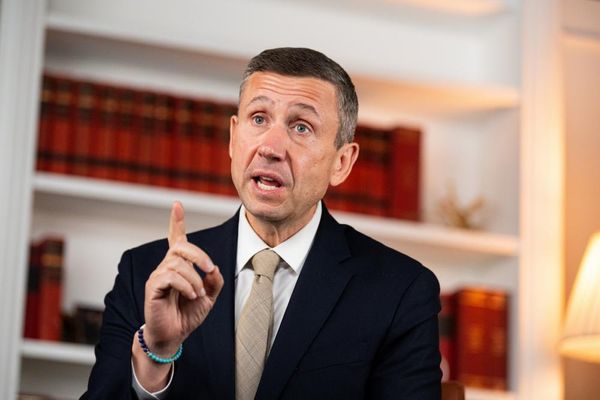
Former European Council President Charles Michel has urged caution over any move to scrap unanimity in EU decision-making, warning the bloc should “think carefully” before watering down national veto powers.
Michel, who led the European Council from 2019 to 2024, said the “European dream” depends on collective agreement among all 27 member states.
"What is frustrating for all those like me who are absolutely convinced that this project is more needed than ever, the European project…We know what we have to do, we know exactly what we has to do," he said.
"They're observing that there are always good reasons to procrastinate. There are always good reasons to waste time, and that's regrettable."
Asked whether Orbán’s recent electoral defeat in Hungary could improve EU cohesion, Michel said he hoped future European Council meetings would be “more united” but suggested that the exit would not lead to more cohesion.
“Some in the European Council were hiding behind Viktor Orbán,” he said, adding that certain leaders share elements of his political stance, including on Ukraine. But he said "we should think carefully" before making a decision not to use unanimity anymore.
Michel stressed that the veto — enshrined in the Treaty of Lisbon — should be used only when vital national interests are at stake, warning against its misuse.
“Unanimity is a challenge, there is no doubt,” he said.
“But decisions to abandon it should not be taken lightly. If you stop trying to involve every country, you risk weakening the EU’s weight on the international stage.”
Ukraine applied to join the EU in 2022 following Russia’s full-scale invasion. However, accession talks have been repeatedly delayed due to vetoes from Budapest.
The Ukrainian President Volodymyr Zelenskyy has admitted that discussions are taking place on different levels regarding "various possible formats of Ukraine's membership in the EU" if the full support from the 27 cannot be garnered.
However, the Ukrainian leader has rejected this notion, repeatedly stating he wants full membership for Ukraine — not "symbolic" membership.