Matthew d’Ancona, as with most commentators, sees the over-mighty state as the main threat to our liberties and in particular associates Tony Blair’s government with the development of the Big Brother state (The Human Rights Act spells peril for Cameron, 18 May). What such small-state liberals fail to see is that the “over-mighty state” can be a protector as well as a threat to our liberties. It was Durkheim who wrote that the modern state was a necessary development to protect the citizen from local powerful bullies such as the exploitative landlord or employer.
While the state has steadily enacted anti-terror legislation, which effectively reduces the liberties of the citizen, it has simultaneously dismantled all that legislation that was put in place to protect the citizen from Durkheim’s local bullies. Security of tenure and employment are no longer guaranteed by the state, and access to legal redress has been steadily diminished by cuts to legal aid.
The human rights industry of which Matthew d’Ancona complains is a development consequent on the failure of the state to protect the rights of the citizen. This is the government that has enacted a law unique in history, which enables the employer to dismiss an employee because their face does not fit.
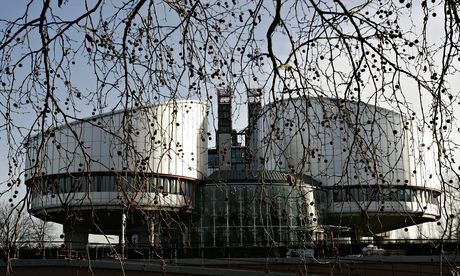
While the European convention on human rights is not perfect, it is the best protection that we have against the power of the over-mighty state and business corporations because the very institution that is supposed to protect our liberties, parliament, has proved a poor defender of them.
Derrick Joad
Leeds
• Matthew d’Ancona is, I fear, indulging impermissibly in a rewrite of history. The European convention on human rights and fundamental freedoms (to give it its full title), as scheduled in the Human Rights Act 1998, is an outcrop of the international law of human rights, and is not, other than remotely, derived from the ancient event of our constitutional history at Runnymede 800 years ago. It is inaccurate to state that international law can be treated as a body of law to be moulded by purely domestic concerns of a member state of the Council of Europe, such as the distribution of membership of the UK parliament between political parties. I suggest that Mr d’Ancona should consult a lecture I gave at King’s College London on 5 May, entitled The Road to Rome and Strasbourg via San Francisco.
Sir Louis Blom-Cooper QC
London