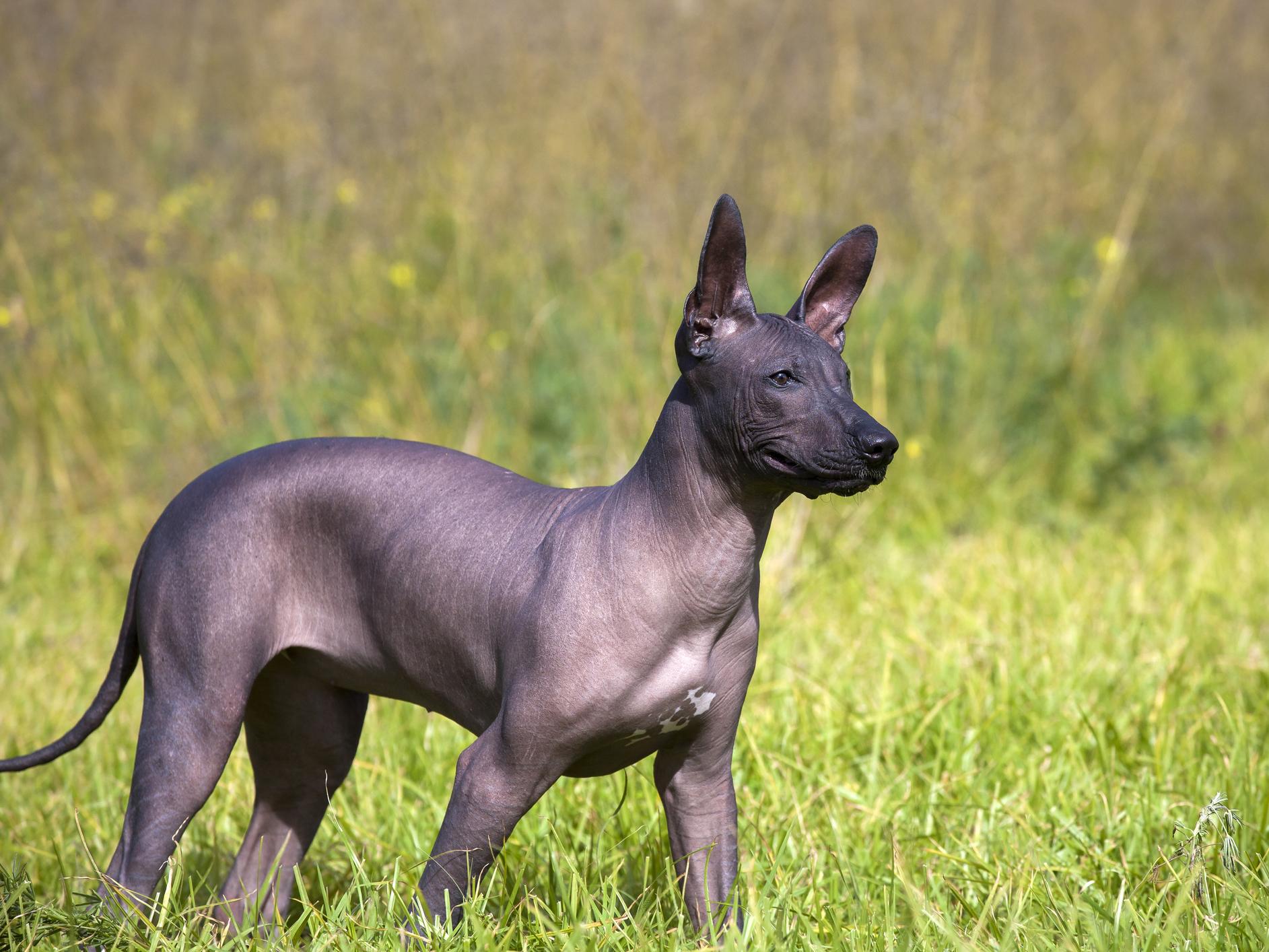
European colonisers arriving in the Americas almost totally wiped out the dogs that had been kept by indigenous people across the region for thousands of years.
The original American dogs were brought across the land bridge that once connected North America and Siberia over 10,000 years ago, by their human owners.
These dogs subsequently spread throughout North and South America, but genetic analysis has revealed they were ultimately replaced by dogs imported from Europe.
“This study demonstrates that the history of humans is mirrored in our domestic animals,” said Professor Greger Larson, director of the palaeogenomics and bio-archaeology research network at the University of Oxford and senior author of the research.
“People in Europe and the Americas were genetically distinct, and so were their dogs. And just as indigenous people in the Americas were displaced by European colonists, the same is true of their dogs.”
In their paper, published in the journal Science, the researchers compared genetic information from dozens of ancient North American and Siberian dogs spanning a period of 9,000 years.
Their analysis showed the dogs persisted for a long time but ultimately vanished, which to Dr Laurent Frantz from Queen Mary University of London said suggests “something catastrophic must have happened”.
“It is fascinating that a population of dogs that inhabited many parts of the Americas for thousands of years, and that was an integral part of so many Native American cultures, could have disappeared so rapidly,” said Dr Frantz, who was also a senior author of the study.
Today, few modern dogs possess any genetic traces of the ancient breeds.
The researchers suggested the dogs’ near-total disappearance from the region was likely a result of both disease and cultural changes brought over by Europeans.
It is possible, for example, that European colonists discouraged the sale and breeding of the dogs kept by indigenous Americans.
“It is known how indigenous peoples of the Americas suffered from the genocidal practices of European colonists after contact,” said Kelsey Witt, who led part of the genome work as a graduate student at the University of Illinois.
“What we found is that the dogs of indigenous peoples experienced an even more devastating history and a near-total loss, possibly as a result of forced cultural changes and disease.”
Bizarrely, one of the only traces of genetic information from “pre-contact” dogs can be found in a transmissible tumour that spreads between dogs known as CTVT. It’s quite incredible to think that possibly the only survivor of a lost dog lineage is a tumour that can spread between dogs as an infection,” added Maire Ní Leathlobhair, co-first author, from the University of Cambridge.
“Although this cancer’s DNA has mutated over the years, it is still essentially the DNA of that original founder dog from many thousands of years ago.”