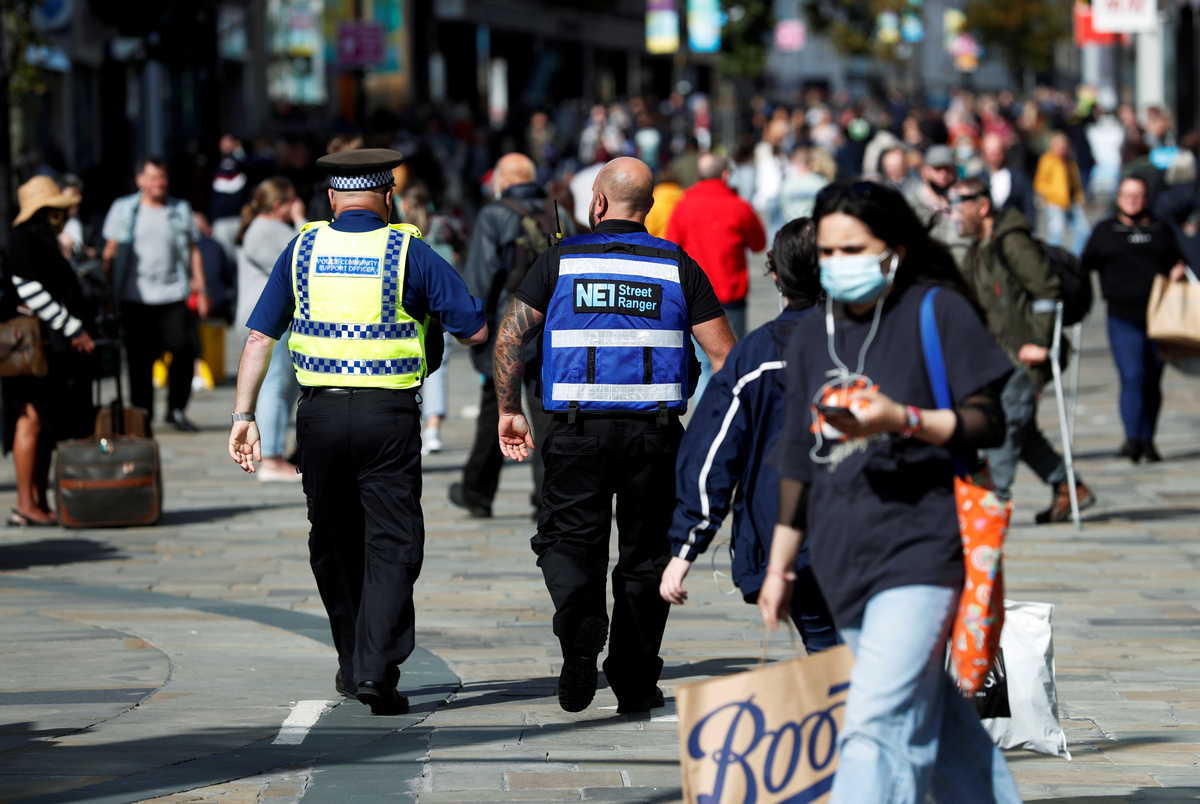
European countries from Denmark to Greece announced new restrictions on Friday to curb surging coronavirus infections in some of their largest cities, while Britain was reported to be considering a new national lockdown.
Cases in the United Kingdom almost doubled to 6,000 per day in the latest reporting week, hospital admissions rose and infection rates soared across parts of northern England and London.
British Prime Minister Boris Johnson said it was inevitable that the country would see a second wave of the coronavirus, and while he did not want another national lockdown, the government may need to introduce new restrictions.
"We are now seeing a second wave coming in ... It is absolutely, I'm afraid, inevitable, that we will see it in this country," he said.
The sharp rise in the number of cases meant the government had to keep everything under review.

"I don't want to get into a second national lockdown at all," he said, but added: "When you look at what is happening, you've got to wonder whether we need to go further."
Britain has already imposed new COVID regulations on the North West, Midlands and West Yorkshire from Tuesday.
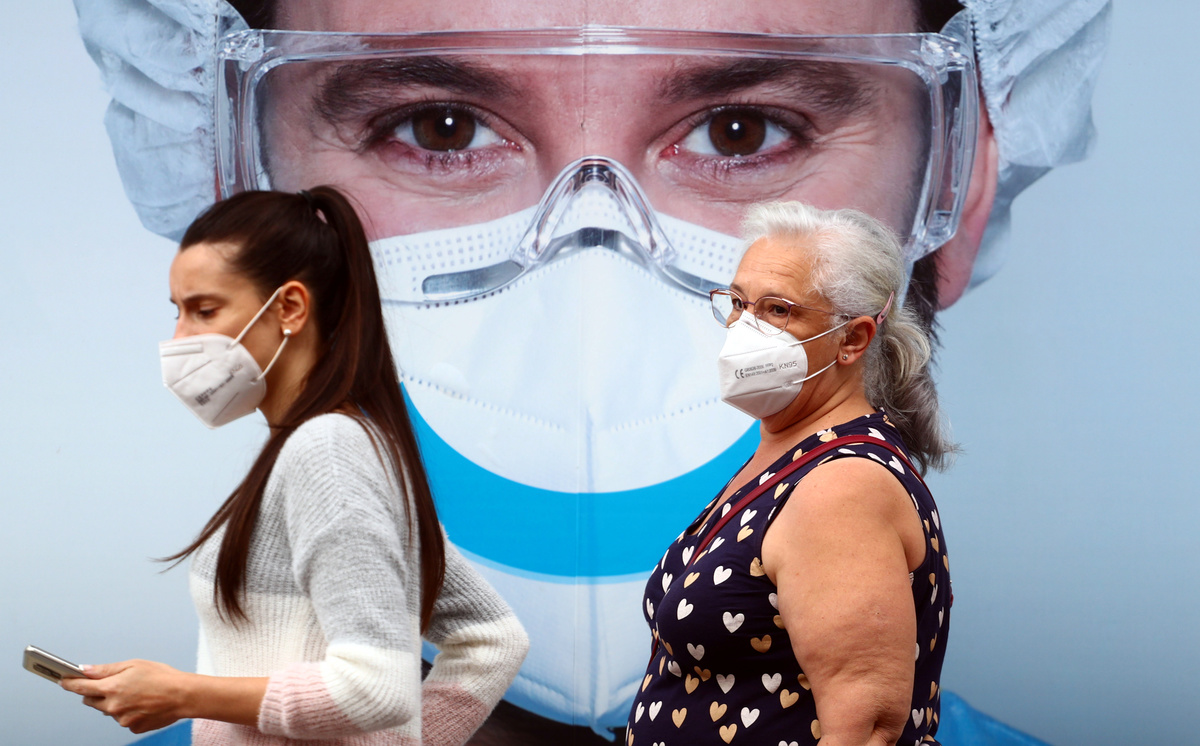
Infections have climbed steadily across most of Europe over the last two months. Intensive care admissions and deaths have also begun to tick up, especially in Spain and France.

In Spain, which has seen more cases than any other European country, the region including the Spanish capital Madrid will limit movement between and within areas badly affected by a new surge in infections, affecting more than 850,000 people.
Regional leader Isabel Diaz Ayuso said on Friday that access to parks and public areas would be restricted, and gatherings will be limited to six, but people would not be stopped from going to work in the country's hardest-hit region.
"We need to avoid lockdown, we need to avoid economic disaster," Ayuso told a news conference.
Authorities in the southern French city of Nice banned gatherings of more than 10 people in public spaces and restricted bar opening hours, following fresh curbs introduced earlier this week in Marseille and Bordeaux.
France on Friday registered more than 13,200 new infections, its highest daily count since the start of the pandemic.
In Denmark, where the 454 new infections on Friday was close to a record of 473 in April, Prime Minister Mette Frederiksen said the limit on public gatherings would be lowered to 50 people from 100 and ordered bars and restaurants to close early.
Iceland ordered entertainment venues and pubs in the capital area to close for four days between September 18-21, while in Ireland indoor restaurant dining and indoor events were banned in Dublin after a surge in cases in recent days.
Dutch Prime Minister Mark Rutte said his government was preparing "regional" measures to combat the coronavirus outbreak after the Netherlands registered a record 1,972 cases in the past 24 hours.
The measures will be detailed later on Friday and are expected to include tighter restrictions on public gatherings and earlier closing times for bars and restaurants. Hotspots include major cities Amsterdam, Rotterdam and The Hague.
In Greece, which emerged largely unscathed from the first wave of COVID-19 which hit Europe in March and April, Prime Minister Kyriakos Mitsotakis said the government was ready to tighten restrictions in the greater Athens area as cases accelerated.
Mitsotakis said Greece's committee of health experts had recommended extra curbs on public gatherings, the suspension of cultural events for 14 days and other measures which "could be decided today ... and go into force on Monday."
Europe is still hoping not to follow the example of Israel, which entered a second nationwide lockdown on Friday at the onset of the Jewish high-holiday season, following a jump in new coronavirus cases.
(Additional reporting by Silvio Castellanos and Guillermo Martinez in Madrid, Dominique Vidalon in Paris, Kate Holton in London, Lefteris Papadimas in Athens, Nikolaj Skydsgaard in Copenhagen, Anthony Deutsch in Amsterdam and Rami Ayyub in Tel Aviv; Writing by Gavin Jones; Editing by Janet Lawrence and Mike Collett-White)