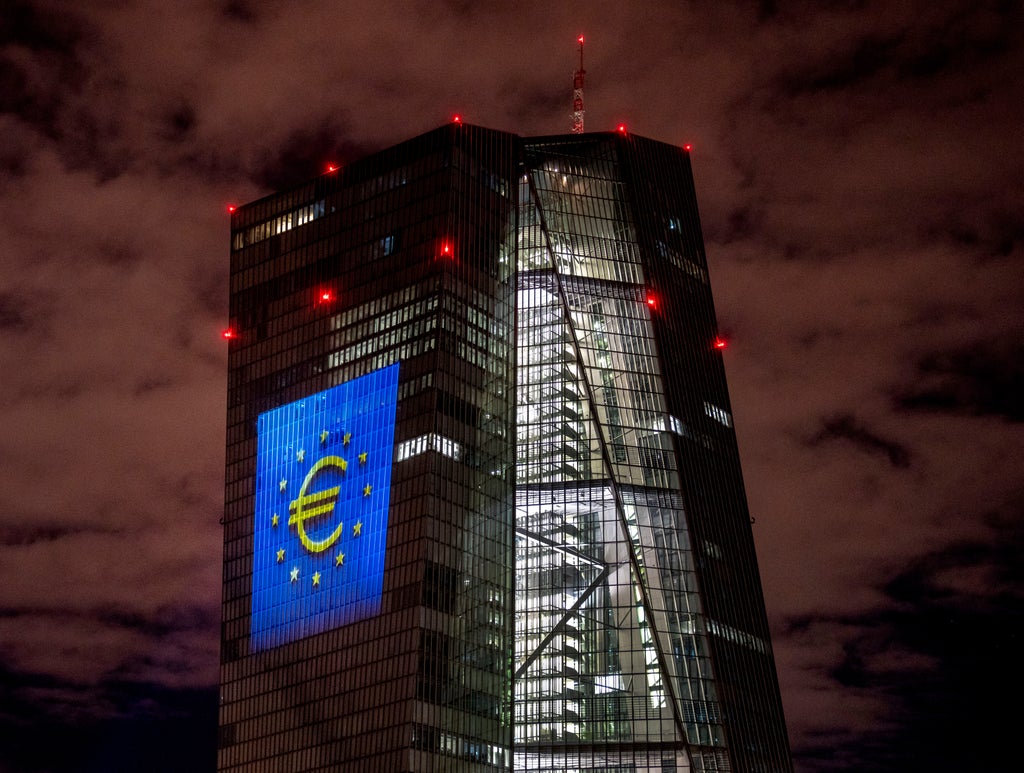
The European Central Bank is celebrating the 20th anniversary of euro notes and coins as member countries wrestle with the pandemic's impact on the economy and the European Union forges a new level of financial cooperation to help boost the recovery.
The event is being marked at midnight New Year's Eve with a light display in blue and yellow, the colors of the EU, projected on its skyscraper headquarters in Frankfurt, Germany.
The introduction of notes and coins in 12 countries on Jan. 1, 2002, was a massive logistical undertaking that followed up on the introduction of the euro for accounting purposes and electronic payments three years earlier, on Jan. 1, 1999. Today, the euro is used in 19 of 27 EU countries.
The cash introduction saw the new euro notes and coins quickly replace German marks, French francs and Italian lire in ATMs, cash registers, and wallets and purses. Shop customers who paid in the old currencies received change in euros under fixed exchange rates. That swept the old currencies out of circulation as people spent their remaining national cash.
ECB President Christine Lagarde said in a video message that “the euros have become a beacon of stability and solidity around the world, thanks to you, the hundreds of millions of Europeans who trust it, gave it strength, confidence, and transact with it every day.”
The bank plans to redesign the banknotes, with a final decision on the new look expected in 2024. The original designs with generic windows, doorways and bridges from various eras that don’t represent any specific place or monument have undergone one relatively minor update since introduction.
The euro has been through its ups and downs since its launch as a major project of European integration. The currency union faced speculation it would break up during an extended crisis over government and bank debt in 2011-2015. European Central Bank head Mario Draghi helped end market turbulence with his July 26, 2012, promise to “do whatever it takes” to preserve the euro, followed by the ECB's offer to purchase the government debt of countries facing excessive borrowing costs.
Under current head Christine Lagarde, the central bank deployed a 1.85 trillion euro ($2.1 trillion) bond purchase program aimed at keeping borrowing costs down for companies so they can get through the worst of the pandemic.
In response to the pandemic, European Union governments have taken a further step toward economic and financial integration by agreeing to borrow money together for the 807 billion euro Next Generation EU recovery fund. The fund aims to support the post-pandemic recovery by financing projects that help the economy reduce emissions of carbon dioxide in order to fight climate change, and that support increasing use of digital technology.
Irish Finance Minister Paschal Donohoe, who heads the Eurogroup panel of finance ministers from the member countries, said that the currency “has strengthened its foundations over the last 20 years. It’s proven its mettle in dealing with great challenges and great crises.”