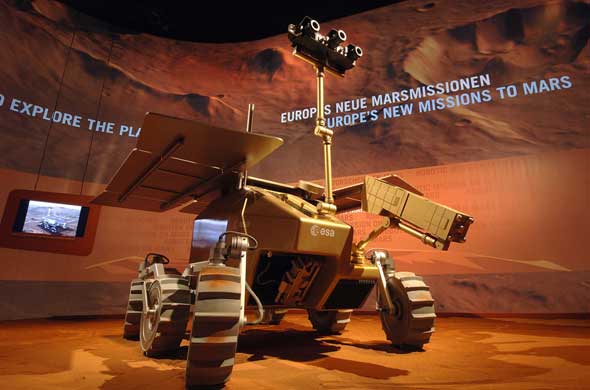
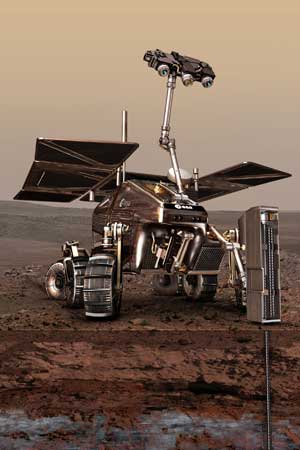
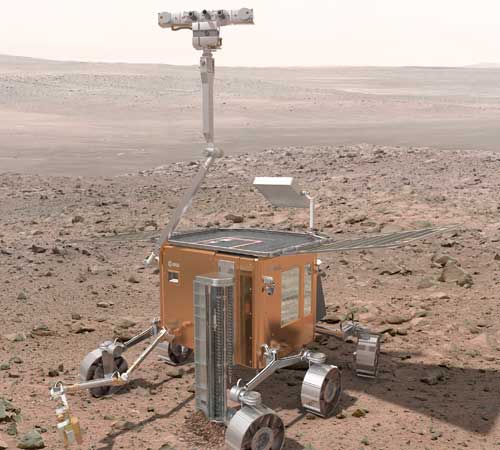
A preliminary design for the rover on show at the ILA 2006 aeronautics exhibition in Berlin. The ExoMars mission will blast off on an Ariane 5 rocket from Kourou in French GuianaPhotograph: M. Pedoussaut/ESAThe rover will be able to drill 2 metres beneath the surface to collect samples of rockPhotograph: ESAThe rover will only be in contact with Earth for two short periods each Martian day, and the signal takes half an hour to travel from planet to planet. To get round these delays – and unlike Nasa's rovers Spirit and Opportunity – the ExoMars rover will be capable of making its own navigation decisionsPhotograph: ESA
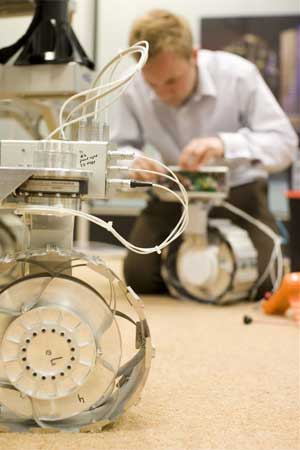
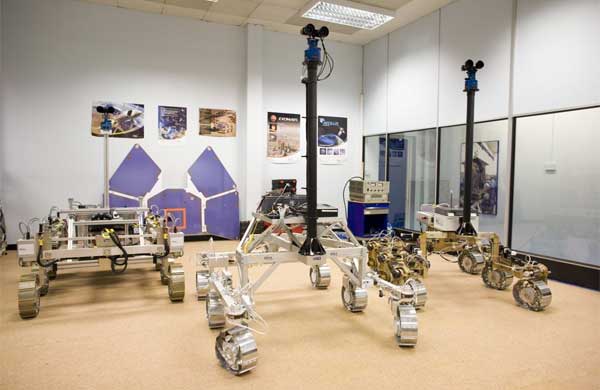
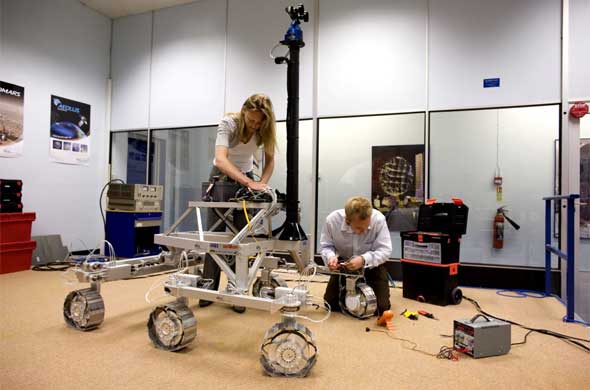
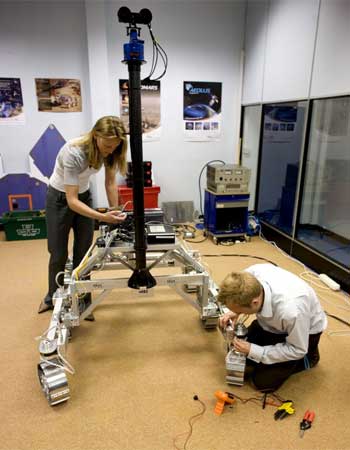
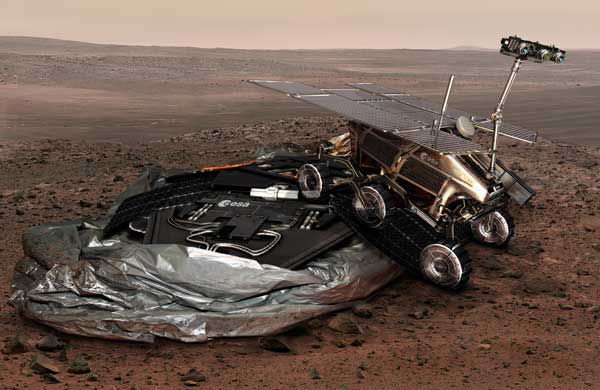
A technician works on ExoMars prototype rover Bradley at EADS Astrium in StevenagePhotograph: Felix Clay/GuardianExoMars rover prototypes Bridget, Bradley and Bruno (from left to right) at EADS Astrium in Stevenage. Bruno and Bradley were pitted against each other to supersede Bridget, the original rover built by AstriumPhotograph: Felix Clay/GuardianBradley beat off its rival in the competition to improve on Bridget's designPhotograph: Felix Clay/GuardianBradley was built by œrlikon of Switzerland. It is highly manoeuvrable, with six wheels that can move independently allowing it to spin on the spot, reverse and drive sideways. The final model will be able to "wheel walk"Photograph: Felix Clay/GuardianArtist's impression of the ExoMars rover venturing onto the surface of the red planetPhotograph: ESA
Sign up to read this article
Read news from 100’s of titles, curated specifically for you.