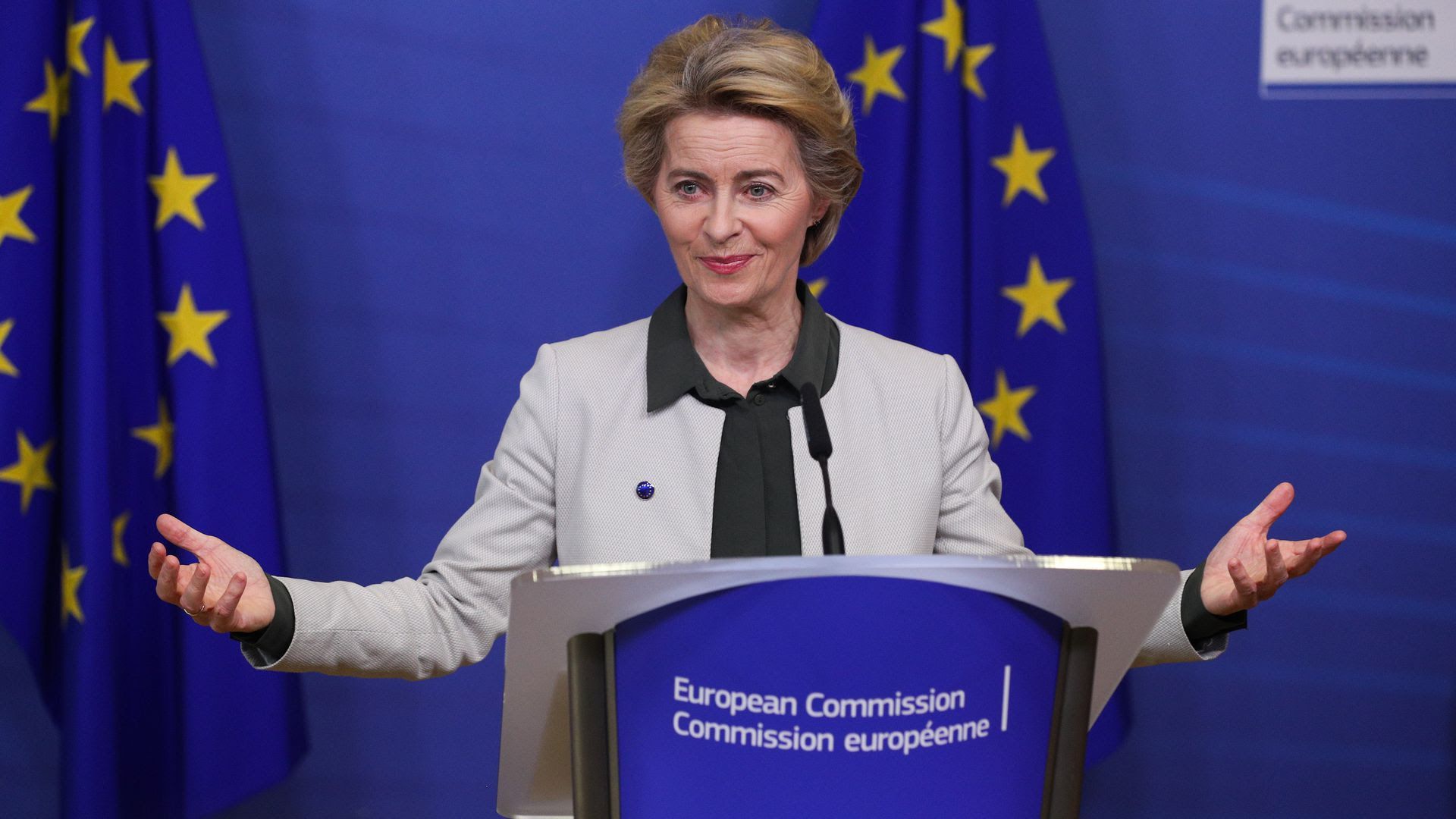
Ursula von der Leyen, the new European Commission president, yesterday unveiled plans for an ambitious "European Green Deal" meant to make the EU a net-zero emitter by 2050.
Why it matters: The EU is the world's third-largest greenhouse gas emitting region after China and the U.S.
The big picture: The sweeping plan envisions crafting a new climate law within the next 100 days.
- And it broadly proposed the outlines of ideas in areas like fuel tax policies, trade via "border carbon adjustments," a "just transition" for fossil-fuel dependent regions, and greatly expanded investment.
The intrigue: One of the documents released yesterday is a "roadmap" of "key actions" around policy development envisioned in the coming year — and it features dozens of them.
- It covers everything from deepening the targeted 2030 emissions cuts to a June 2021 tax policy proposal to the creation of new strategies.
- It envisions crafting new strategies for offshore wind, climate-friendly steel production, various mobility plans, the "just transition" fund, stronger biodiversity and forest efforts, a "farm to fork" policy, and on and on.
The state of play: This document is relevant to the U.S. and the 2020 elections.
- I haven't had time to digest everything the EC dumped yesterday, but even taking it for a quick spin underscores the incredible time and labor it will take to accomplish.
- Similarly, transforming Democratic White House candidates' plans into actual policymaking is a huge lift.
- Put another way, even the somewhat detailed plans from Elizabeth Warren are, in essence, scribbles on a napkin that can obscure the painstaking work ahead if the U.S. ever hopes to implement an aggressive climate policy.
My thought bubble: I know this is kind of obvious, but it's worth mentioning because lots of attention is paid to candidates' sweeping targets (like net-zero by 2050) and aggregate spending levels (like Bernie Sanders' $16 trillion proposal).
- But it's worth remembering that even successfully implementing a small fraction of these plans would be a long slog.
Go deeper: