Get all your news in one place.
100’s of premium titles.
One app.
Start reading
The Guardian - UK
The Guardian - UK
Environment

Europe's butterflies, beetles and dragonflies under threat

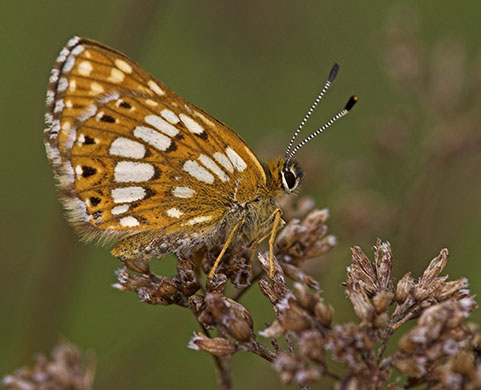
Butterfly IUCN red list: Duke of Burgundy butterfly
The Duke of Burgundy butterfly (Hamearis lucina) is among the endangered species. It is the sole representative of a subfamily known as the "metalmarks", some of whose members, especially in south America, have a metallic appearance. The Duke of Burgundy is found mainly in central southern England, although scattered colonies are found in Cumbria and Yorkshire. It is not found in Wales, Scotland or Ireland.
Photograph: Peter Eeles/National Trust
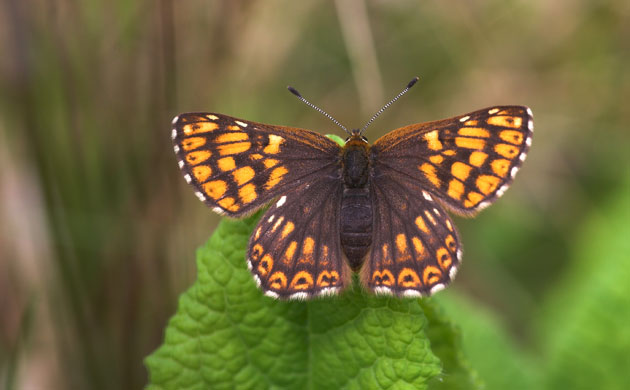
Butterfly IUCN red list: Duke of Burgundy butterfly
The Duke of Burgundy was, in the past, primarily known as a woodland butterfly, feeding on primroses growing in dappled sunlight. There were many colonies in chalk and limestone grassland. However, the cessation of coppicing in woodlands has had a marked effect on this species, with many woodland colonies dying out as a result.
Photograph: Peter Eeles/National Trust
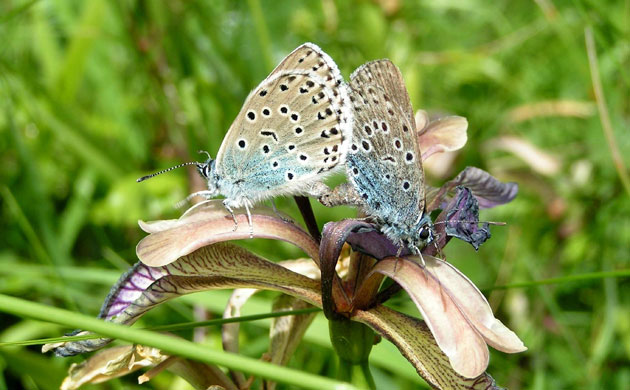
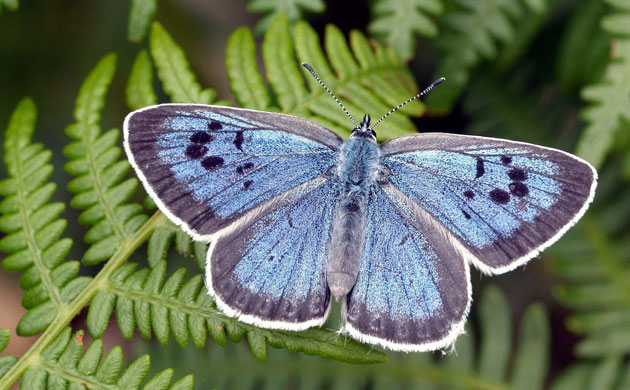
Butterfly IUCN red list: Large Blue Butterfly
The large blue (Phengaris arion) died out in England in 1979 but was successfully reintroduced in 1983. Now it is endangered throughout Europe, according to an assessment by the International Union for Conservation of Nature (IUCN).
Photograph: Emma Daniel/PA
Butterfly IUCN red list: Large Blue Butterfly
The large blue (Phengaris arion) was first recorded as a British species in 1795 and, even then, was considered rare. After the last UK colony – on Dartmoor – became extinct in 1979, the species was brought back from the dead using stock from Sweden.
Photograph: Butterfly Conservation/David Sim/PA
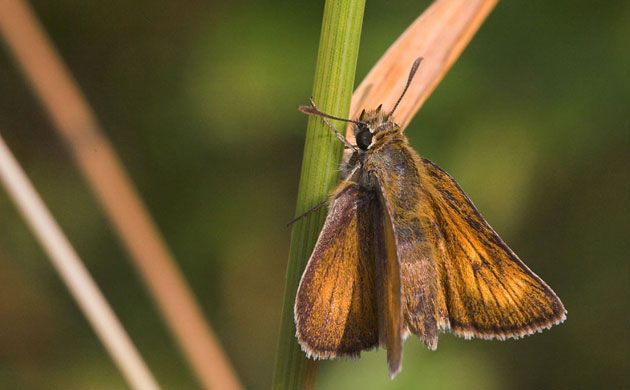
Butterfly IUCN red list: Lulworth Skipper butterfly
The Lulworth skipper (Thymelicus acteon) was first discovered in 1832 on a stretch of coast around the village of Lulworth in Dorset. In Britain, it is never found more than five miles from the south coast. It is found in central Europe and North Africa, where its population is considered stable. But numbers have declined in northern Europe.
Photograph: Bournemouth News/Rex Features
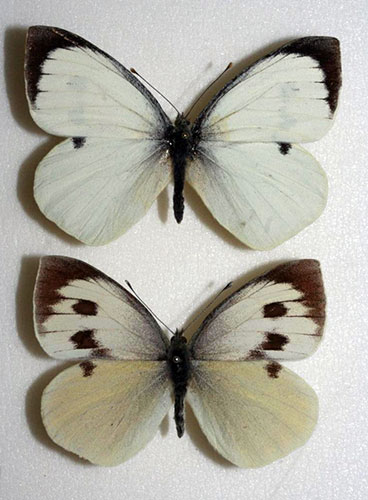
Butterfly IUCN red list: Madeiran Large White
The Madeiran large white (Pieris wollastoni) is critically endangered and possibly extinct – it hasn’t been seen on Madeira for at least 20 years. Its Latin name commemorates Thomas Vernon Wollaston, an entomologist who discovered several insect species on Madeira.
Photograph: Martin Wiemers/IUCNweb
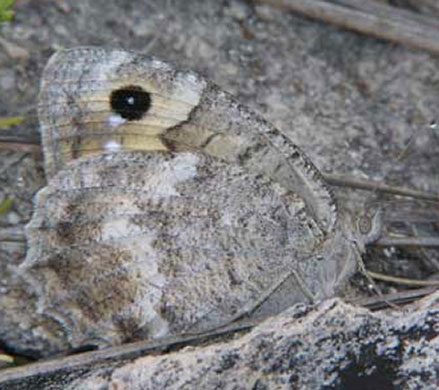
Butterfly IUCN red list: Macedonian Grayling
The Macedonian grayling (Pseudochazara cingovskii) is another on the critical list. It is suffering because quarrying activities are reducing its habitat.
Photograph: Matt Rowlings/eurobutterflies.com
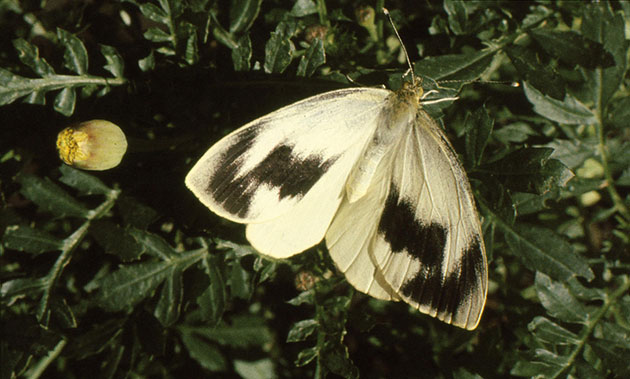
Butterfly IUCN red list: Canary Islands Large White
The Canary Islands large white (Pieris cheiranthi) is a close relative of the widespread large white (Pieris brassicae). The island species is notable for the large black rectangle on the underside of its forewing.
Photograph: IUCN
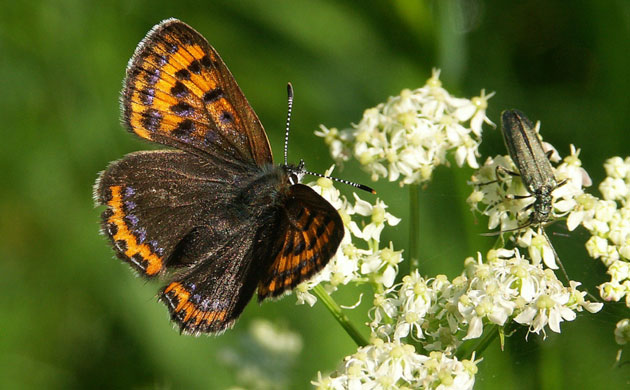
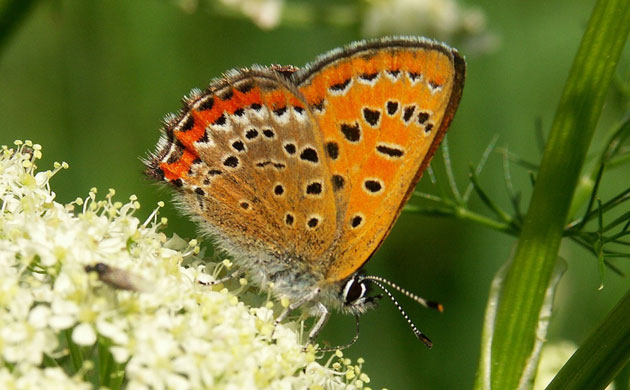
Butterfly IUCN red list: Violet Copper Lycaena helle
The violet copper butterfly (Lycaena helle) is found from the Pyrenees to northern Norway and from Belgium to central Asia. But in many of these areas, its wetland habitat is increasingly under threat.
Photograph: Chris van Swaay/IUCN
Butterfly IUCN red list: Violet Copper Lycaena helle
The violet copper (Lycaena helle) feeds on common bistort – an herbaceous flowering plant – and on white buttercup. Because of this, it is seen only during the blooming season of mid-May to mid-July.
Photograph: Chris van Swaay/IUCN
Butterfly IUCN red list: Calopteryx virgo meridionalis
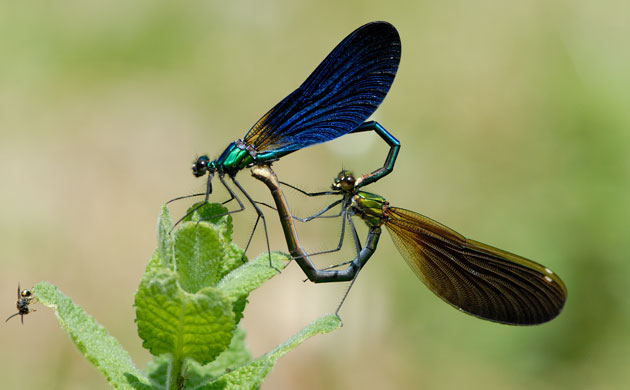
The beautiful demoiselle damselfly (Calopteryx virgo meridionalis), often found near fast-flowing waters, is another species whose numbers are shrinking fast.
Photograph: Jean Pierre Boudot/IUCN
Butterfly IUCN red list: Pyrrhomosama nymphula
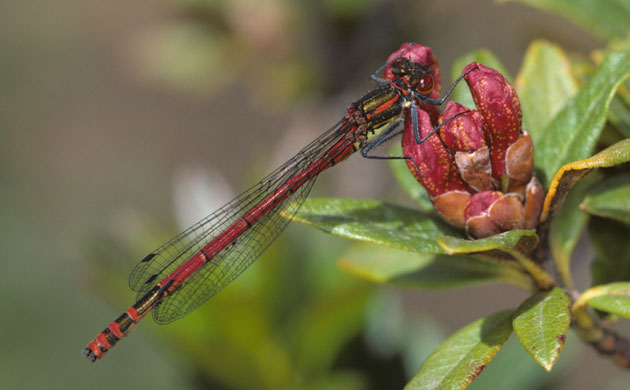
The large red damselfly (Pyrrhosoma nymphula) lives in Britain and has a preference for small acidic pools. The only other red damselfly in the UK is the small red (Ceriagrion tenellum).
Photograph: Jean-Pierre Boudot/IUCN
Butterfly IUCN red list: Rosalia Alpina
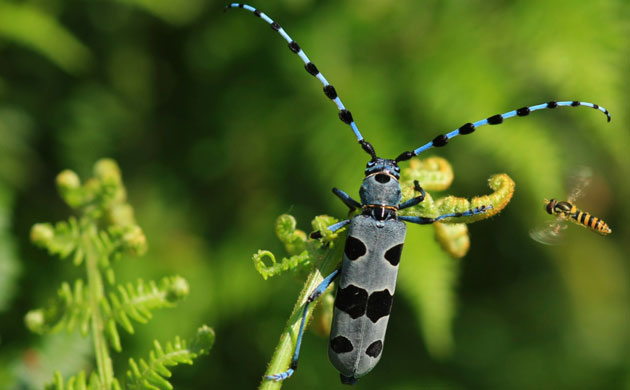
The rosalia longicorn beetle (Rosalia alpina) has very distinctive markings and the male's antennae can be twice as long as its body. It is found from the Alps to Slovakia but its numbers have steeply declined.
Photograph: Nicolas Gouix/IUCN
Butterfly IUCN red list: Cucujus cinnaberinus
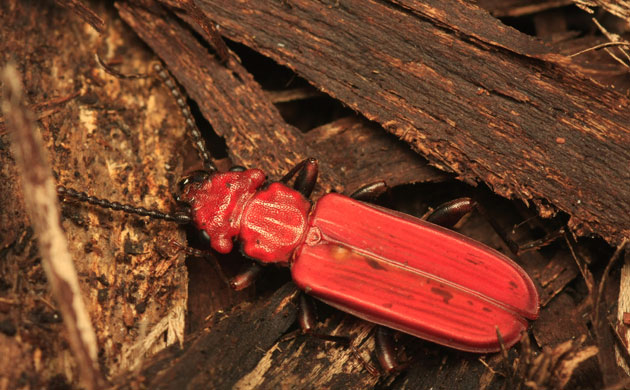
The flat bark beetle (Cucujus cinnaberinus), which lives under the bark of dead and live trees in central and Eastern Europe, is listed as vulnerable by the IUCN.
Photograph: Nicolas Gouix and Hervé Brustel/IUCN

Sign up to read this article
Read news from 100’s of titles, curated specifically for you.
Already a member? Sign in here
Related Stories
Top stories on inkl right now
One subscription that gives you access to news from hundreds of sites
Already a member? Sign in here
Our Picks
Fourteen days free
Download the app
One app. One membership.
100+ trusted global sources.