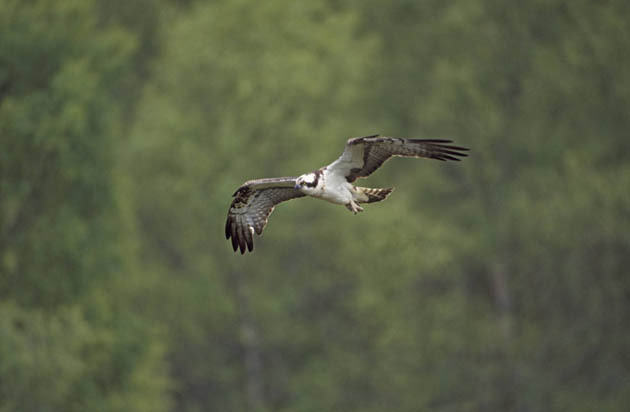
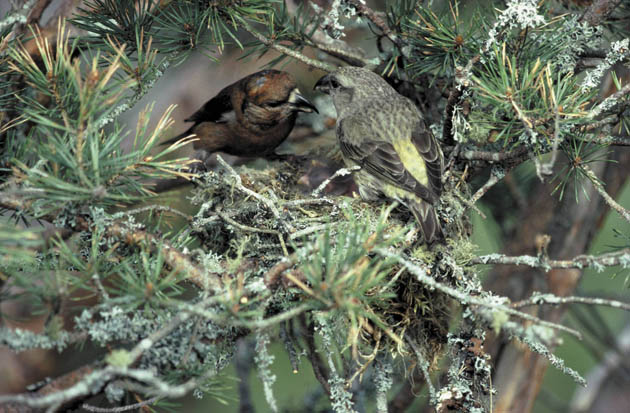
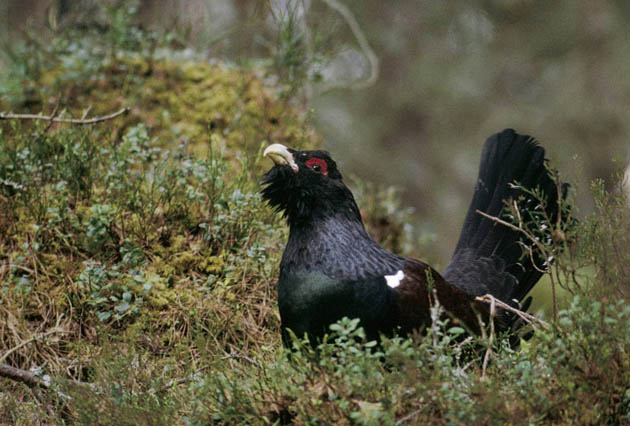
An adult female osprey in flight. According to the RSPB's climatic atlas, this bird will lose suitable climate in the UK and conservationists project that it will suffer probable UK extinction. However this decline will not be as sharp as other species in this category, as the centuries of persecution suffered by the bird mean that it does not currently occupy all of its range to begin withPhotograph: Chris Gomersall/RSPB imagesA pair of Scottish crossbill on the nest. This is another species that may become extinct in the UK if temperatures continue to rise due to climate change Photograph: RSPB imagesA capercaillie cock displaying at the Abernethy RSPB reserve. Data in the climatic atlas shows that the UK distribution of this species is likely to shrink to less than 5% of its current range. The UK capercaillie population has declined rapidly, and it is IUCN-World Conservation Union "Red List" speciesPhotograph: Desmond Duggan/RSPB images
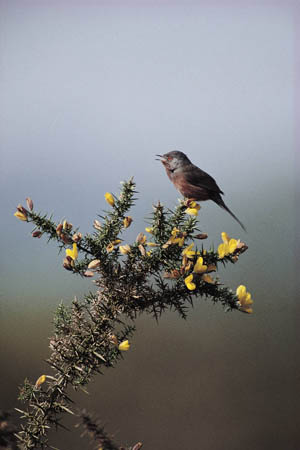
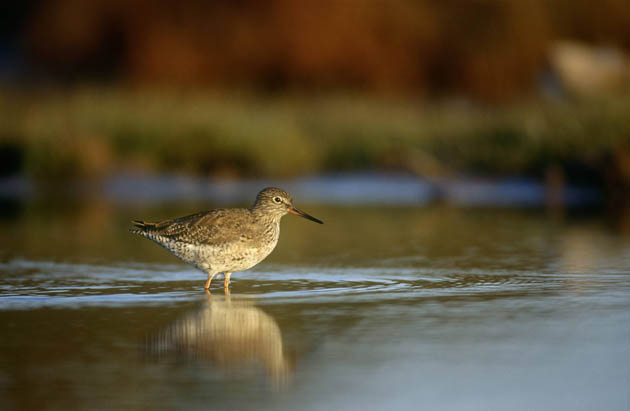
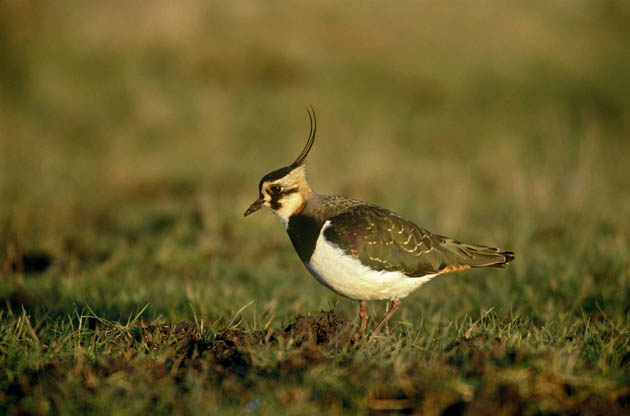
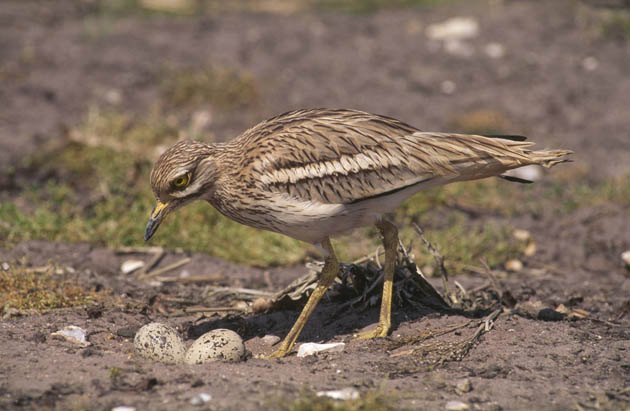
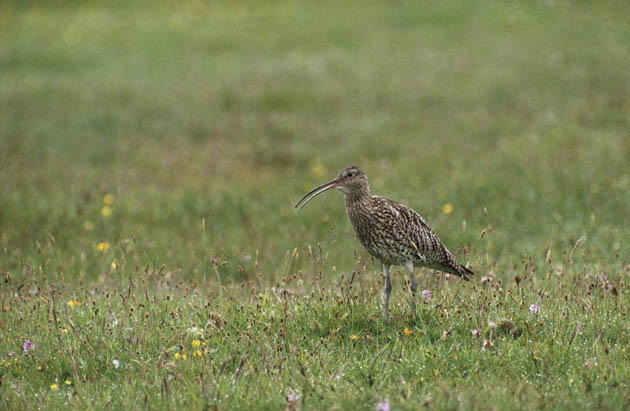
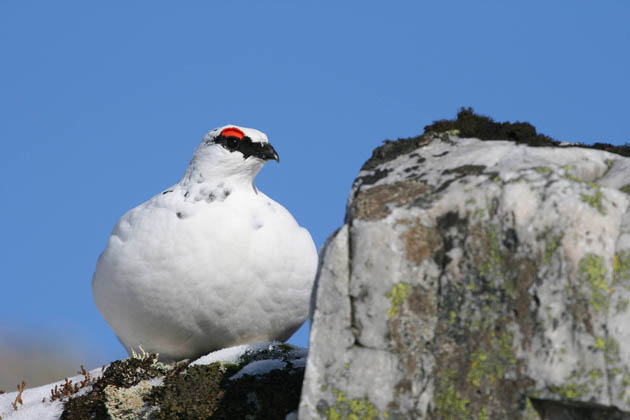
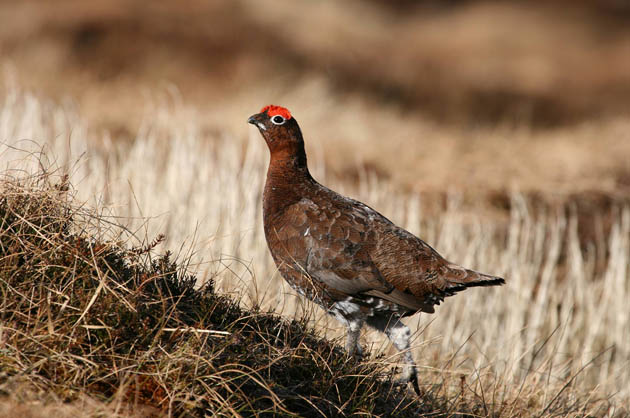
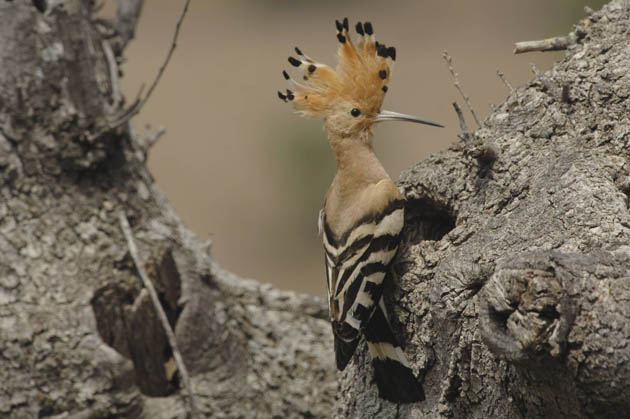
A Dartford warbler, singing from the top of a gorse bush. Climate change may in fact benefit this species of warbler, as parts of the UK are expected to become more suitable habitats and warmer temperatures will increase their range. “To enable these potential new colonists to gain a foothold we must prepare for their arrival by giving them the habitat they need and the freedom from persecution they deserve,” said Mark Avery, the RSPB’s conservation directorPhotograph: Chris Gomersall/RSPB imagesA redshank feeding in shallow water. The UK distribution of this species is likely to shirnk as the climate in parts of the UK becomes less suitable, the RSPB warnsPhotograph: Chris Gomersall/RSPB imagesA adult lapwing at Elmley Marsh RSPB reserve. The lapwing, like the redshank, will also see its UK distribution shrink due to climate changePhotograph: Chris Gomersall/RSPB imagesA stone curlew, with its nest and eggs, in Breckland, Norfolk. The range of the stone curlew will expand due to climate change as more habitat becomes climatically suitable, the RSPB atlas showsPhotograph: Chris Gomersall/RSPB imagesUK distribution of the curlew will shrink due to climate change. “Some level of climate change is now inevitable and we must help wildlife become resilient to the worst impacts by increasing investment in creating larger areas for nature and making the countryside more wildlife-friendly to allow species to move to areas where the climate becomes suitable,” Avery saidPhotograph: Chris Gomersall/RSPB imagesA male ptarmigan in winter plumage in the Cairngorms national park in Scotland. The UK distribution of this species is likely to shrink to less than 5% of its current range in the highest mountains of the Scottish HighlandsPhotograph: Tom Marshall /RSPB imagesA red grouse in the Cairngorms. Red grouse breed in the UK in the uplands of the north and west - distribution which is likely to shrink as the climate in parts of the UK becomes unsuitablePhotograph: Tom Marshall/RSPB imagesA hoopoe raises its crest at a nest hole in Greece. Climate change means we may see more of these birds in the UK as more habitat becomes suitablePhotograph: Richard Brooks/RSPB images
Sign up to read this article
Read news from 100’s of titles, curated specifically for you.