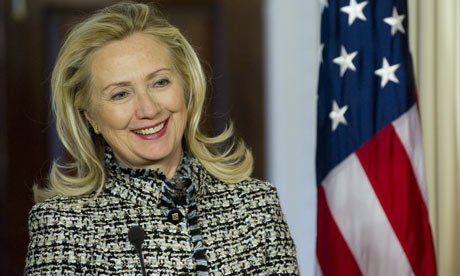
Last month, US Secretary of State Hillary Clinton hosted the Global Impact Economy Forum, gathering high-level investors and experts from across the globe to discuss how to create greater co-ordination and collaboration in this emerging industry. The Global Partnership Initiative event featured input from Hillary Rodham Clinton herself and the famous advocate for "business as unusual", Sir Richard Branson.
Secretary Clinton used her keynote address to ask governments to harness their power to mobilise key players and promote deeper cross-sector partnerships, saying: "We needed to tear down the silos that prevented us from working creatively and smartly together. We needed to facilitate and scale up the impact economy. And we needed to make it clear that we were over the separation mentality that for too long has guided our efforts."
Although Clinton's vision resonates strongly with new EU policies on social innovation and social business, the US approaches the impact economy in a profoundly different way.
In particular, the EU has been slow to recognise the need for international engagement, in contrast to the effective and large-scale international focus of the USA's impact economy; the State Department's Overseas Private Investment Corporation (OPIC) recently approved $285 million in financing for socio-economic projects.
Yet European organisations and institutions, to their credit, have meanwhile been experimenting with a move away from traditional funding avenues, piloting new ways to finance the European impact economy.
Policymakers in Europe, too, are beginning to look to international sources to learn from success stories, surely a sign that those who influence the sector are realising the potential of a global impact economy. Recently, the Pakistan Poverty Alleviation Fund (PPAF) visited London, Berlin and Brussels, where they met with civil society leaders and change-makers to share their dynamic approach to social investment. PPAF, a successful private-public business model of large-scale investment, has had a widespread impact at grassroots level. Implementing the most suitable social finance mechanism for the given situation – be that grants, microcredit or loans – ensures successful delivery on a huge scale. The innovative business model used by PPAF is attracting international interest; Europe, at last, is beginning to view cross-border interactions not only as an opportunity to teach, but to learn.
Europe needs to keep on learning from what is happening across borders to ensure it doesn't fall behind the rest in developing an impact economy with international outreach. Failure to keep up at this crucial time would cost Europe an opportunity for growth – and, as the US has been first to realise, one that is too good to pass up.
Kate Duffy is the network co-ordinator of the European network of civil society professionals.
This content is brought to you by Guardian Professional. To join the social enterprise network, click here.