It took the whirring sound of the helicopter blades on Marine One to reinvigorate Europe’s determination to no longer be subservient to the US dollar.
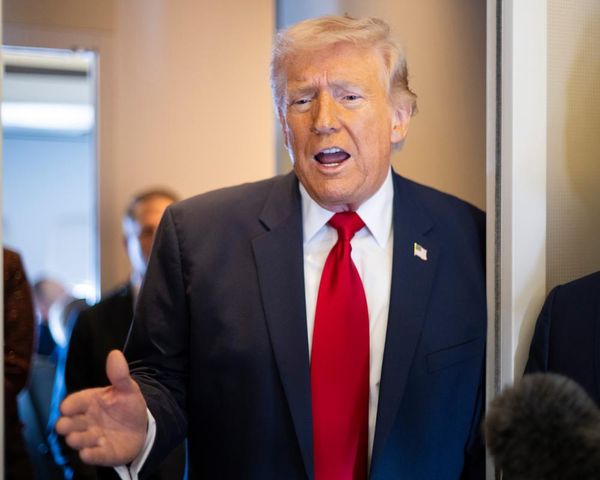
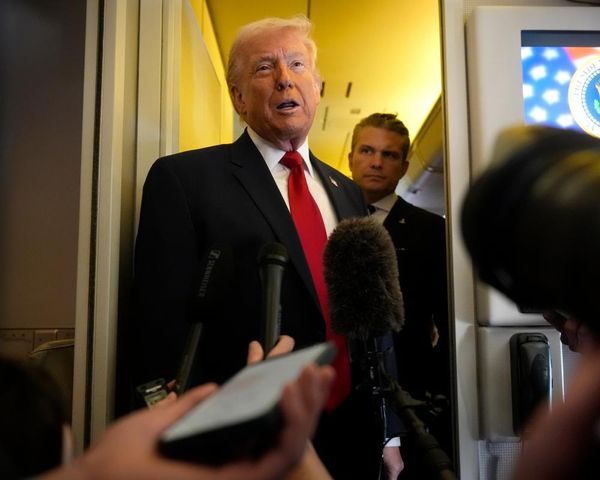
When US president Donald Trump took off early from the G7 summit in Charlevoix, Canada, in June 2018, and abruptly withdrew from a common communique, he left European leaders first “speechless, then determined to work together”, says Martin Selmayr, secretary-general of the European Commission under Jean-Claude Juncker and long seen as the most influential official in Brussels.
“Trump boarding the helicopter in Charlevoix triggered the idea of European sovereignty,” says Mr Selmayr. “Promoting the international role of the euro was one answer to that political moment.”
Just months later, Mr Juncker vowed to make the euro “play its full role on the international scene”. The incoming commission looks eager to pick up the baton: Ursula von der Leyen, the new president, has included the goal of boosting the euro in letters to her team.
Since the start of the year, the commission has been quietly working to promote the use of the euro in cross-border invoicing, specifically for energy products. A clearing house has been created to circumvent US threats to exclude from the US dollar system companies that trade with Iran. And the ECB has been enlisted to communicate the economic consequences of greater euro use internationally.
As Europe looks warily to the growing competition its main industries face from China and the increasingly erratic leadership of its American ally, the role of the euro has become one of the centrepieces of a profound rethink taking place across the region about how it defends its own interests that includes industrial policy and trade.
For European leaders, a more prominent euro is key to securing the region’s financial and monetary autonomy and protecting it against US attempts to weaponise the dollar through financial sanctions.
Josep Borrell, the high representative for foreign affairs, believes the project to boost the euro’s status should be treated on a par with defence policy: “We should reinforce the euro’s international role, and further, our military capacity to act . . . The EU has to learn to use the language of power,” he recently told the European Parliament.
Europe’s monetary inferiority complex goes back a long way. Half a century ago Valéry Giscard d’Estaing, then French finance minister, lamented Washington’s “exorbitant privilege” — the dollar’s pre-eminence that put Europe at a commercial disadvantage and helped provide the Europeans’ motivation on the long road to monetary union.
The same resentment resurfaced with the monetary chaos that Richard Nixon, then US president, unleashed when he unilaterally dismantled the Bretton Woods fixed-exchange rate system by taking the dollar off its gold peg in 1971.
Charlevoix, says Mr Selmayr, was a “second Nixon moment” for Europe.
Europe First
This article is part of an FT series exploring Europe’s efforts to boost competitiveness as its companies are squeezed by the US and China.
Part one
How to build a national champion: the EU’s new industrial policy.
Part two
Internationalising the Euro
Part three
The greening of trade policy
Part four
The data on European industry
The snub at the G7 followed other US announcements that had made Europe fret at the dominance of the dollar. Mr Trump’s decision to pull out of the Iran nuclear deal in May 2018 highlighted how European companies remain dependent on dollar-denominated financial markets. Under the sanctions the Trump administration has reimposed, Europeans doing business with Tehran could face US penalties.
The threat has effectively stopped European companies trading with Iran and undermined the economic incentives at the heart of the nuclear deal.
In August 2018, Germany’s foreign minister Heiko Maas called for “payment channels that are independent of the US [and] an independent Swift system”. Swift, a messaging service used to direct cross-border payments, is based in Belgium but present in the US and embedded in its financial system.
In response, Germany, France and the UK set up a financial clearing house for transactions with Iran, known as Instex.
Could these efforts be more successful than Europe’s previous attempts to break free from US dollar dominance? The timing is propitious. The dollar is facing headwinds because of Mr Trump’s erratic policies, and other countries are also looking for alternatives to the US financial system.
Currency hegemony can shift, warns Barry Eichengreen, a professor of economics at the University of California, Berkeley, and “one can imagine this shift occurring very quickly if something goes wrong”.
The euro is the world’s second most used currency. It accounts for about one-fifth of global foreign exchange reserves and a similar share for international holdings of bonds, loans and deposits — compared with more than half in US dollars.
One of the few areas where the euro comes close to matching the greenback is in global payments and invoicing, where both currencies account for about 40 per cent each, according to ECB figures.
However, trade between the two economic superpowers is overwhelmingly dollar-denominated. According to IMF research, some three-quarters of eurozone sales to the US, and more than 90 per cent of its imports from there, are invoiced in dollars.
The launch of the euro in 1999 created expectations that the European currency would soon enjoy equal standing with the dollar. But after an initial period of growth, its role in the global economy has stagnated or shrunk, to the point where the euro is now less prominent than when it was established.
“By some measures, the euro plays no larger a role than the Deutschemark and French franc that it replaced,” according to a new study by economists Ethan Ilzetzki, Carmen Reinhart and Kenneth Rogoff.
They argue that “a central reason is the scarcity of high-quality marketable euro-denominated assets, and the general lack of liquidity compared to dollar debt markets”. Because of credit downgrades in the previous crisis and a still-fragmented private securities market, the euro has too few of the reliable assets that global investors use as reserves: typically ultra-safe triple A-rated bonds issued by creditworthy governments or companies.
The European Central Bank agrees, according to Benoît Cœuré, a member of its executive board. “In our analysis, [the most important move] would be a deepening of European capital markets and the introduction of a safe asset. That would be a game-changer.”
In fact, no currency has ever gained predominance without liquid markets in a benchmark asset, says Mr Eichengreen. “If [Europe] succeeds in significantly enhancing the international role of the euro without that step, it would be a first.”
The lack of safe euro-denominated assets was aggravated by the 2010-12 eurozone sovereign debt crisis, when investors feared the single currency might fall apart. “It’s a perfectly fine idea to promote the euro in international markets,” says Gita Gopinath, IMF chief economist. “But the necessary condition for that is to improve the euro area architecture to strengthen resilience — centralised fiscal capacity, capital markets union, banking union.”
Beefing up the eurozone architecture is only the start. The “physical access” of non-eurozone investors to the currency must also be actively supported, says Elina Ribakova, an economist at the Institute for International Finance. Among other things, the ECB must be more willing “to provide swap lines [of euros to other central banks] outside the euro area”, like the US Federal Reserve has done for dollars.
She points out that European banks were heavily reliant on dollar funding during the financial crisis, which the Fed provided because the US was at the epicentre of it. “What if a shock came from outside of the US and unrelated to the area of responsibility of the Fed?” she asks. “With deeper and more supported euro markets, you would have banks more funded in euros.”
Economists have tended to measure a currency’s global role by looking at its use in international reserves for central banks and big private investors. But more recently, they have started to pay more attention to a different barometer: the currency choice for trade invoicing and transactions.
“The origins of currency dominance are in transactions”, says Ms Gopinath, who believes that the heavy use of the US dollar in trade has been an important factor in its “exorbitant privilege”. “For many emerging markets, over 80 per cent of their imports are invoiced in US dollars. To protect themselves against currency movements, it is quite natural that they will choose to save in dollars, which in turn leads to dollar dominance in asset markets.”
She argues that a dominant position in invoicing and payments brings macroeconomic advantages. “The rest of the world is far more sensitive to US monetary policy than the other way round. US inflation is quite insulated from its own currency movements,” she says.
This is the context for the EU commission’s drive to increase the euro share of trade with the outside world, in particular in energy.
Ms von der Leyen has instructed Kadri Simson, the commissioner for energy, “to look at ways to sharply increase the use of the euro in energy markets”. The initiative already seems to be bearing fruit. After a meeting between Russian and commission officials in June, Russian media reported that a joint working group would be set up on shifting energy invoicing out of dollars. In October Rosneft, the biggest Russian oil producer, announced it had switched to euros from dollars for all its export contracts.
Ms Ribakova argues the European authorities can have some influence on what currency is used for invoicing in “big-ticket items”, such as energy markets, where there are a limited number of transactions.
“For historical reasons in the past most energy suppliers were pegged to the dollar and the US was the largest consumer,” she says. “[But now] Europeans are the largest consumers and some of the largest suppliers no longer peg to the dollar.” She recommends the creation of new energy price benchmarks to encourage financial markets to create hedging instruments in euros.
While the plans to promote the euro in energy invoicing have made some progress, the attempt to set up a euro alternative to Swift has been a disappointment — even if six new European countries joined Instex last week. Instex “hasn’t worked at all”, says Ms Ribakova, because companies using Instex still risk being cut off from the dollar-based financial system. “I think the cost of missing out on the US market is too significant for banks — even non-financial companies as well — to take part.”
Yet Mr Selmayr insists “the most important is that [the euro’s role] is on the agenda and hasn’t disappeared. The continued activities of Mr trump help promote the international role of the euro. They do not make the US look like a very reliable partner.”
The IMF’s Ms Gopinath believes it will be difficult for the euro to dislodge the dollar because of the “very strong network effects” that sustain the US currency. “When large parts of the world are trading with each other and saving and borrowing in dollars and holding reserves in dollars — all these channels reinforce each other and the dollar’s lead position.”
Berkeley’s Mr Eichengreen is cautiously confident that the foundations will be laid for a more prominent euro. “My view has always been that it would come but we would have to be patient,” he says. “It will take a long time to build the consensus.”
Digital disruption: virtual currencies could undermine the dollar
The dollar’s hegemony is also being put under pressure by rapid changes in payments technology and the launch of digital alternatives to cash.
When Facebook announced in May that it wanted to enter the payments industry with a virtual currency called Libra, finance ministers and central bankers immediately insisted the company could not be allowed to circumvent regulations or undermine financial stability.
For governments, the ultimate fear is that Libra could displace national currencies and render monetary policy impotent. This could happen much faster than historical changes in currency use, warns Benoît Cœuré.
“We tend to see currency choice as a historical process which links to slow changes in trade,” he says. “Digital currencies have the potential of making change happen much faster.”
Digital currencies can accelerate a shift away from the dollar, according to Elina Ribakova. “The more you go into alternative platforms, the less dependent you are on the US.” For example, WeChat, the Chinese payment app, is much less “reliant on the US financial system. That is something Russian authorities are trying to do as well.” Beijing is reportedly close to launching an official digital currency, with the direct involvement of China’s central bank.
Could there be an opportunity to increase euro use by creating a European alternative to these initiatives? Ms Ribakova says the emphasis should be on good payments regulation.
“I don’t think it’s necessary to promote euro-denominated digital systems,” she says. “It is important to have transparent and well-regulated systems and hope the currency goes along. That would reduce reliance on US-based systems.”
The private sector in Europe, however, is beginning to ask for more. The association of private commercial banks in Germany has called for the creation of a digital euro. One of their stated motivations was to avoid relying on China or US-based services.
Copyright The Financial Times Limited 2019
2019 The Financial Times Ltd. All rights reserved. Please do not copy and paste FT articles and redistribute by email or post to the web.