The European Union (EU) should play a greater role in the Indo–Pacific region to prevent a US–China confrontation, say experts on international relations affairs.
Co-hosted by the Konrad Adenauer Foundation, the Southeast Asian Center of Excellence for Public Policy and Good Governance (CPG) and the Asian Governance Foundation (AGF), Thammasat University Law Faculty, recently held a webinar called "EU Indo-Pacific Strategy and its Meaning for Asean" to discuss Europe's Indo-Pacific strategy amid Sino-US rivalry in this region. The experts suggested the EU should play an active role to contain Sino-US rivalry as this region is a strategic area for both.
Kasit Piromya, a former foreign minister, said that Europe had been a constant factor in the Indo-pacific region, and the Asean region in particular. It had been instrumental in shoring up the open market economy and repulsing the expansion of communism.
"I think the European Union has contributed to the great achievement of Asean as a whole and also opened up the Asean market to allow industrialisation.
''To me, it is nothing strange or new for the EU to be in Southeast Asia and I think the relationship between these two regions has always been positive throughout the latter period of the Cold War and at the inception of the globalisation era," he said.
China's assertiveness is rising along with its unilateral aggression in this region, in part to deter the US which has long had a presence in this region.
Under US leadership, there were arrangements of focal power between the US, Australia, Japan and India. Australia, the US and Britain have also entered a nuclear submarine production pact to tame the influence of the Chinese in the region.
"So, as we can see on the US side, the message is that China cannot have its way and the US will not run away from the Western Pacific and Indian ocean."
For Europe's role in this region, Mr Kasit suggested the group promote trade links, champion climate change and promote the universal idea of democracy and human rights, particularly in the Southeast Asia, in which the EU could provide successful stories that the Indo-Pacific region could follow.
The EU also could play a positive role in helping modify Chinese behaviour and thinking.
"I think Europe could speak in a mild manner to make them play by international rules, to show them the benefits of globalisation and the WTO [World Trade Organization].
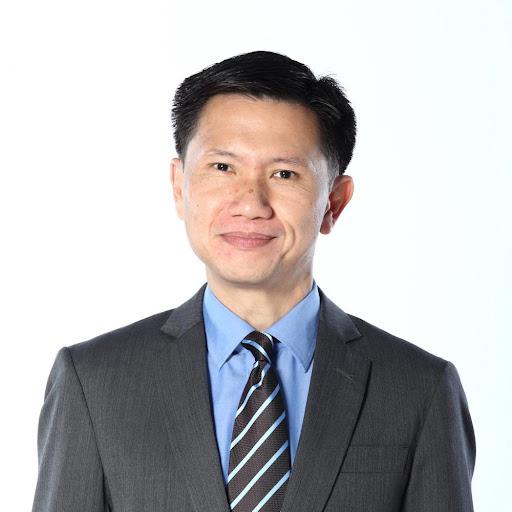
Thitinan Pongsudhirak
"At the same time, there would not be any excuses for the US to take a confrontational stance which it has been doing since the late Obama period,'' Mr Kasit said.
"Some 40–50 years ago, Asean released three basic documents: a treaty of amity and cooperation, nuclear-free zone declaration, and a neutrality zone declaration for Southeast Asia.
"If Asean wants to have a clear position in the Sino-US confrontation, it must reiterate the principle of neutrality and act accordingly, rather than just come out with pieces of paper," he said.
Thitinan Pongsudhirak, Institute of Security and International Studies director from Chulalongkorn University's Political Science Faculty, said the region is in danger of being dominated by China.
"Also, China is not only a rising power but also diligent in expanding its power to the South China Sea and Mekong dams, and China is resisting all opposition," he added.
''We are not talking about an anti-China policy or security or strategic pact. It is just cooperation in trade and investment and talking about rights and freedom,'' Mr Thitinan said.
When the superpowers were fighting over the region, Asean itself would be at risk similar to what happened during the Cold War, in which conflict between the USSR and the US in Southeast Asia led to divisions for several decades.
"And now we have conflict and confrontation between the US and China. That could lead to division again. Therefore, the role of EU strategy in this region should be to ensure Asean is not divided by the US or China, or anyone else,'' he said.