LONDON (Reuters) - The European Union stands ready to regulate crypto-currencies if risks from the sector are not tackled at the global level, the bloc's financial services chief said on Monday.
A global investment craze over bitcoin <BTC=BTSP> and other virtual currencies in the last year has seen wild gyrations in their valuations, making fortunes for some investors while others have lost heavily.
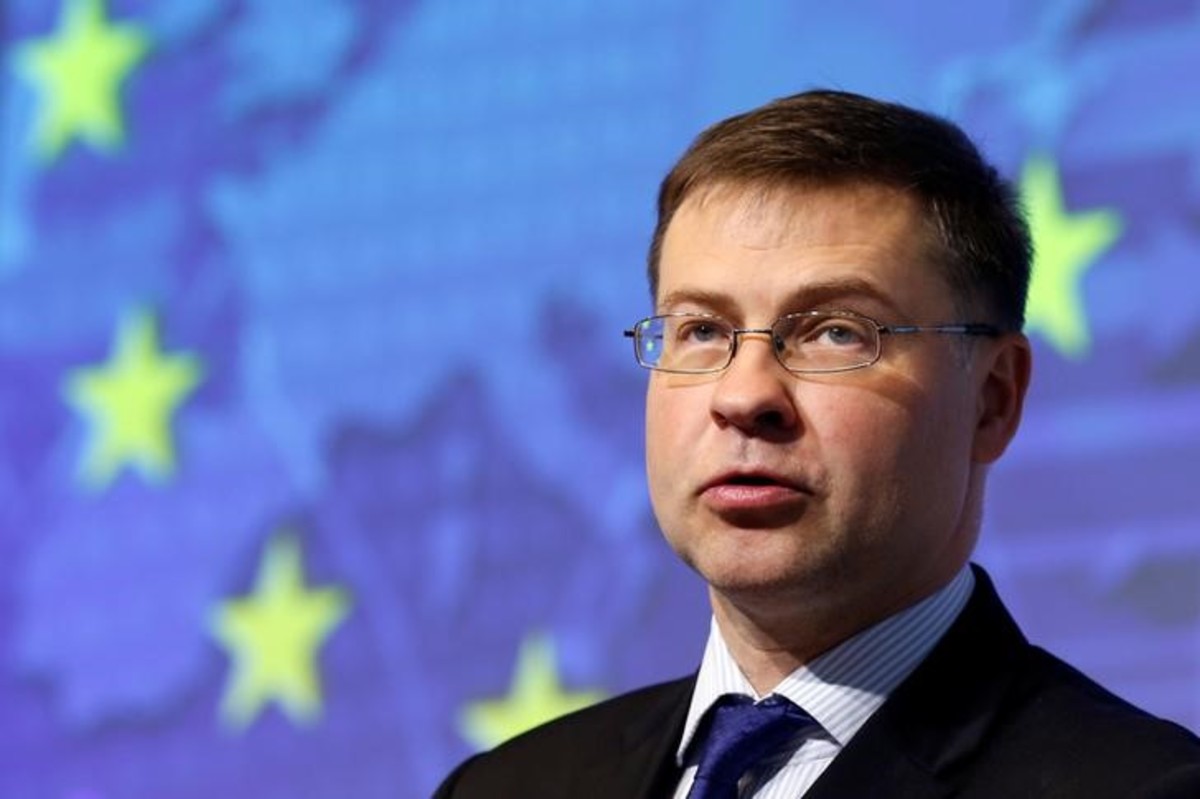
"This is a global phenomenon and it's important there is an international follow-up at the global level," Valdis Dombrovskis told reporters.
"We do not exclude the possibility to move ahead (by regulating crypto-currencies) at the EU level if we see, for example, risks emerging but no clear international response emerging."
Dombrovskis was speaking after hosting a roundtable attended by the European Central Bank, industry bodies, and the Financial Stability Board, which writes and coordinates regulation for the Group of 20 Economies.
G20 finance ministers and central bankers meet in Buenos Aires in March, with crypto-currencies set to be on the agenda. The EU will decide how to address the issue later this year or early in 2019, the financial services commissioner said.
Germany and France said this month that, while new opportunities arose from crypto-currencies, they could also pose substantial risks for investors and be vulnerable to financial crime without safeguards.
But given they represent just a tiny part of the financial system, so far there appears to be no strong consensus among G20 countries to regulate them closely.
Policymakers worry about losing jobs and growth to other regions if they crack down hard on innovation in the sector, especially stemming from the blockchain technology that underpins crypto-currencies, which Dombrovskis said holds strong promise.
Markus Ferber, a center-right member of the European Parliament, said a quick EU regulatory response was needed, rather than waiting years for international rules to trickle through.
"In order to make sure that retail investors do not fall prey to market manipulation and fraud, virtual currencies should be regulated as other financial instruments," Ferber said in a statement.
(Reporting by Huw Jones; editing by John Stonestreet)