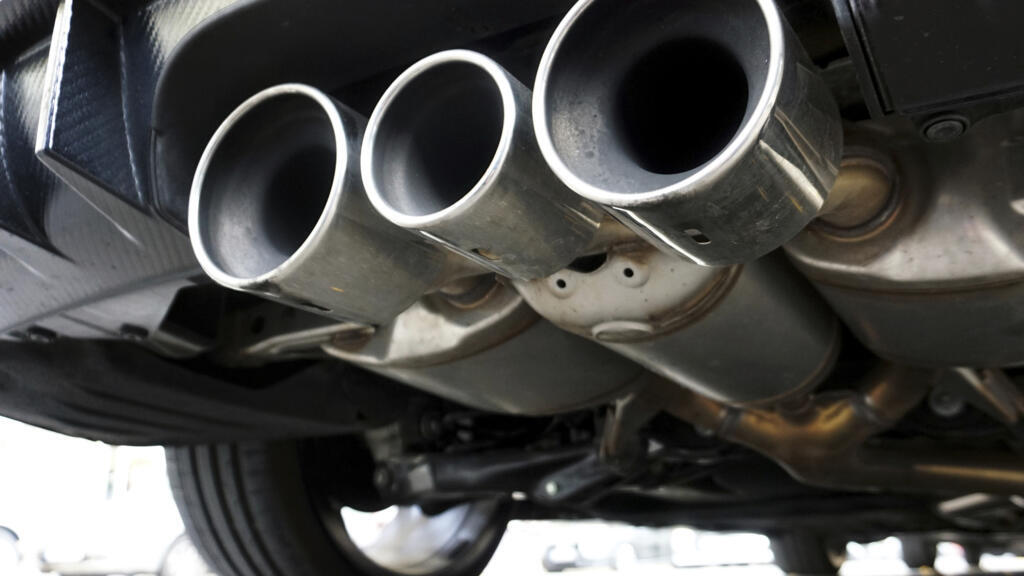
The European Union has weakened its planned 2035 ban on new petrol and diesel cars, retreating from a flagship climate measure as it moved to support an auto industry hit by job cuts, factory closures and fierce global competition.
The change allows carmakers to keep selling a limited number of polluting vehicles after 2035, provided they offset the extra emissions through carbon credits. The original ban, adopted in 2023, required all new cars sold from that date to be zero-emission.
EU industry chief Stéphane Séjourné said the bloc was not abandoning its climate goals as he presented what he called a “lifeline” for Europe’s carmakers.
“The European Commission has chosen an approach that is both pragmatic and consistent with its climate objectives,” Séjourné said.
The decision follows months of lobbying by manufacturers and several EU governments, led by Germany, which argued that the shift to electric vehicles was slower than expected and left Europe exposed to competition from China.
Just over 16 percent of new vehicles sold in the first nine months of 2025 were electric, industry figures show.
Rigged diesel cars caused 16,000 deaths in France, study says
Carbon credits
Under the revised plan, carmakers will be able to sell petrol, diesel and hybrid vehicles beyond 2035 by compensating for their emissions in two ways.
One involves using low-carbon steel produced in the EU in vehicle manufacturing. The other depends on the amount of biofuels and so-called e-fuels placed on the market by energy companies each year.
Europe’s auto industry employs nearly 14 million people and accounts for about seven percent of the bloc’s economic output. Carmakers had warned that high costs and patchy charging networks had slowed consumer demand for electric vehicles.
German Chancellor Friedrich Merz welcomed the shift, calling it a step in the right direction. “More openness to technology and greater flexibility are the right steps,” he said in a statement, adding that Berlin would examine the proposals in detail.
Manfred Weber, head of the European Parliament’s largest conservative group, also backed the move, saying that “forbidding technologies” would fuel support for far-right populists.
How the EU’s reliance on China has exposed carmakers to trade shocks
France pushes back
France criticised the decision and said it would try to stop it when the package is put to EU member states for approval.
“We regret the flexibility granted for combustion-engine cars,” French Environment Minister Monique Barbut said. “We will do all we can to have this flexibility removed.”
Spain, France and Nordic countries had warned that weakening the ban risked slowing the shift to electric vehicles and deterring investment. Greenpeace accused the EU of a “U-turn”, saying it was “flogging a dead horse” by diverting money away from electric cars.
“This backward industrial policy is bad news for jobs, air quality and the climate,” said Martin Kaiser, the group’s Germany executive director.
Critics in France have also warned that easing the ban risks leaving Europe behind as other regions accelerate the shift to electric vehicles.
“To claim that tomorrow’s jobs and innovations still lie in diesel or petrol engines, when the rest of the world has embarked on an industrial race towards batteries and electric vehicles, is to condemn the French and European automotive industry to decline,” Neil Makaroff, director at Paris-based think tank Strategic Perspectives, tol AFP.
Tesla customers in France sue over brand becoming 'extreme right'
Help for electric fleets
Alongside the change, the European Commission unveiled measures to help carmakers meet emissions targets before 2035. These include “super credits” for small, affordable electric cars made in the EU, which will be counted more heavily when calculating fleet emissions.
Medium and large companies will also be required to green their vehicle fleets, which account for about 60 percent of new car sales in Europe. At least 30 percent of new vehicles bought by firms will need to be zero or low-emission, with higher targets for wealthier countries.
The EU also pledged €1.5 billion euros in interest-free loans to support European battery producers. Road transport accounts for about 20 percent of Europe’s total planet-warming emissions, with cars responsible for most of that, EU figures show.
(with newswires)