We’re bringing this blog to a close, but fear not, Haroon Siddique has launched a new live blog for all the latest Brexit reaction and fallout.
Updated

Photograph: Kay Nietfeld/EPA
Philip Oltermann provides this translation of Merkel’s remarks.
There is no point beating about the bush. Today represents a break in Europe’s history, a break in the process of European integration.
What the consequences of this decision will be, depends on whether the other 27 member states will prove to be willing and capable to draw not hasty and simplified conclusions from the British vote that would only divide Europe further, but willing and capable to analyse the result with calm and level-headedness and make a joint decision on that basis. In doing so, we should consider the following.
First, Europe is multifaceted. Expectations towards the European Union are as varied as the people of Europe. More and more often we see ourselves confronted with fundamental doubts about the current direction of European integration. That doesn’t just apply to Britain, but in various forms to all member states. We therefore have to ensure that citizens get a concrete sense of how the European Union contributes to improving their own personal lives. That’s a task for the EU institutions as well as the member states.
Secondly, in a world which is growing ever more closely intertwined, challenges are too great for individual states to manage on their own. The European Union is one of the biggest markets in the world. It has to act as an engaged global partner, shaping and wanting to shape globalisation. It is a unique community of solidarity and values. It is our guarantor of peace, wealth and stability. Only by working together will we able to assert our democratic and constitutional values, as well as our economic, social, ecological and foreign policy interests in the global race.
Thirdly, we have to draw our conclusions from the outcome of the British referendum with history in our minds. Even if it is hard to imagine now we should remember, especially in these hours, that the idea of the European Union is an idea of peace. After centuries of terrible bloodshed, the founders of the European Union found a joint path towards reconciliation and peace, culminating in the treaties of Rome signed almost sixty years ago. That is and continues to be anything but a given in the future. We are seeing a world in turmoil: in Europe too we feel the consequences of oppression, crises, conflicts and wars in our immediate vicinity that have cost many lives and uprooted many others from their home countries.
Germany has a special interest in and a special responsibility for the European Union to succeed. That is why I have invited the president of the European Council, Donald Tusk, the French president François Hollande and the Italian prime minister Matteo Renzi for talks in Berlin on Monday. On Tuesday and Wednesday we will continue talks with other member states at the summit in Brussels.
In the European treaties there is a clear set and orderly procedure for member states who want to leave the European Union. This procedure involves several years of negotiations, at the end of which we will have established the details of Britain’s departure from the European Union. While the negotiations are ongoing, Britain remains a member of the EU. All the rights and commitments that pertain to this membership are to be respected and fulfilled until the actual exit. This applies to both sides.
Our goal should be to shape the future relationship between Britain and the European Union in a close and fair manner. The German government will pay special attention to the interests of German citizens and the German economy in that process.
Ladies and gentlemen, the European Union is strong enough to find the right answers to today’s events. Myself and the entire government are fully committed to that.
Updated

Associated Press has more on German chancellor Angela Merkel’s reaction. She said the European Union was strong enough to find the “right answers” to Britain’s vote to leave.
Merkel said that Germany had a “special interest” and a “special responsibility” in European unity succeeding. She said she had invited the EU president, Donald Tusk, the French president, François Hollande, and the Italian PM, Matteo Renzi, to a meeting in Berlin on Monday before a scheduled EU summit.
Merkel told reporters in Berlin that Europe shouldn’t draw “quick and simple conclusions” from the referendum that would only create further divisions.
She voiced “great regret” at the British decision to leave the EU and said the bloc must aim for a “close” future relationship with Britain. She emphasised that the country remains an EU member with “all rights and obligations” on both sides until negotiations are complete.
Updated

Sir David Attenborough has expressed his sadness at the prospects for Britain’s environment following the country’s vote to leave.
The country’s top naturalist has previously ruled out commenting on the referendum in any form, despite focus groups saying the wildlife broadcaster was among the most trusted public figures on the issue.
But in his first intervention on the referendum, when asked about the potential impact of Brexit on the environment Attenborough told the Guardian: “That is sad. Swallows aren’t members of the union, and migrant birds and so on.”
Throughout the campaign, environmentalists have been largely united in proclaiming the environmental protections guaranteed by EU membership. Attenborough said he was hopeful that international conservation efforts would not be hampered by the UK leaving the EU. “One just hopes that collaboration on these issues, conservation issues, will transcend political divisions,” he said.
He said he hoped the EU’s two key protections for wildlife, the birds and habitats directive, would stay in UK law. “I hope so, and I hope it may be possible for us to do so,” he said.
Updated
Corbyn faces no confidence motion
Jeremy Corbyn faces a no confidence motion in his leadership from two of his MPs.
Labour MPs Margaret Hodge and Ann Coffey have sent a letter to John Cryer, chair of the parliamentary Labour party, submitting the motion.
The letter calls for a discussion at the next meeting of the PLP on Monday. The ballot has no formal constitutional force, but would be a significant expression of the lack of confidence of Labour MPs in their leader.
It is up to Cryer to decide whether or not to accept the motion and allow it to be debated.
If it is accepted, it would be followed by a secret ballot of Labour MPs on Tuesday. It would require a simple majority of MPs to support the motion for it to be passed.
Here’s the text:
We wish to submit a motion for urgent consideration by the Parliamentary Labour Party as follows:
“That this PLP has no confidence in Jeremy Corbyn as Leader of the Parliamentary Labour Party.”
Proposed by: Rt Hon Dame Margaret Hodge MP
Seconded by: Ann Coffey MP
Updated
More on joint efforts by Scotland’s first minister, Nicola Sturgeon, and the London mayor, Sadiq Khan, to secure some kind of referendum opt-out for Scotland and London.
Here’s what Sturgeon said:
I have made it clear to the prime minister this morning that the Scottish government must be fully and directly involved in any and all decisions about the next steps that the UK government intends to take.
We will also be seeking direct discussions with the EU institutions and its member states including the earliest possible meeting with the President of the European Commission.
I also be communicated over the weekend with each EU member state to make clear that Scotland has voted to stay in the EU and I intend to discussion all options for doing so.
I have also spoken this morning with [London] mayor Sadiq Khan and he is clear that he shares this objective for London, so there is clear common cause between us.
Khan’s office confirmed that he had talked to Sturgeon about the need for Scotland and London to be involved in Brexit negotiations.
Spokesman for @SadiqKhan confirms he has spoken to @NicolaSturgeon about need for Scotland+London to have seat at Brexit negotiating table.
— Heather Stewart (@GuardianHeather) June 24, 2016
Updated
What we know so far
- David Cameron has resigned after Britain took the momentous decision to ditch the EU with the leave campaign prevailing 52% to 48% after a bitter campaign. Cameron said a new prime minister should be in place by the start of the Conservative party conference in October. He said his successor should decide when to trigger article 50 of the Lisbon treaty, which begins the two-year process of negotiating a new trade relationship with the UK’s former partners. “I will do everything I can as prime minister to steady the ship over the coming weeks and months, but I don’t think it would be right for me to try to be the captain that steers our country to its next destination,” said Cameron, his voice breaking up at the end of his statement.
- Cameron’s announcement is expected to trigger a battle for the Conservative leadership. Obvious candidates include Boris Johnson, the star of the leave campaign, and the home secretary Theresa May, who was ostensibly for remain but was barely visible in the referendum campaign. In his first comments, Johnson said he agreed with Cameron’s decision not to immediately invoke article 50. He said the EU is no longer right for this country and claimed young people could look forward to a prosperous future if we take back control from the EU.
- Nicola Sturgeon, Scotland’s first minister, has said a second independence referendum is “highly likely”. She wants to explore all options to stay in the EU.
- The win for leave wreaked havoc on the markets. Shares plunged and the pound plummeted to a 31-year low as panicked traders reacted to the prospect of recession amid months of market turmoil. The FTSE 100 tumbled 530 points, or 8.4%, within the first few minutes of trading. That mirrored sharp losses for the pound overnight as investors sold sterling on the back of growing worries about the UK’s economic outlook. Mark Carney, the governor of the Bank of England, sought to reassure the markets by declaring that the Bank will “not hesitate” to steady the markets. He said it will make an extra £250bn available to the banks. His comments steadied the markets a little as FTSE losses were at 4.8% compared with almost double that at the open. More than £100bn was wiped off the FTSE. The European Central Bank promised to provide extra liquidity to protect the financial world.
- Donald Tusk, the president of the European council, said the EU’s 27 remaining members will meet to assess its future next week without Britain. Tusk said he had spoken to EU leaders in the past few days and the union had been prepared for the result and was determined to keep its unity. “There is no hiding the fact that we wanted a different outcome of yesterday’s referendum,” he said in Brussels, “especially for the UK. It is a historic moment, but not a moment for hysterical reactions.”
- Donald Trump who is visiting his golf courses in Scotland hailed the leave victory as a “great thing” that the people of the UK have “taken back their country”.
- Within the Labour party, the knives are out for Jeremy Corbyn. Tony Blair turned on Corbyn for a “lukewarm” and backward-looking Labour campaign. Former Labour minister and EU commissioner Lord (Peter) Mandelson said the referendum campaign showed Corbyn “can’t cut it” as leader. The PoliticsHome website reported that least 55 Labour MPs will put their name to a letter calling for Corbyn to quit next week.
A petition for a second EU referendum is so popular that site has crashed.
Here’s the full text of Boris Johnson’s comments:
I want to begin by paying tribute to David Cameron who has spoken earlier from Downing Street, and I know I speak for Michael when I saw how sad I am that he has decided to step down but obviously I respect that decision. I have known David Cameron for a very long time, and I believe he has been one of the most extraordinary politicians of our age. A brave and principled man, who has given superb leadership of his party and his country for many years.
Delivering one nation Conservative government, making this country the most dynamic economy in Europe and with his own brand of compassionate Conservative that rightly earned his party the first majority government for decades. It was his bravery that gave this country the first referendum on the European Union for 43 years. Today I think all of us politicians need to thank the British people for the way they have been doing ou job for us. They hire us to deal with the hard questions and this year we gave them one of the biggest and toughest questions of all.
Some people are now saying that was wrong and that people should never have been asked in that way. I disagree, it was entirely right and inevitable and there is no way of dealing with a decision on this scale except by putting it to the people.
Because in the end this decision is about the people, the right of people in this country to settle their own destiny. The very principles of our democracy, the rights of all of us to elect and remove the people who make the key decisions in their lives. And I think that the electorate have searched in their hearts and answered as best they can in a poll the scale the like of which we have never seen before in this country. They have decided it is time to vote to take back control from a EU that has become too opaque and not accountable enough to the people it is meant to serve.
In voting to leave the EU, it is vital to stress there is no need for haste, and as the prime minister has said, nothing will change in the short term except how to give effect to the will of the people and to extracate this country from the supranational system. There is no need to invoke article 50.
And to those who may be anxious both at home and abroad, this does not mean that the United Kingdom will be in anyway less united, it does not mean it will be any less European. I want to speak directly to the millions of people who did not vote for this outcome, especially young people who may feel that this decision involves somehow pulling up the drawbridge because i think the very opposite is true.
We cannot turn our backs on Europe we are part of Europe, our children and our grandchildren will continue to have a wonderful future as Europeans, travelling to the continent, understanding the languages and the cultures that make up our common European civilisation, continuing to interact with the peoples of other countries in a way that is open and friendly and outward looking. And I want to reassure everyone Britain will continue to be a great European power, leading discussions on defence and foreign policy and the work that goes on to make our world safer.
But there is simply no need in the 21st century to be part of a federal government in Brussels that is imitated nowhere else on Earth. It was a noble idea for its time but it is no longer right for this country. It is the essence of our case that young people in this country can look forward to a more secure and more prosperous future, if we take back the democratic control which is the foundation of our economic prosperity. We have a glorious opportunity, to pass our laws and set our taxes entirely according to the needs of the UK, we can control our borders in a way that is not discriminatory but fair and balanced and take the wind out of the sails of the extremists and those who would play politics with immigration.
Above all we can find our voice in the world again, a voice commensurate with the fifth biggest economy on earth. Powerful, liberal, humane, an extraordinary force for good in the world. The most precious thing this country has given the world is the ide aof parliamentary democracy. Yesterday, I beleive the British people have spoken up for democracy in Britain and across Europe and we can be proud of the result.

Updated
The sun in shining in Clacton, Essex, and the mood in Ukip’s heartland is just as upbeat.
In the seaside town’s centre, Rob Blyth, 53, said he was delighted by the vote.
“I don’t want to sound racist, but I think there are just too many people coming into the country. I moved out here from Dagenham four years ago, because Dagenham was looking like a foreign country.”
Blyth, who works on the London Underground, said that many people had moved out to Clacton from London, but “there was nowhere further for them to go now”.
“Dagenham just became a dumping ground,” said Blyth. “They weren’t doing it to Surrey, just Dagenham. People have had enough.”
Joe Liff, 67, said he was very pleased by the result of the vote.
He was also concerned about immigration.
“The thing is, it’s like if you’ve got the Hilton hotel and a greasy spoon caff,” said the pensioner. “We’re the Hilton and Bulgaria’s the greasy spoon, so of course they all want to come here.”
Jackie Collins, 53, housewife said she was “shocked” the country had voted for Brexit.
“I didn’t think we’d actually do it. I think that’s how a lot of people feel shocked by it. I’m pleased though, I’m pleased for Britain.”
Watching her grandchildren play in the fountains, she said it was important for their generation.
“I think it’s going to be tough for a while. I haven’t got a clue what happens next,” she said. “I did it for my grandchildren. I think my age range will suffer, but it will be better for them.”
Updated
The president of the European commission, Jean-Claude Juncker, has rejected suggestions that Brexit will trigger the end of the European Union. Asked whether British withdrawal would bring the end of the EU, he gave a one-word answer: “No.” Officials at the press conference burst into applause.
Juncker stressed the British government must start negotiations to terminate Britain’s relationship with the EU “as soon as possible, however painful that process might be”. But it is not obvious that the EU has any legal means to compel the UK to start negotiations, under the article 50 procedure.
“I expect France and Germany to take a very clear position, as it is clear and obvious to everyone that this situation of unertainty that we are in now cannot last too long. We have to speed things up.”
The veteran EU leader was speaking after a meeting with the EU’s other three presidents: Donald Tusk of the European council, Martin Schulz of the European parliament and the Dutch prime minister, Mark Rutte, who is chairing the EU’s rotating presidency.
Juncker said he was “personally sad” about the UK’s decision to leave, but insisted Europe would stand strong and united.
“This is an unprecedented situation but we are united in our response. We will stand strong and uphold the EU’s core values of promoting peace and the well-being of its peoples.”
Updated
Now it’s German chancellor Angela Merkel’s turn to react. “There is no way around it. This is a blow to Europe,” she says.
“What happens in the next days, months, years - will depend on what we, the remaining 27 EU nations are able and willing to do.”
Updated
Jean-Claude Juncker, the European commission president, has said: “The British people have expressed their wish to leave. We regret this decision but respect it.”
.@JunckerEU "The British people have expressed their wish to leave. We regret this decision but respect it" #EURef pic.twitter.com/zAMN7LCKQw
— European Commission (@EU_Commission) June 24, 2016
Updated
Sturgeon says a second independence referendum is “highly likely”. She wants to explore all options to stay in the EU.
Sturgeon says the option of a second Scottish independence referendum is on the table. There are many people who voted against independence who are reassessing their decision in the light of vote to leave the EU, Sturgeon says.
She adds: “My priority will be to act in the best interest of Scotland. I’m proud of Scotland and how we voted yesterday. We said clearly we don’t want to leave the European Union.”
Updated
Sturgeon says she intends to explore all means possible of maintaining Scotland’s place in the EU. She has called for an urgent meeting with the president of the European commission.
Sturgeon says she has talked to the London mayor, Sadiq Khan, who shares her views about London’s place in the EU.
Updated
Nicola Sturgeon is now giving her reaction. She says the vote in favour in Scotland was “significant” as it came after positive case for immigration. The vote is a sign of divergence between Scotland and the rest of the UK, she adds.
She says taking the UK out of the EU against the will of Scots is “democratically unacceptable”.
Brexit represents a material change to the terms under which Scotland voted against independence.
Updated
The president of the EU commission, Jean-Claude Juncker, says there will be no re-negotiation on Britain’s membership of the EU.
Updated
Michael Gove also pays tribute to Cameron, who he says should be remembered as a “great prime minister”.
He says the vote to leave is the start to a process. Officials and diplomats can start to scope out the best possible terms for Britain, Gove says.
Britain is embarking on a new chapter that is inline with its traditions of openness and tolerance, Gove insists.
Our liberal democratic tradition are being renewed, Gove adds.
“Britain can move forward in the spirit of the warm, humane and generous values that are the best of Britain,” Gove says.
Johnson says he agrees with Cameron’s decision not to immediately invoke article 50 to leave the EU. He says the EU is no longer right for this country. He claims young people can look forward to a prosperous future if we take back control from the EU.
He adds:
Above all we can find our voice in the world again. Powerful, liberal, humane, an extraordinary force for good. Yesterday the British people have spoken up for democracy.
Boris Johnson pays tribute to Cameron as a “brave and principled man” and praised his “compassionate Conservatism”. He also thanked Cameron for holding a referendum. He said holding the referendum was “right and inevitable”. It was about the right of people to elect people who make key decisions in their lives. “They have decided to vote to take back control,” he said.
Updated
Vote Leave is holding a press conference. Vote Leave’s chair, Gisela Stuart, pledges that Britain will remain a good neighbour.
Updated
Martin McGuinness has warned that the impact of Brexit would be “very profound” for Northern Ireland.
The Sinn Féin deputy first minister of Northern Ireland said David Cameron had been “tow-towing” to the “little Englander mentality” and yet people in Northern Ireland both from the unionist and nationalist community had voted against that.
Updated
John Kampfner, former New Statesman editor and now chief executive of the Creative Industries Federation – whose members overwhelmingly backed remain, has pledged it will now do a bit of necessary bridge building.
He said: “Within the UK, we will play our part in helping to bridge divides within and between the nations and regions of the country.
“It will be vital for all sides to work together to ensure that the interests of our sector on issues including access to funding and talent are safeguarded as the UK forges its new relationship with Europe. The importance of British culture in representing our country to the world will be greater than ever.”
Updated
Here’s a regional breakdown of the result.
In the village of Birstall a handful of people were paying their respects at the memorial to Jo Cox in the village square, just around the corner from where she was killed a week ago.
The area of Kirklees, which includes Cox’s constituency of Batley and Spen, voted to leave by 55.7% on a 71% turnout, slightly lower than surrounding areas Wakefield (66.4%) and Barnsley (68.3%).
Michelle Victor, 33, who works in HR for the NHS, said she knew people who changed the way they voted because of the MP’s murder, feeling they would be associating themselves with her attacker if they voted to leave. “People would have thought long and hard when making their decision, but we are where we are,” she said.
“[Jo Cox] would be incredibly disappointed, but she would have been out there for the community, working as she always did to bring us all together, because – even though this is a traditional Pennine area – there are diverse communities and different views.”
Ismail Rhjah, a 33-year-old technical engineer, said he helped Cox’s campaign on various issues in the area and that she often visited his mosque and his cricket club. He said he felt let down and disappointed by the result. “This is something that Jo felt very strongly about and she would have been let down as well. I was hoping that England would be behind us, in sympathy with Jo and what she wanted.”
Another woman, who asked not to be named, said that the result and the resignation of David Cameron was the best thing that had ever happened to the UK. “I hope it’ll be George Osborne next,” she said.
She added that while some may have decided to vote in accordance with Cox’s wishes, many in the area were already set on voting to leave. “The way you vote is very personal and everybody does what they think is best for themselves and their families.”
A handful of mourners at the Jo Cox memorial in Birstall. One says he had hoped "England would be behind us". pic.twitter.com/Levs3sfDKs
— Frances Perraudin (@fperraudin) June 24, 2016
Updated
The Welsh first minister, Carwyn Jones, has said he wants a place within the team that will negotiate the UK’s withdrawal from the EU. He expressed deep concerns that Welsh jobs would be at risk and was gloomy about the future of the UK.
Welsh first minister Carwyn Jones - time to unite, to think clearly. https://t.co/7c4v2baoJ9
— steven morris (@stevenmorris20) June 24, 2016
Seventeen of the 22 Welsh local authority areas voted for out including heartland Labour places such as the south Wales valleys. Jones said the timing – just six weeks after an assembly election - had been “impossible”.
He said people on the doorstep had told him that they were making a stand against the Tories in Westminster. “The EU has become a proxy for the anger of the people, the anger they feel is about job security, casualisation of the workforce, having jobs with no pension, not having union recognition. These are all issues that are controlled from London.”
Jones is no huge fan of Labour’s national leader, Jeremy Corbyn, but he absolved him of blame.
He said: “It is too early for anyone to fully analyse why the country voted the way it did last night – but one thing is obvious. Areas of Wales and England that contain post-industrial communities, often deprived communities, voted out – even though they had often benefited massively from European funding. Even though those communities voted for parties in May who supported a remain vote. Too many people in these communities feel that politics, and our economy, has left them behind, and we have a real task ahead to undo that sense of alienation.”
Jones also accepted that fears about immigration were a factor. “A message had been given to [voters] that their job security was a result of immigration. They believed it.”
Speaking in the Welsh capital, Jones said he wanted a place on the top negotiating team. “We have to get the best deal for Wales … I would not trust the UK government to do all this themselves.”
An avid unionist, he sounded gloomy on the prospects of the UK staying together. “As to the future, it’s very difficult to predict,” he said. The first minister said his number one priority was protecting Welsh jobs. “It’s right to say it is more difficult now to attract investment into Wales.”
After protecting jobs, Jones said his priorities were:
- Playing a full part in negotiations over the EU withdrawal.
- Ensuring the UK retained access to the 500 million customers in the single market.
- Negotiating continued participation, on current terms, in major EU programmes like CAP and Structural Funds up until the end of 2020
- Reviewing the Barnett formula under which Wales receives funds from Westminster.
- Reforming the relationship between the devolved administrations and the UK government.
Updated
The German foreign minister, Frank-Walter Steinmeier, has invited his counterparts from the six founding members of the EU – France, Germany Belgium, Holland, Italy, Luxembourg – to Berlin for an emergency summit tomorrow.

Meanwhile, Elmar Brok, a German MEP, CDU member, and chairman of the European parliament committee on foreign affairs, told the Guardian that the European parliament would call on Jean-Claude Juncker to strip the British commissioner Jonathan Hill of his financial services brief with immediate effect and turn him into a “commissioner without portfolio”.
“We will need to have classical divorce negotiations as you do it in real life. They will have to negotiate from the position of a third country, not as a member state. If Britain wants to have a similar status to Switzerland and Norway, then it will also have to pay into EU structural funds like those countries do. The British public will find out what that means.”
Updated

Arlene Foster, the first minister of Northern Ireland, has expressed her delight at the Brexit outcome.
The Democratic Unionist leader said: “I think this is a good result for the United Kingdom. Our nation state has made a clear definition as to where they want to go forward. They backed hope, they backed aspiration, they backed the future potential of the United Kingdom and I’m very pleased with the result.”
Foster said she was “proud” of Northern Ireland, although it has to be stressed again that the region voted by a majority of 54% to 46% in favour of remaining inside the EU.
With her partner in government Martin McGuinness, the Sinn Féin deputy first minister, today demanding a poll on the future of Northern Ireland within the UK, it will be interesting to see how the two leaders continue to hold together the power-sharing government in Belfast.
Updated
Here’s a video of Boris Johnson’s car being blocked by cyclists.
Updated
The Brexit vote has left senior EU climate officials reeling, with shock and depression already mingling with fears that the “dirty man of Europe” may stage a comeback.
Officials will be closely scanning the British political scene for signs of commitment to the Paris agreement, the 2020 climate targets and, above all, the bloc’s carbon market, the Emissions Trading System (ETS).
Committing to stay in the ETS would demonstrate that the UK was a sovereign state that can honour international deals, they say.
Britain is unlikely to renege on an emissions reduction target for 2020 that it has already substantially met. But the country is lagging on renewable energy goals and credible enforcement mechanisms there have just disappeared.
While a mutual interest is seen in “playing nicely” on climate politics, much will hinge on whether other EU states see a new working arrangement as a model for repudiating bloc membership.
Next month’s planned launch of emissions reductions targets for individual states by 2030 is now in question, sources say.
In Brussels, the UK has come to be viewed as an ambitious climate actor, which has played a positive role as a channel to Barack Obama’s climate-sensitive US administration. There are some fears of a rightwards lurch that could leave it an offshore environmentally-deregulated zone.
“We all remember the dirty man of Europe,” one senior official said. “He might be on his way back”.
Updated
Blair turns on Corbyn

Tony Blair said the referendum result has made him “sad for our country, for Europe, for the world” and he turned on Jeremy Corbyn for a “lukewarm” and backward-looking Labour campaign.
Speaking to Sky News, Blair said: “It has got vast implications economically and politically. The prime minister has got a huge task in trying to bring people together. There is no point in hiding it, for me this is a very very sad day.”
Blair praised Cameron for not immediately invoking article 50, as Corbyn demanded. “We really need to think our way through this. What’s important now to stabilise our situation,” Blair said.
On Corbyn, he said: “I think the leadership of the Labour party was pretty lukewarm in its support for remain. I don’t think we mobilised our supporters to understand that this was not a protest vote against the government or indeed against the establishment. Those people in Labour areas ... can see cuts to local services, they can see pressure on local industry and jobs. These are the big challenges that country’s around the today world face. Unfortunately the right answer is to leave the largest commercial market and biggest political union in the world and I don’t think we really explained that to our voters.”
He added: “One of things I heard from Jeremy Corbyn was this notion that successive governments have let down the people in some of the Labour areas that are voting leave. We invested massively in those areas, we introduced things like the minimum wage, we signed up to European social chapter. The way to bring these people back to a sensible view of politics is to go and provide them with answers to the problems we face. It is about the future not in taking our country back to a time that doesn’t exist in the world anymore.”
Blair said the referendum result posed bigger questions for Labour than who leads the party.
He said: “You can see this happening about world, look at the United States of American and elsewhere in Europe: The centre left and centre right have lost political traction. We have got to accept that. The populous insurgent movements of left and right are taking control right now. We have got to work out where we are going. All of these problems are coming from the force of globalisation. The answers don’t lie in shutting ourselves off from the world. You can ride the anger from these populous movements, but you don’t actually produce the answers to the challenges that people face.
He added: “The answers to the problems people face, is not to turn on migrants or to divide the country, it through education, it’s through infrastructure, it’s through understanding how the modern world works.”
Updated
Here’s video of Boris driving away from his home to boos and shouts of “shame on you” and worse.
Boris soundly booed this morning #Brexit #EURefResults #BorisJohnson pic.twitter.com/x4xBOCnhk0
— Adam Page (@adamp1972) June 24, 2016
Festivalgoers at Glastonbury are waking up to the multiple shocks of the leave victory, Cameron’s resignation and a rain-free night.
“Aargh, I live in a country of fascists,” one person was heard shouting from his tent just after 7am.
“I don’t want to have children in this country,” said another.
“Cameron’s gone, let’s just stay here in Glastonbury,” said another.
One women muttering quietly to her friend at about 7.30am joked: “I know this Vietnamese person who is marrying an Amercian for a green card. Maybe I’ll have to marry a Frenchman to stay in the EU.”
Others were jubilant. “I think it’s great news. Now we can have another referendum and join the EU,” said a Scottish security guard.

Photograph: Stoyan Nenov/Reuters
Updated
Boos greeted leave campaigner Boris Johnson as he left his London home this morning.
Johnson, who is the favourite to succeed David Cameron as prime minister, said little to waiting reporters.
Instead he got into a cab to drive to Vote Leave headquarters.
A crowd gathered outside the former London mayor’s house throughout the morning, with expectations that he might announce running for prime minister following Cameron’s resignation.
But Johnson walked straight from his door to a waiting car as the crowd – some of whom had been waiting for three hours – followed and heckled him, while police officers tried to calm the situation.

Updated
The arts face many challenges in the wake of the Brexit vote, the actor and director Samuel West has warned. West, who is chair of the National Campaign for the Arts, said:
The vast majority of those working in the cultural sector backed a vote to remain. We are now very concerned about our ability to access important European funding, such as the €1.3bn Creative Europe programme. But the implications for the arts don’t end with money. There are a host of other issues that we must address over the coming months: international artistic exchange, export of cultural products, copyright, visas and access to training in European centres of excellence, to name just some. The National Campaign for the Arts will do all it can to ensure that an exit from the EU does not mean a fall from our position as world leaders in the arts and creativity.

We call on the secretary of state for culture, media and sport to do everything in his power to ensure that there is no further damage to the sector as a result of yesterday’s vote. This has been a hard-fought and difficult campaign. Now more than ever the arts need resources and support to allow us to play a role in bringing communities back together and to continue to fly the flag for British culture.
Updated
Guardian reporter Saeed Kamali Dehghan has sent this from Oslo, where Norwegians have been closely watching the results of the referendum in the UK – even though they are not part of the European Union.
Reeta Torronen, 37, who works at an advertising company, expressed worries about the future of the EU without Britain. “I am scared,” she said. “That might be the beginning of whole EU falling apart. Britain has money and power and the EU would be much weaker without it.”
“Shock and disbelief of the yes-side,” read the main headline on the website of the newspaper Aftenposten. Another Norwegian daily, Dagens Næringsliv, concluded that the financial consequences of the Brexit would be “brutal. This is what we feared would happen.”
A middle-aged Norwegian woman, who preferred not to give her name, said she believed Britain did not have much to lose. “We are not in the EU either and I believe it’s better to be out.”
Joseph Friend, a 31-year-old American visiting Oslo, said: “It’s a horrible idea to leave, we have enough turmoil because of Hillary and Trump who are creating mayhem so it’s a shame to see other countries dissolving.”
A 31-year-old Norwegian personal trainer, David Ewalde, feared the repercussions. “I don’t know what would the repercussions will be but the British people wanted to leave because they thought the benefits of doing so outweighed the cost, but I’m not sure if that’s a right decision.”
Justin Welby, the archbishop of Canterbury, says Britain will have to “reimagine” its place in the world in the wake of the vote but should continue to cherish “our wonderfully diverse society”.

In a statement, Welby, who came out in favour of remain, said:
The vote to withdraw from the European Union means that now we must all reimagine both what it means to be the United Kingdom in an interdependent world and what values and virtues should shape and guide our relationships with others.
We must now unite in a common task to build a generous and forward looking country, contributing to human flourishing around the world. We must remain hospitable and compassionate, builders of bridges and not barriers. Many of those living among us and alongside us as neighbours, friends and work colleagues come from overseas and some will feel a deep sense of insecurity. We must respond by offering reassurance, by cherishing our wonderfully diverse society, and by affirming the unique contribution of each and every one.
The referendum campaign has been vigorous and at times has caused hurt to those on one side or the other. We must therefore act with humility and courage - being true to the principles that make the very best of our nation. Unity, hope and generosity will enable us to overcome the period of transition that will now happen, and to emerge confident and successful. The opportunities and challenges that face us as a nation and as global citizens are too significant for us to settle for less.
Updated
The defence secretary, Michael Fallon, has said he would have preferred to the prime minister to remain longer in his post.

Speaking on BBC News, Fallon said: “Yes, you can argue you need someone part of the leave campaign to lead the negotiations. I think the PM would have been the best person [to negotiate], but it’s his decision, it was the honourable decision, now we’ve got to get on and make this work.”
Asked about the prospects of Boris Johnson becoming prime minister, Fallon said: “He’ll be one of the candidates; there’ll be other candidates. A bit too early to start making the odds. I’m certainly not going to be putting my hat in the ring.”
On the economy he said: “You have seen the turmoil in the markets, it’s beginning to recover, but … Osborne was right to warn there will be consequences.
“I hope we will resume growth and see investment decisions. Obviously investment was paused while we waited for the result and now we may have to wait a little longer for the result of the negotiations.”
Updated
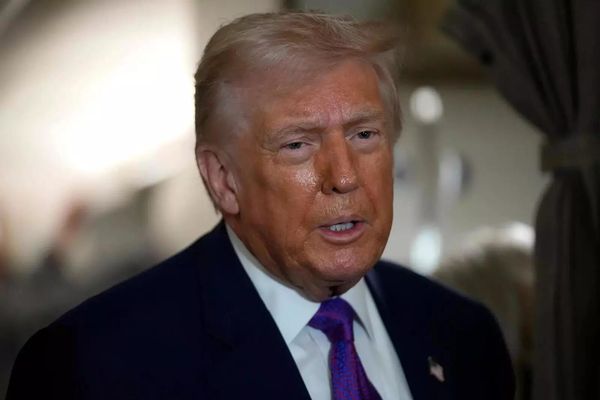
Donald Trump hails Brexit vote as a 'great thing'
The US presidential hopeful Donald Trump has said it is a “great thing” that the people of the UK have “taken back their country”.
He made the remarks as he touched down at his Trump Turnberry golf resort in Scotland. Interesting timing.
Updated
Our reporter on the ground in Germany, Kate Connolly, has sent this report of the reaction in Berlin:
Angela Merkel is meeting her party and parliamentary heads in the chancellery at 11.30am (10.30am UK time), for an emergency meeting to discuss the consequences of the UK’s Brexit vote. Various cabinet ministers are also expected to be present. She is due to deliver a statement an hour later..
Sigmar Gabriel, the head of Germany’s Social Democrats – the coalition partners in Angela Merkel’s government – said in an interview that the British vote does not signal a downfall, rather, “the chance for a new beginning.”
He called Brexit a “shrill wake up call” for European politicians. “Whoever fails to heed it or takes refuge in the usual rituals, will drive Europe against the wall,” he said.
Updated
The Plaid Cymru leader, Leanne Wood, has called it a “dark and uncertain morning.”
She said: “People in Wales and elsewhere in the UK have voted to leave the European Union – their will must be respected.

“The top priority now must be to secure political and economic stability for Wales and the rest of the United Kingdom.
“With Scotland voting to remain and a second independence referendum now on the cards, it is clear that the UK cannot continue in its current form. Wales, its economy and its communities will soon be at the full mercy of the Westminster elite and robust action must be taken to mitigate the impact of this.
“All the promises made by the eave campaign, with regards to safeguarding grants and financial support for Wales and our NHS must now be fully honoured, not only up to 2020 under current EU programmes, but beyond that into the future.
“Plaid Cymru will work to ensure that every penny and every key power that is handed down directly from Brussels comes to Wales.
“On this dark and uncertain morning for our country, people can rest assured that Plaid Cymru is united, confident and focused on getting the best for Wales. We are determined to do everything we can in order to empower our national institution and protect our communities.”
Updated

Here’s the full text of Cameron’s statement:
There can be no doubt about the result. Across the world, people have been watching the choice that Britain has made. I want to reassure those markets that Britain’s economy is fundametally strong. I would also reassure Brits in European countries and EU citizens living here that there will be no immediate changes in your circumstances. There will be no initial change in how we can travel, how our services and goods can move. we must now prepare for a negotiation with the EU. This will needed to involve the full participation of the Scottish, Welsh and Northern Irish governments to ensure all parts of our United Kingdom are protected and advanced.
Above all this will require strong, determined and committed leadership. I am proud and very honoured to have been the prime minister of this country for six years.
I have always believed we need to confront big decisions not duck them. I fought this campaign in the only way I know how, to say directly and passionately what I think and feel, head, heart and soul. I held nothing back. I was absolutely clear about my belief that Britain is stronger, safer and better off inside the EU. I made clear the referendum was about this and this along not the future of any single politician, including myself. But the British people made a different decision to take a different path. As such I think the country requires fresh leadership to take it in this direction. I will do everything I can as prime minister, to steady the ship in the weeks ahead, but I do not think it would be right for me to try to be the captain that steers our country to the next destination. This is not a decision I have taken lightly but I do think it is in the national interests to have a period of stability and then the new leadership required. In my view we should aim to have new prime minister by the start of the Conservative party conference in October, delivering stability will be in important and I will continue in post with my cabinet for the coming months. The cabinet will meet on Monday.
The negotiation with the European Union will need to take place under the next prime minister, and the new prime minister takes the decision about whether to trigger Article 50, the legal process of leaving the EU. I will attend the European Council next week to explain the decision the British people have taken and the decision I have taken.
I love this country and I feel honoured to have served it. And I will do everything I can in future to help this great country succeed.
The EU referendum turnout represents the the single highest UK-wide election turnout of the past two decades.
The final turnout was 72.2%, higher than any general referendum since 1997 but lower than that recorded in the Scottish independence referendum in 2014 when turnout reached 84.6%.
Below is a selection of voter turnout in selected general elections and the 2014 Scottish independence referendum.
Carney concluded his statement with this:
A few months ago the Bank judged that the risks around the referendum were the most significant near-term domestic risk to financial stability. To mitigate them, the Bank has put in place extensive contingency plans and these plans beginning with ensuring that the core of our financial system is well capitalised, is liquid and is strong ... All of these resources will support orderly market functioning in the face of any short term volatility.
The Bank will continue to consult and cooperate with all relevant domestic and international authorities, to ensure that the UK financial system can absorb any stresses and can do its job of concentrating of serving the real economy. That economy will adjust to new trading relationships that will be put in place over time. And it is these public and private decisions which will determine the UK’s longterm economic prospects. The best contributing we can make is to continue to pursue relentlessly our responsibilities for monetary and financial stability. We have taken all the necessary steps to prepare for today’s events and in the future we will not hesitate to take any additional measures required.
His words have only been of some help, according to our banking specialist Jill Treanor.
Carney's words don't appear to have done much to help bank shares, although FTSE losses at 4.8% compared with almost double that at the open
— Jill Treanor (@jilltreanor) June 24, 2016
Here’s the video of Mark Carney’s statement this morning.
More calming words from Carney:
The capital requirements of our largest banks are now 10 times higher than before the financial crisis. The Bank of England has stress-tested those banks against scenarios far more severe than our country currently faces. As a result of these actions UK banks have raised over £130bn of new capital and now have more than £600bn of high quality liquid assets. That substantial capital and huge liquidity gives banks the flexibility they need to continue to lend to UK businesses and households even during challenging times.
Moreover, as a backstop to support the functioning of the markets the Bank of England stands ready to provide more than £250bn of additional funds through its normal market operations. The Bank of England is also able to provide substantial liquidity in foreign currency if requires. We expect institutions to draw on this funding if and when appropriate.
Updated
Carney added:
It will take some time for the UK to establish a new relationship with Europe and the rest of the world. So some market and economic volatility can be expected as this process unfolds, but we are well prepared for this. Her Majesty’s Treasury and the Bank of England have engaged in extensive contingency planning and the chancellor and I have remained in close contact including through the night and this morning. The Bank of England will not hesitate to take additional measure as required, as markets adjust.
Mark Carney makes Bank of England statement on Brexit

Mark Carney, the governor of the Bank of England, is making a statement to try to reassure the markets. He says the Bank will “not hesitate” to steady the markets. Carney said it will make an extra £250bn available to the banks.
Updated
The recriminations in the Labour party continue. The former EU commissioner and Labour cabinet member Lord (Peter) Mandelson has accused Jeremy Corbyn of sending “muted” and “mixed messages” on the EU.

Speaking on Sky News, he said: “My feeling about the Labour party is that it is drifting without guide map, compass, or strong voice. The problem for Labour voters during this entire referendum is that most of the time, most of them did not know what the Labour party’s position was.”
Mandelson said that two weeks ago he warned Labour’s deputy leader Tom Watson and general secretary Iain McNichol that Labour supporters were not backing remain.
He said: “When they really set to and started galvanising the party in the way they did, we still had a situation where at best Jeremy Corbyn’s voice was curiously muted and when he did say anything there seemed to be mixed messages to Labour voters.”
Updated

The Liberal Democrat leader Tim Farron has said the result of the referendum left Cameron no choice but to resign.
“In this immediate period, the government must act quickly to steady the economy, reassure the markets, and immediately set a new course,” he said in a statement.
“Greater instability will lead to job uncertainty, falling investment, and greater pressure on public services. There is no doubt this is going to be an incredibly testing, difficult and fractious time.
“David Cameron has become the latest Conservative leader to fall victim to his party’s dangerous obsession with Europe. The Conservatives’ political manoeuvring have taken our country to the brink, and today we have toppled over the edge.”
Updated
You can listen to the full audio of Cameron’s resignation speech here.
Here is the key quote from Cameron, where he announces his resignation.
I was absolutely clear [in the referendum] about my belief that Britain is stronger, safer and better off inside the European Union. And I made clear the referendum was about this and this alone, not the future of any single politician, including myself.
But the British people have made a very clear decision to take a different path and as such I think the country requires fresh leadership to take it in this direction.
I will do everthing I can as prime minister to steady the ship over the coming weeks and months. But I do not think it would be right for me to try to be the captain that steers our country to its next destination.
This is not a decision I have taken lightly. But I do believe it’s in the national interest to have a period of stability and then the new leadership required.
There is no need for a precise timetable today. But in my view we should aim to have a new prime minister in place by the start of the Conservative party conference in October.

He says he thinks Britain can survive outside the EU, and find a way.
He says he loves this country, and has been honoured to serve it. He will do all he can to help it succeed.
Cameron announces he will resign as prime minister before the autumn
He says he is very proud of what he has done as prime minister.
He says he has always thought you have to confront big decisions, not duck them.
He formed a coalition, delivered a referendum in Scotland and gave the public a referendum on Europe.
He fought the referendum with head and heart.
The referendum was not about him, he says.
But the British people have decided to follow another path. So they need a new prime minister.
- Cameron says he will resign as prime minister.
- He will do what he can to “steady the ship”.
- He says he is not announcing a timetable today, but a new prime minister should be in place by the start of the Conservative conference.
- He says he thinks the new prime minister should decide when to trigger the article 50 renegotiation process. So he will not trigger it himself.
Updated
He says he would reassure markets and investors that the economy is fundamentally strong.
And he would reassure Britons living abroad, and EU nationals here, that there will be no immediate changes.
He says he will involved the governments of Scotland, Wales and Northern Ireland in the renegotiation.

Updated
Cameron says he wants to thank all those who took part in the campaign.
The will of the British people is an instruction that must be delivered.
He says it was not a decision that was taken lightly.
There can be no doubt about the result.
Cameron says the country has taken party in a giant democratic exercise.
All the people have had their say.
We should be proud of the fact that we trust the people, he says. There are times when it is right to ask the people.
This is from the Telegraph’s James Kirkup.
Best guess: Cameron resigns Tory leadership immediately but remains PM until a new party leader is chosen. Last contest took c3 months.
— James Kirkup (@jameskirkup) June 24, 2016
David Cameron's statement
David Cameron is about to deliver his statement outside Number 10.
Rumour suddenly gaining traction that Cameron to resign - not confirmed by any stretch
— Laura Kuenssberg (@bbclaurak) June 24, 2016
FTSE 100 and sterling plunge
Shares plunged and the pound plummeted to a 31-year low as panicked traders reacted to the UK’s vote to leave the EU and the prospect of recession amid months of market turmoil.
The FTSE 100 tumbled 530 points, or 8.4%, within the first few minutes of trading. That mirrored sharp losses for the pound overnight as investors sold sterling on the back of growing worries about the UK’s economic outlook.
Live Global markets plunge after UK votes to leave EU – live updatesShares are plunging, and sterling has crumbled to a 31-year low, after the leave campaign won a shock victory in the EU referendumRead more
In London, bank shares and housebuilders were among the worst hit with losses of as much as 40% for Taylor Wimpey and Berkeley Homes. Barclays was down by 30%.
Salmond says Scotland must now hold second independence referendum
Alex Salmond has said he believes Scotland must now stage a second independence referendum before the UK’s exit from the European Union is agreed – a timescale that suggests a new referendum within the next two years.
He said the Brexit vote, despite a large majority in Scotland in favour of the EU, is a material change in Scotland’s constitutional position. Salmond told BBC Radio Scotland: “This changes the whole context of Scottish independence.”
The former first minister and Scottish National party leader said his successor, Nicola Sturgeon, now had to implement her manifesto pledge to call for a second referendum if there was “a significant and material change in the circumstances that prevailed in 2014, such as Scotland being taken out of the EU against our will”.
Salmond said: “I’m quite certain that Nicola will start to implement that manifesto.”

His intervention implies that he expects Sturgeon to press for a quick second poll. She has been hesitant on the case for an immediate referendum because there is no clear or substantial support for it in recent opinion polls.
Sturgeon is due to make a statement in Edinburgh this morning. While insisting that her government is given a direct role in the UK government’s negotiations with the EU on exiting, the first minister could also demand that Westminster gives Holyrood the legal authority to stage a second referendum if it wants to.
An orchestrated move against Jeremy Corbyn appears to be under way as Labour’s shadow cabinet prepares to convene this morning. There are rumours of some of his MPs preparing to sign a motion of no confidence in him and some are calling for him to resign - anonymously at this stage.
The Labour leader gave a radio interview in which he said the main driver for the Brexit vote was economic instability.
But a number of Labour MPs are furious about what they see as his lacklustre campaigning for remain and refusal to acknowledge the party’s core supporters do not trust it to deal with their concerns about immigration.
One Labour MP said:
Corbyn has to go. The referendum proved he is worse than even his worse critics said he would be. Even people who supported him have seen he is not up to it. He can’t motivate Labour voters, let alone persuade anyone else. He can’t handle a campaign or even manage to get a message across in an interview. But it is not just that he is incompetent and not up to the job: he has no ideas beyond his vacuous slogans. He hasn’t set out a single serious policy since he became leader and the views he does have are diametrically opposed to the public’s.

Updated
The European council president, Donald Tusk, has promised “wider reflection” on the future of the union in the wake of Britain’s vote to leave, but suggested that Brexit could make the union stronger.

Speaking in Brussels, Tusk said: “I have offered the leaders an informal meeting of the 27 in the margins of the European council summit. And I will also propose to the leaders that we start a wider reflection on the future of our union.
“It is true that the past years have been the most difficult ones in the history of our union, but I always remember what my father used to tell me ‘what doesn’t kill you makes you stronger’.”
He added: “On behalf of the 27 leaders I can say that we determined to keep our unity as 27, for us the union is the framework for our common future. I would like to reassure you that there will be no legal vacuum. Until the United Kingdom formerly leaves the European Union, EU law will continue to apply to and within the UK. By this I mean rights as well as obligations. All the procedures for the withdrawal of the UK from the EU are clear and set out in the treaties.”
Updated
Here is the clip of Nigel Farage, the Ukip leader, saying he could not guarantee that an extra £350m a week would go to the NHS as a result of the UK leaving the EU. He told ITV that that was a promise from the Vote Leave campaign, not from him. He would not have made it, he said.
Updated
EU leaders are going to meet in Brussels next week without the UK present to decide their stance for the withdrawal negotiations, Sky’s Faisal Islam reports.
Informal meeting of EU 27 next week without PM in the room to decide common negotiating position vs UK on exit negotiations
— Faisal Islam (@faisalislam) June 24, 2016
The former cabinet secretary Gus O’Donnell has urged the government to delay invoking article 50 on leaving the EU. Speaking to BBC News, Lord O’Donnell, who led the civil service until 2011, also urged David Cameron to consider whether he is the right person to lead negotiations to exit the bloc.

He said: “On the political front we need to sort ourselves out to get a negotiating position …For example, when do we trigger article 50? If I were cabinet secretary I would be saying there is no great rush about that, because this is a two-year process – and believe me this is not a simple process. It was designed to make leaving very difficult for the leaving country … It took Greenland three years to sort out its exit and they only had one issue – fish – and rather fewer people than watch most football matches in Euro 2016.
On Cameron’s future, he added: “We need that negotiating position to be sorted out and the question is who is going to do that ... I think the prime minister will want to think about whether he is the right person to do that or whether he will want to say ‘look, the people have spoken, so I’m going to manage an orderly period where we will move on to a new set of people who might do this negotiation’. Who he leaves it to is a matter for the Conservative party.”
Corbyn says government should use article 50 to start EU withdrawal process now

Jeremy Corbyn, the Labour leader, tells the BBC he thinks the government must invoke article 50 of the Lisbon treaty now, to start the two-year withdrawal process from the EU.
There are some difficult days ahead, he says. We must do everything we can to protect jobs and working conditions.
Q: So why do you want to invoke article 50 now? Why rush?
Corbyn says negotiations must take place. We must get the best deal possible.
Q: It has been said you were half-hearted. He said your enthusiasm for the EU was only seven and a half out of 10.
Corbyn says he was making the point that there were problems with the EU that needed to be addressed.
Q: You said there could be no upper limit to immigration in this country. Many of your supporters probably think the opposite.
Corbyn says he was talking about single market rules.
Q: What is your policy on immigration?
Corbyn says Labour will have to develop one. It will apply to Europe as well as to the rest of the world. But it is important to recognise that immigrants have a lot to contribute.
Q: Many people voted to leave because they think immigration is too high.
Corbyn says that may be the case. But these communities need to be helped, through policies like a migration impact fund.
Q: Isn’t it the case that people are worried about the numbers?
Corbyn says the government is underfunding areas affected by immigration.
Q: What do you want the PM to do?
Corbyn says he hopes the PM will steady the pound. He says he needs to negotiate a good deal with the EU. After that, what Cameron does is up to him.
Updated
Farage says it is 'very difficult' to see how Cameron can stay on as PM
Nigel Farage, the Ukip leader, is on the Today programme now.
He says he thinks 23 June should become a national holiday. There are 183 other countries in the world that celebrate an independence day. Now we can become the 184th, he says.
He also says it is “very difficult” to see how David Cameron could stay on as prime minister.
The first thing we have to do is have a government that is committed to Brexit. That is absolutely key. I think it is very difficult for [Cameron] to stay on as prime minister given that he involved himself so heavily in the campaign, told us that dreadful things would happen to us if we were to leave, recession, threats of war and all the rest of it. I find it difficult to believe that he could become a Brexit prime minister. I might be wrong, but I doubt it.

Updated
David Cameron is due to give his statement from Downing Street at 8am, according to Sky. The stock market also opens at 8am, as usual, meaning that we will be able to see market reaction to what he says as he says it.
Official referendum results announced in Manchester - video
All the referendum results are now in. Here are the key figures.
Areas
Remain: 119
Leave: 263
Votes
Remain: 16,141,241 (48.11%)
Leave: 17,410,742 (51.89%)
Updated
Bank of England will take 'all necessary steps' to preserve monetary and financial stability
The Bank of England has issued a statement this morning:
The Bank of England is monitoring developments closely. It has undertaken extensive contingency planning and is working closely with HM Treasury, other domestic authorities and overseas central banks.
The Bank of England will take all necessary steps to meet its responsibilities for monetary and financial stability.
For full coverage of the business reaction to the referendum vote, do read our business live blog.
Updated
Here is the scene in Downing Street, where David Cameron is due to make a statement.
Waiting for the PM in Downing Street pic.twitter.com/Q35W8DrZuE
— Torcuil Crichton (@Torcuil) June 24, 2016
And this is from the Daily Mail’s Quentin Letts.
Atmosphere in Downing St like that before a funeral, media mourners arriving puffy-eyed, nodding to friends, steping with exaggerated care.
— Quentin Letts (@thequentinletts) June 24, 2016
Updated
The Labour leave campaigner Kate Hoey has urged the party’s leadership to address the “huge disconnect” it has with its supporters outside London, while insisting Jeremy Corbyn was not to blame the party’s problems.

She told BBC Radio 4’s Today programme: “There is this huge disconnect in Labour areas, the further out of London you get from the Labour leadership. A big discussion is going to have happen about what happens to our party if we are ever going to win these people back.
“I actually don’t think Jeremy is responsible for this at all, for the last 27 years he has been voting in the same way as I did, very much against the EU. When he became leader of the party I think he felt he had to keep the party together, but it was very clear that he didn’t want to campaign on this issue.
“There are people in my party who want to get rid of Jeremy whatever he had done. I don’t think this in itself will change the situation within the Labour party about our leader.”
But Hoey said Corbyn should have been more relaxed about Labour MPs campaigning for leave. “I think the Labour party should have had a clearer view that they were quite happy for people to be campaigning on both sides, and I’m disappointed that Jeremy didn’t take that view. Of course he was under huge pressure from the shadow cabinet who are on the whole 100% pro-EU, whereas outside London there is this huge difference which has not been reflected by our party and we are going to have to look at it.”
The FT’s Jim Pickard has more from the script that Labour MPs are being told to use this morning. It says that Labour is “far closer to the centre of gravity of the British public than other other political parties”. It also says Jeremy Corbyn is “uniquely placed” to represent the nation’s views because he is a “critical remainer”.
Here is some of the script that Labour MPs have been ordered to quote from on the airwaves today... pic.twitter.com/6gSjlMZgNC
— Jim Pickard (@PickardJE) June 24, 2016
In Labour circles this has attracted some criticism, according to Sky’s Tamara Cohen.
Labour source re Corbyn lines pic.twitter.com/m4J9EWkVp6
— Tamara Cohen (@tamcohen) June 24, 2016
Nicola Sturgeon, Scotland’s first minister, will now be gauging the strength of feeling among the Scottish National party’s most senior figures, particularly her predecessor Alex Salmond, on whether she should now call clearly for a second independence referendum or simply demand that this option is put on the table.
Salmond, by far the second-most influential SNP figure after Sturgeon, made clear a month ago he believes there is a powerful case for a quick second referendum within two years of an EU exit vote. He told the Victoria Derbyshire BBC referendum debate in late May a new referendum “would have to be [held] within the two-year period of the UK negotiating withdrawal; it would have to be.”
Many SNP activists will take heed of Salmond’s views. The question now is whether Salmond takes that position given the UK has voted to leave despite Scotland giving the largest pro-EU vote of any part of the UK.
The latest SNP manifesto on which it won a third successive Holyrood election said a Brexit vote would be the “material change” which could justify a second vote on Scotland’s constitutional future.
Sturgeon’s instinct will be to tread carefully since few recent Scottish opinion polls show a majority of voters want a second referendum even if there was a Brexit vote, and she also knows the Scottish economy is very fragile, making her government’s spending heavily reliant on UK support.
Some senior SNP figures believe they need polls showing consistent 60% support for independence before calling for one.
Updated
Oliver Holmes in Bangkok has rounded up some perspective from east Asia on the UK’s referendum result:
There has been little reaction to the UK’s Brexit vote so far from east Asian leaders, but the widely anticipated tumbles in global stock markets have already begun to play out.
A senior Bank of Thailand official told the Bangkok Post that Brexit would have minimal domestic impact, but could pose a long-term threat.
In the Philippines, newspapers were warning of the potential financial repercussions of the referendum result. Annual remittances from overseas Filipinos in the UK amount to more than £1bn, nearly 6%, of all money wired home by south-east Asian expats.
Hong Kong’s chief executive, Leung Chun-ying, said earlier this week that the city – home to about 600 British companies should brace itself for a large fallout following Brexit. “As a highly open and internationalised small economy in a globalised market, the impact on Hong Kong will be relatively large,” he said.
Updated
The FT’s Jim Pickard has a copy of the script that Labour MPs have been told to use when giving interviews overnight.
SCRIPT: Those poor Labour MPs...so many words to remember...so little time to mug up...this is one of many pages.... pic.twitter.com/rAQ1MEz94D
— Jim Pickard (@PickardJE) June 24, 2016
John Redwood, the pro-Brexit Tory, told ITV’s Good Morning Britain: “This has to be a Brexit government.” But he sidestepped questions about who he would like to see as prime minister.
Nigel Farage, the Ukip leader, has told ITV’s Good Morning Britain that he thought it was a mistake for the Vote Leave campaign to say that it could save £350m a week by leaving the EU and that the money could go to the NHS.


Frank-Walter Steinmeier, the German foreign minister, has said this is a sad day for Britain and for the EU.
FM #Steinmeier: The early morning news from #GreatBritain are truly sobering. It looks like a sad day for #Europe+the #UnitedKingdom. #UK 🇪🇺
— GermanForeignOffice (@GermanyDiplo) June 24, 2016
Reuters in Sydney has this reaction from Australia’s Malcolm Turnbull on Brexit.
Australia’s prime minister said on Friday he expects a period of uncertainty and some instability in global markets as Britain was on the verge of Brexit but the immediate impact on Australia will be limited.
‘The impact on Australia immediately, directly, from a legal point of view, will be very limited because it will take some years for the United Kingdom to leave the European Union, to negotiate an exit,’ he told reporters.
‘However, we’ve seen already large falls on stock markets and there will be a degree of uncertainty for some time.’
Updated
Green MP Caroline Lucas described the referendum result as heartbreaking and called for voting reform to allow the public to better express their anger.
Speaking to BBC News she said:
I think this is an absolutely devastating result. Personally, I feel pretty heartbroken. It has revealed massive divisions within our country. There is such levels of alienation and anger and frustration which is real wake up call to Westminster. We have got here basically people rebelling against 98% of MPs.
The anger that we are hearing from around the country actually was less to do with EU per se and more to do with a sense of just having been un-heard, un-listened to for so many years.
In a statement, she added:
We’re calling on all sides to come together to fix our democracy here in Britain – starting with electoral reform for the House of Commons. The democratic deficit will not be fixed by leaving the EU – we need to look closer to home too.
The prospect of shutting down the right to free movement is frightening, as are the consequences of a campaign that has at times pitted neighbours against one another, whipped up fear and allowed lies and myths to take the place of truth. Britain deserves better and I am pledging anew to fight against division on behalf of my constituents.
Updated
Marine Le Pen, the leader of France’s far-right Front National party, has welcomed the result of the referendum. She says she wants a similar referendum in France.
Victoire de la liberté ! Comme je le demande depuis des années, il faut maintenant le même référendum en France et dans les pays de l'UE MLP
— Marine Le Pen (@MLP_officiel) June 24, 2016
UK should leave EU within 2 years, says EPP chair
Manfred Weber, the chairman of the European People’s Party group of centre-right parties in the European parliament, has used Twitter to say that he thinks the UK should leave the EU within two years. The EPP is the biggest group in the parliament.
We respect and regret the decision of the British voters. It causes major damage to both sides. #Brexit 1/4
— Manfred Weber (@ManfredWeber) June 24, 2016
This was a British vote, not a European vote. Cooperation within Europe is a question of self-assertion of the continent #UKReferendum 2/4
— Manfred Weber (@ManfredWeber) June 24, 2016
We want a better and smarter #Europe. We have to convince the people and bring Europe back to them. @EPPGroup
— Manfred Weber (@ManfredWeber) June 24, 2016
Exit negotiations should be concluded within 2 years at max. There cannot be any special treatment. Leave means leave. #Brexit 4/4
— Manfred Weber (@ManfredWeber) June 24, 2016
Liam Fox, the Conservative former defence secretary, told the BBC it would be a mistake for David Cameron to invoke article 50 (the procedure that starts the two-year countdown to withdrawal) immediately. Cameron said he would do this immediately in the event of a Brexit vote during the campaign. But Fox said that that was a campaign promise that it would be best to ignore.
We are going to get a statement from David Cameron shortly, Sky’s Kay Burley says.
PM to make a statement shortly calling for stability and unity #EUref
— Kay Burley (@KayBurley) June 24, 2016
John McDonnell, the shadow chancellor, has urged the government to take steps to stablise the economy.
People will be waking up this morning to turmoil in the markets and the pound crashing, and fearing the emergency budget the chancellor threatened to hike their taxes and cut public services.
The government must now take steps to stabilise the economy, and to protect jobs, pensions and wages. Labour will not allow any instability to be paid for by the working people of this country.
Updated
Geert Wilders, a Dutch far-right politician, said on his website that Brexit has created a precedent for other European countries to exit the EU:
We want be in charge of our own country, our own money, our own borders, and our own immigration policy. If I become prime minister, there will be a referendum in the Netherlands on leaving the European Union as well. Let the Dutch people decide.
Hurrah for the British! Now it is our turn. Time for a Dutch referendum! #ByeByeEUhttps://t.co/kXZ0aQtgmx
— Geert Wilders (@geertwilderspvv) June 24, 2016
Leave campaign has officially passed the winning post in the EU referendum, the Press Association reports.
Updated
The chair of Vote Leave, Gisela Stuart, broke into her native German to reassure Europe that Britain would continue to be an “open” and welcoming society” despite the decision to leave the EU.
In a speech in Manchester, Stuart provided this translation:
What I have just said [in German] is to make clear to all our colleagues in Europe, that Britain is an open society, it is a welcoming society and we will be continuing to be cooperating with European countries on an international level.

She added:
This referendum has taken place against the backdropof all the might of institutions and of money. The people were given the impression that they had no choice but to remain, but they voted to leave. It is now incumbent on all of us to be very calm ... and work together.
It is our opportunity to take back control of democratic decisions but also an opportunity to renew some of those processes. Vote Leave has been a cross party organisation. I think what happens now also has to be a cross party effort, because we have a responsibility to act in the best long term interest of this country.”
JK Rowling has used Twitter to says that Daivd Cameron’s legacy will be “breaking up two unions”.
Scotland will seek independence now. Cameron's legacy will be breaking up two unions. Neither needed to happen. https://t.co/4MDj7pndcq
— J.K. Rowling (@jk_rowling) June 24, 2016
EU referendum: how Britain voted out
We take look back at how events unfolded on EU referendum night. From the moment polls closed at 10pm to Farage’s victorious speech in the early hours of the morning, watch to see how Britain voted to leave the European Union.
This is from the Spectator’s James Forsyth.
Looking at regional breakdown, clear 1 reason OUT won is that Remain didn’t really have any politicians who could speak to the working class
— James Forsyth (@JGForsyth) June 24, 2016
With over 90 % of the results reported, these are the areas that voted most in favour of leave or remain:
Top 10 leave
Boston – 75.6%
South Holland – 73.6%
Castle Point – 72.7%
Thurrock – 72.3%
Great Yarmouth – 71.5%
Fenland – 71.4%
Mansfield – 70.9%
Bolsover – 70.8%
North East Lincolnshire – 69.9%
Ashfield – 69.8%
Top 10 remain
Gibraltar – 95.9%
Lambeth – 78.6%
Hackney – 78.5%
Haringey – 75.6%
City of London – 75.3%
Islington – 75.2%
Wandsworth – 75.0%
Camden – 74.9%
Edinburgh – 74.4%
East Renfrewshire – 74.3%
LEave 300k votes shy of official winning line with 20 counting areas to go - over 1 million votes ahead
— Faisal Islam (@faisalislam) June 24, 2016
Paddy Ashdown wants David Cameron to stay as prime minister.
Please stay PM, said the pirates who took over the ship as they lead him down to the hold in chains.
— Paddy Ashdown (@paddyashdown) June 24, 2016
This is from Sky’s Faisal Islam.
Fall in sterling in past few hours says @EdConwaySky by 15 cents is now bigger than Black Wednesday - FTSe seen 6%+ down
— Faisal Islam (@faisalislam) June 24, 2016
Sinn Féin’s declaration that the British government has “forfeited any mandate” to represent the economic or political interests of Northern Ireland is a restatement of party policy.
Martin McGuinness, the Sinn Féin deputy first minister of Northern Ireland, has already called for a referendum on the region’s future within the UK in the event of a Brexit vote.
While the party might press the British government for such a vote, unionists will resist a so-called border poll. In addition, all the opinion polls on the issue of whether Northern Ireland exits the UK to join in a united Ireland indicate the majority would support maintaining the British link.
On Friday morning the party’s national chairman, Declan Kearney, said:
All the indications are that we are going to see English votes overturning the democratic will of people here in the north of Ireland. Republican and unionist, Catholic and Protestant people have voted in favour of remain.
The British government as a direct result have forfeited any mandate to represent the interests of people here in the north of Ireland in circumstances where the north is dragged out of Europe as a result of a vote to leave.
Leave campaigners across the country are celebrating the victory for their side:


This is from the BBC’s Laura Kuenssberg.
One source tells me Gove and Boris negotiating the terms of Cameron's departure - only one source
— Laura Kuenssberg (@bbclaurak) June 24, 2016
Different source says Boris and Gove haven't spoken to number 10 yet - deny suggestion deals being done
— Laura Kuenssberg (@bbclaurak) June 24, 2016
David Davis, a leave campaigner and Cameron’s opponent in the Tory party’s last leadership race, has backed calls for the prime minister to continue.
Speaking to Sky News he said:
What we need now is a sensible policy on negotiating our new relationship with the European Union and stability so we get on with that policy. So long as he appoints a sensible team and gives them the power to do it, I don’t see any threat to him at all.
One of the things about David Cameron is that he is a very tough cookie and he’s good at getting out of difficult scrapes and difficult corners. I actually think that in the country’s interest he should provide some stability while we do this negotiation, that’s the right thing to do.
He has got to put in place a team to do the negotiation, and that needs to start planning right away.
Asked if Cameron should appoint leading Brexiters Boris Johnson or Michael Gove to lead the negotiations, Davis said:
He should give it to someone committed to that aim, and those to people are certainly possibles in that category.
When you are going through a campaign like this it is very rough and tumble, things are said often that are maybe regretted later. Just as in the 2010 election you may remember Nick Clegg and David Cameron knocking seven bells out of each other, three days after the election they were gazing into each other’s eyes in the rose garden. We will come together as a party, we always have before, we will this time and actually put the interest of the country first, which means a new negotiation with the European Union and that’s the most important thing.
Asked if he backed an early election, Davis said:
No I don’t. I think the most important thing now is to deliver on the referendum. That will take two or three years to do, and you want a bit of time for that to bed in before your next election. We have just got enough time.
Updated
8 questions Cameron must address when he speaks to the nation
David Cameron is expected to address the nation this morning, and he may well be writing his speech now. Here are some of the questions he has to address.
1 - What will be done to calm the markets? With the pound in freefall, will the Bank of England intervene? There has even been talk of closing the stock market to stop panic selling of share. Cameron will have to say something to steady nerves.
2 - Will he remain as prime minister? No one expects him to leave Number 10 this morning, but does he really think he will be able to oversee the EU withdrawal process over the next few year? Perhaps he does. More likely, he will recognise that is unrealistic. In that case it is possible that he may announce his intention to stand down later this year, possibly before the Tory conference.
3 - Will he invoke article 50 of the Lisbon treaty immediately? This is the process that starts the two-year countdown to Brexit. Before the referendum Cameron said he would trigger article 50 straightaway, but there is no reason why he should and every reason to delay. It makes no sense to start the two-year clock running until the UK knows what it wants. He would be wise to clarify his intentions.
4 - Will parliament be recalled? There is a strong case for saying it should sit on Saturday, to allow the government to assure MPs that it has a plan before markets open again on Monday.
5 - Who will be in charge of the withdrawal negotiations? This begs the huge question as to what mandate will apply to those doing the negotiating. Will Cameron seek cross-party agreement? Will he take the Vote Leave programme as a manifesto he is bound to honour? For example, will the UK definitely withdraw from the single market?
6 - Will there be an emergency budget? George Osborne said an emergency budget would be necessary this summer. Does that still apply, or will Cameron write that off as campaign scaremongering?
7 - Will there be an election? There is a case for saying a new prime minister may need a mandate for the withdrawal negotiations – although there are probably very few people in Westminster with the appetite for another election now?
8 - Does Cameron accept that the Scots have the right to have a second independence referendum? During the campaign he said the 2014 referendum was supposed to last for a generation, but there were some moments during the campaign when he accepted that the Scots would have a case for demanding a second referendum if they voted to stay in the EU while the UK as a whole voted out. And that is what has happened. (See 5.32pm.)
Updated
Region by region voting figures
Here are the latest region by region voting figures.
They show that Scotland voted to stay in the EU by a large margin - even though the UK as a whole is voting out.
Eastern
After 43 results out of 47 in the EU referendum, running totals are:
Voting Total Share
areas votes %
Remain 1,273,544 - 43.24%
Leave 1,671,469 - 56.76%
East Midlands
After 32 results out of 40 in the EU referendum, running totals are:
Voting Total Share
areas votes %
Remain 798,353 - 41.56%
Leave 1,122,403 - 58.44%
London
After 29 results out of 33 in the EU referendum, running totals are:
Voting Total Share
areas votes
Remain 1,955,018 - 59.94%
Leave 1,306,503 - 40.06%
North-east
After 11 results out of 12 in the EU referendum, running totals are:
Voting Total Share
areas votes %
Remain 480,573 - 41.36%
Leave 681,404 - 58.64%
Northern Ireland
After one result out of one in the EU referendum, running totals are:
Voting Total Share
areas votes %
Remain 1 440,707 - 55.78%
Leave 0 349,442 - 44.22%
North-west
After 38 results out of 39 in the EU referendum, running totals are:
Voting Total Share
areas votes %
Remain 1,603,565 - 46.18%
Leave 1,868,843 - 53.82%
Scotland
After 32 results out of 32 in the EU referendum, running totals are:
Voting Total Share
areas votes %
Remain 1,661,191 - 62.00%
Leave 1,018,322 - 38.00%
South-east
After 58 results out of 67 in the EU referendum, running totals are:
Voting Total Share
areas votes %
Remain 1,937,512 - 47.71%
Leave 2,123,281 - 52.29%
South-west & Gibraltar
After 31 results out of 38 in the EU referendum, running totals are:
Voting Total Share
areas votes %
Remain 1,122,386 - 47.86%
Leave 1,222,974 - 52.14%
Wales
After 22 results out of 22 in the EU referendum, running totals are:
Voting Total Share
areas votes %
Remain 772,347 - 47.47%
Leave 854,572 - 52.53%
West Midlands
After 27 results out of 30 in the EU referendum, running totals are:
Voting Total Share
areas votes %
Remain 1,038,695 - 40.89%
Leave 1,501,474 - 59.11%
Yorkshire & The Humber
After 20 results out of 21 in the EU referendum, running totals are:
Voting Total Share
areas votes %
Remain 1,094,681 - 41.63%
Leave 1,534,954 - 58.37%
Updated
BREAKING: Sinn Fein says "British government has forfeited any mandate to represent economic or political interests of people in N Ireland"
— Marc Mallett (@MarcMallett_UTV) June 24, 2016
Patrick Harvie, the Scottish Green party co-leader, has signalled his party could support a second independence referendum if that was called for by Scotland’s first minister Nicola Sturgeon.

The Scottish Greens announced they had launched a public petition calling for Holyrood to “examine and exhaust every option for continuing Scotland’s close ties with Europe” – a move which would include staging a second vote.
Describing the Brexit campaign as “deceitful, manipulative and at times downright racist”, Harvie said it would damage the economy and tear up the many benefits of EU membership.
He said: “Scotland must keep open every option for protecting ourselves from this threat. The Scottish parliament and government must be represented in the negotiations about what comes next. A cross-party plan of action should be sought, so we can defend our rights as EU citizens.”
With the SNP two seats short of an overall majority at Holyrood, Sturgeon would need the six votes of the pro-independence Scottish Green party to win a Scottish parliament vote calling for a second referendum.
The Scottish Greens have previously said they would only back a second vote if 1 million voters called for one. Many observers believe Sturgeon will resist pressure to demand one until opinion polls show far stronger support for breaking away.
The Guardian’s Anushka Asthana says while there will be jubilation at the decision to leave the European Union, for many it will be a traumatic experience. She suggests there could be resignations by party leaders, a second independence referendum in Scotland and even a snap general election.
Northern Ireland has voted remain by a majority of 440,707 to 349,442 for Brexit on an overall turnout of 62.9%.
There were 11 Westminster constituencies with majorities in favour of remain while seven voted for Brexit. Only one solidly unionist constituency – North Down – had a remain majority.
The result will have massive ramifications not just for Northern Ireland but the entire island. The Brexit vote will raise questions about the Irish border. If border checks and controls come back this will enrage the nationalist population of Northern Ireland. It will also undoubtedly be a boon for Irish republican dissidents opposed to the peace process.
The republican hardliners will argue that the principles of freedom of movement on the island and the fact that Northern Ireland voted for remain are subject to an English electorate veto. They will contend that the connection with Britain and the power of England to threaten to reinforce the border through this vote undermines the Good Friday agreement.
Another casualty might be the power sharing executive’s demand for a low 12.5% corporation tax rate for the region. The Irish Republic has used its 12.5% corporation tax rate to attract global corporate giants from Apple to Google, creating hundreds of thousands of jobs. However, the multinationals’ decision to be in the Republic is also based on Ireland being an English-speaking nation inside the EU.
As the Irish Nobel laureate WB Yeats put it, albeit about another momentous event 100 years ago, the 1916 Rising, all is changed utterly on the island of Ireland.
Tory rebel and Brexiter Andrew Bridgen, who had called for a new Tory leader and a general election before Christmas, has called on David Cameron to stay to “stabilise the situation”.

Speaking to BBC Radio 4, Bridgen said:
Will it be in the interest of the country for the prime minister to resign this morning? I don’t think so. Given all the volatility at the moment I think we can give the prime minister a little breathing space.
Asked whether he would carry out his threat of a no confidence vote in the prime minister, Bridgen said:
I don’t think it will come to that. The prime minister will consider what the people have said, I think he will act in the interest of the country. Short term he is going to need to get a grip, reshuffle his cabinet and address the pressing issues of Scotland, Northern Ireland and the financial markets, where there is going to be some short-term volatility.
Asked how long Cameron should stay, Bridgen said:
That will depend on how long it takes to stabilise the situation and move forward. He has politically exposed himself immensely in this campaign. I think he has been very badly advised, I think he has underestimated the level of support for leave within the parliamentary party, within the wider party and ultimately within the country. I wish the prime minister had stayed above this and been a little more impartial.

As the results unfolded were there any metrics that could help predict whether an area was likely to vote leave or remain? We’ve taken six key measures for each voting area and mapped them against the results.
With the over two-thirds of the counting areas reporting a result the strongest predictor of how an area would vote is the education level of the residents. So far the results indicate that greater the proportion of residents with a higher education, the more likely a local authority was to vote remain.
This is from ITV’s Allegra Stratton.
Am being told that Cameron and Osborne are finished. There will be a "dignified exit" say senior Tories. "Not immediate".
— Allegra Stratton (@ITVAllegra) June 24, 2016
Andy Coulson, David Cameron’s former communications chief, has just told ITV that he thinks Cameron will be pondering his resignation.
Andy Coulson on set w @tombradby saying he thinks the PM "pondering his future". He thinks he should stay, "no time for a novice" #ITVEURef
— Allegra Stratton (@ITVAllegra) June 24, 2016
There’s a state of shock in the City this morning, as investors digest the news that Britain appears to have voted to leave the European Union.
Markets had rallied yesterday on expectations that the remain side would win, so traders are now facing the prospect of a huge selloff this morning.
Over on IG’s trading floor, chief market analyst Chris Beauchamp says:
We’re seeing an unraveling of positions now that clearly shows that financial markets were heavily weighted one side. The financial markets looked at the polls and the betting markets – all the information available.
They suggested it would be close but history suggests that undecideds tend to go with the status quo. We’re now seeing highly volatile financial markets. We’ve had the worst night for the pound since the financial crisis.
Updated
Commenting on the result of the EU referendum in Scotland, Nicola Sturgeon said:
Scotland has delivered a strong, unequivocal vote to remain in the EU, and I welcome that endorsement of our European status. And while the overall result remains to be declared, the vote here makes clear that the people of Scotland see their future as part of the European Union.
Scotland has contributed significantly to the remain vote across the UK. That reflects the positive campaign the SNP fought, which highlighted the gains and benefits of our EU membership, and people across Scotland have responded to that positive message. We await the final UK-wide result, but Scotland has spoken – and spoken decisively.
A Canadian MP is urging the Canadian government to prioritise a UK-Canada trade deal.
Canada should immediately demonstrate respect for the choice made by the British people, & prioritize negotiation of Canada-UK free trade.
— Jason Kenney (@jkenney) June 24, 2016
Asian stock markets are already being routed, as traders watch events unfold in the UK.
Japan’s Nikkei index has slumped by 7%, a loss of over 1,100 points. That is its worst one-day fall since March 2011, when Fukushima was hit by a devastating earthquake that trigged a tsunami and a nuclear disaster.

We’ve had 319 out of 382 results in now. Here are the figures.
Areas
Remain: 102
Leave: 217
Votes
Remain: 12,991,972 (48.4%)
Leave: 13,842,109 (51.6%)
Stephen Crabb, the work and pensions secretary, has said the government failed to get its message across to the white working class.
I just think there is a disconnect with the white working class. We didn’t get our core messages across to them.
When we tried to explain to them just how important the European single market was to their jobs, their livelihoods, we didn’t quite land those messages successfully.
And I think that is one of the themes that is emerging this evening is that old industrial white working-class areas clearly haven’t bought the message that we have tried hard to communicate.
He also said it was “absolutely essential” that Cameron remains as prime minister.
There isn’t anybody else around the cabinet table or outside the cabinet, for that matter, or in any of the other political parties who can give this country the kind of leadership skills and abilities that David Cameron can at this, what is going to be very challenging weeks and months for the country.
Updated
Chuka Umunna, the London Labour MP, said that the referendum result highlighted “particular issues” for the Labour Party adding:
I don’t actually think for a lot of our supporters and voters sovereignty was quite the issue that immigration became. Why did it become such an overwhelming issue in spite of all the warnings of the experts? A lot of people said that you are saying this about the economy but we don’t actually feel we have a lot from that economy for the moment.
BBC says leave has won
The BBC has also called it for leave.
They are forecasting a four-point leave victory, 52% to 48%.
We're calling it - We're out
— Laura Kuenssberg (@bbclaurak) June 24, 2016
Updated
ITV says leave have won
ITV are calling it for leave.
ITV CALLS LEAVE WIN#EUref #Brexit
— NCP EU Referendum (@NCPoliticsEU) June 24, 2016
Only Robert Peston, ITV’s political editor, got his tweet wrong.
ITV News calls Remain victory by 52% to 48%. It's done.
— Robert Peston (@Peston) June 24, 2016
(It’s been a long night.)
Liam Fox, the former defence secretary and leave campaigner, says David Cameron has a duty to stay on as prime minister to see Britain through the “turbulence” that a vote to leave the EU will bring.
Speaking to Sky News he also suggested Ukip should now disband. On the the prime minister’s future Fox said:
I think he should stay because there is clearly going to be some short-term turbulence, we have seen that in the markets tonight, although one might ask why they weren’t better prepared for the possibility of a Brexit vote. As the prime minister that gave us the referendum he is best placed to see us through. As prime minister of the coalition he showed that he had the skills to be able keep very disparate groups together.
That’s a prime minister who understands the sense of duty of taking the thing through to its conclusion. It would be quite wrong, and against his character, just to say, ‘I lost the referendum therefore I’m going.’ There’s a duty to take that process through to a logical conclusion. I hope that’s what we do.
On Ukip, Fox said:
What Ukip does now is up to them. Most rational people would say, ‘They have actually served their purpose. They set out to have a referendum and to get Britain to leave the European Union. That has been fulfilled. What’s the point of Ukip in the future? Every voter should be asking their member of parliament, ‘Will you stand by the verdict of the British people?’ Because that is what a democracy is.
Leave set to win with 52%, according to latest Sky forecast
Here is the lastest forecast from Michael Thrasher, the psephologist who is doing the numbers for Sky.
LAtest MIchael Thrasher forecast model - Leave lead trimmed... 52% Leave - 48% Remain
— Faisal Islam (@faisalislam) June 24, 2016
Prof. Michael Thrasher says on Sky News that there is now a 70-80% change of the United Kingdom voting to Leave.
— Britain Elects (@britainelects) June 24, 2016
Updated
Chuka Umunna, the London Labour MP, hit back at the language being used by Nigel Farage in his victory speech (see 4.16am), telling the BBC:
When [Farage] gets up and says this is a victory for decent, for honest, real ordinary people, that tends to suggest that all the people who have just voted for us to stay don’t fit into that category.
The challenge for us as policymakers is how do we knit together our society after that division.
Updated
In Wales 21 of 22 results have been declared – 17 for leave, four for remain. Running totals in Wales are 52.9% for leave and 47.1% for remain. Only Gwynedd to go. Wales is very much out.
Julie Morgan, Labour assembly member for Cardiff North and the wife of former first minister Rhodri Morgan, welcomed a win for remain in the capital. But she said her party needed to analyse why its heartland seats in the valleys and in cities like Swansea and Newport had voted to leave.
Massive losses expected when London stock market opens
City traders are bracing for a massive selloff when the London stock market opens at 8am.
The futures market is indicating that the FTSE 100 index of blue-chip shares will plunge by 480 points, a drop of around 7.5%.
That would wipe around £120bn off the Footsie, which is home to many of Britain’s biggest companies.

You can track it on IG’s website.
Shares in banking giant HSBC have already plunged by 8% in Hong Kong (its shares are listed there, and in London).
Here are some more results.
South Staffordshire
Remain 23,444 (35.15%)
Leave 43,248 (64.85%)
Leave maj 19,804 (29.69%)
Electorate 85,788; Turnout 66,692 (77.74%)
Lancaster
Remain 35,732 (48.92%)
Leave 37,309 (51.08%)
Leave maj 1,577 (2.16%)
Electorate 100,554; Turnout 73,041 (72.64%)
Newark and Sherwood
Remain 26,571 (39.61%)
Leave 40,516 (60.39%)
Leave maj 13,945 (20.79%)
Electorate 87,322; Turnout 67,087 (76.83%)
South Holland
Remain 26,571 (39.61%)
Leave 40,516 (60.39%)
Leave maj 13,945 (20.79%)
Electorate 87,322; Turnout 67,087 (76.83%)
Plymouth
Remain 53,458 (40.06%)
Leave 79,997 (59.94%)
Leave maj 26,539 (19.89%)
Electorate 186,980; Turnout 133,455 (71.37%)
Blackburn with Darwen
Remain 28,522 (43.66%)
Leave 36,799 (56.34%)
Leave maj 8,277 (12.67%)
Electorate 100,116; Turnout 65,321 (65.25%)
Tunbridge Wells
Remain 35,676 (54.86%)
Leave 29,350 (45.14%)
Remain maj 6,326 (9.73%)
Electorate 82,178; Turnout 65,026 (79.13%)
Rushcliffe
Remain 40,522 (57.55%)
Leave 29,888 (42.45%)
Remain maj 10,634 (15.10%)
Electorate 86,397; Turnout 70,410 (81.50%)
Hambleton
Remain 25,480 (46.34%)
Leave 29,502 (53.66%)
Leave maj 4,022 (7.32%)
Electorate 70,139; Turnout 54,982 (78.39%)
Gravesham
Remain 18,876 (34.62%)
Leave 35,643 (65.38%)
Leave maj 16,767 (30.75%)
Electorate 72,801; Turnout 54,519 (74.89%)
Bristol voted strongly for staying in the EU, with remain getting more than 53,000 votes more than the leave camp.
In total, remain got 141,027 votes, more than 62% of the total cast, and leave 87,418. Sources in the leave camp say they were facing an uphill struggle as the city had been strongly leaning left, with the Greens campaigning hard. They also point out that the new mayor, Marvin Rees, had energised Labour voters. Remain supporters cheered the declaration but most left promptly – stunned by the nationwide results.
#bristol votes remain by 141027 leave 87418 pic.twitter.com/0hhYpU6G5f
— Randeep Ramesh (@tianran) June 24, 2016
Farage welcomes 'victory for decent people'
This is what Nigel Farage said to his supporters. Just as he appeared to concede defeat prematurely at the start of the evening, he is now effectively declaring victory.
If the predications now are right this will be a victory for real people, a victory for ordinary people, a victory for decent people. We have fought against the multinationals, against the big merchant banks, against big politics, against lies against lies, corruption and deceit and today honesty and decency and belief in nation I think now is going to win.
We will have done it without having to fight, without a single bullet having been fired.
I hope this victory brings down this failed projects and brings us to a Europe of sovereign nation states trading together.
Let’s June the 23rd go down in our history as our independence day.
Updated
The SNP’s Westminster leader, Angus Robertson, has told ITV news that the scenario whereby Scotland votes to remain but the rest of UK opts for Brexit will trigger a “constitutional crisis”.

And with all but two results now declared in Scotland – with remain so far winning in 30 of 32 council areas across the country – it is painfully obvious that the constituent parts of the UK have voted in very different directions.
Granted, the remain vote in Scotland has not been decisive across the country: in Moray, for example, remain scraped through with 50.1%. But this is precisely the scenario that Nicola Sturgeon has been warning of since the EU referendum was first tabled: Scotland being “dragged out of the EU against its will”.
The SNP’s manifesto was clear: this scenario represents a “material change” in circumstances that could trigger a second independence referendum.

In her interview with the Guardian earlier this week, Sturgeon set out the next steps:
If there’s a leave vote … then there will be things I’ll want to do very quickly to assert our ability to have a direct voice both with the UK government and with Europe.
But also our manifesto was very clear that the Scottish parliament should in these circumstances have the right to propose another referendum. Even if we don’t take the decision straightaway that it’s definitely happening in a particular timescale we’ll have to start doing certain things to keep that option open. It takes time to legislate for a referendum. So it’s going to be really important to make sure that every option that is available to Scotland to protect our position is kept open.
In his address to supporters Nigel Farage said he and his supporters had taken back control of the country “without a shot being fired”. In the light of the killing of Jo Cox, this went down particularly badly in the remain camp, according to journalists.
This is from the Independent’s Jon Stone.
Absolute silence at Remain party as Nigel Farage comes on TV. Shouts of anger when he starts talking about 'victory for real people'
— Jon Stone (@joncstone) June 24, 2016
And this is from the BBC’s James Landale.
Shouts of "shame" & "that's disgusting" at Remain party when Nigel Farage said Leave had won the #euref "without a shot being fired"
— James Landale (@BBCJLandale) June 24, 2016
Updated
Resounding win for leave in the Tendring area – which includes Clacton – with only 25,210 voting to remain, while 57,437 voted to get out of Europe.
Chris Griffiths, a councillor for the Conservatives, said it was turning into a great night. He said:
The people have spoken and they’re saying it’s time to leave. There’s a lot of anger and disaffection in the area – they are fed up with Europe.
Ukip councillor Richard Everett said that Vote Leave had been very successful in getting out the vote:
We’ve done a much better job in our areas. I’ve been very pleased with this evening.
Updated
This is from Sky’s Roddy Mansfield.
Leave breaks through the 500,000 vote advantage over Remain.
— Roddy Mansfield (@roddymansfield) June 24, 2016
Sterling dollar over the last 30 years .... pic.twitter.com/fFd7kUgzJG
— Jill Treanor (@jilltreanor) June 24, 2016
"We are through 35" says Jeremy Cook at World First. The lowest since 1985. Happens as Nigel Farage appears on TV
— Jill Treanor (@jilltreanor) June 24, 2016
By 4am, a series of key results had signposted how a victory for leave lay ahead.
After a lower than expected margin of victory for the remain campaign in Newcastle, where it won the backing of 54% of voters, there was a jolt after midnight when leave captured Sunderland with 61.3% of the vote in a city which has traditionally been a labour stronghold.
There was continued joy at leave parties during the night as swing areas across England delivered wins, often of a much larger magnitude than forecast.
The beginning declarations in some larger areas of London saw what was a fleeting piece of good news for remain as the south London district of Wandsworth delivered 118,463 votes for remaining in the EU.
But it was short-lived as traditional election marginals backed leave. Nuneaton, a central English town seen as a bellwether of “middle England” opinion, delivered a 66% vote for leave.

In Wales, too, leave were dominant where at least 18 of the 22 Welsh authorities had declared. Only three – the Vale of Glamorgan in the south, Monmouthshire in the south-east and Ceredigion in west Wales – had voted to remain.
As expected, remain won out in Scotland, although margins of victory and turnouts fell short of what was needed to stop the leave juggernaut in the south.
Nigel Farage is addressing supporters. He says he expects leave to win.
Dawn is breaking on an independent United Kingdom ... This will be a victory for ordinary people.
He declares June 23 “our independence day”.
Updated
As John Rentoul points out, we may well end up with an emergency Commons sitting on Saturday.
I'm in shock. David Cameron's gamble has failed. His career is over. Will the Commons sit on Saturday? Is Boris Johnson really up to it?
— John Rentoul (@JohnRentoul) June 24, 2016
(It would be the second recall in a week, which may be unprecedented.)
There are 217 results in now, out of 382. Here are the latest numbers.
Areas
Remain: 69
Leave: 148
Votes
Remain: 8,042,118 (48.5%)
Leave: 8,544,442 (51.5%)
With 217 #EUref results in, here are the figures - Stronger, safer, better off 8,042,118 (48.5%) / Take back control 8,544,442 (51.5%)
— AndrewSparrow (@AndrewSparrow) June 24, 2016
Here is Edinburgh announcing it has voted remain …
… while Chelmsford returned a majority vote to leave.
The Specator’s James Forsyth thinks we may have a general election before too long.
I suspect we might well see a general election before Article 50 is invoked; whoever the PM is seeking a mandate for the planned terms
— James Forsyth (@JGForsyth) June 24, 2016
Will the Bank of England intervene in the currency markets? Or perhaps cut interest rates? One former member of the Bank’s monetary policy committee thinks the Bank will have to act:
GBP down to $1.37 presume MPC members been contacted only question what time they will meet and will they cut by 25bp or 50bp
— Danny Blanchflower (@D_Blanchflower) June 24, 2016
"Sterling is in free fall at the moment, from the optimism at 10.20pm the pound is now 10% lower," said Jeremy Cook at World First
— Jill Treanor (@jilltreanor) June 24, 2016
"It looks like its goose is cooked," says Jeremy Cook, talking about the pound
— Jill Treanor (@jilltreanor) June 24, 2016
The Conservative MP Jacob Rees-Mogg told the BBC that, if there is a recession, it won’t be because of Brexit.
There will be no recession because of Brexit, though there are fragile economic conditions in other parts of the world. I can’t say no recession ever, but not caused by Brexit specifically.
Remain source says it looks 'very tough from here'
— Laura Kuenssberg (@bbclaurak) June 24, 2016
Cameron will have to resign if Britain votes for Brexit, says Benn
Hilary Benn, the shadow foreign secretary, has said David Cameron will have to resign if the UK votes to leave.
If there were to be a vote to Leave, then as far as the Prime Minister is concerned I don’t see how he is going to remain in his job for very long at all.
I think it’s very hard for him in those circumstances to remain. If you are the prime minister, you’ve called this referendum, you’ve laid your reputation on the line and your arguments, I think it’s going to be very hard.
Ian Paisley Jr, the North Antrim MP, has predicted that a Brexit vote would increase the Democratic Unionist party’s influence in the House of Commons due to the likely chaos within the Tory ranks.
Paisley, whose firebrand father Ian represented the constituency for decades, said if some Tory MPs withdraw their support for the government, “this is where the DUP will come in and be more influential. It means we can extract more for Northern Ireland with our 8 MPs.”
Overall it appears that Northern Ireland – unlike Wales a pro-remain region, with at least around 56% of the electorate voting to stay in the EU.
Sterling's 8% fall is biggest ever one-day move
The pound is now down 8% at $1.36, its biggest ever one-day move (it swung by 7% in 2008).
The falls have accelerated as Sheffield unexpectedly backed leave and ITV put an 80% chance on leave winning the vote.
Updated
After 167 results, out of 382, here are the latest figures.
It is the vote figures that count.
Areas
Remain: 51
Leave: 116
Votes
Remain: 5,846,811 (48.5%)
Leave: 6,199,790 (51.5%)
After 167 #EUref results - Heath 5,846,811 (48.5%) / Thatcher 6,199,790 (51.5%)
— AndrewSparrow (@AndrewSparrow) June 24, 2016
Eighteen of the 22 Welsh authorities have now declared. Only three – the Vale of Glamorgan in the south, Monmouthshire in the south-east and Ceredigion in west Wales – have voted to remain, the rest are for leave.
In places like the south Wales valleys (traditional Labour heartlands), leave is sweeping the board. Cardiff is expected to vote to stay but it’s been a miserable night in Wales for the remain campaign. Ironically, some of the places that have received the most EU funding over the years because of their economic problems have voted most strongly to leave.
Remain campaigners seeing it as a protest against the establishment, against austerity rather than a positive mood. The steel crisis and fears over immigration can’t have helped.

Updated
And here is Nigel Farage on the Sheffield result.
Sheffield votes to Leave EU. Amazing stuff. Delighted.
— Nigel Farage (@Nigel_Farage) June 24, 2016
Updated
This is from the academic Matthew Goodwin.
Sheffield is 51% Leave. It was predicted to go Remain on 52% #euref
— Matthew Goodwin (@GoodwinMJ) June 24, 2016
And this is from the Spectator’s James Forsyth.
Am told ecstasy in Vote Leave office as Sheffield result came through, they think this really might be on
— James Forsyth (@JGForsyth) June 24, 2016
Sheffield result feels very significant, Remain are going to need mega blow outs in London to pull this out of the fire
— James Forsyth (@JGForsyth) June 24, 2016
Updated
Pound falls 6%
The pound has hit a new low for the night at $1.3879, down 6%.
Sterling is very volatile, said Jeremy Cook of World First, whose colleagues are starting to stream into the office. The mood is sober. The largest cause for the downswing in the pound is a prediction by ITV of a 75% chance of the UK leaving the EU.

Labour party 'working to assumption leave will win'
The Labour party is now working on the assumption that leave will win, according to a party source. The view in Labour HQ is that, if Britain does vote to leave, Jeremy Corbyn should call on David Cameron to resign, but senior figures believe that that may prove unnecessary because Cameron may announce his departure of his own accord.

Updated
The market volatility continues:
We're back down again... pic.twitter.com/TxsgkeNdL6
— Jamie Nimmo (@JamieNimmo63) June 24, 2016
Leave's lead grows to 176,888 and GBPUSD resumes it's slide, back down to 1.4225 from 1.4500 half an hour ago.
— City Index (@CityIndex) June 24, 2016
Curtice not calling it, BUT says Leave now are favourites
— Laura Kuenssberg (@bbclaurak) June 24, 2016
Asked if he thought David Cameron should stay as prime minister if leave win, the veteran Conservative Eurosceptic Sir Bill Cash tells the BBC whoever is prime minister will have to be “completely committed to Brexit”. He says that is vital because the EU withdrawal negotiations will have to led by No 10.
Updated
This is from Peter Murrell, the SNP’s chief executive.
02h50: Remain now has over 1 million votes in Scotland. With just 8 results to go, the map is turning bright yellow pic.twitter.com/clL4W8iqLE
— Peter Murrell (@PeterMurrell) June 24, 2016
Peter Kellner, the former YouGov president who was predicting a remain win (see 10.15pm), has changed his mind.
Seems we are heading for result bad for UK, bad for pollsters and (least important) embarrassing for me
— Peter Kellner (@PeterKellner1) June 24, 2016
Updated
Here is another slab of results.
Lincoln
Remain 18,902 (43.06%)
Leave 24,992 (56.94%)
Leave maj 6,090 (13.87%)
Electorate 63,336; Turnout 43,894 (69.30%)
Ribble Valley
Remain 15,892 (43.61%)
Leave 20,550 (56.39%)
Leave maj 4,658 (12.78%)
Electorate 46,139; Turnout 36,442 (78.98%)
Rugby
Remain 25,350 (43.30%)
Leave 33,199 (56.70%)
Leave maj 7,849 (13.41%)
Electorate 74,127; Turnout 58,549 (78.98%)
Hertsmere
Remain 27,593 (49.16%)
Leave 28,532 (50.84%)
Leave maj 939 (1.67%)
Electorate 73,284; Turnout 56,125 (76.59%)
Liverpool
Remain 118,453 (58.19%)
Leave 85,101 (41.81%)
Remain maj 33,352 (16.38%)
Electorate 317,901; Turnout 203,554 (64.03%)
Rhondda Cynon Taf
Remain 53,973 (46.30%)
Leave 62,590 (53.70%)
Leave maj 8,617 (7.39%)
Electorate 172,877; Turnout 116,563 (67.43%)
Ceredigion
Remain 21,711 (54.63%)
Leave 18,031 (45.37%)
Remain maj 3,680 (9.26%)
Electorate 54,464; Turnout 39,742 (72.97%)
Wyre Forest
Remain 21,240 (36.85%)
Leave 36,392 (63.15%)
Leave maj 15,152 (26.29%)
Electorate 77,875; Turnout 57,632 (74.01%)
Malvern Hills
Remain 22,203 (46.75%)
Leave 25,294 (53.25%)
Leave maj 3,091 (6.51%)
Electorate 60,215; Turnout 47,497 (78.88%)
North Ayrshire
Remain 38,394 (56.88%)
Leave 29,110 (43.12%)
Remain maj 9,284 (13.75%)
Electorate 104,570; Turnout 67,504 (64.55%)
North East Lincolnshire
Remain 23,797 (30.13%)
Leave 55,185 (69.87%)
Leave maj 31,388 (39.74%)
Electorate 116,294; Turnout 78,982 (67.92%)
Watford
Remain 23,167 (49.73%)
Leave 23,419 (50.27%)
Leave maj 252 (0.54%)
Electorate 65,048; Turnout 46,586 (71.62%)
Updated
Henry McDonald has sent this from Belfast:
Nathan Anderson is a 26-year-old MA politics student at Queen’s University Belfast and a Democratic Unionist councillor.

Unlike a majority of his contemporaries in his age group, he is strongly in favour of Brexit.
He said: “As part of my MA I have been studying the EU and it has made me more Eurosceptical. The EU commission is wholly unelected and it makes the laws. That is why I will be delighted if its a Brexit result today.”
Updated
The Guardian’s Dan Milmo talks us through the volatility in the financial markets with the results coming in for the European Union referendum.
John Mann, one of the few Labour MPs to vote for Brexit, has just told the BBC that Labour voters have “decisively voted to leave the European Union”.
We’ve had 84 results in now, and remain are back on the lead - but only just.
Here are the figures. The vote ones are the ones that count.
Areas
Remain: 34
Leave: 50
Votes
Remain: 2,877,575 (50.01%)
Leave: 2,876,697 (49.99%)
84 #EUref results in - Experts 2,877,575 (50.01%) / Bloke in the pub 2,876,697 (49.99%)
— AndrewSparrow (@AndrewSparrow) June 24, 2016
Wandsworth has voted for remain by a thumping 75-25 majority on a 72% turnout. There were 118,463 votes for remain and 39,421 for leave.
The borough was a remain stronghold so victory was assured. The only issue was the margin of victory. After the disappointments of Sunderland and Newcastle, Wandsworth will come as a fillip for the remain camp, although the result can only reinforce the impression of a deep divisions in the country.
Wandsworth result now in; 118,463 remain, 39,421 leave #EURefResults pic.twitter.com/AuYJ2FLTiG
— Wandsworth Council (@wandbc) June 24, 2016
Jane Ellison, the Conservative MP for Battersea, was delighted but expressed concern over what seemed to be a developing north-south divide.
She said: “Whatever the outcome, it is obvious there are very different concerns and where we stand in the world, and we need to address that. All you can do is do your best in your own patch.”
During the count, Justine Greening, the Conservative MP for Putney and international development secretary, said the gap between remain and leave was bigger than she had anticipated.
“That seems much more categorical than I expected,” she told the Guardian. It’s a combination of London being more international and the immigration debate really jarring [with] people.”
On whether the death of Labour MP Jo Cox had been a factor, Greening said: “It made people sit up and think and the vote was their first chance people had to show how they felt.”
Rosena Allin-Khan, the newly Labour MP for Tooting, also campaigned for remain in a cross-party effort. She said she found some confusion among remain voters because the government had been so “woefully divided”.
Leanne Wood, the Plaid Cymru leader, said at the count in Cardiff that the results show David Cameron was wrong to hold the referendum so soon after the Welsh elections.
We warned the prime minister very early on that the date was too close to the Welsh and Scottish elections and that it would cause problems. In Wales we saw the election of a large number of Ukip AMs with all of this as background noise. If it the result ends up being leave for Wales, it exonerates our position on the issue of timing.
The Ukip MEP Paul Nuttall has told Sky News that Ukip will do well whatever happens.
Win or lose this referendum Ukip is in a very, very good position. If we win this referendum then Ukip should get the plaudits ...
If we lose, and it is only going to be very tight, the SNP have done quite well out of losing a tight referendum. Anger is a very powerful emotion in politics and people, I think, will come to Ukip in their droves.
Here’s more on the Asian markets:
After opening slightly up, the Nikkei benchmark index in Tokyo fell by 2.9% mid-morning as early referendum results filtered through from the UK. The Nikkei has since mounted a steady recovery, but there is little doubt that investors are nervous about the possibility of a Brexit win and the instability that would bring to the British and European economies. In a volatile start to trading that is expected to continue for most of the day, MSCI’s broadest index of Asia-Pacific shares outside Japan slipped 1.3%, while Australia fell 2% and South Korea 1.2%.
The Hang Seng is currently down 0.48%.
John McDonnell, the shadow chancellor, has told BBC that he expects the Bank of England to intervene in the morning to protect sterling.
That is exactly the sort of shock we were expecting so I would expect the Bank of England to intervene in the morning.
Chancellors and shadow chancellors can’t comment on sterling but what we can do is have a mature approach to this and say whatever the outcome, we will negotiate the best deal we possibly can with regard to our trading partners in Europe and in that way we might give some assurances to the market.
Updated
As expected, Oxford came in powerfully for remain with a 71% vote – nearly 50,000 out of 70,000 in total.
Remain benefited by running up huge votes in the wealthier areas like Summertown, outweighing a closer result in Labour-voting working-class areas such as Rose Hill and Blackbird Leys.
Andrew Smith, the veteran Labour MP for Oxford East, which includes Blackbird Leys, said it was a “great result and reflected the open nature of our community and links with Europe”. But he added: “It’s been clear to me that there would be a strong working-class vote for leave.”
Why? “For many people their experience of globalisation hasn’t been positive and [they] viewed our involvement in Europe as part of that,” Smith said.
Results are still awaited for the rest of Oxfordshire, with very high turnouts of over 80% in South Oxfordshire and Vale of White Horse counties.
This is from the Independent’s John Rentoul.
Barking & Dagenham Leave by 24 pts vs 8 pts expected; Hammersmith & Fulham Remain by 40 pts, 30 pts expected if 50-50 nationally
— John Rentoul (@JohnRentoul) June 24, 2016
And this is from the academic Matthew Goodwin.
On average we find that the Leave vote is up by about an average of 3 points on a 50-50 model #euref (so far!)
— Matthew Goodwin (@GoodwinMJ) June 24, 2016
We’re just over halfway through the north-east declarations and the verdict is clear: leave has won comfortably in this region.
The Brexiters were always expected to do well in this industrial heartland of shipping, mining and steel – but the sheer scale of the leave vote has stunned experts and activists.
Of the eight north-east areas to have declared so far, seven have voted heavily to leave the EU. In Hartlepool, the seaside town that saw a Ukip surge at the recent local elections, 69.5% voted to leave.
There are a further four areas to declare here – including Northumberland, Durham and Gateshead – but they are expected to be closer run than those that have already declared.
North Tyneside is 53.4% LEAVE
— Josh Halliday (@JoshHalliday) June 24, 2016
That's seven out of eight North East local authorities to vote Leave. Four still to declare. #EURef
This is from the Sunday Times’s Tim Shipman.
Vote Leave source: at current rate they're on course for 150,000 fewer votes in London than hoped. But will more than cover that elsewhere.
— Tim Shipman (@ShippersUnbound) June 24, 2016
The academic Rob Ford has more on the Wandsworth result.
Wandsworth 75% remain - that's 9 points above what Remain wld need on 50-50 split, and turnout strong there too
— (((Rob Ford))) (@robfordmancs) June 24, 2016
This vote suggests a very deeply divided country. London (& Scotland, other cities?) very different to everywhere else
— (((Rob Ford))) (@robfordmancs) June 24, 2016
Two more Belfast constituencies have followed the west of the city in voting for remain. North and South Belfast backed an in vote, with the latter having a significant majority for Remain.
Belfast South results: 30,960 votes for Remain, 13,596 votes for Leave, 27 votes rejected. #EURefResults
— Electoral Office NI (@eoni_official) June 24, 2016
Belfast North results: 20,128 votes for Remain, 19,844 votes for Leave, 26 votes rejected. #EURefResults
— Electoral Office NI (@eoni_official) June 24, 2016
The result in East Belfast is surprising given that it is a 70% plus unionist constituency. There was only just over a 1,000-vote majority in favour of leaving the EU. Leave gained 21,918 votes compared to 20,278 for remain.
East Belfast results: 20,728 for Remain, 21,918 votes to Leave, 19 votes rejected. #EURefResults
— Electoral Office NI (@eoni_official) June 24, 2016
The Labour MP Emily Thornberry, speaking at the Islington count, has reacted to the early results.
“I think that whatever happens, about half the country has grave reservations,” she said. “We have to think about why that is. What we don’t want to do is not learn lessons from this.”
She said that while housing and public services were under strain, “these are all things that are in our power to do something about. And David Cameron ought to listen to that”.
Emily Thornberry at Islington count: "Whatever happens about half the country has very grave reservations." pic.twitter.com/mHSf2Z0gdx
— David Pegg (@davidtpegg) June 24, 2016
The Wandsworth results are in.
Remain: 118,463 (75%)
Leave: 39,421 (25%)
Wandsworth is one of the most pro-remain areas in the country, but the remain lead here is even bigger than the Hanretty figures suggested it would be.
Updated
Chris Hanretty, on his University of East Anglia blog, has updated his forecast. Based on 33 results in, he expects leave to win by five points.
This is a big update, and I’m conscious that I may have made a terrible mistake somewhere in estimating differential turnout, but here goes:
Predicted probability of Britain remaining: 0.03
(33 of 382 areas reporting.)
Predicted vote share for remain: 47.5%.
(90% prediction interval: 45.5-49.6%)
Updated
Here is Glasgow’s announcement that the city voted for remain, a much-needed result for the remain side:
As well as the announcement from Falkirk:
Updated
Here’s more from Ladbrokes on leave now being favourite to win the referendum. The bookmaker has leave at 1/2 and remain at 6/4.
Matthew Shaddick, head of political betting at Ladbrokes, said: “We are seeing huge sums of money coming in for leave on the back of consistently better than expected results. There is a long way to go, but the trend thus far is only going one way. London will be key in the eventual outcome and the remain camp needs a better than expected result on a better than expected turnout.”
Meanwhile, markets continue to slide, with the FTSE 100 now forecast to open down around 6%:
Futures market predicting a massive selloff -- FTSE 100 being called down 6% pic.twitter.com/QhtxxuhyCk
— Graeme Wearden (@graemewearden) June 24, 2016
Joe Rundle, head of trading at ETX Capital, said:
“Stocks and sterling are whipsawing around as markets are starting to price in a Brexit. The pound is swinging around and FTSE futures are trading down at present. Gold is rallying strongly on safe haven demand.
“We can expect to see these gyrations continue throughout the night as traders react to the referendum results as they come in. We’re not seeing a panic just yet but the complacency has definitely gone.”
Updated
We’ve got 42 results in now, out of 382.
Here are the numbers. It is the votes that count.
Areas
Remain: 17
Leave: 25
Votes
Remain: 1,145,433 (46.3%)
Leave: 1,326,686 (53.7%)
42 #EUref results in so far -Glastonbury 1,145,433 (46.3%) / Last Night of the Proms 1,326,686 (53.7%)
— AndrewSparrow (@AndrewSparrow) June 24, 2016
The Guardian’s data team have this about each side’s contribution to the overall result:
Leave has a lead of 4% in the 41 areas that have reported results so far. The biggest contributor to the leave result overall has been Sunderland, with 6.3% of the leave vote. Meanwhile, the biggest contributor to remain has been Newcastle with 5.8% of the remain vote.
The places to watch that are expected to report in the next hour are Castle Point, which is anticipated to lean towards leave, and Crawley in West Sussex which is a general election bellwether and the split between leave and remain should be telling. After 3am we can expect large London areas Camden and Islington to report, which are predicted to lean heavily towards remain.
A Labour source’s claim that the SNP was to blame for low turnout in Scotland was swiftly thrown into doubt on Twitter by none other than the former Labour first minister Jack McConnell.
@bbclaurak Presumably a source who spent the campaign in London.
— Jack McConnell (@LordMcConnell) June 24, 2016
When I interviewed the current first minister and SNP leader, Nicola Sturgeon, earlier in the week, I put it to her that her party’s campaign has been lacklustre and certainly far less energetic than other campaigns of recent years.
She responded: “I don’t think it’s the case that we’re doing less than other parties but I had this conversation with UK government politicians at the time they were deciding the date of the referendum and I know there were similar concerns raised by the Welsh government.
“Up until 5 May we were absolutely focused on a Scottish election and there was always going to be a difficulty in bringing activists who exhaust themselves in an election campaign out of that immediately into another campaign with exactly the same intensity.”
In terms of Scottish government campaigning, she noted that there were five working days between her being confirmed as first minster and EU referendum purdah beginning, adding: “There have been some very practical constraints placed on us.”
Leave on course for 12-point lead, Sky predicts
Professor Michael Thrasher, the Sky News number cruncher, says that as things stand it looks as if leave is heading for a 12-point lead.
Prof Michael Thrasher preliminary forecast as things stand for @skynews:
— Sky Data (@SkyData) June 24, 2016
Leave 56%
Remain 44%
Updated
Arron Banks, the Leave.EU co-founded, thinks leave has won.
Aaron Banks says he thinks they've won
— Laura Kuenssberg (@bbclaurak) June 24, 2016
Bristol turnout was 73.2%, with 228,678 people voting, and the city is expecting a declaration earlier than 6am.
Sir Vince Cable, the former Lib Dem business secretary, has told BBC that if leave win, David Cameron’s days as prime minister will be over.
(He may well be right. If so, the Robert Syms letter - see 10.43pm - may well turn out to be a waste of time.)
Pound and shares sharply lower as Leave tipped to win
The pound is slumping now, down 5.5% at $1.408 as bookies now put Leave as the favourite to win.
And the FTSE 100 futures are now down more than 4%.
*FTSE 100 INDEX FUTURES DROP 4.3%
— lemasabachthani (@lemasabachthani) June 24, 2016
IG clients now see #Leave with a slender lead. #Brexit #EUref
— IGSquawk (@IGSquawk) June 24, 2016
LEAVE IS NOW A FAVORITE TO WIN
— zerohedge (@zerohedge) June 24, 2016
LADBROKES:
5/4 REMAIN;
4/7 LEAVE
With #Sterling taking another leg down, @FTSE futures are down 5% and #Dow down 2%.Some bookies have shifted #brexit odds in favor of #Leave
— Mohamed A. El-Erian (@elerianm) June 24, 2016
My colleague Jill Treanor is at currency dealer WorldFirst. She reports:
“We forecast on the basis of a Leave vote that we could see sterling fall 7% on the day. We’re on track for that,” said Jeremy Cook at World First. Sterling has fallen fast since the BBC said that Labour had warned there would be Leave vote. After leaping to $1.50 when the polls closed, the so-called cable rate slipped 4% when the Sunderland vote came in but steadied at 2% lower until the warning from the BBC. Then sterling fell to $1.40 or so - down more than 5% - by around 2am.
Updated
Alex Salmond, the former SNP leader and Scottish first minister, is on the BBC. Asked about the way Labour sources are briefing against the SNP (see 1.56am), he said that in Scotland remain was winning in the industrial areas where the SNP are dominant by 60/40. But in England, where Labour hold seats like that, leave is winning, he said. If Labour wanted to work out who to blame, they should look to themselves, he said.
Two neighbouring unionist constituencies have voted in opposite directions to each other.
North Down voters backed remain, albeit with just a 2,000 majority while next door in Strangford people opted for Brexit. The former constituency maybe the only pro-union (with the UK that is!) that is also in favour of staying in the EU.
Overall in Northern Ireland, it is safe to say that the region will have a majority in favour for remain as the combined votes of nationalists, the liberal centre and soft unionists, like those in North Down, should be enough to give the region a remain majority.
North Down results: 23,131 votes for Remain, 21,046 votes for Leave, 34 votes rejected. #EURefResults
— Electoral Office NI (@eoni_official) June 24, 2016
Strangford results: 18,727 votes for Remain, 23,383 votes for Leave, 13 votes rejected. #EURefResults
— Electoral Office NI (@eoni_official) June 24, 2016
Leanne Wood, the leader of Plaid Cymru, has said the leave vote – which is looking very strong in Wales – was an attack on the establishment. She also said that if the UK does leave the EU it could provide opportunities for Plaid, whose ultimate aim is independence for Wales.

Speaking at the count in Cardiff, she told the Guardian: “It’s looking as though those areas where there are greatest areas of deprivation and poverty, those areas which are receiving the most amount of money from EU funds are the areas where people are voting in the greatest number to leave.
“I’m of the view it’s austerity that is at the root of the problem here. People want change and they’ve seen this as an opportunity to get the change they want.”
Asked if a leave vote would boost Plaid’s aim of independence, Wood said it would provide an opportunity for the nationalists. “I’ve said all along it was in Wales’s best interest to stay in the European Union but you must always look for opportunities.”
Updated
Leave is first to pass one million votes
The leave side was the first to break through the one-million vote mark – though remain was not far behind.
With 34 authorities declared:
- Leave 1,214,127 votes
- Remain 1,065,771
Some 16.8m votes will be needed overall to secure victory, so it is still very early. But leave will be cheered by that symbolic moment.
Updated
Leave have now got more than 1m votes, the BBC is reporting.
Here are some more results.
Brentwood
Remain 19,077 (40.85%)
Leave 27,627 (59.15%)
Leave maj 8,550 (18.31%)
Electorate 58,777; Turnout 46,704 (79.46%)
Flintshire
Remain 37,867 (43.63%)
Leave 48,930 (56.37%)
Leave maj 11,063 (12.75%)
Electorate 115,954; Turnout 86,797 (74.85%)
Middlesbrough
Remain 21,181 (34.52%)
Leave 40,177 (65.48%)
Leave maj 18,996 (30.96%)
Electorate 94,610; Turnout 61,358 (64.85%)
Weymouth and Portland
Remain 14,903 (38.96%)
Leave 23,352 (61.04%)
Leave maj 8,449 (22.09%)
Electorate 50,441; Turnout 38,255 (75.84%)
Inverclyde
Remain 24,688 (63.80%)
Leave 14,010 (36.20%)
Remain maj 10,678 (27.59%)
Electorate 58,624; Turnout 38,698 (66.01%)
Renfrewshire
Remain 57,119 (64.81%)
Leave 31,010 (35.19%)
Remain maj 26,109 (29.63%)
Electorate 127,290; Turnout 88,129 (69.23%)
Midlothian
Remain 28,217 (62.06%)
Leave 17,251 (37.94%)
Remain maj 10,966 (24.12%)
Electorate 66,757; Turnout 45,468 (68.11%)
Merthyr Tydfil
Remain 12,574 (43.56%)
Leave 16,291 (56.44%)
Leave maj 3,717 (12.88%)
Electorate 42,854; Turnout 28,865 (67.36%)
Stockton-on-Tees
Remain 38,433 (38.27%)
Leave 61,982 (61.73%)
Leave maj 23,549 (23.45%)
Electorate 141,486; Turnout 100,415 (70.97%)
Westminster has voted to remain:
Updated
The leave camp’s lead in the results so far seems to have filtered through to Japan. After early gains the Nikkei 225 has slipped into negative territory, down 0.38%.
And in the US, the S&P 500 is currently forecast to open down around 0.8%.
Updated
Basildon in Essex votes to leave the EU:
Labour is also blaming the SNP for remain’s relative lack of success. This is from a party source.
Turnout in Scotland has been considerably lower than expected. The SNP, the dominant party which ran huge campaigns for the independence referendum, UK election and Scottish elections, has run a lacklustre campaign with minimal ground activity.
Sturgeon had more to say about criticising the remain camp than making the positive case for Europe and she was nowhere to be seen until the dying days of the campaign.
Updated
The Ukip MEP David Coburn was in an optimistic mood in Glasgow, saying “it’ll be Ukip what won it” if leave comes out as victorious.
Updated

And the Basildon result is in.
Leave: 67,251 (68.6%)
Remain: 30,748 (31.4%)
But leave were expected to do well here. According to the Hanretty chart, it is the 13th most pro-Brexit place in the UK.
Bridget Phillipson, the Labour MP for Houghton and Sunderland South, said she knew the pro-EU campaign faced an uphill struggle in the north-east: “There’s huge anger that time and again our region is left behind when it comes to jobs and investment. We don’t get what we need from the Tory government – people feel like they continue to be kicked.
“The reason I campaigned so strongly for remain is that I believe our region will be the hardest hit if we leave the European Union.”
Bridget Phillipson MP on Sunderland #EUref vote https://t.co/xj1RE9kafq via @audioBoom
— Josh Halliday (@JoshHalliday) June 23, 2016
Richard Elvin, the ex-Ukip councillor who coordinated the Vote Leave campaign in Sunderland, said he was “absolutely elated” at the result and that it would have “huge consequences” for Labour in the north-east.
“Voters made a big statement saying we’re sick to death of politics as it is. Sick to death of being told what’s good for us. It could change the political landscape,” he said.
Elvin, a former Ukip parliamentary candidate, said the result showed Labour’s three pro-EU Sunderland MPs as “completely out of touch with the electorate”.

Julie Elliott, the Labour MP for Sunderland South, said the strength of the leave vote in the city “highlights the disparity of feeling around the country” between strongly Eurosceptic areas and pro-EU regions.
“Some people are feeling really vulnerable at the moment and the north-east is being really hard hit by the cuts – massive, massive cuts to the local authorities, health services and people are feeling very, very vulnerable,” she said.
Updated
The Hartlepool result is in, and leave got 70% - more than expected. This is from the academic Caitlin Milazzo.
Hartlepool - Forecast #Brexit vote 61% ,UKIP 2014 EP vote 39%, Actual vote share 70% #EURef
— Caitlin Milazzo (@CaitlinMilazzo) June 24, 2016
Perhaps Lindsay Lohan has been one of those using Google. (See 1.43pm.)
#REMAIN Sorry, but #KETTERING where are you&why is this woman @BBCNews speaking on people rather than TELLING us what happens if UK LEAVES?
— Lindsay Lohan (@lindsaylohan) June 24, 2016
According to the Press Association, Google says there has been a more than 250% increase in the number of searches for “what happens if we leave the EU” in the past hour, as early results indicate stronger-than-expected results for Brexit campaigners.
I tried it a moment ago. The top result I got was this.
Unconfirmed results from Hartlepool huge for Leave
— Laura Kuenssberg (@bbclaurak) June 24, 2016
Foyle, the constituency covering Derry city, has been the first to return a result in Northern Ireland. It was solidly pro-remain, which is hardly surprising given that it is a nationalist dominated constituency.
West Tyrone, another nationalist constituency represented by Sinn Féin MP Pat Doherty, also voted for remain.
Foyle results: 32, 064 votes for Remain, 8, 905 votes for Leave, 18 votes rejected. #EURefResults
— Electoral Office NI (@eoni_official) June 23, 2016
In “Paisley country”, aka North Antrim, they have voted solidly for Brexit. The constituency of Ian Paisley, the former first minister and founder of the Democratic Unionist party, has voted for leaving the EU with 18,782 votes for remain and 30,938 votes for leave.
It is a paradox that Paisley consistently topped the poll in euro elections, worked the EU system for the benefit of Ulster farmers but was a virulent Eurosceptic.
Updated
Fifteen results are in so far, out of 382.
Here are the results. It is the vote figures that count.
Areas
Remain: 10
Leave: 5
Votes
Remain: 394,282 (48.5%)
Leave: 418,809 (51.5%)
15 #EUref results in so far - Guardian 394,282 (48.5%) / Daily Mail 418,809 (51.5%)
— AndrewSparrow (@AndrewSparrow) June 24, 2016
John McDonnell: Labour vote seems 'two-thirds, one-third split'
One after another, leading remain figures have been telling broadcasters that the result is looking close in interviews where they appear to be less optimistic than they were at about 10pm.
John McDonnell, the shadow chancellor, said the results were “exactly as predicted … pretty close, whichever way”, adding: “I am hoping remain will win, but I think it will be one or two percentage points either way.”

He told Sky News that within the Labour vote, it appeared to be a “two-thirds, one-third split”.
Defending his party leader’s handling of Labour’s campaign, McDonnell said Jeremy Corbyn was aware that the British public was “basically Eurosceptic to a certain extent but believes remain is the best thing”.
“I think you will see that as the night goes on and if it is a narrow victory for remain that will demonstrate that Jeremy is in tune with the country actually.”
Will Straw, who has been running the remain campaign, said: “I think it is always going to be close and it’s looking close now.
“The results this evening have not been any different from the projections that had those results roughly in the margin of error.”
The fall in the pound is the third biggest move on record, after the 2008 financial crisis and Black Wednesday when sterling left the Exchange Rate Mechanism:
Pound move at number 3 with a bullet.... pic.twitter.com/FOC9x2tKTw
— michael mackenzie (@michaellachlan) June 24, 2016
But here’s a bit of perspective:
#GBP has fallen from $1.50 to $1.45 in just a few hours, but recall it was at $1.40 earlier this month. Not a sterling crisis - yet...
— Capital Economics (@CapEconMarkets) June 24, 2016
Updated
Chris Bryant says 'tosspot' Miliband to blame for state Labour is in
Labour figures are also attacking each other. Talking to guests at the Stronger In referendum party, Chris Bryant, the shadow leader of the Commons, denounced Ed Miliband when he saw the former party leader being interviewed on TV. He said:
I might go and punch him because he’s a tosspot and he left the party in the state it’s in.
The turnout figures for the four Belfast constituencies are out and they show that unionist majority areas have voted significantly more than republican districts.
In republican West Belfast – a Sinn Féin stronghold – the turnout was 48%, an historic low compared to successive general and assembly elections. By contrast, the turnout in loyalist East Belfast was 66%, as it was in the more liberal South Belfast constituency. In North Belfast, where there is a sizeable republican and nationalist population, the turnout was 57%.
This reflects a trend across Northern Ireland where unionists, especially working-class loyalists, appear more animated about EU-related issues – most notably on immigration – compared to working-class republicans and nationalists. Lee Reynolds, of the leave campaign, was clearly correct in terms of his analysis of working-class loyalism and this referendum: they came out to vote in unprecedented numbers.

You can always tell who is losing on an election night - it’s the side where they start blaming each other. Earlier, when it looked good for remain, we saw Vote Leave have a go at Nigel Farage.
But now the recriminations are breaking out on the remain side, where Labour is blaming the government. This is from a party source.
A significant minority of Labour voters have undoubtedly voted for Leave. After David Cameron and the Tories made this a referendum on them and their leadership, many of the areas hardest hit by this government’s unfair policies like Sunderland have taken the opportunity this referendum as a means to kick a Conservative government that is out of touch.
This was a vote against a government that has failed to rebalance the economy, and has failed to deliver the Northern Powerhouse that it keeps promising.
Our private polling has consistently shown from the beginning of the campaign that about two thirds of Labour voters supported remain and we expect that to be borne out in the results. A clear majority of Labour voters support remaining in Europe, unlike Tory voters.
And this is from the Sunday Times’s Tim Shipman.
Remain camp already eating each other. Angela Eagle slagging off govt. You can bet Dave will blame Labour if this goes wrong.
— Tim Shipman (@ShippersUnbound) June 24, 2016
Updated
This is from the Guardian’s diplomatic editor Patrick Wintour:
Hartlepool ex seat of Lord Mandelson & key Remain figure, gone 70 to 30 for Leave. Project Fear cut no ice.
— Patrick Wintour (@patrickwintour) June 24, 2016
Gibraltar announces before Sunderland. A rock beats a hard place.
— Peter Smith (@Redpeter99) June 23, 2016
Scottish Labour leader Kezia Dugdale believes Edinburgh is ‘overwhelmingly in support of remain’.
In Cardiff, the Plaid Cymru leader, Leanne Wood, is concerned that the vote is going to be very close in Wales. She said places that have suffered economically through austerity seem to be those that are voting out.
Plaid Cymru leader Leanne Wood at the count in Cardiff. pic.twitter.com/MMFo9pWvJ5
— steven morris (@stevenmorris20) June 24, 2016
These are from Matthew Goodwin, the academic and Ukip expert.
Kettering expected to be 59-41 for Leave. Actual result 61-39. A tad over expectations for Remain #euref @CaitlinMilazzo
— Matthew Goodwin (@GoodwinMJ) June 24, 2016
Kettering is another area where Leave is delivering a bit more punch than academic models suggest #euref
— Matthew Goodwin (@GoodwinMJ) June 24, 2016
....wondering what message voters will send to Labour from the other northern heartlands.... #euref
— Matthew Goodwin (@GoodwinMJ) June 24, 2016
Shetland Islands Remain 56.5, Leave 43.5. Predicted Remain 63% leave 37% #euref
— Matthew Goodwin (@GoodwinMJ) June 24, 2016
John Curtice, the elections expert who is number-crunching for the BBC, also has leave as favourite to win on the basis of the results we have now.
John Curtice: At the moment at least the Leave side are favourites to win this Referendum - but there is still a very long way to go. #EUref
— Nick Sutton (@suttonnick) June 24, 2016
Updated
The University of East Anglia is running a referendum live blog. It has been crunching the numbers and, on the basis of the first five results, is forecasting a narrow win for leave.
Predicted probability of Britain remaining: 0.48
(5 of 382 areas reporting.)
Predicted vote share for remain: 49.8%.
(90% prediction interval: 42.7% to 56.8%)
Updated
With surprises in Newcastle and Sunderland, the Guardian’s Anushka Asthana summarises the EU referendum results night so far.
This is from Caitlin Milazzo, an academic and Ukip expert.
Kettering - Forecast #Brexit vote 59%, UKIP 2014 EP vote 36%, Actual vote share 61% #EURef
— Caitlin Milazzo (@CaitlinMilazzo) June 24, 2016
Prof John Curtice has told the BBC that turnout in London seems to be 2 or 3% lower than expected, based on figures in so far. That might be the result of terrible rain we had in the capital. If so, this is bad for remain, which counts London as a stronghold.

Updated
Stock markets have started to open in Asia and in Japan the Nikkei 225 is currently up 0.65%.
But the UK futures are now suggesting the FTSE 100 will open around 1.9% lower.
Meanwhile, the count continues in Belfast, where Alasdair McDonnell MP (seated) is not looking as confident after the Sunderland result as he was earlier.

Eight results are in so far, out of 382.
Here are the figures. It is the vote figures that count.
Areas
Remain: 5
Leave: 3
Votes
Remain: 227,726 (46.9%)
Leave: 257,816 (53.1%)
Eight #EUref results in so far - Bob Geldof 227,726 (46.9%) / Nigel Farage 257,816 (53.1%)
— AndrewSparrow (@AndrewSparrow) June 24, 2016
Updated
Eddie Izzard has joined supporters of the Stronger In campaign as they gather to wait for the result of the EU referendum at the Royal Festival Hall.

Richard Adams has sent this from the count at Oxford town hall where the turnout has been announced as 70,411 out of 97,331 on the electoral roll – high at 72%.

The whole thing seems to have been too much for one Labour councillor, who earlier was involved in an altercation with police and then removed.
Updated
With 8 results in out of 382 in the EU referendum, turnout is 69.7%.
Michael Thrasher, the psephologist who is number crunching for Sky News, has just said the eight results in so far suggest it is going to be very close.
The Swindon result has been announced.
Remain: 51,220 (45.3%)
Leave: 61,745 (54.7%)
This looks like a hefty leave win but, according to the Hanretty data, leave should have been doing slightly better here.
Updated

Arron Banks, the co-founder of Leave.EU, has described the Sunderland result (see 12.20am) as a “wholesale rejection of the Labour party by its voters.”
In Wandsworth, Mark Tran reports a turnout of 71.98% – or 158,018 out of 219,521 voters.
In Bristol, Marvin Rees, the newly elected mayor of the city, told the Guardian that the “Brexit campaign has exposed the fragility at the heart of the system”.
He added: “We have people vulnerable to people coming along singing a simple tune. We have to change the way we do public services. We are not sharing the prosperity. We need to deliver the change that people need. We need a city that people can afford to live in.” Rees said that this was not just a message to the Labour leadership but “for everyone”.
Bristol’s polling officials said that of the 58,000 postal votes, the city has recorded a 90.8% turnout. That’s a record.
#bristol mayor @MarvinJRees: #brexit campaign exposed fragility at heart of system. We are not sharing prosperity. pic.twitter.com/MXhtrXWXvG
— Randeep Ramesh (@tianran) June 23, 2016
Updated
These are from the BBC’s Laura Kuenssberg.
Hear Remain might be as high as 83% in Lewisham - we going to see London v the rest of the country?
— Laura Kuenssberg (@bbclaurak) June 23, 2016
Foyle, N Ireland, 78% Remain, 22% Leave
— Laura Kuenssberg (@bbclaurak) June 23, 2016
Lewisham was expected to vote Remain, by a margin of roughly two to one. According to both the Hanretty measure and the Sky News index (see 10.12pm), it is one of the 50 most pro-EU areas in the country.
Bridget Phillipson, the Labour MP for Houghton and Sunderland South, said she is “naturally disappointed” with the result but says it reflects the “real sense of anger” in the region about low wages and other issues.
Updated
John Redwood, the Conservative pro-Brexit MP, has just told Sky News that a fall in the value of the pound is not necessarily something to worry about. If it falls too much in value, people will start buying it again, he said.
I’m told sampling from the boxes in Hastings suggests leave is on 50.6%, and remain is on 49.4%. Leave were expected to be ahead here, but by more than this.
Cardiff South and Penarth Labour MP Stephen Doughty is cheerful about the chances of the Welsh capital returning a healthy Remain vote. He said he had been joined on the campaign trail on voting day by people who had never been actively engaged in politics before.
“People were saying they wouldn’t forgive themselves if they did nothing and the country voted to leave.” But it’s in places like the valleys town of Merthyr Tydfil where the remain vote could be in trouble. Turnout there was 67% – it was 53% at the last general election.
Cardiff South and Penarth MP Stephen Doughty at the count on the Welsh capital. pic.twitter.com/ar7hHCUcO7
— steven morris (@stevenmorris20) June 23, 2016
More big turnouts in Wales:
In Blaenau Gwent it was 68.1% (58% at the general election). In Ynys Mon (Anglesey) it was 73.8% (69.9% at general election).
Updated
Here is an interesting tweet from the Higher Education Policy Institute, which has looked closely at student voting patterns.
It’s headed by Nick Hillman, a former Conservative candidate and special advisor, who says the BBC’s analysis of student voting is “incomplete”:
Lots of tonight's analysis is ignoring that it is university holidays, so students not generally at their term-time address. #EUref
— HEPI (@HEPI_news) June 23, 2016
That means student votes are likely to be distributed in their home authorities rather than their university ones – which could help explain the disappointing remain performance in Newcastle.
Updated
This is from the Press Association’s Ian Jones.
50 of the 382 voting areas have now reported turnout, and the average is 71%. #EURef
— Ian Jones (@ian_a_jones) June 23, 2016
Speculation is growing in Wales that there are going be some handsome wins for leave in parts of the south valleys. For the moment, Alun Cairns, secretary of state for Wales (and remain supporter), is not being drawn in. He has been arguing at the count in Cardiff that no matter the result this is a good day for democracy. He is also keen to remind us that the Tories have delivered a manifesto promise. He also says, just like in a general election campaign, whoever wins the argument over the economy is likely to carry the day. As to the result in Wales? Too early to say.
Sec state for Wales Alun Cairns. https://t.co/Htp2tgbtTO
— steven morris (@stevenmorris20) June 23, 2016
Updated
The leave campaign’s regional coordinator in Northern Ireland is holding on to the hope that working-class voters across the UK will turn around the Brexit camp’s fortunes. Lee Reynolds, a former Democratic Unionist party councillor, said there had been an unprecedented turnout in Ulster loyalist working-class areas.
“They are not voting in any large numbers for remain,” Reynolds said. “If the loyalist working class are voting like never before then what are their counterparts doing in England and like them, the English working class is for leave. People have to came calm down and let the votes be counted. I think the odds are even in terms of which side is going to be on the 52-48 split in the vote. It is far from over.”
Five results are in (out of 382).
Here are the figures. It is the vote figures that count.
Areas
Remain: 4
Leave: 1
Votes
Remain: 158,536 (49.5%)
Leave: 161,744 (50.5%)
Arron Banks, the millionaire backer of Ukip and co-founder of the Leave.EU campaign, says he is “feeling quite confident, strangely.”

He dismissed the significance of the result from Newcastle after it declared for remain, telling Sky News: Newcastle … That’s a metropolitan Labour city. It’s still all to play for.”
Pressed on Sky News about Nigel Farage’s earlier comments that remain appeared to have edged the result, Banks said: “I think he has conceded, re-conceded … you know Nigel. Honestly, I still haven’t got a clue. I think once we start seeing some of the bigger results we will know.”
British emigrants in Berlin are gathered at the legendary Volksbühne theatre tonight to watch the incoming first results.
An overwhelming majority has voted remain – but not all of them did enthusiastically. Peter Vine, a 27-year-old research analyst, who recently moved to the German capital from Taiwan, said he was a reluctant Remainer. “I don’t understand why the European Union has to be so political. I can see the advantages of a trade union, but I don’t understand why we need a European parliament, for example. All this expensive bureaucracy seems excessive when countries like Greece are told to tighten their belts.”
In the end, he said he was swayed by the economic argument. “All those quangos and international bodies – they can’t all be wrong”. If leave had presented a more coherent argument, he said, he may have voted to leave. “I don’t feel European. I feel British, and maybe global.”
Here is the Clackmannanshire result.
Remain: 14,691 (58%)
Leave: 10,736 (42%)
Remain maj: 3,955 (15.55%)
Electorate 37,841; Turnout 25,427 (67.19%)
Updated
In Wandsworth, Rosena Allin-Khan, who succeeded Sadiq Khan, as Labour MP for Tooting, is predicting a 65-35 margin of victory in her constituency.
“It’s looking good from the sampling,” she told the Guardian. Right on cue, an official with a sampling sheet came over showing 75 votes for remain and 17 for leave. Earlier, a Tory campaigner in Putney predicted a 60-40 margin of victory in his constituency. All three MPs in Wandsworth – Allin-Khan, Justine Greening, the international development secretary and MP for Putney, and Jane Ellison, the Conservative MP for Battersea – have campaigned for remain. Wandsworth is strong remain territory and the only question is the margin of victory.
Allin-Khan said she found some confusion among remain voters because the government had been so “woefully divided”. Labour voters by contrast felt Jeremy Corbyn had been vocal about remain.
Labour MP Ronena Allin-Khan at count in Wandsworth: "It's looking good" for Remain #EUreferendum pic.twitter.com/u8QOu0APAq
— Mark Tran (@marktran) June 23, 2016
Greening is also reporting a big majority for remain based on the sampling she’s seen – about 75-25. “That seems much more categorical than I expected,” she told the Guardian. “It’s a combination of London being more international and the immigration debate really jarring on people.”
On whether the death of Labour MP Jo Cox had been a factor, Greening – who knew Cox from her humanitarian work – said: “It made people sit up and think and the vote was their first chance people had to show how they felt.”
Updated
With 5 results in out of 382 in the EU referendum, turnout is 67.21%.
Pound plunges after Sunderland result
The Leave victory in Sunderland has sent the pound plunging, down 3.5% to $1.435.
Sunderland in graph format #EUref pic.twitter.com/eqNW6MMkSV
— World First (@World_First) June 23, 2016
Joe Rundle, head of trading at ETX Capital said: “The pound is plummeting as Sunderland votes heavily for Leave. Markets are very nervy at the moment as the polls – and the markets - could be wrong. The Sunderland result has definitely altered the tone of the evening and markets are getting very choppy.”
The FTSE 100 is now also called to open lower by spread betting firm IG:
IG's out of hours market for the FTSE now at 6240 -1.5%
— Angus Nicholson (@ANicholson_IG) June 23, 2016
Updated
The count was halted in Bristol after fire alarm set off. The counting officer sent out staff. Vote Leave joke about being worried about what will happen to their ballot papers. It’s a false alarm.
Count halted in #bristol #euref after fire alarm set off pic.twitter.com/8BaRVV2XX7
— Randeep Ramesh (@tianran) June 23, 2016
Updated
Leave win in Sunderland by more than expected
Leave has won a big victory in Sunderland.
Remain: 51,930 (39%)
Leave: 82,394 (61%)
Leave were expected to win here, according to the Hanretty figures, but not by a margin as big as this. It looks as if the early remain optimism was premature.
Updated
The SNP’s Humza Yousaf says he is “quietly optimistic” of a vote to remain.

Voters in some areas have been claiming that they were turned away from polling booths after being told their names were not on the register, despite having seemingly registered weeks ago.
Becky Timmons told the Guardian that she and her husband received polling cards after registering in September, but only he was able to vote.
“When I went along and said my name and address they said that I was not on the list,” said Timmons, from Campton, Bedfordshire. “Then the official said: ‘Oh, we have actually had three other people like this, so let us check.’ They phoned up the council but I was still unable to vote. Then she suggested it was some sort of computer error.
“It made me quite cross. If there were four that happened in our local village then you wonder if it was part of a nationwide thing.”
Kieran Robertson, in North Oxfordshire, said he had registered online to vote on 28 May and had received an email confirming he was registered. After checking and rechecking with the council earlier this week he turned up at his local polling station and was told that he was not able to vote.
“It seems like the national computer system went fine but when that tried to send the details to the council system something went wrong and nobody was informed,” said Robertson, who said he will complain. “It leaves you thinking about our status as a democracy. I have not been able to vote, which means that we are not a democracy in some ways.”
A spokesperson for the Electoral Commission said that it was not aware of any major problems being reported in relation to voting.
Updated
Farage says Eurosceptics 'winning the war', even if they do not win tonight.
Here are the key quotes from Nigel Farage.
I have to say, it has been a long campaign - in my case 25 years. And whatever happens tonight, whoever wins this battle, one thing I am completely certain of is that we are winning this war. Euroscepticism was considered to be fringey, fruitcakey, to quote the prime minister, and now it looks like tonight maybe just under half, maybe just over half the country, is going to vote for us to leave the European Union ...
The Eurosceptic genie is out of the bottle - and it will now not be put back.
But, perhaps even more remarkably the biggest change from this referendum is not what has happened in the United Kingdom. It is what has happened across the rest of the European Union. We now see in Denmark, in the Netherlands and even in Italy up to about 50% of those populations want to leave the European Union.
I hope and pray that my sense of this tonight is wrong. And my sense of this - and no, I’m not conceding - is that the government’s registration scheme, getting 2m voters on, a 48-hour extension, is maybe what tipped the balance. I hope I’m wrong.
- Farage says he thinks Remain has won.
- He says government’s decision to change the law to allow a 48-hour registration extension may have tipped the balance.
- He says Eurosceptics are “winning this war”, even if they do not win tonight.
- He says “the Eurosceptic genie is out of the bottle”.
As we await the results, here are two snapshots from two different post-vote events in London.


This is how sterling reacted to the Newcastle news:
Massive market moves on that Newcastle result: GBP/USD traded 200 points lower (2c) than tonight's high. #EUref pic.twitter.com/7nxWTnG2K8
— David Jones (@JonesTheMarkets) June 23, 2016
Deborah Mattinson is asking how a divided Britain can heal itself after the EU referendum.
The EU Referendum campaign may not have clarified all the issues in voters’ minds, but it has shone a light on a growing chasm in the country. People divided by geography, social class, age, education and income are even more sharply divided by outlook. Whether to remain in the EU or leave is just one of many of those differences. Whatever the outcome on Thursday, it is unlikely to heal our fractured nation.
Remain win in Newcastle, but by less than expected
The Newcastle-upon-Tyne result is in.
Remain: 65,404 (50.7%)
Leave: 63,598 (49.3%)
This is a very good result for leave. According to the Hanretty figures, remain were expected to be comfortably ahead. (see 10.22pm.)
And here is a video from the announcement:
Updated
With the ballot sampling under way, a pattern is now emerging in Glasgow, with middle-class areas voting decisively to remain while working-class areas like the east end are neck and neck with leave.
Estimates of turnout around the country are solidifying around 70% – higher than last month’s Scottish parliament elections but less than the 2014 independence referendum. Turnout in Scotland looks like being a wee bit less than England but, having urged the electorate to the polling booths four times in the last three years, this is no great surprise.
I’m also told to look out for surprisingly high leave votes in solid SNP areas like Dundee and Inverclyde; perhaps prompting some soul-searching for the party’s high command.
Scottish Labour leader Kezia Dugdale, Ian Murray MP and SNP MP Anne McLaughlin at the Glasgow count pic.twitter.com/mhq4W1TtRt
— Libby Brooks (@libby_brooks) June 23, 2016
Sterling has slipped back from its highs against the dollar on talk that the Newcastle result will only be a marginal win for Remain, while Sunderland is said to be strongly leave. The pound is now at $1.4897, having earlier hit $1.5018.
If Leave really win Sunderland by 20% and Remain win Newcastle by only small margin, upset back on the table.
— Roel (@RoelD_) June 23, 2016
My colleague Jill Treanor is on the trading floor at currency trader WorldFirst. Its chief economist and head of currency strategy Jeremy Cook said: “These markets are so thin, so skittish, [the pound] could really come off on any thing.”
There is some chat that hedge funds had been doing their private polling to get one step ahead of the market. Cook too has heard about hedge fund exit polls and apparently people were being asked how they’d voted by financial analysts in some constituencies. “If a hedge fund had a scent of something sterling would have been hit a lot harder,” Cook says. A veteran of late night election campaigns, Cook says this is the classic time for rumours to start while count comes in. “If a hedge fund had a scent the market had mispriced this and a leave vote was likely sterling would be a lower than this”.
Updated
The latest reports from Sunderland suggest (contrary to earlier claims) that Leave is heading for a big win.
The BBC’s Laura Kuenssberg says Leave could be on 62%.
Laura K has a source that says Sunderland could be 62% Leave
— roadto326 (@roadto326) June 23, 2016
This is from Matthew Goodwin.
Hearing early indications of 66% Leave vote in Sunderland which would be a strong result for them. In models it's predicted to be 53% #euref
— Matthew Goodwin (@GoodwinMJ) June 23, 2016
And this is from Glen O’Hara, another academic.
A very bad result for #Remain in Sunderland might not be catastrophic. We may just be more divided than we thought. But it isn't good.
— Glen O'Hara (@gsoh31) June 23, 2016
And this is from the BBC’s Richard Moss.
One set of counted votes in Sunderland #EUref. Leave piles generally bigger but by how much? pic.twitter.com/ARg5XXvGQ4
— Richard Moss (@BBCRichardMoss) June 23, 2016
A minute’s silence in memory of Jo Cox has been held at various counts. Here is a video of one of them:
Updated
Nigel Farage has told reporters that the ‘Eurosceptic genie is out of the bottle’. Here is the video:
At a Leave.EU party in London, a cake shaped like a champagne bottle is waiting to be cut. John Crace has some more about the party – and its rather low turnout – in his politics sketch.

This is from the BBC’s Nick Eardley.
Vote Leave source says samples so far in Glasgow and Falkirk better than expected for them #EUref
— Nick Eardley (@nickeardleybbc) June 23, 2016
Alasdair McDonnell, the SDLP MP for South Belfast, has told the Guardian the turnout in his constituency is “touching” 70%. The Social Democratic and Labour party MP said he is hoping in Northern Ireland the final vote could be 60-40 for remain.
Speaking inside the Titanic visitor centre, where the votes from the four Belfast constituencies are being counted, McDonnell said the SDLP wanted “to avoid turning the referendum into a traditional Orange versus Green contest”. He added: “We wanted this to be a civic campaign that cut across the traditional political divide. We had good meetings with the Ulster Unionists and a pro-EU business breakfast. The remain vote is a cross-community vote.”
He declined to speculate on the future of the pro-Brexit Northern Ireland secretary Theresa Villiers, who has conceded defeat on Sky News.

Updated
On Sky News Nigel Farage has just given what sounded a bit like a concession speech (even though he insisted that was not what it was.) I will post the key quotes in a moment.
The first result is in, from Gibraltar. It is a massive vote for Remain.
Remain: 19,322
Leave: 823
Remain were always going to do well in Gibraltar. Gibraltarians worry that, if the UK were to leave the EU, crossing the border into Spain would become much more difficult - a vital issue for the many people who need to cross it every day.
Updated
Douglas Carswell, Ukip’s only MP, has fired yet another coded salvo at the leader of his own party, emphasising that he would like to see a party after the referendum that was “optimistic” about change and not go back to the 1950s.

Asked what the future of Ukip would be if the referendum result was for remain, he said he believed there would be many people after the campaign “in all parties” who perhaps feel that the leaders of their parties “have more in common” with each other than with ordinary people.
“They perhaps feel that the leaders of their parties on the issue of Europe and many other things have more in common with one another in Westminster than they do with ordinary folk across the country,” Carswell told the BBC.
The MP has frequently clashed with Farage in the past and at one point last year called on him to resign in order to draw a line under its image.
“I think many people will conclude that politics is a cartel and that we need to break that cartel and we need new upstart parties like Ukip to break that cartel. If Ukip is an optimistic party that wants change and that looks to reshape the country for 2030, 2040, not go back to 1950, we can be that change.”
Updated
Contrary to what you might be thinking, the UK may not be the most Eurosceptic of the EU’s member states. Helena Bengtsson has this:
Despite Britain teetering on the edge of Brexit, polling suggests it may not be the most Eurosceptic state in the EU. A poll of 10,000 Europeans across 10 countries by Pew Research earlier this year found that a majority of people felt unfavourably towards the union in both Greece (71%) and France (61%). Spain also had a higher proportion of unfavourable people (49%) than the UK (48%) did.
Updated
This is from Sky’s data expert Harry Carr.
Turnout so far suggests overall turnout of roughly 70% - winning line therefore roughly 16.25 million votes
— Harry Carr (@harrydcarr) June 23, 2016
The general election turnout was 66%.
This is from the Conservative MSP Annie Wells, who is close to Ruth Davidson.
@libby_brooks @_PaulMonaghan I still think it's going be that old chestnut 55% v 45% for remain
— Annie Wells MSP (@AnnieWellsMSP) June 23, 2016

Douglas Carswell, the Ukip MP, told the BBC that Leave have done well even if they do not leave.
Who would have thought, after everything that has been thrown at the leave campaign – taxpayer-funded propaganda and the rest of it – that it would be this close.
I think it has been an extraordinary campaign and I think Vote Leave has done incredibly well to narrow the gap and reduce the lead, perhaps not quite enough, but perhaps they have done enough.
Updated
But Matthew Goodwin, the academic and Ukip expert, has heard different figures for Sunderland.
Sunderland expected early. Forecast Brexit vote 53%. Ukip polled 30% here in 2014. Median income only £19,000 #euref #LSEBrexitVote
— Matthew Goodwin (@GoodwinMJ) June 23, 2016
That would be roughly in line with the Hanretty expectations (see 10.12pm), pointing to a very close result nationwide.
Friday’s UK newspapers showed two different approaches: either risk hinting at the result or else talk about the subject in much more general terms.
The Sun took the bolder option, its “Brex Mad” headline talking about the high turnout but then adding at the top, “Farage concedes to remain”.
Friday's Sun front page:
— Nick Sutton (@suttonnick) June 23, 2016
Brex Mad#tomorrowspaperstoday #bbcpapers #EUref pic.twitter.com/3CdofAcooB
Metro took a similar approach, leading on Farage’s apparent concession.
Updated Metro front page:
— Nick Sutton (@suttonnick) June 23, 2016
Farage: I think it's all over#tomorrowspaperstoday #bbcpapers #EUref pic.twitter.com/lMMKh2RLSr
The Times, meanwhile, played it fairly safe for a first edition, merely noting the closeness of the race.
Friday's Times front page:
— Nick Sutton (@suttonnick) June 23, 2016
Closest call for Britain#tomorrowspaperstoday #bbcpapers #EUref pic.twitter.com/I4OhWIJtH3
The Daily Telegraph focused on the aftermath, and a letter from 84 pro-Brexit Tory MPs calling for David Cameron to stay.
Friday's Telegraph front page:
— Nick Sutton (@suttonnick) June 23, 2016
Brexit MPs pledge loyalty to PM#tomorrowspaperstoday #bbcpapers #EUref pic.twitter.com/PG9iSHi4bn
The Guardian and Mirror, by contrast, talk of a wider need to heal and reunite, both as a nation and with the EU.
Friday's Guardian:
— Nick Sutton (@suttonnick) June 23, 2016
Party leaders reach out to divided
nation after bitter EU referendum#tomorrowspaperstoday #EUref pic.twitter.com/wkptH9w3hQ
Friday's Daily Mirror front page:
— Nick Sutton (@suttonnick) June 23, 2016
Project Reunite#tomorrowspaperstoday #bbcpapers #EUref pic.twitter.com/s21zUqAk2I
The Daily Mail goes somewhat off-piste, calling investment bankers “parasites” for, um, doing what they do every single day, which is to speculate on how world events could move markets.
Friday's Daily Mail front page:
— Nick Sutton (@suttonnick) June 23, 2016
The £100bn parasite bankers#tomorrowspaperstoday #bbcpapers #EUref pic.twitter.com/OXShDSXvhK
The Financial Times also leads on the markets, though is understandably a bit less shocked.
Friday's FT:
— Nick Sutton (@suttonnick) June 23, 2016
City watchdogs on high alert over expected post-poll trading frenzy#tomorrowspaperstoday #EUref pic.twitter.com/YXJm47nOVu
Only the Morning Star, so far, has veered from the EU line, with a story about foreign aid and private health companies.
Friday's Morning Star:
— Nick Sutton (@suttonnick) June 23, 2016
Foreign aid cash lines pockets of health privateers#Tomorrowspaperstoday #bbcpapers pic.twitter.com/FSR4l8fUh4
Here is more from tonight’s YouGov poll.
Dis-United Kingdom? @YouGov's On-the-Day poll demonstrates how groups in society have such differing views on #EURef pic.twitter.com/lAoeamMtLe
— Joe Twyman (@JoeTwyman) June 23, 2016
Our On-the-Day poll shows challenge facing leaders. Majority of Con and nearly third of Lab voters support Leave. pic.twitter.com/ZHNNG8aZV5
— Joe Twyman (@JoeTwyman) June 23, 2016
This is from the Mail on Sunday’s Dan Hodges.
If the sampling from Sunderland is correct, Remain have won. And by a good margin.
— (((Dan Hodges))) (@DPJHodges) June 23, 2016
This is significant because, according to Professor Chris Hanretty’s data (see 10.12pm), Sunderland is an area where, if Remain and Leave are 50/50 nationwide, Leave should be six points ahead (because it is inherently more pro-Brexit).
Here is an extract from Hanretty’s blog.
If the result in Sunderland is very close, then Remain has probably won. I said that we should expect Leave to be six percentage points ahead in Sunderland.
Updated
Ballot boxes arrive in Bristol. Although the city was supposed to be one of the last to count votes at 6am, the Guardian has been told that it was likely to be earlier. Expect a vote from the supposedly pro-remain citadel by 4am.
#Bristol #EUref ballot boxes arrive pic.twitter.com/jmKCb4zyAc
— Randeep Ramesh (@tianran) June 23, 2016
This is from the pollster Deborah Mattinson.
Kettering turnout 76% - much higher than GE2015 if true.,,
— Deborah Mattinson (@debmattinson) June 23, 2016
Updated
This is from the BBC’s Emma Simpson.
Sounds like a big turnout for both City of London and Westminster counts. As high as 82% and the Remain camp in confident mood.
— Emma Simpson (@BBCEmmaSimpson) June 23, 2016
Pro-Brexit Theresa Villiers says she thinks remain has won
My instinct is that Remain have won.

Updated
This is from Sky’s Faisal Islam.
IN sources say two late poll shifts: 1. status quo reversion on economy 2. Core Labour Remain turnout soars on revulsion at Leave tactics
— Faisal Islam (@faisalislam) June 23, 2016
“Revulsion of leave tactics” is probably a reference to Nigel Farage’s “Breaking Point” poster, which may explain why people in the Vote Leave camp (which is not linked to Ukip) are so angry with Farage. (See 10.55pm.)
Updated
Sunderland is once again vying to be the first to declare its result – and expecting a high turnout. About 45% of the city’s 207,207 voters do so by postal vote. We’re told that a significant number of those votes had been cast by yesterday; and 78% of the postal vote was returned – one of highest on record. So if that is matched by voters in the polling booth then the turnout here could be very high indeed.
They're just showing off now #EUref #sunderland #alwaysfirst pic.twitter.com/2YIOox9l4l
— Josh Halliday (@JoshHalliday) June 23, 2016
Updated
The pound has hit another new high for the year (the highest since December in fact) of $1.5018. Here’s how it spiked after the polls closed:

Kathleen Brooks, research director at City Index, said: “While we expect further upside for the pound if the unofficial exit poll is correct and remain have won the referendum, the focus in the markets could shift to the margin of victory. An 8% margin of victory, as suggested by the Ipsos Mori poll, would probably be considered a big enough margin to put the Brexit issue to bed for many years, which could give a substantial boost to risky assets in the coming hours. However, anything below a 5% margin may not be considered wide enough to reduce Brexit uncertainty, which could limit enthusiasm for a pound and risk rally.”
Updated
The BBC’s Mark Hutchings has tweeted the latest on postal votes from Flintshire in north Wales:
86 per cent of postal votes sent out in Flintshire have been returned - the highest on record. #bbceuref
— Mark Hutchings (@markhutchings1) June 23, 2016
Updated
This is from Peter Spiegel, the FT’s news editor.
Sources briefed on hedge fund exit polls told me they had similar 52-48 result for Remain as of late afternoon https://t.co/fWk5qpoqSz
— Peter Spiegel (@SpiegelPeter) June 23, 2016
Mark Tran is in Wandsworth, where the postal vote turnout was 83.6% as of 9pm – 47,510 sent out and 39,717 returned. He has also tweeted a picture from the count:
Emptying ballot boxes in Wandsworth as the count picks up momentum #EUreferendum pic.twitter.com/zORkNGKG0w
— Mark Tran (@marktran) June 23, 2016
This is from Ipsos MORI’s Bobby Duffy.
Our polling over final days: 51% Remain on Tues, 54% on Weds and 54% again on polling day #EUref pic.twitter.com/P50BzjAevO
— Bobby Duffy (@BobbyIpsosMORI) June 23, 2016
Ipsos MORI poll gives remain an 8-point lead
Ipsos MORI have released some new polling figures. These are from a poll that finished today.
Ipsos MORI (#EUref on the day):
— NCP EU Referendum (@NCPoliticsEU) June 23, 2016
REMAIN 54 (+2)
LEAVE 46 (-2)
Changes vs earlier today
*** ALSO NOT AN EXIT POLL ***#Brexit #EUreferendum
Updated
Counting has started in Birmingham and London. Don’t know when results will come in? Here’s our handy guide to give you all the details.
Vote Leave are angry with Nigel Farage for saying he thinks remain will win. A Vote Leave source said:
Farage was hugely unhelpful during the last week of the campaign. Why would that change tonight?
Updated
Boris Johnson, the lead figure in the Vote Leave campaign, has tweeted.
The polls have now closed, democracy has been served + we await the verdict of the people. Thanks to everyone involved + everyone who voted
— Boris Johnson (@BorisJohnson) June 23, 2016
On Twitter people have been in touch to report very high turnout figures.
@AndrewSparrow Sheringham (Nfk) counting officer (w/89-year-old mum last min Remain ) amazed @ turnout. 1200 of 1300 registered voters.
— Mark Brayne (@braynework) June 23, 2016
@AndrewSparrow In Clophill (Beds) we had 83% turnout for station votes and approx. 80% overall. A huge increase on usual turnout figures
— Engelbert (@woodelliot_) June 23, 2016
The importance of Sunderland – one of the supposed bellwethers expected to declare early – has been emphasised by John Curtice, one of the UK’s leading psephologists.

“Newcastle and Sunderland are different from each other,” the University of Strathclyde professor has told the BBC. “Newcastle is a the kind of place with lots of graduates living there, the kind of place again where we expect Remain to do relatively well.
“In contrast, Sunderland: much more working class, much smaller university community. That is somewhere we would expect leave not to do astonishingly well but relatively well.
“Certainly, if the remain side were to win in Sunderland that would be a very good news for them. That would be an indication that we have perhaps voted to remain.”
He also played down the significance of Gibraltar as a “new Sunderland”. “To be honest we expected it to be very strongly for remain even if the turnout in Gibraltar is extraordinarily high,” he said.
Updated
Farage says he thinks 'remain will edge it'
Here is the full quote from Nigel Farage, the Ukip leader, saying he thinks remain will edge it.
It’s been an extraordinary referendum campaign, turnout looks to be exceptionally high and (it) looks like remain will edge it. Ukip and I are going nowhere and the party will only continue to grow stronger in the future.

Updated
While neither campaign has dared to call the vote yet, the Sun, which has backed Brexit, has gone with this for its first edition:
Tomorrow's front page: Brits go Referendum mad with over 30 million voting pic.twitter.com/Gud3HQbTpj
— Sun Politics (@SunPolitics) June 23, 2016
84 pro-Brexit Tory MPs sign letter saying Cameron should stay as prime minister
The Conservative MP Robert Syms has been getting pro-Brexit Conservative MPs to sign a letter saying that David Cameron should stay on as prime minister regardless of the result of the referendum. He has just published it now on Twitter.
This evening I delivered to Gavin Williamson MP,PPS to the Prime Minister a letter from Vote Leave supporters who are also Tory MPs
— Robert Syms MP (@robertsymsmp) June 23, 2016
The letter thanked Prime Minister David Cameron for giving the British people a choice of their destiny today .
— Robert Syms MP (@robertsymsmp) June 23, 2016
"We believe whatever the British people decide you have both a mandate and a duty to continue leading the nation implementing our policies
— Robert Syms MP (@robertsymsmp) June 23, 2016
Given the available time not possible to approach all vote leave colleagues to ask them to sign but many have expressed support for the PM
— Robert Syms MP (@robertsymsmp) June 23, 2016
Here are the signatories. They include Boris Johnson and Michael Gove.
The letter was signed by 84 MPs, two-thirds of those who publicly supported the Vote Leave Campaign list attached pic.twitter.com/CvKYCWyZJz
— Robert Syms MP (@robertsymsmp) June 23, 2016
The original letter , none signed in pencil ! pic.twitter.com/w5JYShnbWY
— Robert Syms MP (@robertsymsmp) June 23, 2016
Analysis: Does this mean David Cameron will definitely remain prime minister, whatever happens? Not necessarily. If Leave were to win decisively, it would still be hard to see Cameron holding on for long regardless of what tonight’s letter says. But at the moment no one is predicting that leave will win decisively.
By signing this letter, these 84 MPs are effectively committing themselves to not writing a letter to the chair of the backbench 1922 committee calling for a vote of no confidence in Cameron. (If 50 MPs demand such a vote, it goes ahead; a leadership contest would only take place if Cameron lost, or if he subsequently resigned.)
The real significance of the letter is that it is likely to deter those Tory MPs who are determined to demand a vote of no confidence regardless of the outcome of the referendum. Last month, the Conservative MP Andrew Bridgen said that he thought a leadership challenge was “probably highly likely” and that there were enough Tory MPs unhappy with Cameron to ensure that a confidence vote took place whatever happened in the referendum. Now that is starting to look like a rash forecast. Syms may also have found that some Tories became more willing to sign his letter in the last few days as the polls shifted back towards remain.
Updated
My colleague Holly Watt is in Essex, where Ian Davidson, chief executive of Tendring council, said there had been a very high number of postal votes in the area.
Davidson said 19,000 postal votes had been requested for the referendum, compared to 14-15,000 at other elections. “There are a lot of people, in their 30s and 40s who are voting for the first time ever in this election,” he said.
Tendring district council includes Clacton, which voted for the first Ukip MP, Douglas Carswell. Richard Everett, a local councillor, said the turnout had been very high, adding: “All the polling stations have been very busy.”
In Cardiff, Andrew RT Davies, the leader of the Welsh Tories, believes there is “every possibility” of Wales voting out. Davies went against the prime minister and campaigned for leave.

He told the Guardian: “I do think it’s going to be very close. There’s a large turnout without a shadow of a doubt. The people I’ve spoken to who are for out have remained solidly out and have gone and voted out. I think we may be in for a surprise in Wales.
“When you think of the weight of the government machine and the information that was thrown out at the taxpayers’ expense from the remain side then I do think that for us to be competitive is a remarkable achievement.”
He backed David Cameron – no matter the result. He said: “The prime minister is the prime minister. He’s got a five-year mandate. I think the party deserves great credit for delivering the referendum. A cynical person could have said it would have been easier to push it into the long grass.”
Updated
Economist James Knightley at ING Bank has looked at the economic implications of the UK remaining in the EU, assuming the initial indications are correct.
And there’s good and bad news. Investment which has been put on hold should start up again, but as the economy recovers the chances of an interest rate rise increase.
Knightley said: “Making a big leap to assume these sample polls are correct, it should provide a near-term boost to the economy. if it is true, the slowdown in investment and hiring caused by the uncertainty that the vote has generated should reverse and the UK economy should revert back towards trend growth. We also think that inflation pressures will pick up due to labour market tightness and there will be a growing sense that a Bank of England rate hike won’t be too far away. We still think February 2017 with a second rate hike in the second half of 2017.”
Updated
This dispatch has just arrived from Henry McDonald in Belfast:
As counting gets under way, Northern Ireland’s Electoral Office clearly assumes everyone coming to tonight’s count is driving a car. Those journalists and observers coming by foot had a 25-minute plod through an empty industrial estate full of rain water-filled craters and mud banks before they could reach the Titanic visitors centre for the 10pm deadline, some of them ending up late for the ballot boxes being opened. Nil points so far for organisation!
Libby Brooks has sent this from the Glasgow count.
Waiting for the first ballots to arrive at the Glasgow count https://t.co/Hba3ISCout
— Libby Brooks (@libby_brooks) June 23, 2016
Chris Grayling, the former justice secretary and a prominent Tory leave supporter, has also declined to say his side might have lost. “It’s much too early,” he told Sky News. “We have no idea what the result’s going to be.” Labour’s Alan Johnson, a main figure in remain, agreed: “It’s the first time in six weeks I’ve agreed with Chris,” he said. “For a post-match analysis we have to wait for post match.”
Updated
The first predictions from MPs are trickling through and Labour’s Chuka Umunna has said that he is “reasonably confident” of the result he and the remain side have been campaigning for.
“I am reasonably confident that hopefully remain gets the result but it could go the other way,” he told Sky News a little earlier when pressed.
The former Liberal Democrat leader Paddy Ashdown said: “The truth is that nobody knows.”
When told that Nigel Farage appeared to be conceding defeat, Ashdown laughed and said that the Ukip leader was “hedging his bets”.
Updated
Leave think Nigel Farage may be right. (See 10.03pm.) “Nigel Farage is probably right,” one Leave source said.
55-45 for Remain is on the cards. But that means about as many will have voted for Brexit as voted for every government since War.
Updated
Our education editor Richard Adams has sent this from Oxford:
Some unusually high turnouts are being reported around Oxfordshire, where an extra 30,000 people joined the electoral roll compared with the last general election.

The city of Oxford is expected to return its results first at about 2am, and is likely to be strongly remain given its combination of affluence and education. Leave campaigners were out in force in Oxford’s Cornmarket today, but an unusual alliance of Labour, Lib Dem and Conservative activists have been working together for remain and blanketing the city. Most of the rest of the county, including David Cameron’s seat in west Oxfordshire, is strongly Tory, where Ukip has previously failed to make in-roads.
Some parts of Oxfordshire have reported very high turnout. In Kennington, in the Vale of White Horse, some 80% of voters had cast ballots more than an hour before polls closed.
And Nicola Blackwood, the Tory MP for Oxford West and Abingdon, tweeted:
Well, Oxford seems convinced - clear cross party support for #Remain on display today #EUref pic.twitter.com/dLbJmyQrJm
— Nicola Blackwood (@nicolablackwood) June 23, 2016
Updated
Sterling and markets rise after YouGov poll
The YouGov poll has seen the pound climb even higher, now up to a new high for the year of close to $1.50, while the FTSE 100 is forecast to open around 90 points higher tomorrow. Investors clearly like the idea that the Remain campaign may be in the lead.
Michael Hewson at City firm CMC Markets said: “Just prior to polls closing late money bets on the betting markets saw stock market futures and sterling surge higher;
“As the final poll from YouGov hit the wires sterling pushed back higher again towards the 1.5000 level. FTSE 100 futures are trading above 6,425 [the index closed at 6338]”
But Joe Rundle, head of trading at ETX Capital warned: “For now markets are pretty calm but these are only forecasts – we’re waiting for the first declarations from the first counts to get a clearer picture. The first real bellwether is Sunderland, when we’ll have a much better idea of where we stand.
“If there is an unexpectedly high show for Leave there we could yet start to see some moves in sterling and stock futures. “
Updated
In Sunderland (for reasons best know to themselves) they pride themselves on declaring election results more quickly than anywhere else in the country. Here is some video of the boxes being rushed to the count.
Britain Stronger in Europe say they are not getting too carried away by the YouGov poll. “We got burnt by YouGov last year,” a source says. “It’s too close to call.”

Iain Duncan Smith, the Conservative former work and pensions secretary, on BBC News has declined to call it for remain, saying it is still too close to call. “We don’t know where we are, and that’s what make it very difficult to call,” he said.
Duncan Smith said he felt the vote could be swayed by a very high turnout, especially in more deprived areas, which he said would lean more to leave. Turnout in such parts of Essex were getting close to 80%, he said, against about 40% for a general election.
Updated
Peter Kellner, the former YouGov president, has come out with his final prediction. He thinks Remain will have a lead over Leave of about 8.5%, as he explain on his blog.
Let’s assume the polls haven’t screwed up completely, and the true eve-of-referendum position, including Gibraltar and expatriate voters, was Remain 51.2-55.3%, Leave 44.7-48.8%. Adding in on-the day effects that hover between neutral and a 2 point lift for Remain, the final UK result should be somewhere in the range of Remain 51.2-57.3%, Leave 42.7-48.8%
This gives us a mid-point prediction of an 8.5% lead for remain, or a majority of around 2.5 million of votes cast. But don’t be surprised if the gap is less than one million – or as much as four million. And if the phone polls have been systematically overstating support for Remain throughout the campaign, then a victory for Brexit is perfectly possible.
My apologies if that is not precise enough for you. If you need a more exact forecast, I suggest you toss a coin or ask an astrologer.
The final turnout in Gibraltar if 84%, the BBC reports.
In a general election the psephologists can start to work out who’s winning or losing as soon as the first results come in by looking at the swing - the difference between the new result, and the last election in the constituency. Obviously that won’t be possible this time, but there are ways of working out whether Leave and Remain are doing better or worse than expected.
The results are being counted in 380 council areas in Britain. Northern Ireland, which counts as one areas, and Gibraltar, take the total number of areas to 382. Using data from the British Election Survey (an ongoing mass and very thorough opinion poll), the academic Professor Chris Hanretty has ranked all areas according to how likely they are to vote Leave or Remain. He explains his methodology in a blog here, and the full table is here (pdf).
Sky News has compiled an alternative Brexit ranking for all the council areas in Britain. Their figures are based on demographic data (taking into account, for example, the fact that older people are more likely to vote Leave.) Some of their results overlap closely with Hanretty figures (which are based on Leave/Remain polling, but from 2015), and but some do not.
My Guardian data colleagues will be using some of this information to produce their own analysis as the night goes on.
Here is more on the YouGov poll.
YouGov on-the-day poll: REMAIN 52, LEAVE 48 pic.twitter.com/TFlAcGcYIR
— YouGov (@YouGov) June 23, 2016
Breaking: exclusive @skynews/ Yougov poll of 3000 today has Remain at 52: Leave at 48 - NOT an exit poll
— Faisal Islam (@faisalislam) June 23, 2016
But, just to make things confusing, Leave.EU, the group linked to Ukip, has put out a news statement saying it has polled 10.000 people over the last two days. It says its figures put Leave 4-points ahead.
Leave: 52%
Remain: 48%
But Leave.EU has not given any further details, or even said who carried out the polling. Nigel Farage clearly has his doubts. (See 10.03pm.)
YouGov poll gives Remain a 4-point lead
YouGov has carried a poll of 5,000 people and YouGov’s Joe Twyman has just announced the figures on Sky News. Here are the figures:
Remain: 52%
Leave: 48%
According to Sky News, Nigel Farage, the Ukip leader, is saying “it looks like Remain will edge it”.
In the City the markets appear to be betting on a Remain result. Earlier, shares moved sharply higher as did sterling.
And in the last half an hour before the polls closed the pound’s rise has accelerated. It is currently up 1.35% at $1.4903, not quite at its high for the day but heading back in that direction.
The pound builds on gains just before end of voting day #EUref pic.twitter.com/d8isG7Lyjh
— Georgi Kantchev (@georgikantchev) June 23, 2016
Pound volatility has crashed while polling stations still open as speculators sell vol out of fear of boring results pic.twitter.com/RdYo9Utj16
— Holger Zschaepitz (@Schuldensuehner) June 23, 2016
Fear Index Vix drops as #Brexit angst cools. pic.twitter.com/kGz9CoIFl2
— Holger Zschaepitz (@Schuldensuehner) June 23, 2016
Updated
As the polls close, here are two poll of polls.
The What UK Thinks poll of polls

The Financial Times’ Brexit poll tracker

The last time Britain had a referendum on membership of the European Union (or common market or European Economic Community [EEC], as we called it then), Remain won easily. It was 1975 and Britain had only been a member for two years, but the Labour prime minister, Harold Wilson, called a referendum because his party was fundamentally split over Europe. The government, the opposition, business, all of Fleet Street except the Morning Star and most of the establishment backed staying in and Yes to the common market won by 67% to 33%. Afterwards, asked to explain the result, Roy Jenkins, the home secretary, said: “The people took the advice of people they were used to following.”

Forty one years later another smooth-talking but rather slippery prime minister has asked the electorate to resolve what started as an internal party management problem. But if David Cameron thought that voters would meekly take instructions from the establishment as they did in the Jenkins era, he has had an awful shock. Cameron has lined up party leaders, the IMF, the head of the NHS, unions, the Bank of England, the OECD, the Institute of Fiscal Studies, and even the American president to tell Britain that voting to leave the EU would be a disaster, but the polls suggest all these official exhortations have had only a limited impact and, as polls close, Leave seem to have a chance of winning (although the poll of polls puts Remain ahead.)
Why has it turned out like this? In part it is because Cameron expected to be fighting a Leave campaign dominated by Ukip’s Nigel Farage and Conservative cabinet rank second-raters like Iain Duncan Smith and Chris Grayling, but instead found himself up against Boris Johnson, the UK’s most charismatic politician, and Michael Gove, a Conservative intellectual powerhouse. More importantly, though, it is because the referendum has unleashed powerful forces normally constrained by first-past-the-post parliamentary politics. The referendum may have originated as an in-house Conservative party obsession, but now it has exposed deep divisions relating to age, class, education, geography and social outlook. For some, voting Leave was not just about Europe; it was a vote against the entire political class and the economic system they operate.

It has not been an edifying campaign; in fact, it has been a carnival of exaggeration and untruth. It has hard to recall any recent British election where mainstream figures have accused their opponents so often of lying - or, indeed, where they have been right to do so. But at last it is over. The polling stations are closing, and counting will begin soon.
If Britain votes to leave the EU, the consequences will be enormous. Experts say there could be a sharp economic shock, affecting not just the UK but Europe, and the global economy too. Britain would have to spend the next few years untangling itself from the EU, and negotiating new trade arrangements. All those countries that have said they want Britain to stay in would be horrified, and support for leaving in other EU member states could shoot up. The prospect of the EU itself breaking up within the next decade or so would suddenly look quite realistic. Donald Tusk, president of the European council, said Brexit could eventually lead to the downfall of Western political civilisation. It is probably safe to assume we won’t get that tonight (although if and when Western civilisation does collapse, the Guardian will of course be covering it with a live blog). There is also the very real chance that Scotland could respond by voting for independence. By comparison, the fact that Brexit would probably lead to Cameron resigning as prime minister quite soon and a Tory leadership contest is almost trivial.
And if we vote to remain in? Well, no one thinks UK politics would return to normal overnight. The contest has exacerbated divisions in the Conservative party which could take years to heal, and the prospect of some fundamental realignment of politics does not seem impossible. At the time Wilson thought his party-unifying wheeze had succeeded, but six years later Jenkins walked out to form the SDP.
So that’s what’s at stake. Tonight, though, will primarily be about the results, although we will be bringing the best reaction and analysis as it happens.
Here is my colleague Jessica Elgot’s guide to what to expect through the night.
If you’re at an election count, and you get an early steer as what the numbers are, do please get in touch. You can contact me on Twitter at @AndrewSparrow, DM me on Twitter if you can, or email me at andrew.sparrow@theguardian.com. Or if you see anything that you think we should be including in the blog, do get in touch too. I normally monitor the comments BTL but that is going to be hard tonight, so it is best to get in touch via Twitter or email.