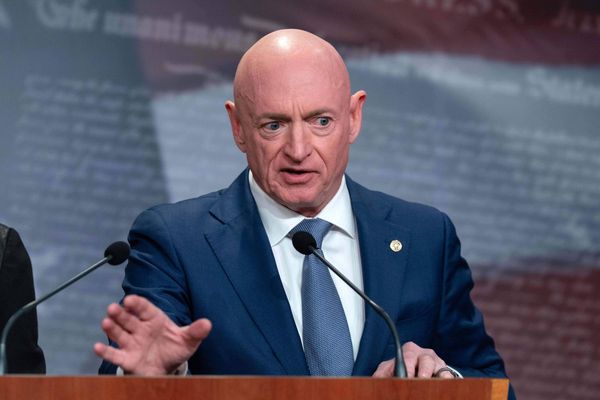
Afternoon summary
- Sadiq Khan, the Labour mayor of London, has criticised his party’s leadership, saying it is “deeply concerning” voters don’t know where Labour stands on EU membership. (See 5.38pm.)
- Boris Johnson, the lead campaigner for Vote Leave, has defended his campaign’s claim that EU membership costs the UK £350m a week. The cross-party Commons Treasury committee and the Institute for Fiscal Studies are two of the many organisations saying this claim is just wrong. (See 10.53am.) Asked about this for the BBC’s Britain and Europe: For Richer or Poorer? programme being shown tonight, Johnson said:
The reason I think that it is legitimate to use the £350m figure is because that is the sum that we do send to Brussels and over which we have no control. Because after all what happens is about half of that disappears never to be seen again, and some of it goes to a Greek tobacco farmers, and some of it goes to support Spanish bull fighting and heaven knows what, we just - we don’t know what happens to it.
- Johnson has claimed that the EU referendum campaign is a contest between those who want to take back control and the Davos elite. Asked in an interview for the BBC programme if it was a contest between elites and the ordinary man, Johnson replied:
It is in a sense a struggle between people who want to take back control, and a small group of people who do very well out of the current system and who know Christine Lagarde and can go “mwah mwah” with her at Davos, or whatever it happens to be. Of course they’re going to be in favour of the system.
That’s all from me for today.
Thanks for the comments.
Nick Ryan, communications director for Hope Not Hate, has been in touch to say that, if there were protesters waiting for Nigel Farage, they were not from his organisation. For more on this, see the update at 4.34pm.
Khan hits back at Labour leadership, saying it is 'deeply concerning' voters don't know its EU stance
Sadiq Khan, the Labour mayor of London, has hit back at John McDonnell. A spokesman for him said:
It should come as no surprise that Sadiq is campaigning with the prime minister for Britain to remain in the EU, as he made it crystal clear that he would do so throughout the mayoral election.
It is deeply concerning that the polls today suggest that Labour voters are unsure where the Labour Party stands on the referendum.
Sadiq won’t miss a single opportunity to make it absolutely clear to those voters where Labour stands on the referendum.
- Sadiq Khan hits back at the Labour leadership, saying it is “deeply concerning” voters don’t know where Labour stands on EU membership.
Khan’s spokesman is referring to research featured in today’s Guardian splash. Here’s an excerpt.
A campaign memo from Britain Stronger In Europe leaked to the Guardian shows that only about half of Labour voters have realised their party is in favour of staying in the EU, with the rest thinking it is split or believing it is a party of Brexit.
The analysis, sent to some Labour MPs, found that focus groups in London, Brighton and Ipswich over the past few weeks showed voters were “uniformly uncertain” about whether Labour was campaigning to stay in the EU. They did not know what Labour leader Jeremy Corbyn thought or believed he was for remain but “his heart isn’t in it”.
In a sign that Labour’s arguments are not cutting through to the mainstream, it revealed that a group of undecided working-class women in Liverpool mostly assumed the party was for leaving the EU.
This is backed up by some YouGov polling published in today’s Red Box briefing from the Times. It shows that only a third of voters know that most Labour MPs favour remaining in the EU. Another third say they do not know where Labour MPs stand on this. This chart shows the responses when people were asked where Labour MPs stand on Europe.

Even amongst people who voted Labour in 2015, less than half know that most Labour MPs want to stay in the EU.

To be fair, surprisingly, the poll also found that a third of all voters don’t know where Tory MPs stand on the EU.

Updated
Here is some reaction to the Guardian/ICM poll.
From Matt Singh, who runs the NumbrCrunchrPolitics blog
This won't make happy reading for the Remain camp. But past experience with bank holiday weekends says "be cautious" https://t.co/AWRQrSfqGF
— Matt Singh (@MattSingh_) May 31, 2016
From the Spectator’s James Forsyth
This will put the cat among the pigeons, and add towards sense that something might have moved in the last few days https://t.co/ftQzzAh0hp
— James Forsyth (@JGForsyth) May 31, 2016
Just 2 polls, 1 online / 1 phone, but Leave ahead with govt in purdah suggests EU ref could be closer than expected https://t.co/Xwz6QJqe06
— James Forsyth (@JGForsyth) May 31, 2016
From BuzzFeed’s James Ball
This is odd: Guardian/ICM phone poll has swung 14pts in a month, while the online poll is unchanged. https://t.co/VTrAmXLXgz
— James Ball (@jamesrbuk) May 31, 2016
From Matthew Goodwin, politics professor at the University of Kent
Can't read into polls too much tho suspect latest net migration figures & Leave's push on immigration will be cited as contributory factors
— Matthew Goodwin (@GoodwinMJ) May 31, 2016
From Will Jennings, political science professor at the University of Southampton
Seismic shifts rarely occur in public opinion, and never on the basis of just a single poll. Why do I even bother?! https://t.co/8NVs1kyo4B
— Will Jennings (@drjennings) May 31, 2016
Which is not to say public opinion isn't necessarily fluctuating, just a 14-point swing is a little less than likely...
— Will Jennings (@drjennings) May 31, 2016
From Philip Cowley, politics professor at Queen Mary, University of London
Because everyone's focused on 23 June, few paying much attention to 'normal' opinion polls. They should be.
— Philip Cowley (@philipjcowley) May 31, 2016
Latest have Conservatives ahead by 4 (phone) or 5 points (online). That's one year into government, in the middle of a Tory Civil War.
— Philip Cowley (@philipjcowley) May 31, 2016
Someone BTL was asking what Labour have been up to today on the EU referendum front. Well, Alan Johnson, chair of Labour In for Britain, has been in Barry in South Wales.

It hasn’t been all hard work.

Here’s Professor John Curtice, the leading psephologist, on today’s Guardian poll.
Today's @ICMResearch #euref phone poll is the 3rd to put Leave ahead. Previous ones by @ORB_Int & @YouGov. https://t.co/nSDg1eTXuE
— What UK Thinks: EU (@whatukthinks) May 31, 2016
Today's 2 @ICMResearch #euref polls move our Poll of Polls to Remain 51 (-2 on this am) Leave 49 (-2). 3/6 phone. https://t.co/juaJun47Yb
— What UK Thinks: EU (@whatukthinks) May 31, 2016
Sterling falls after Guardian/ICM poll shows rise in support for Brexit
The Guardian’s ICM poll has led to a small drop in the value of sterling against the dollar.
This is from the Wall Street Journal’s Mike Bird.
Sterling Slumps as Phone Poll Shows Brexit Referendum Getting Tighter https://t.co/pLuFux3MrM pic.twitter.com/yfire9SGv6
— Mike Bird (@Birdyword) May 31, 2016
And this is from Open Europe’s Raoul Ruparel.
Pound down q sharply against US Dollar on back of ICM phone poll showing lead for Leave (52-48) in #EUreferendum pic.twitter.com/din3IRA9n8
— Raoul Ruparel (@RaoulRuparel) May 31, 2016
Farage cancels visit to avoid protest
Nigel Farage’s Grassroots Out bus was due to drive to Northampton for another campaign stop. However, as it headed there word came from waiting supporters that 50 or more protesters from the Hope Not Hate group, which has previously targeted Ukip, were also there.
Fearing potential trouble the Northampton stop has been postponed, with the bus group currently waiting at a pub outside the town. Farage said he was upset to not be able to go ahead with the stop. “This has never happened before, that I’ve had to cancel something.”
Aides said the decision was made on police advice.
A spokeswoman for Northamptonshire police denied that it had advised Farage’s team to cancel their visit. She said there was no sign of any Hope Not Hate protesters. “There’s a few people handing out leaflets to leave the EU, but that’s it,” she said.
Either way, Farage is now in another pub, chatting to a small group of supporters who have come to him. He was last seen posing for a photo with a large Union flag.
Lesson from a day with Farage's Brexit camp: consumption of beer and cigarettes would put a 1970s newspaper office to shame.
— Peter Walker (@peterwalker99) May 31, 2016
UPDATE: Nick Ryan, communications director for Hope Not Hate, has been in touch to say that, if there were protesters waiting for Nigel Farage, they were not from his organisation. He went on:
For the record Hope Not hate doesn’t “protest” or do counter-demonstrations: by far the largest part of our work is carried out by a charitable trust, which engages in research, reports, focusing on community cohesion, etc.
We’re currently engaged in a mass voter registration campaign at the moment, with youth empowerment movement Bite The Ballot (please see turnup.org.uk) – this is about to launch a week of action tomorrow and all our teams are focused on this right now.
We don’t view demonstrating as a particularly productive form of effecting change, hence the focus on running campaigns and research.
We do have a smaller not-for-profit (non-charitable) arm, which engages directly in election campaigning during election periods and is registered with the Electoral Commission: again, this isn’t anything to do with demonstrations. (We are not taking sides in the EU Referendum with either In or Out, simply focusing on voter registration and getting out the vote.)
Updated
How Vote Leave Tories backed increasing VAT on fuel to 17.5%
Britain Stronger in Europe is accusing some senior Vote Leave Tories of “hypocrisy” over VAT on fuel because, while Vote Leave is now calling for the abolition of VAT on fuel, they voted in favour of VAT on fuel being increased to 17.5% in the 1990s.
Norman Lamont proposed this when he was chancellor. But when his successor Kenneth Clarke tried to implement this in December 1994, he was defeated by an alliance of Labour and Tory rebels, forcing him to respond with an emergency budget.
Three prominent Vote Leave Tories, Iain Duncan Smith, John Whittingdale and Liam Fox, all voted for the 17.5% increase. Britain Stronger in Europe has even dug out a quote from Duncan Smith at the time saying: “If the opposition want to get rid of the uprating to 17.5% VAT on fuel, where will they find the extra money?”
In a press notice issued by Britain Stronger in Europe, the Labour MP Conor McGinn said:
This just goes to prove that the Leave campaigners are so desperate, they will say anything. They are badly mistaken if they think working people will fall for this sort of cynicism and hypocrisy.
But the point is not an especially strong one. It was Conservative government policy to raise VAT on fuel to 17.5%, and none of these three Tories was important enough to have any say in shaping the policy. Fox was a whip in 1994, and Whittingdale was a parliamentary private secretary, which means they would have had to resign if they wanted to vote against the government. Duncan Smith could have rebelled. He didn’t. But it was 22 years ago.
Updated
McDonnell says Khan sharing platform with Cameron discredited Labour

Yesterday Sadiq Khan, the Labour mayor of London, shared a platform with David Cameron at an event to make the case for staying in the EU. This was remarkable not just because Cameron used PMQs to launch very personal attacks on Khan during the mayoral election (accusing him of being sympathetic to Islamist extremists), but also because other Labour figures, like Jeremy Corbyn and Alan Johnson, have ruled out campaigning alongside Cameron. They remember all too well what happened in Scotland, where Labour campaigned with the Tories against independence in 2014 only to see its vote disintegrate at the general election.
At a Labour In for Britain event in Wolverhampton last night, John McDonnell, the shadow chancellor, accused Khan of discrediting Labour. According to PoliticsHome this is what he said when asked if Labour should campaign for Remain alongside Cameron.
The Europe that the Tories want is not our Europe. Cameron went to negotiate away workers’ rights in advance of this referendum. If he could have done it, he would have done.
If Cameron and his crew are still in power after this referendum they will continue dismantling our welfare state. They will continue to cut benefits, undermine wages and cut public service jobs. This will go on.
Sharing a platform with them discredits us. It demotivates the very people we are trying to mobilise.

Guardian/ICM phone and online polls both show Leave ahead - with Leave support rising sharply on phone poll
The Guardian has just published its latest ICM polling on the EU referendum. Both the online survey and the phone survey show Leave ahead, and the phone poll shows a sharp rise in support for Leave.
Here is Heather Stewart’s story.
Here is the start of the story.
Public opinion has shifted towards the UK leaving the EU, two Guardian/ICM polls suggest as the referendum campaign picks up pace – with voters splitting 52-48 in favour of Brexit whether surveyed online or by phone.
Previous polls have tended to show voters surveyed online to be more in favour of Britain leaving the EU. But in the latest ICM research, carried out for the Guardian, both methodologies yielded the same result – a majority in favour of leaving.
“Our poll rather unhinges a few accepted orthodoxies,” said ICM’s director, Martin Boon. “It is only one poll, but in a rather unexpected reverse of polling assumptions so far, both our phone poll and our online poll are consistent on both vote intentions and on the EU referendum.”
And here are the key figures

Updated
In the Q&A after his speech this morning Chris Grayling said Vote Leave had never said every penny saved by not being in the EU would go towards the NHS. (See 12.31pm.) Labour MP Emma Reynolds says this is very significant. In a press notice from Britain Stronger in Europe headed “Vote Leave’s NHS claim blown out of the water”, she says:
Chris Grayling has let the cat out of the bag. If these Tory Leave campaigners have their way and take us out of the EU, they won’t spend another penny on our National Health Service. You can’t trust Tories like Chris Grayling to protect the NHS and give it the investment it needs.
The truth is that leaving Europe would land us with less money, not more, to spend on the NHS. Economic experts say leaving would create a £40bn black hole in our public services – opening up our NHS to billions of pounds of damaging cuts.

Farage says, if Remain win, UK might not get 2nd referendum until another country leaves EU
I’m spending the day on the semi-organised chaos of the Ukip-led unofficial Brexit campaign battlebus, currently between Birmingham and Northampton. Before a stop for the inevitable pub lunch I had a chat with Nigel Farage about his thoughts on the campaign and the possible aftermath of the 23 June vote.
Farage said he does not believe a vote for Remain will end the EU argument permanently, predicting that growing anti-EU feeling in places like Italy could see another nation leave, reigniting the debate in the UK.
“The issue won’t go away,” he said. “I suspect that if Remain were to win narrowly then we’d wait for another country to get out first. And just look at the shift.”
This would, however, take some time, Farage said: “If we lost, would there be a second referendum soon? There would be a chunk of the Conservative party that would be irreconcilable to the way the campaign had been fought. But is the British parliament going to give us another referendum? I don’t think so.”
It would this take a vote to leave from another nation, he predicted: “I suspect somebody else would do it for us. But the arguments won’t go away because the EU is going to get worse.”
In less policy-based news Farage revealed he is currently on his first-ever mid-campaign diet, prompted by a regime of hotel breakfasts, pub lunches and evening curries. In a telling vignette, an aide had earlier struggled to find a bottle of water. “There’s Rioja,” he said. “And beer. The water must be somewhere.”
And Farage is even going to the open top deck of the bus for a cigarette when it is on the motorway.

Here’s a Guardian video explaining Brexit for non-Brits.
Jeremy Corbyn, the Labour leader, has written an article for Huffington Post encouraging young people to register to vote in the referendum. Here’s an excerpt.
Too many young people I meet feel insecure about their housing and working life - where low pay, insecure hours and temporary contracts have become the norm.
There has never been a more important time to get political. In the words of the US politician Ralph Nader, “if you don’t turn on to politics, politics will turn on you” ...
The more people participate in our democracy, the better decisions we will make as a country. That’s why I have been so encouraged that young people are turning to Labour in increasing numbers.
Our party membership has doubled in the last year, and our youth membership (for those under 27) has more than trebled. Labour now has more young people as members than Ukip or the Liberal Democrats have members in total.
I want young people to have their voice heard in the EU referendum on 23 June and in politics more generally. That’s why it’s so important that you register to vote, encourage your friends to register to vote by 7 June - and then use that vote.

Lunchtime summary
- Vote Leave campaigners have revised their claim that leaving the EU would lead to VAT on fuel being cut. In a joint Sun article this morning Vote Leave’s Boris Johnson, Michael Gove and Gisela Stuart say “fuel bills will be lower for everyone” if Britain leaves the EU because the UK will no longer be bound by EU rules imposing a 5% minimum rate of VAT on household gas and electricity bills. But, in response to questions from journalists this morning, Michael Gove (see 10.13am) and Chris Grayling (see 12.31pm) admitted that they were in no position to make this an explicit promise. It would just be an option for the government, they said. (The episode perhaps reveals how some in the Vote Leave camp are starting to think of themselves as a shadow government, drawing up an alternative manifesto, because if a Brexit vote were to lead to Johnson becoming prime minister, then of course he would be able to cut fuel bills. Another example would be Gove’s recent call from higher NHS spending.)
- George Osborne, the chancellor, and others in the Remain camp have accused Leave of “fantasy economics”, arguing that they have made promises about how the money saved by not being in the EU could be spent worth £112bn a year. (See 9.01am.) That actual amount that would have saved is closer to £8bn a year. (See 10.53am.)
More fantasy economics from Vote Leave: leaving EU would lead to smaller economy, a hole in public finances + higher taxes - like higher VAT
— George Osborne (@George_Osborne) May 31, 2016
Vote Leave has responded by arguing that Britain Stronger in Europe has “invented pledges that don’t exist” and that the alleged spending proposals it is highlighting are just illustrations of how money saved could be used.
- Sajid Javid, the business secretary, has criticised Iain Duncan Smith for claiming Javid used to say privately that he was strongly in favour of leaving the EU. Duncan Smith made the comment last week. Asked about it today, Javid said:
I think what that shows is unfortunately some people in this debate prefer to play the man rather than the ball. Which tells you all, really.
Hear @sajidjavid of @StrongerIn says Iain Duncan Smith would "prefer to play the man rather than the ball" on #EUref pic.twitter.com/lr1VYZCiA8
— Richard Vernalls (@rvernallsPA) May 31, 2016
BIS Secretary @sajidjavid asked if he's changed mind on #EUref "My view has always been clear on the economic issue" pic.twitter.com/uLD7Thd5BS
— Richard Vernalls (@rvernallsPA) May 31, 2016
Last week sources close to Javid insisted that he had never called for the UK to leave the EU, either in private or in public.
- Javid has said small businesses would be “hit hard” if the UK left the EU. Speaking in Birmingham he said:
Make no mistake: if we vote to leave the EU, small businesses will be hit hard.
You may have heard the myth that only massive multinationals want us to stay in the EU; that small businesses want out; that hardly any small firm exports to the EU, so leaving it won’t be such a big deal.
That’s just plain wrong. It’s a misconception that could have dangerous consequences for millions of people who rely on small businesses for their jobs and for their livelihoods.

- An ORB poll for the Daily Telegraph suggests Leave has had a significant boost over the last week. This is what Sir Lynton Crosby, the Tory election strategist, says about it in his analysis of the ORB figures.
This week’s ORB poll for the Daily Telegraph suggests that the Leave campaign increasing focus on lack of control over immigration and associated message discipline has helped their case.
The effectiveness of this improved clarity and emphasis is demonstrated by the four point jump (to 46%) in the Leave campaign’s vote share among Definite Voters in this poll. The Remain campaign’s vote share has correspondingly fallen by four points (to 51%).
As always caution must be exercised with one poll and it is possible that last week’s poll which showed strong gains for Remain may have been overly positive for the Remain camp but there have been significant lifts in most factors for the Leave case.
- Downing Street has said migrants are attempting to cross the Channel in boats because of improved security measures at the tunnel and ferry port in Calais. As the Press Association reports, Number 10 said additional vessels aimed at protecting the coastline would become operational in the coming months, but full deployment of the new boats will not take place until the end of next year. On Saturday, 18 Albanians had to be rescued from an inflatable boat after it sank off the Kent coast, and immigration union officials have warned Britain’s coast is facing one of its greatest ever breaches from small boats and dinghies carrying migrants. A Downing Street spokesman said the increased security at Calais had led some migrants to attempt to use “more dangerous routes” to reach the UK. Chris Grayling, the leader of the Commons and former justice secretary, said Albanians coming to the UK should not be granted asylum unless there is an “extremely individual and particular reason”. After giving a speech he said: “I would want us to be very vigorous about any applicant for asylum from Albania.
I would want us to be very vigorous about any applicant for asylum from Albania.
Albania is a candidate country of the European Union and unless there is an extremely individual and particular reason for granting asylum for someone from Albania then I would want to have an asylum system that treated those people as economic migrants.”
As part of the Government’s approach, additional vessels to supplement Border Force’s three cutters in UK waters will take to the sea in the coming months - but full deployment will not take place until the end of 2017.
- Grayling has said David Cameron’s renegotiation has failed to protect the UK from EU measures promoting “every closer union”. (See 12.35pm.)

Updated
Grassroots Out has paid for full-page adverts in 21 regional newspapers today. One of the adverts featured is this one.
Peter Bone, the Conservative MP and a Grassroots Out co-founder, said:
The Grassroots Out message is very straightforward. This is a battle between the people and the establishment.
We may be David and they may be Goliath but we can win this referendum and voters must not be bullied by the likes of Obama.

Farron suggests Gove should be sacked from cabinet after EU referendum
Tim Farron, the Lib Dem leader, is suggesting that Michael Gove should be sacked from the cabinet after the referendum, and that Boris Johnson should be kept out. In a statement referring to the Vote Leave spending proposals (see 9.01am) he says:
The right wing of the Conservative party have abandoned any pretence of economic competence in order to try and force a vote for leave. Boris, Gove and co can’t be trusted on the facts, and now they are proving that they can’t be trusted with the economy either.
When the referendum is over, David Cameron will have to explain how he can justify keeping people willing to wilfully mislead people and threaten our economy in his cabinet.
Nigel Farage, the Ukip leader, has spent a slightly chaotic morning spreading the leave message at Birmingham’s Bull Ring market, arriving at the edge of the stalls in a purple battlebus blaring out the Great Escape theme song before engaging with a crowd notably more receptive to his message than, the polls would indicate, is the case nationally.
“I do like him,” said 71-year-old Pauline Jones, there to watch with her husband. “I don’t think we see enough of Nigel Farage. He’s been a bit pushed out by Boris Johnson and Michael Gove. It’s a shame.”
Leading a smallish but committed throng on a tour of the stalls, Farage at once criticised the Remain camp for its simplistic message while delivering arguments which, while generally more positive, were themselves also fairly broad in tone.
He spent almost ten minutes trying to persuade a pair of young women running a clothes accessories stall to vote for the first time and vote to leave, talking rapidly about industry, regulations and borders.
“I can’t guarantee that once we’re running our own affairs again, things will be perfect. But at least the people making the rules, we will vote for and we can remove,” he told Laura, 24, and Amy, 25.
“I also think we should be a bit prouder of who we are as a country, stand a bit taller as a country, and maybe re-engage our friendships with India, Australia, Canada and the Commonwealth, and have a more global view of the world,” Farage argued, producing from his jacket pocket his passport for about the dozenth time that morning to show the gold “European Union” wording.
The two women were left a bit dazzled but unsure. “I still don’t know what to do,” said Amy. “We’ve been in the EU all my life and the country is totally shit, so I don’t know if leaving can make anything much worse.”
In general the reception was friendly, with several stalls in the indoor food market area hanging signs from Farage’s leave camp, and seeking pictures with him.
Here are some of Farage’s tweets about his visit.
Fantastic response in Birmingham from small business owners who want their country back. #BrexitBusTour pic.twitter.com/VmLHxjaiPY
— Nigel Farage (@Nigel_Farage) May 31, 2016
The enthusiasm to Leave EU here in Birmingham is incredible. Extremely encouraging. #BrexitBusTour pic.twitter.com/sv6907oONL
— Nigel Farage (@Nigel_Farage) May 31, 2016
Updated
And here are some lines from Chris Grayling’s Q&A.
- Grayling claimed that Vote Leave was not arguing all the money saved from not having to contribute to the EU would go to the NHS. (See 10.30am.)
Grayling on where EU money would go' We wouldn't necessarily spend every penny on the NHS.' Surely NOT what it says on the side of the bus?
— Carl Dinnen (@carldinnen) May 31, 2016
- He said the claim that leaving the EU would allow VAT on fuel to be removed was only an illustration of what might happen. Vote Leave was not announcing government policy, he said.
Grayling; Vote Leave can only set out options for the Government. Cutting VAT on fuel is one of the options.
— Carl Dinnen (@carldinnen) May 31, 2016
That is not quite the way it came out in today’s Sun.
- He claimed Priti Patel, the employment minister, was not attacking David Cameron and George Osborne in her Sunday Telegraph article.
Grayling "interpreted" Priti comment about leaders of Remain camp being too posh to push on migration as "about banks + big biz" not the PM.
— Harry Cole (@MrHarryCole) May 31, 2016
Sky’s Beth Rigby thinks Grayling may be more interested in a post-referendum promotion than Patel.
Grayling invited by press 2 attack Javid, and pile in behind Patel on 'posh remainers'. He has declined. Post #Euref promotion. Definitely.
— Beth Rigby (@BethRigby) May 31, 2016
- He claimed the Conservative party was not tearing itself apart.
Chris Grayling turns a blind eye to the upheaval in the Tory party: "I am not part of a party that is going to rip itself to pieces."
— Christopher Hope (@christopherhope) May 31, 2016
Chris Grayling says he does not feel like he's in a party about to rip itself apart & all will go back to normal in three weeks' time. Hmm!
— Rowena Mason (@rowenamason) May 31, 2016
- He said he would be happy to see Sir Jeremy Heywood, the cabinet secretary, lead Brexit negotiations. (In some Leave circles Heywood is a hate figure, because they think he has unfairly allowed the government machine to campaign for Remain.)
Grayling: I trust Sir Jeremy Heywood to lead the Brexit talks with the EU if Britons vote to leave on June 23. #EUref
— Christopher Hope (@christopherhope) May 31, 2016
Grayling says UK is not protected from 'every closer union'
Here is the full text of Chris Grayling’s Vote Leave speech, on the risks of remaining in the EU.
And here are the key points.
- Grayling said people should not vote on staying in or leaving the EU as it is now, but on the EU as it will be in the future. And over the next decade it will become “very different”, he said.
- He said a eurozone political union was inevitable. This would amount to a “United States of the eurozone”, he said.
- He said he did not want to see social rights and protections weakened if Britain left the EU. But he said he was opposed to the new EU “social pillar” consultation launched earlier this year, because it would result in the EU taking decisions on social policy that should be left to member states.
- He claimed the protections that the UK has from further EU integration, including the opt-out from “every closer union” negotiated by David Cameron, would not stop the UK having more EU rules imposed on it.
So what’s the problem. Well, ladies and gentlemen, the problem is this. We have an opt-out from the euro. We have an opt-out from the Schengen Area. We have an opt-out from some justice and home affairs measures.
But on everything else we have no opt out. We are subject to every law introduced by the EU and in the eurozone. On banking and financial services. On business regulation. And on EU social policy, on the so-called social Europe, we have no opt out.
So we have a new list of EU social policies which will deepen integration across the eurozone. But these will be EU laws passed in the normal way. There is no other method of doing so right now. And we have no opt-out from them.
Many of these measures will be things we already do well; some may be measures we would want in the UK. The point is that it should be up to us to control what happens to the NHS, to workers’ rights and to social protection and control over these areas should not lie with Brussels ...
And this is why we are not at all exempt from ever closer union. Because the nuts and bolts of integration will come from new EU laws passed under the terms of the Lisbon treaty.
- He said the Lisbon treaty allowed the European court of justice too much scope to expand its power.
The Lisbon treaty itself is a huge part of the problem.
It is vaguely worded, and gives both the commission and the European court of justice free rein to expand their brief and take over competences from the member states.
It’s already happened. Under the treaty individual countries are supposed to be responsible for social security. But the European court decided that the free movement rights of the European citizen were more important, and now the EU controls more and more aspects of our benefit system. A treaty we signed in good faith is being rewritten by a court whose president made a speech saying the job of the European commission is to resist Euroscepticism.

My colleague Peter Walker has been tweeting from Nigel Farage’s visit to Birmingham.
He's here! Farage drives into the middle of the market in his purple bus. Lots of talk about Brussels bureaucrats pic.twitter.com/C3NXe3sYsP
— Peter Walker (@peterwalker99) May 31, 2016
"Do you want 508 million people to have this passport?" Farage booms from mic. "No!" yell back dozen or so people.
— Peter Walker (@peterwalker99) May 31, 2016
Farage asked by local dad to sign his T shirt saying, "Sons of Anarchists". Farage visibly not sure but still does.
— Peter Walker (@peterwalker99) May 31, 2016
Some people here I've talked to say they think Farage is best person to deliver Brexit message but sidelined for Johnson & Gove
— Peter Walker (@peterwalker99) May 31, 2016
Nigel Farage has now taken out his passport to show to people to show off the "EU passport" wording about a dozen times now.
— Peter Walker (@peterwalker99) May 31, 2016
Nigel Faraga talks fish quotas at a fish counter in the indoor market. pic.twitter.com/UjlU7scEzg
— Peter Walker (@peterwalker99) May 31, 2016
Michael Gove’s claim that he is opposed to VAT because it’s unfair on the poor (see 10.13am) may sound unlikely, but in his book about the coalition government, Coalition, David Laws, the Lib Dem former schools minister, says Gove has progressive views on tax at odds with official Conservative policy.
He describes Gove as someone who “had quietly let it be known that he thought the 2012 reduction in the top rate of tax was premature; and who was believed to have told friends that he thought inheritance tax should be increased, not reduced.”
Laws worked with Gove in the Department for Education and admires him.
His book, by the way, may not be the definitive account of the coalition, as claimed on the cover, but is a very good one nevertheless, and excellent on Lib Dem/Conservative policy negotiations. Laws and Nick Clegg (whose notes he uses) also seem to have kept a lot of verbatim records, and so there are far more direct quotes than usual in a memoir like this, which help to make it a lively read.
Chris Grayling, the leader of the Commons and former justice secretary, is giving a speech on the risks of remaining in the EU.
I will post a summary when I’ve seen the text.
Grayling; You cannot have single currency without political union... There has to be a United States of the Eurozone pic.twitter.com/Tv81TC6GN2
— Carl Dinnen (@carldinnen) May 31, 2016
Updated
David Davis, the Conservative backbencher, Brexit campaigner and David Cameron’s main rival for the leadership in 2005, has said that those Tories calling for Cameron to stand down after the EU referendum are being “unhelpful”. He said:
This referendum is about the country, not the Conservative party. It is vital that the British people make their decision on the best facts available, and on what they think is in the long term interests of the country - not on short-term skirmishing about what may or may not happen after the referendum is over. In the light of that, these calls are an unnecessary and unhelpful distraction.
It is entirely likely that what the country, and indeed the Conservative Party, will want after an unavoidably bruising referendum debate, is a period of stability - not another battle. That may be particularly true if we are in the middle of negotiating our exit from the EU.

Nigel Farage, the Ukip leader, is campaigning in Birmingham this morning. He has just tweeted this.
Great to be here in Birmingham on the #BrexitBusTour. The only way that we can control our borders is to Leave EU. pic.twitter.com/YiCgPU5bLW
— Nigel Farage (@Nigel_Farage) May 31, 2016
Why EU membership does not cost the UK £350m a week
Those of you who have been following the EU debate will be familiar with the arguments as to why Vote Leave’s claim that EU membership costs the UK £350m a week is dodgy, but for reference here is what the Commons Treasury committee and the Institute for Fiscal Studies said about this in reports last week.
From the Treasury committee report.
At the heart of Vote Leave’s presentation of its case is the claim that, on leaving the EU, the UK government would receive a windfall of £350m per week, available to be spent in other ways, “like the NHS and schools”. This, and the other figures used byVote Leave for the UK’s EU budget contributions (£150bn ‘contributed’ in the past decade, and £511bn since joining) are highly misleading to the electorate for a number of reasons.
First, Vote Leave’s £350m figure does not account for the budget rebate, which amounts to £85m per week. Leaving the EU could not make this money available to spend on schools and hospitals because it is not ‘sent’ to Brussels in the first place. The rebate does not leave the UK or cross the exchanges. This is repeated in other ways. A ‘counter’ is prominently displayed on Vote Leave’s website. This purports to show that the UK has historically contributed £511bn to the EU since joining in 1973 and excludes the rebate. The UK rebate is indeed controversial in other Member States. It may be raised in future negotiations over the EU’s financial framework. However, it can only be changed with the UK Government’s consent, as happened in the Government led by Tony Blair.
Secondly, the extent to which money that the UK receives from the EU budget (a further £88m per week to the public sector and £79m per week to the private sector and non-governmental organisations) would be available for spending on other priorities, would depend on the policy choices of the democratically-elected government of the day. Vote Leave has stated that “There will [ … ] be financial protection for all groups that now get money from Brussels”. If that policy were implemented, the money available to fund other priorities after Brexit, such as schools and hospitals, would be much lower, and probably closer to the UK’s net contribution of £110 million per week than it is to £350 million. This would be true even if, as has been widely argued, efficiencies could be made in the way that money the UK currently receives from the EU budget is spent.
Finally, it is not impossible that the UK may continue to make contributions to the EU budget after Brexit, either on a transitional or permanent basis, in return for continued access to parts of the single market, or because it considers mutual co-operation in certain areas, such as science research, to be desirable. This too would reduce the supposed fiscal windfall arising from leaving the EU.
From the Institute for Fiscal Studies report (pdf)
The UK’s notional gross contribution (i.e. ignoring the UK’s rebate) in 2014 was £18.8 billion, which is about 1% of GDP. It is by dividing this number by 52 weeks that one comes to the widely-reported figure of over £350 million a week as the UK’s contribution to the EU. But in this context, ignoring the rebate is clearly inappropriate. It is equivalent to suggesting that were the UK to leave the EU and not make any financial contribution to the EU’s budget then remaining EU members would continue to pay the rebate to the UK. That is clearly absurd. The correct figure to use for the UK’s gross financial contribution takes account of the rebate. It stood at £14.4 billion, or 0.8% of GDP, in 2014.1 (This is equivalent to around £275 million a week.)
In principle, the UK’s public finances could be strengthened by that full £14.4 billion a year if we were to leave the EU. However, the EU returns a significant fraction of that each year. The amount varies, but on average our net contribution stands at around £8 billion a year. That is £8 billion a year that we could use to fund other spending, cut taxes or reduce the deficit.
Updated
Vote Leave’s chief executive Matthew Elliott has responded to the claim that Leave campaigners have made spending promises worth £112bn. (See 9.01am.) He said:
BSE are simply making up numbers and have invented pledges that don’t exist. If we Vote Leave, we can spend the £50 million we hand to the EU every day on our priorities, like using a small proportion of it to cut energy bills and eases the pressure on family budgets.
The Remain campaign should admit that if we vote In then Brussels will be in charge of VAT levels and will continue taxing low-income families.
(Vote Leave like referring to Britain Stronger in Europe by the acronym BSE because of its obvious unfortunate connotations.)
But the Vote Leave bus implies that the £50m per day (which isn’t £50m per day, remember) will be spent on the NHS. It is quite unusual in a campaign to be rebutted by your own battlebus.
Admittedly, Elliott only talks about using a “small proportion” of the money that would be saved by not having to pay a contribution to the EU on cutting fuel bills. But the Sun is costing the Gove/Johnson/Stuart proposal at £2bn, which is a quarter of the £8bn-odd that would be saved. That is not a “small proportion”.

Photograph: Stefan Rousseau/PA
Updated
Gove says VAT is a 'very unfair tax'
Michael Gove, the justice secretary and co-convenor of the Vote Leave campaign committee, has been giving interviews this morning. Here are the key points he has been making.
- Gove sought to justify Vote Leave’s claim that leaving the EU would allow Britons to save £2bn a year because VAT on fuel would be cut. In a Sun article jointly written with Boris Johnson, the Conservative MP, and Labour’s Gisela Stuart, Gove says explicitly fuel bills “will be lower” if Britain leaves the EU.
And fuel bills will be lower for everyone.
In 1993, VAT on household energy bills was imposed. This makes gas and electricity much more expensive. EU rules mean we cannot take VAT off those bills.
The least wealthy are hit particularly hard. The poorest households spend three times more of their income on household energy bills than the richest households spend.
As long as we are in the EU, we are not allowed to cut this tax.
When we Vote Leave, we will be able to scrap this unfair and damaging tax.
In an interview this morning, Gove admitted that it would be up to the government to decide after Brexit whether to scrap VAT on fuel and that he personally was not in a position to make this promise.
It would be up to the government after we vote to Leave ... I’m not the prime minister; I’m not the chancellor of the exchequer. But one thing is for certain: we could not do it if we remain in the European Union.
(In the comments, maxfisher points out the Tories don’t exactly have a good record when it comes to cutting VAT.)
- He said that he personally was in favour of cutting VAT on fuel because he thought VAT was a “very unfair tax”.
Personally I think it would be the right thing to do, because VAT is a very unfair tax, it hits the poorest people hardest, and actually the cost of fuel for the poorest households is about £105 of their weekly income. I think it would be a really good thing if we could help the poorest people in our country by removing this unfair tax burden on them, which will hit particularly hard as we go into the winter.
It is worth reminding readers that in his first budget in 2010 George Osborne raised VAT from 17.5% to 20%, raising £13bn a year.
- He insisted that he wanted David Cameron to remain as prime minister, regardless of the outcome of the referendum.
I think that David Cameron should stay as prime minister. The country voted for David to be prime minister in the general election last year ... I want David Cameron to be prime minister right up until the next election.
- He insisted that he did not want to be prime minister himself.
The one thing I absolutely don’t want to do is to be prime minister.
- He claimed that the Conservative party would be able to unite behind Cameron after the referendum.
- He said that the Remain cause was more likely to appeal to the wealthy.
I think it is absolutely right to say that some of the people who are backing Remain are the people at the top of multinationals and the top of investment banks who do very well thank you out of the European Union. And I also think it’s the case that the people who suffer most as a result of our membership of the European Union are the poorest, they are the people whose wages are lower and whose access for example to NHS services is more difficult.
This is a more tactful version of the argument that Priti Patel, the pro-Brexit employment minister, put in a Sunday Telegraph article at the weekend. Patel was more blunt, implying that Cameron and George Osborne did not understand voters’ concerns about immigration because they were too posh.
I’ve taken some of the quotes from PoliticsHome.

According to the Sun, Nicola Sturgeon, Scotland’s first minister, is being lined up to be one of the three speakers representing Remain in the ITV debate being held next week.
Britain Stronger in Europe have released a video message from Lord Sugar, the Apprentice star, businessman, former Labour peer and - as of last week - government enterprise tsar.
A pyschologist would have fun with this. Sugar starts: “I started my business when I was seventeen years old from a council flat in Clapton. I am not a drug dealer, I didn’t rob banks ...”
Whoever said you did, Alan?
Still, Sugar’s key message is direct and punchy.
You could not be listening to a bigger gambler than me. I’ve gambled all my life in business, okay, and I am telling you this is a gamble that we cannot afford to take ...
Let me put it in very plain terms. This is not a general election, this is not something that’s going to come round in five years’ time, oh, it didn’t work, okay well we’ll have another vote. No. No, this is the most serious vote you most probably will ever make in your lifetime.
Now I’ve been in business for many years and I’ve seen plenty of daft ideas and duff proposals in my time and Britain leaving the European Union is one of them.
Ryan Coetzee, Britain Stronger in Europe’s director of strategy, has responded to my tweet about their costings document.
@AndrewSparrow It's just a record of what they have claimed. The point is their claims are nonsensical and dishonest.
— Ryan Coetzee (@RyanCoetzee) May 31, 2016
Britain Stronger in Europe accuse Leave of making spending promises worth £112bn
Good morning. I’m Andrew Sparrow, taking over from Claire.
The EU referendum campaign is becoming more like a general election every day. One standard feature of an election campaign is the attack document listing unfunded spending commitments and, as Claire reported earlier, Britain Stronger in Europe have put out their own version this morning, accusing the Leave camp of making promises worth £112bn.
The full press notice is not available on the internet yet, but here is the key table.

A British DARPA is Defence Advance Research Projects Agency.
Britain Stronger in Europe have adopted a maximalist approach to their costings.
One of the biggest items on the list is an extra £18.2bn for the NHS. They have arrived at this figure by taking literally Vote Leave’s claim that EU membership costs the UK £350m a week (it doesn’t) and that this could all be spent on the NHS.
Another is an extra £18.25bn for pensions, which they have produced by citing a Nigel Farage quote in the Guardian saying the £350m a week money could go on pensions instead. (The difference between the £18.2bn and the £18.25bn is explained by the fact that Farage talked about a saving of £50m a day, not £350m a week, giving a slightly different annual figure.)
And the third biggest item on the list is £17.2bn spent reducing council tax. The source for this, as a Leave camp “spending commitment” is a tweet from the Tory MEP Daniel Hannan saying not having to pay EU contributions could lead to the government being able to cut council tax by 60%.
Will Straw, Britain Stronger in Europe’s executive director, says his research shows that Leave have been using “fantasy economics”.
The Leave campaign has been exposed once again for promoting fantasy economics. There would be no saving and no tax cuts because our economy would be damaged by leaving.

I’m handing over the live blog now to Andrew Sparrow, who’ll steer you through the rest of the day.
A reminder: your daily referendum briefing is here to ensure you’re up to speed with the latest ins and outs on the in and out campaigns. Thanks for reading.
Michael Gove, interviewed on ITV’s Good Morning Britain, says cutting VAT on energy bills – something he, along with Boris Johnson and Gisela Stuart, has written about in the Sun this morning – would save the average household £64 a year.
A report just published by the Remain camp claims Vote Leave has made unfunded promises worth £111bn – 10 times greater than any potential saving from keeping monies currently paid to the EU, it says.
The report claims that Vote Leave has made 20 spending commitments – covering the NHS, schools and farming among others – that are unfunded, and have labelled Vote Leave’s vision a “make-believe land of milk and honey”, according to the BBC.
Updated

And in non-referendum news (because there still is a little of that), confirmation that the Labour MP and shadow minister for mental health, Luciana Berger, will stand to be mayor of Liverpool city region. My colleague Frances Perraudin reports:
Berger so far faces a battle with with Joe Anderson, who has been the city’s current mayor since 2010, and Steve Rotherham, the MP for Walton, to secure the Labour nomination.
Labour’s dominance of the city means that whoever wins the party’s nomination is likely to win the overall competition.
JD Wetherspoon has printed 200,000 beer mats bearing a message arguing for the UK to leave the European Union, Press Association reports.
The beer mats will be available in the company’s 920 pubs across the UK In the run-up to the referendum.
The message draws attention to governance issues with senior staff at the IMF and asks why UK voters should trust the views of Christine Lagarde, who has voiced her support for the Remain group.
The beer mat has a message on both sides, which is signed by Wetherspoon founder and chairman Tim Martin, a strong believer in leaving the EU.
Martin said: “Corporate governance at the IMF is clearly out of control and Christine Lagarde would have been obliged to resign at any normal plc or institution until the matters in question were resolved.
“The UK public have been asked to rely on her comments by both George Osborne and David Cameron in the forthcoming referendum and she must now answer the questions on the beer mats and others that the public may have.”
I don’t yet have an image of the beer mat, so any readers currently enjoying a breakfast pint in a Wetherspoon’s pub, please do get in touch. Bonus points if you’re Christine Lagarde.
8.30am update: here’s the beer mat image as promised

Updated
If Britain does vote to leave the EU on 23 June, what happens next – and how quickly?
My colleagues Patrick Wintour and Jennifer Rankin have compiled this useful primer on how a British exit would be negotiated (and what would happen to David Cameron) in the hours, days, weeks and months after a vote to leave:
A shattered David Cameron, his leadership already a matter of speculation, will have no option but to make a statement outside 10 Downing Street saying he will respect the mandate of the British people. The Treasury, Bank of England and the European Central Bank (ECB) will move quickly to roll out well-hidden battle plans to prevent market chaos.
A shocked European political class will find itself grappling with an unprecedented, messy and sprawling divorce that could rumble on for years.
The EU will respond as it does to any crisis, and convene an emergency summit.
I’m guessing the chancellor is referring here to the claims by Boris Johnson, Michael Gove and Gisela Stuart today that a win for Leave could see VAT on fuel bills scrapped:
More fantasy economics from Vote Leave: leaving EU would lead to smaller economy, a hole in public finances + higher taxes - like higher VAT
— George Osborne (@George_Osborne) May 31, 2016
As Norman Smith on the Today programme put it (though I paraphrase): leaving the EU might mean a UK government would be entitled to scrap or cut VAT on household energy bills – but whether that government could afford to do so is another question.
Louise Stewart, from the Federation of Small Businesses, has just been interviewed on the Today programme – the Remain camp is making small business, and what it says would be the risks of leaving the EU, its focus today.
Stewart says the federation is officially neutral on EU membership. But she says some members do complain about the red tape coming from Europe; the “top burden”, she says, being the working time directive, which limits the hours employees can be required to work.
Tuesday’s Guardian front page kicks off what it’s calling “the final countdown” (ho ho) to the vote:
Tuesday's Guardian front page:
— Nick Sutton (@suttonnick) May 30, 2016
Can Cameron keep Britain in Europe?#tomorrowspaperstoday #bbcpapers #EUref pic.twitter.com/0MeXs9fEIF
Morning briefing
Good morning and welcome to the start of the Guardian’s daily EU referendum coverage as the campaign begins in earnest (all that campaigning so far? Consider it an amuse-bouche, perhaps one you didn’t order but took a taste of anyway, just to be polite).
We’ll be bringing you daily coverage as the Remain and Leave camps take their final arguments to voters ahead of the referendum on 23 June, starting at 7am with a morning briefing that will set you up for the day ahead and catch you up on the polls, claims and celebrity endorsements that might just sway/cement your decision.
I’ll be setting out the morning briefing and steering the live blog each morning until Andrew Sparrow takes his seat. Do come and chat in the comments below or find me on Twitter @Claire_Phipps.
The big picture
With three-and-a-half weeks left before the vote, expect to see more pro-Remain Tories sharing platforms with Labour, Green and Liberal Democrat campaigners – witness David Cameron’s rapprochement with London mayor Sadiq Khan – as efforts are stepped up to make this really, truly not a story about Conservative divisions.
Labour has its work cut out, too, as a campaign memo from Britain Stronger In Europe, seen by the Guardian, says only half of Labour voters are aware that the party is in favour of staying in the EU. The rest reportedly believe the party is split over the issue or backs Brexit:
The analysis, sent to some Labour MPs, found that focus groups in London, Brighton and Ipswich over the past few weeks showed voters were “uniformly uncertain” about whether Labour was campaigning to stay in the EU. They did not know what Labour leader Jeremy Corbyn thought or believed he was for remain but “his heart isn’t in it”.
Meanwhile, Cabinet minister Chris Grayling will today say that the NHS and pensions are under threat inside the EU:
When there are new EU rules on pensions, skills and health, they will apply to us too. It means the EU starting to set the rules for our NHS. With no opt-out. And millions more people able to access our free at the point of delivery service as countries like Albania, Serbia and then Turkey join the EU.

In the Sun, fellow Brexiteers Boris Johnson, Michael Gove and Labour’s Gisela Stuart say they could scrap VAT on household fuel bills once free from EU rules (the assumption that they – or two-thirds of them, say – would be the people making such decisions in a post-Leave government is left to readers to surmise).
Claims by Migration Watch that up to half a million refugees and their families could move to Britain after 2020 have been slammed by the Remain campaign as “false and bogus”. As my colleague Rowena Mason reports:
The study was cited as ‘more evidence of the uncontrollable scale of immigration to this country’ by Iain Duncan Smith, the former work and pensions secretary, who is campaigning for Brexit.
However, Britain Stronger in Europe, the official campaign to stay in the EU, said the study was based on the ‘false and bogus’ assumption that refugees would be granted EU citizenship.
And more than 200 Cambridge University academics have signed a letter to the Telegraph arguing that leaving the EU would put at risk “our foremost position in research and innovation”.
You should also know:
- Bristol city council has withdrawn a referendum leaflet over an ‘unfair’ graphic.
-
David Cameron will be in Orkney for a centenary service for those who died in the Battle of Jutland.
- An inquest opens today into the death of young Tory activist Elliott Johnson.

Poll position
Approach polls with caution and a sceptical eyebrow, of course, especially given the 2015 general election non-triumph. But, caveats in hand, an ORB poll for the Daily Telegraph today shows a narrowing of Remain’s lead over Leave, with the in-crowd slipping four points to 51% and the out-ers up four to 46%.
All of which leads Number Cruncher politics to put the chances of a Brexit vote at 19%:
Forecast and % probability:
— NCP EU Referendum (@NCPoliticsEU) May 30, 2016
REMAIN 56 (=)
LEAVE 44 (=)
REMAIN WIN 81 (=)
LEAVE WIN 19 (=)https://t.co/rhRhKe4Rtd pic.twitter.com/Mh3S6fXQKo
Diary
- Michael Gove pops up on ITV’s Good Morning Britain at 7.30am.
- The UK in a Changing Europe conference on the EU referendum opens at 10am in London, with speeches by Lord (Michael) Howard, Charles Clarke and Daniel Hannan.
- Nigel Farage is out and about on the Ukip referendum battle bus: today it’s Birmingham at 10.30am and Northampton at 2.30pm.
- Sajid Javid, the business secretary, is also in Birmingham with seven current and former members of the BBC’s Dragons’ Den to say leaving the EU would be “an unnecessary risk”.
- At 11am in London, Chris Grayling makes his Vote Leave speech.
- At 7pm, John McDonnell heads an EU rally in Wolverhampton.
Talking point

Broadcaster Jon Snow has labelled the referendum campaign “abusive” and “boring” in an article in which he compared the current debate unfavourably with the “coherent and comprehensible” Scottish independence campaign in 2014. Snow was critical of media coverage while pointing out that politicians had not given journalists much to work with:
With so few weeks to go before the vote, I believe that the negativity, the bickering, the foul-mouthing, and particularly the wholesale abuse of facts by both sides have seen off most of our attempts to make the vote interesting.
Although those who can remember as far back as 2014 might not have such uncomplicated memories of the tone of Scotland’s referendum campaign and its media coverage …
Read these
Lynton Crosby, writing in the Telegraph, says the latest poll suggests that expectation of victory could be encouraging Remain voters into sluggishness:
The reality is that at this stage, the Leave and Remain campaigns have two different strategic imperatives. The challenge for the Remain campaign is to identify and motivate their voters to actually show up on June 23. Twice as many voters in this poll cite Leave as a risk as think remaining in the UK is a risk. This could continue to be the best way to motivate Remain voters to turn up.
The challenge for the Leave campaign is to persuade more voters of their position. Their existing voters are more motivated but they need more voters to be convinced that voting out offers something better.
Rachel Sylvester in the Times (paywall) says divisions in the campaign are about more than Europe:
Class, as well as age, will be a defining factor in the referendum. One of the few things the opinion polls agree on is that educated middle-class voters are far more likely to support remaining in the EU. According to YouGov, 70% of graduates back Remain and 62% of AB voters. In contrast Leave has the support of 63% of DE voters and 62% of those with qualifications up to GCSE level.
The campaign has highlighted a profound culture clash between the world view of metropolitan liberals who are relaxed about immigration and those who are struggling to thrive in rural areas and seaside towns, threatened by the rapidly changing world. As a pro-Brexit MP puts it: ‘One side sees the others as bigots and the other side sees them as snobs.’
In the Financial Times (paywall), Chris Giles and Jim Pickard report that hedge funds and investment banks have commissioned private exit polls:
By finding out the voting patterns early on June 23 and predicting the result, entrepreneurial traders can lay big bets on the result, hoping to be the first to benefit financially from a government-induced swing in sterling …
Early indications of the likely result in the referendum will be indirectly visible from foreign exchange and sterling derivative markets before the polls close, if big money is bet on the result.
Too much of the EU debate has been pragmatic and parochial, argues this Guardian editorial:
The European Union is far from perfect. Yet even in its imperfection, it provides the conditions in which British education and British culture have shone as rarely before. Why else have so many artists and academics been so energised on behalf of Remain? From within the EU, Britain can both enjoy the strength derived from connections with its European neighbours and open itself up to the rest of the world.
Find all the Guardian coverage of the referendum campaign here.
Baffling claim of the day
Alan Sugar, writing in the Sun in favour of Remain, offers this tantalising – and completely unexplained – analogy:
So you might ask: why leave? The song There’s a Hole in my Bucket comes to mind here.
Celebrity endorsement of the day

A few contenders today. Stephen Hawking says the UK should stay in the EU – but he already showed his anti-Brexit workings back in March. The Leave campaign has been showing off Ian Botham and his worries about the UK becoming “cluttered” – but we knew that too.
So instead the honour goes to Paul McCartney, who told French newspaper Le Parisien that he’s … not sure:
It’s crazy in England at the moment! Everyone I talk to goes from one extreme to the other. I’m the same, I haven’t decided yet.
The day in a tweet
EU referendum now part of my whatsapp convo with my besties. I've been waiting months for this moment pic.twitter.com/mIjp6dPPaL
— Raziye Akkoc (@RazAkkoc) May 30, 2016
If today were a romantic comedy ...
It would be Friends With Benefits: unlikely partners cosy up to achieve a, ahem, shared goal. Or, as Peter Bradshaw reviewed it, “frantically unromantic and unfunny”.
NB: not those kinds of benefits.