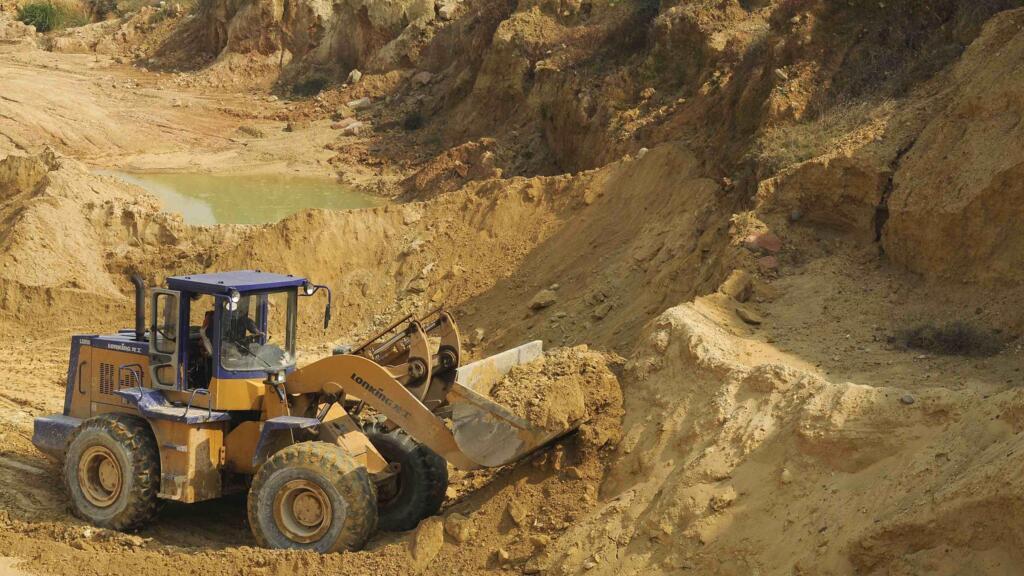
Europe will on Wednesday unveil a plan to reduce its reliance on China for rare earths and other critical minerals, opening a fresh front in its effort to secure supplies needed for major industries. The initiative, known as RESourceEU, is meant to give the bloc more control over materials that support sectors from energy to defence.
The plan, to be presented by the European Commission, centres on creating a European hub for critical materials that would pool company orders and build joint stockpiles, an effort driven by Industry Commissioner Stéphane Séjourné.
The commission wants to curb how much European firms rely on China, which dominates global rare earth processing and requires foreign buyers to disclose how the materials will be used.
"Europe wants to send a signal to manufacturers which is ‘watch out for your resilience'," said Bruno Jacquemin, of French industry group the Alliance for Minerals, Metals and Materials.
"If you prefer to buy your steel in China, your rare earths in China because they are cheaper, you will be in the hands of actors who can put you in a state of absolute vassalisation."
Concerns also focus on how Brussels would manage sensitive sectors such as defence, an issue sharpened by China’s dominance in refining more than 90 percent of the world’s rare earths and by the fact that many European buyers operate in areas linked to national security.
“I am doubtful about the practical effectiveness of a system run from Brussels," Jacquemim told RFI. "Should Europe spell out everything it does for these national defence issues? I am not sure it is a good idea to proclaim that loudly.”
Macron begins China visit as Europe faces trade and security tensions
A commercial stand-off
The broader question of leverage between Europe and China sits behind the debate.
“Europe needs rare earths from China, but China needs the 450 million consumers that Europe represents,” Jacquemin said, adding tht commercial pressure rather than bureaucracy will be needed if Europe hopes to reduce its dependence on China.
The discussion comes as Emmanuel Macron travels to China, where rebalancing trade ties is among the goals.
EU officials are pushing the initiative amid what they describe as over-reliance on China and rising global competition.
European Central Bank chief Christine Lagarde said last week: “Europe has become more vulnerable, also due to our dependency on third countries for our security and the supply of critical raw materials.”
Fresh anxiety hit European industries after China threatened new rare earth export limits in October, following earlier restrictions in April. Europe is now “directly targeted” by trade tensions between the United States and China, Industry Commissioner Séjourné said this week.
RESourceEU is part of a wider package being unveiled on Wednesday that the commission calls its Economic Security Doctrine, which is intended to make European firms more self-sufficient, Reuters reported.
The framework mirrors the RePowerEU scheme that helped the bloc move away from Russian oil and gas.
French and European leaders visit China, the 'systemic rival'
Expensive and slow
Building Europe’s rare earth and critical minerals capacity is expected to be costly and slow. An EU official said an early step would be to allocate €3 billion to the most urgent 25 of 60 strategic projects in the sector.
These projects cover rare earths as well as gallium, germanium and lithium.
Concerns that Europe could fall behind the United States, Japan, Canada and Australia are widespread in the industry. One executive told Reuters: “Time is against the EU. They have been too slow.”
Experts say breaking free from Chinese rare earths will be harder than ending reliance on Russian natural gas because the materials cannot be easily replaced and China dominates extraction and processing know-how.
Recycling will play a major role, although Europe will still need enough raw material to feed that system.
A pilot stockpile scheme is already under way with some EU member states to buy and store critical minerals together. Decisions on which materials to store will wait until a new critical minerals centre opens next year.
(with newswires)