Brussels: After three years of hard work cleaning up its fisheries industry, the Thai government can breathe a sigh of relief after the European Union yesterday delisted the country from yellow-card status in recognition of its progress in tackling illegal, unreported and unregulated fishing (IUU).
"We have decided to lift the yellow card because Thailand has aligned its legal and administrative systems with its international obligations to fight IUU fishing. That may sound like a dry technical phrase. But let me assure you, there has been a lot of hard, honest work behind it," Karmenu Vella, European Commissioner for Environment, Fisheries and Maritime Affairs and Fisheries, said in a press conference in Brussels yesterday.
"Illegal, unreported and unregulated fishing damages global fish stocks but it also hurts the people living from the sea, especially those already vulnerable to poverty. Fighting illegal fishing is, therefore, a priority for the EU. I am excited that today we have a new committed partner in this fight," Mr Vella said on a stage, as delegates from Thailand stood by his side.
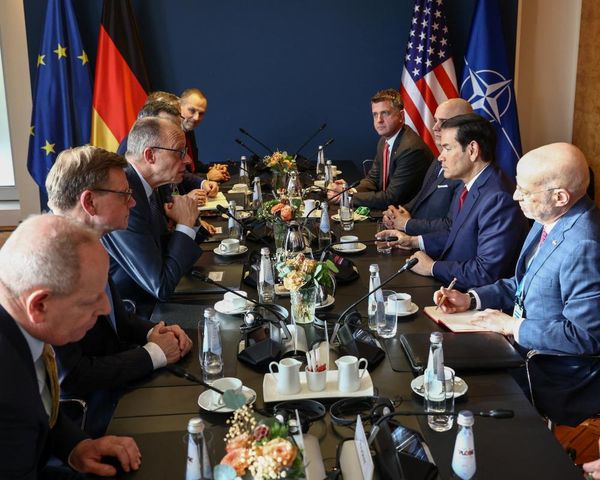
The Thai delegation, led by deputy prime minister Gen Chatchai Sarikulya, arrived in Brussels on Monday to provide a formal update regarding the country's progress in addressing concerns raised over its fishery sector.
The EU had issued a yellow card, or warning, in April 2015. The yellow card is the first step towards the EU banning imports from a country.
Thailand is the world's third-largest exporter of fish products. Failure to resolve the IUU problem, and an ensuing trade ban, could have led to losses of up to US$300 million a year for the sector.
Since the yellow card was issued, the EU and Thailand have engaged in a constructive process of cooperation and dialogue.
The Thai government has amended 138 of its fisheries regulations to align with international laws and standards.
According to the EU, it has also "reinforced compliance with its obligations as a flag, port, coastal and market state and set up a deterrent regime of sanctions".
It has also "enhanced its monitoring, control and surveillance systems. This includes remote monitoring of fishing activities and a robust scheme of inspections at port".
"With these measures, Thai authorities now have all the necessary policies in place to prevent, deter and eliminate illegal, unreported and unregulated fishing," stated the EU press release.
In the past three years, Thai authorities recorded 4,427 incidents related to illegal fishing activity, 3,883 of which were prosecuted in court.
Thailand's efforts to tackle human trafficking and to improve labour conditions in the fishing sector were also praised by the EU.
Mr Vella said the EU has confidence that Thailand, which is this year taking over the presidency of Asean, will play a leading role in reforming fishing practices across Southeast Asia.
Gen Chatchai, meanwhile, pledged that Thailand will work with the EU to promote sustainability in the industry on both a domestic and regional level.
"We did not introduce laws and improve our fishery standards just to convince the EU to withdraw the yellow card. We did it because we want to make the Thai fishery sector sustainable," said Gen Chatchai adding that Thailand now has some of the strongest laws in the world governing its fisheries.
Gen Chartchai said Thailand will work with the EU on an IUU-Free certification system for responsible fishery operators to present to their trade partners.
Thailand plans to establish an Asean IUU Task Force to monitor sustainable fishing in the region.
Thailand is also going to host the first-ever Asean IUU workshop using funding offered by the EU.
According to the EU, the global value of IUU fishing is estimated at €10-20 billion per year.
Between 11 and 26 million tonnes of fish are caught illegally a year, corresponding to at least 15% of world catches. The EU is the world's biggest importer of fisheries products.