Brussels officials will draw up a plan on how to use the EU’s little-known mutual assistance pact in the event of a foreign attack, as Donald Trump’s criticism of Nato intensifies.
EU leaders have agreed that the European Commission “will prepare a blueprint” on how the bloc will respond if the mutual assistance clause is triggered, according to Nikos Christodoulides, the president of Cyprus, who is hosting the talks.
They discussed the mutual defence clause, article 42.7 of the EU treaty, on Thursday night, before reports emerged that the US was exploring how to suspend Spain from Nato.
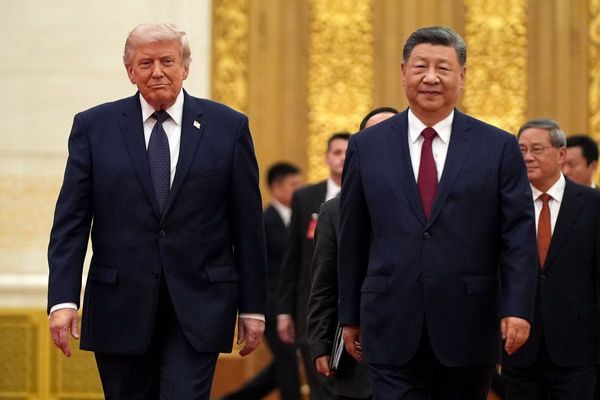
Trump, a long-term critic of the transatlantic military alliance, has stepped up his invective at “very disappointing Nato” after European countries refused to get involved in the US-Israeli war on Iran. This month he said he was “absolutely without question” considering withdrawing the US from Nato, pushing the 77-year-old alliance into the worst crisis in its history.
Pedro Sánchez, Spain’s prime minister – who has been the most vociferous European critic of the war in Iran – said on Friday that Spain was a loyal Nato member, while renewing his criticism of “the failure of brute force in the Middle East”.
In that context interest has been rekindled in the EU’s mutual assistance clause, which puts on member states “an obligation of aid and assistance by all the means in their power” if a fellow country is attacked by a foreign government or non-state actor.
Speaking on Friday, the European Council president, António Costa, said: “We are designing the handbook [on] how to use this mutual assistance clause.” There had already been “a test case” in Cyprus, he added, referring to a recent drone strike on a British base on the island at the start of the latest Middle East conflict. Costa said: “Greece, and then France, Italy, Spain and [the] Netherlands mobilised military equipment and forces … to help Cyprus to defend from external attacks.” The Royal Navy, meanwhile, was heavily criticised for having a limited number of warships available for deployment.
France is the only country to have triggered article 42.7, after the 2015 Paris attacks, when militants killed 130 people in bars, restaurants, a stadium and at the Bataclan concert hall. France called on other member states to reinforce its overseas military commitments so it could redeploy troops for domestic security.
The lack of detail in the EU treaty on article 42.7 was previously seen as a strength, enabling a flexible response, but member states now feel uncertain about how it would work.
Christodoulides said: “Let’s say France triggers article 42.7. Which countries are going to be the first to respond to the request of the French government? What are the needs of the government or of the country that triggers article 42.7?” Such issues would be part of the blueprint, he said, to “have an operational plan to put in action” if and when article 42.7 was triggered.
Cyprus, which is not a member of Nato, wants the EU to take the clause more seriously after a drone hit Britain’s RAF Akrotiri airbase on the island in March. But some EU members are cautious about any steps that could be perceived as undermining Nato’s collective defence clause, article 5.
One EU official said there was a need for shared understanding of how triggering the clause would play out. “Nato remains the bedrock of collective defence,” the official said. “But the EU has tools available that are complementary to Nato – such as sanctions, financial assistance and humanitarian aid – which could come into play in an article 42.7 situation.” Kaja Kallas, the EU’s foreign policy chief, briefed EU leaders about continuing work on the clause.
In a sign of unease over Trump’s comments, the prime minister of Poland, one of the staunchest allies of the US in Europe, expressed doubts about Washington’s commitment to Nato. Donald Tusk told the Financial Times that Europe’s “biggest, most important question” was whether the US would be “ready to be as loyal as it is described in our [Nato] treaties”.
Meanwhile, Sánchez played down reports that the Pentagon was considering punishing Nato allies deemed insufficiently supportive of the US offensive against Iran by suspending them from the alliance.
A US official told Reuters that an internal memo was circulating at the highest levels of the Pentagon that outlined retaliatory options, including suspending Spain from the alliance and reviewing the US position on Britain’s claim to the Falkland Islands.
The US official said the policy options were set out in an email that expressed frustration over some allies’ perceived reluctance or refusal to grant the US access, basing and overflight rights – known as ABO – for its strikes on Iran. The email described ABO as “just the absolute baseline for Nato”, and said that options included suspending “difficult” countries from important or prestigious positions within the alliance.
Nato officials say the organisation’s founding treaty does not include any mechanism for the expulsion of a member.
Sánchez riled Trump last year by rejecting Nato’s proposal for member states to increase their defence spending to 5% of their GDP, saying the idea would “not only be unreasonable but also counterproductive”.
Speaking in Cyprus on Friday morning, Sánchez said: “We don’t work on the basis of emails; we work with official documents and statements made by the US government. The Spanish government’s position is clear: absolute cooperation with allies, but always within the framework of international law.”
But Sánchez also renewed his criticisms of the US war in Iran. “The crisis that this illegal war has brought to the Middle East shows the failure of brute force – and has prompted demands for international law to be respected and for the multilateral order to be safeguarded and reinforced,” he said.
EU senior diplomats are expected to hold tabletop exercises in May exploring different scenarios should article 42.7 be triggered.
After France activated the mutual defence pact in 2015, some member states increased their contributions to EU and UN missions in the Sahel, Mali, Central African Republic and the Mediterranean to allow redeployment of French troops from those areas. The UK, then an EU member, allowed French aircraft to use the RAF Akrotiri base in Cyprus. EU member states also pledged to increase intelligence sharing and counter-terrorism cooperation.