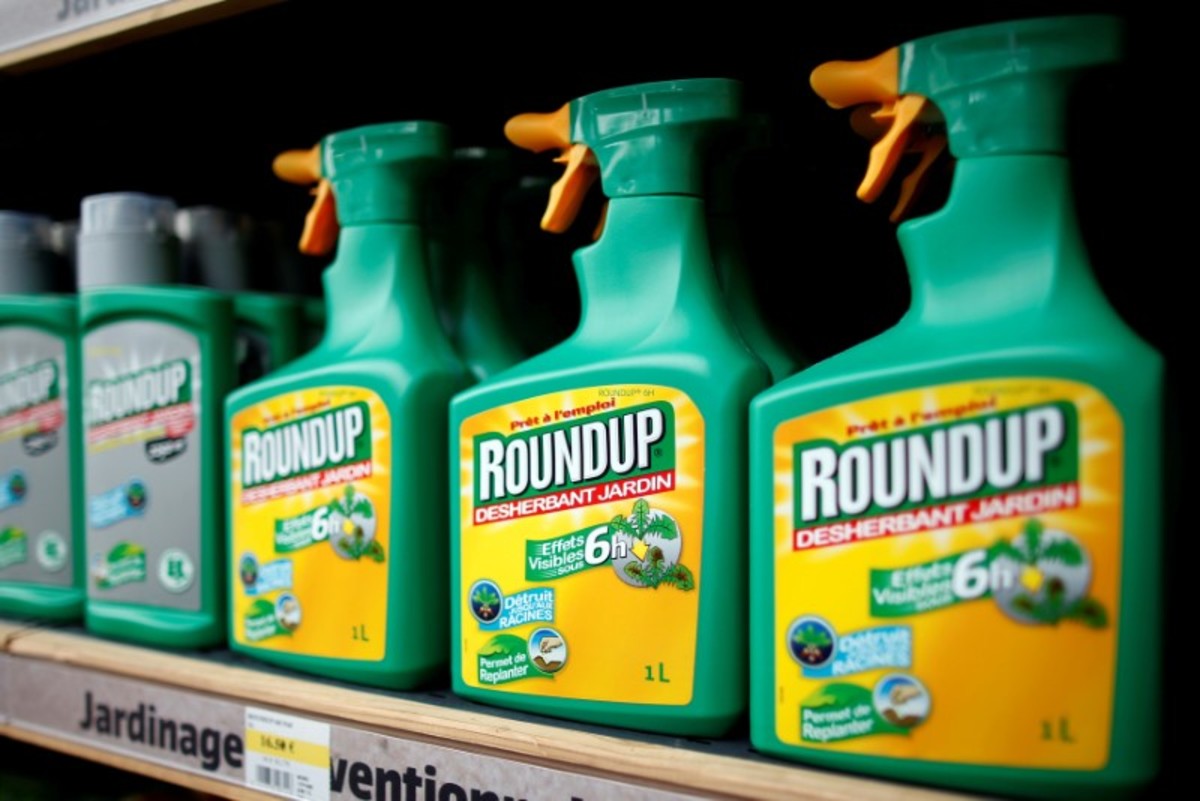
BRUSSELS (Reuters) - EU countries failed on Wednesday to vote on a license extension for weedkiller glyphosate, delaying again a decision on the widely used herbicide that critics say could cause cancer.
The European Commission said in a statement the relevant committee did not hold a vote at a meeting and that it would announce the date of the next meeting shortly.
It also failed to vote at a meeting earlier this month. The current license expires at the end of the year.
Europe has been stuck over what to do with the chemical, a key ingredient in Monsanto Co's top-selling weedkiller Roundup, after the World Health Organization's cancer agency concluded in March 2015 it was a substance that probably causes cancer.
The classification has led to mass litigation in the United States.
The EU passed an 18-month extension in June 2016 pending further scientific study.
That research came in the form of a European Chemical Agency conclusion in March that there was no evidence to link glyphosate to cancer in humans.
It was the same conclusion as that of the European Food Safety Agency and of regulatory bodies of other countries such as Canada and Japan.
In anticipation of a vote, the European Parliament called on Tuesday for the weedkiller to be phased out in the next five years, prompting the Commission to drop its proposal for a 10 year license extension.
The Commission then said it would seek to find a consensus around an extension of between five and seven years.
Weedkillers containing glyphosate have been in use for more than 40 years. European agriculture group Copa and Cogeca says the product is safe and that removing it would put EU farmers at a competitive disadvantage.
Campaign group Greenpeace has questioned the methodology of studies concluding glyphosate is safe and says there are other farming methods, including crop rotation, to reduce weeds.
(Reporting by Philip Blenkinsop; Editing by Mark Potter)