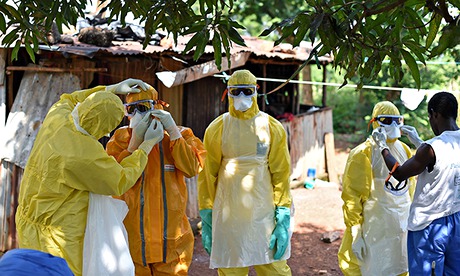
The European Union is stepping up its fight against Ebola, sending more funds, medication and supplies to the three west African countries most affected by the epidemic.
“The best way to keep Europe safe is to fight the disease on the ground,” said Christos Stylianides, the EU’s new Ebola coordinator, speaking exclusively to the Observer. “The EU has stepped up its efforts … the people of Sierra Leone, Liberia and Guinea are not alone. We want to isolate Ebola. Not the people.”
Stylianides, a Greek Cypriot who was made commissioner for humanitarian aid and crisis management this month, stressed that Ebola must be addressed as a “mega natural disaster”. He said a Dutch ship carrying vital supplies was already en route to the region.
“One of the reasons this epidemic has been so horrific is the serious weakness of the healthcare systems,” said Stylianides, who visited the west African states with the EU’s health Commissioner last week.
The World Health Organisation estimates that more than 5,000 people have so far died from Ebola, with recent cases in Mali. The outbreak has generated huge secondary humanitarian needs, ranging from food to clean water and sanitation.
The EU has committed more than €1bn (£800m) and on Friday earmarked an extra €17m (£13.6m). The IMF’s expanded support was welcomed by the US Treasury secretary Jack Lew at the weekend. “[It] will free up critical resources in these countries for both immediate economic needs and longer-term recovery efforts,” he said.
EU officials, well briefed on policies being enacted to combat the virus, said attention was also being paid to beefing up cooperation between the affected countries. “Cooperation is crucial,” said a policy maker in Brussels. “If you get rid of it in one country and not the other, then the neighbourhood is simply not safe. There are regional implications.”
Stylianides, a member of the medical profession himself before he went into politics, said in addition to shipping and airlifting supplies, the EU was also supporting a humanitarian air service to operate across the affected west African states.
“And we are investing in the development of a vaccine against the disease,” he added. “Difficult months are ahead.”