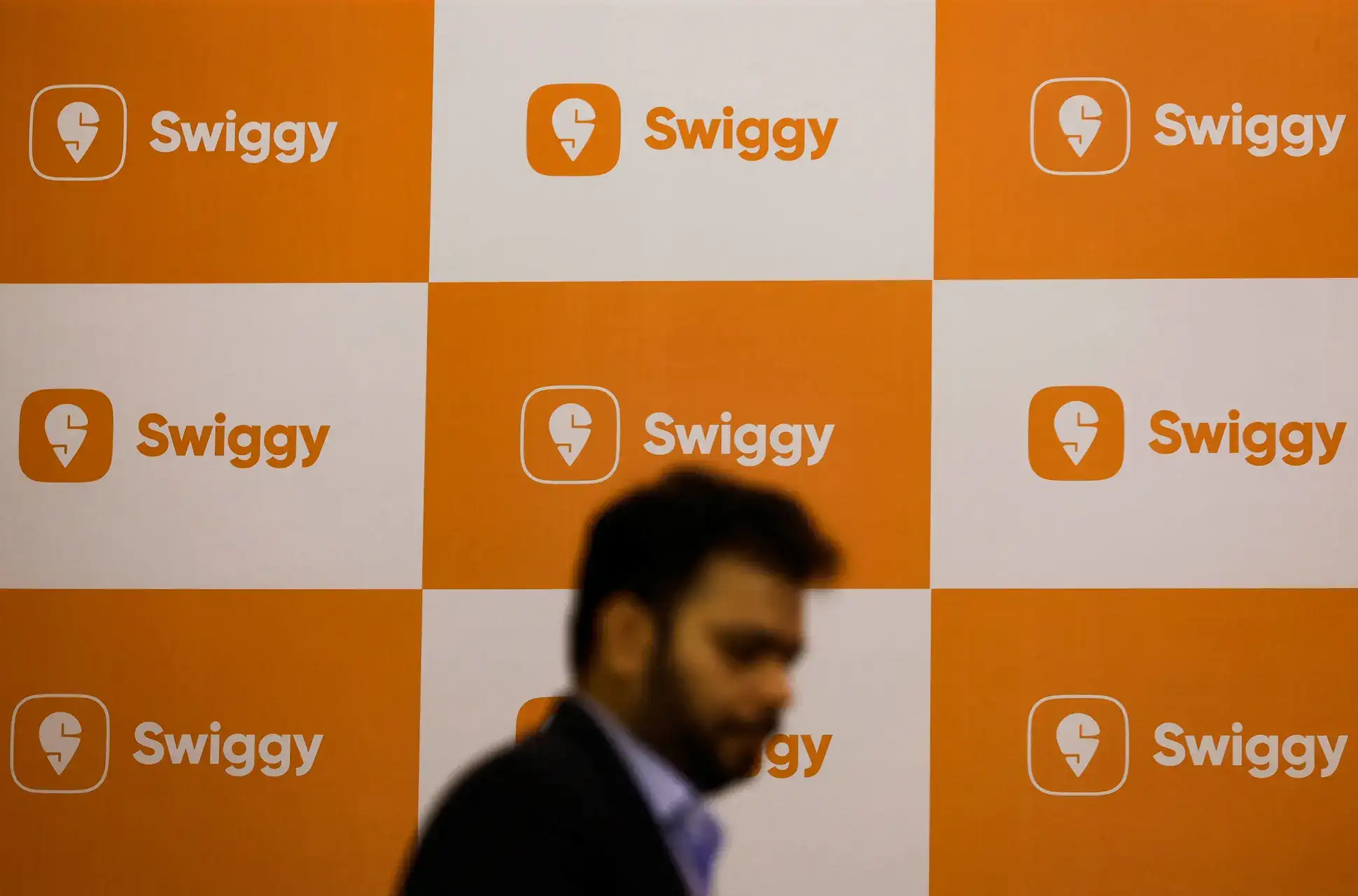
Food and grocery delivery platform Swiggy saw its stock fall about 7% to close at Rs 263.95 on Monday after announcing its fourth quarter FY26 results on Friday.
The Bengaluru-based company reported a 45% year-on-year rise in operating revenue for the March quarter to Rs 6,383 crore. It also narrowed its net loss by 26% YoY to Rs 800 crore, aided by controlled losses in its quick commerce business.
Despite strong performance in food delivery, the stock has remained under pressure due to a slowdown in its quick commerce business, Instamart, according to analysts.
ETtech breaks down the details in this explainer.
A quick recap
Swiggy’s food delivery business reported 27% YoY growth in adjusted revenue to Rs 2,304 crore and a gross order value (GOV) of Rs 9,005 crore in the March quarter. GOV grew 22.5% from a year earlier, above the company’s guided range of 18–20%.
Instamart saw improved profitability this quarter after the company reduced discounting, which it had flagged last quarter as unsustainable in the long term. However, this also led to moderation in Instamart’s growth. To be sure, this is in line with the broader quick commerce industry, which is witnessing a slowdown.
What happened to Swiggy stock?
Analysts attributed the decline in the stock price on Monday to the slowdown in its quick commerce vertical. Instamart’s GOV declined marginally to Rs 7,881 crore from Rs 7,938 crore in the December quarter.
“While everyone is seeing a slowdown in new customer acquisition, the decline in GOV is a new and unexpected development. Usually, there is significant growth in GOV in this sector, so this decline is a major red flag for investors,” said Satish Meena, founder of market intelligence firm Datum Intelligence.
A research note by brokerage firm Jefferies said, “Quick commerce, where Swiggy is number 3, presents a significant growth opportunity, but the space is facing intense competition, which will likely keep profitability under pressure. With calibrated dark-store expansion in the short-term and elevated competitive intensity, Q3’s profitability marked a trough. However, Swiggy remains prone to high volatility given its low margin base”.
What did the company say?
Speaking on an analyst call, Swiggy founder and group CEO Sriharsha Majety said that while the company is not comfortable ceding market share in quick commerce, it is making trade-offs between growth and profitability.
“If fighting for short-term relevance means spending in places that will hurt us later, I think that will compromise our long-term relevance,” he said, adding that the company is working toward its medium-term goal of building Instamart into a Rs 1 lakh crore net order value business with a 4-5% Ebitda margin.
“It’s a balancing act, but there’s no commitment to go out and lose market share. It’s important to build a more durable business. As we mentioned, more growth will come from executing on the clarity of positioning that we’ve been talking about,” he added.
Also Read: Blinkit flags growth moderation as margins improve
What's next for Instamart?
Swiggy is currently focused on rationalising incentives offered to quick commerce customers to improve contribution margins. Instamart is also being cautious about the pace of dark store expansion.
“Dark store additions remained near-flat at seven in Q4FY26 (total: 1,143), reflecting achieved densification (2.2x store count, 3.2x retail footprint in two years), with focus now shifting to improving utilisation (which dipped from 50% in Q4FY24 to 40% in Q4FY26),” brokerage firm Nuvama said in a report.
Companies typically densify a region by opening additional stores once utilisation levels approach 80-85%. Currently, store utilisation levels are operating at about 40% for Instamart, according to Nuvama.
“While food delivery execution remains steady with expanding margins, slower MTU additions and softer dark store utilisation in Instamart remain key monitorables,” Motilal Oswal said in its report.