In an investing landscape often dominated by benchmark-hugging strategies and short-term noise, the case for high-conviction investing stands out for its ability to create meaningful long-term wealth.
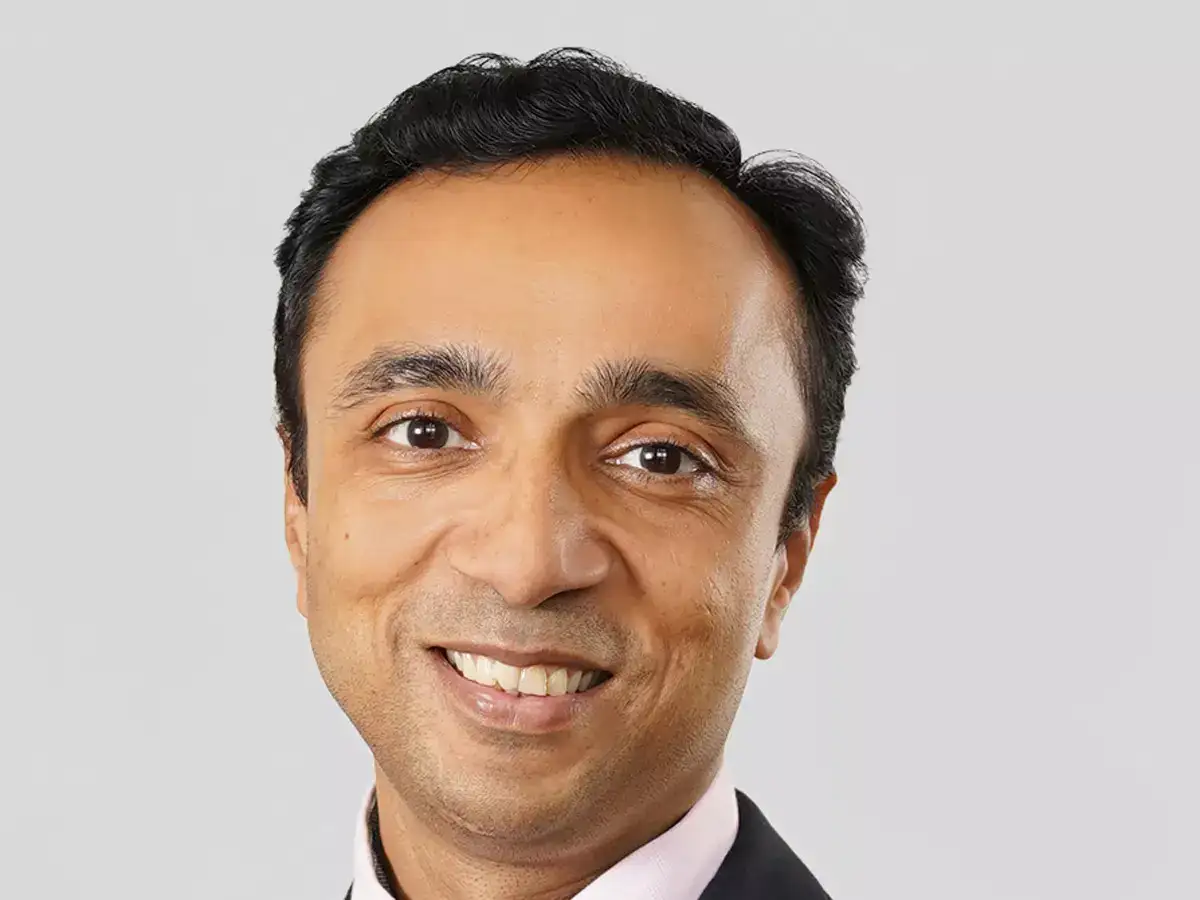
In this edition of ETMarkets PMS Talk, Alok Agarwal, Head – Quant and Fund Manager at Alchemy Capital Management, shares how a disciplined, benchmark-agnostic approach has helped deliver extraordinary outcomes over time.
Highlighting a compelling track record, Agarwal explains how an investment of ₹1 crore at inception in 2002 would have grown to ₹85 crore over 24 years—underscoring the power of concentrated bets backed by strong conviction and rigorous research.
He delves into the philosophy of building a focused portfolio of high-quality companies, the importance of identifying structural growth themes early, and why staying committed to a robust process matters more than chasing short-term trends. Edited Excerpts –
Q) Thanks for taking the time out. Please take us through the performance of the fund for FY26 which turned out to be one of the top 10 funds (Alchemy High Growth).
A) Alchemy High Growth's position among the top 10 strategies in FY26 reflects the edge of concentrated conviction over consensus, rather than index-hugging.
Having said that, the strategy is set to celebrate its 24th Anniversary on May 8, 2026. Rs 1 crore invested in the fund at inception in May 2002 would have risen to Rs 85 crore (Data as on Apr 30, 2026) compared to Rs 38 crore in BSE 500 TRI Index.
We run a benchmark-agnostic portfolio of generally upto 25 stocks across sectors, rooted firmly in GARP (Growth at Reasonable Price) philosophy—. This isn't closet indexing; it's deliberate positioning in sectors demonstrating durable earnings momentum.
Our key contributors: Overweight in Capital Markets, Power, Defence, and Metals & Mining— we identified early on the sectors benefiting from structural tailwinds. Retail financialisation, infrastructure buildout, defence indigenisation, and commodity super cycles aren't narratives; they're earnings realities.
Equally important was what we avoided. Staying away from benchmark heavyweights like IT, FMCG, Large Private Banks, and Oil & Gas that allowed us to remain less exposed to the earnings headwinds they encountered.
The cricket analogy fits well: We aim to construct a playing eleven of potential match-winners, not a balanced squad designed to minimize loss. Every name in the portfolio must possess the capability to deliver alpha independently.
High conviction demands tolerance for volatility. But over full cycles, concentrated positions on quality compounders beat diversified mediocrity decisively. FY26 validated that philosophy again.
Q) AHG has outperformed its benchmark in 15 out of 24 years—what have been the key drivers of this consistency? Since inception, the strategy has delivered 20.4% CAGR—how sustainable is this performance going forward?
A) High conviction—with a typical equity Portfolio generally consisting of upto 25 stocks across sectors—creates the potential for alpha. But active course correction converts potential into performance.
We spot structural themes early, but here's the critical part: we maintain the discipline to exit when reality diverges from thesis. We remain disciplined in our positioning, without undue attachment. It is the strength of the process, not any single call, that drives outcomes.
Delivering 20%+ CAGR# over 24 years while ranking among the top 10 strategies in FY26 reflects the strength of a disciplined and evolving investment approach. It is not about past milestones, we're hungry for more, adapting continuously while maintaining philosophical consistency.
The process focuses on holding stocks as long as they retain long-term potential—which is how you identify multibaggers. But it equally ensures timely exits when the story shows signs of breaking, without emotional bias.
Sustainability comes from process discipline, not past returns. The 20.4% CAGR is an outcome, not a promise. What endures is the disciplined investment approach behind it.
Q) Your philosophy is “Growth at Reasonable Price.” How do you balance growth and valuation in today’s expensive market environment?
A) GARP: It's About Math, Not Mythology
GARP isn't a vague concept—it's precise arithmetic.
Start with "Growth." Our portfolio qualifies only if expected earnings growth exceeds the benchmark's. Bloomberg consensus shows next 2-year earnings growth for Alchemy High Growth portfolio at 26% CAGR versus 14% for the benchmark. Growth box: checked.
But "Reasonable" doesn't mean cheap PE or trading below historical averages—that's value investing theatre. Reasonableness is established through PEG ratio: PE divided by growth.
Portfolio forward PE: 18x. Benchmark: 19x.
Portfolio PEG: 18/26 = 0.7x. Benchmark: 19/14 = 1.4x.
We're paying less per unit of growth - that's reasonableness quantified.
Here's what GARP's acronym hides: Quality can't be compromised. Portfolio ROE stands at 21% versus benchmark’s 15% - we’re not buying growth through capital destruction.
The irony is that yesteryear heroes—expensive but stagnant—inflate index valuations while delivering mediocre growth. As a result, the benchmark looks pricier than reality suggests.
As Warren Buffett said, “It’s far better to buy a wonderful company at a fair price than a fair company at a wonderful price.”
GARP ensures we do exactly that—systematically, not accidentally.
Q) The portfolio typically holds up to 25 stocks—how do you ensure diversification while maintaining conviction?
A) Sufficient research papers have established that beyond 20-30 stocks, diversifiable risk cannot be meaningfully reduced further. Below that number, you're courting avoidable concentration risk. We chose the mid-point of upto 25 stocks as the intersection of conviction and prudence.
India offers a unique advantage here: sectoral depth. India is home to multiple industries running independent cycles simultaneously—bull markets and bear markets coexisting across different corners of the economy. We are seeing varied sectoral trajectories—capital markets and defence showing strength, metals holding up well, while IT, FMCG, and oil & gas face more growth headwinds.
This structural reality makes assembling 25 potential high conviction positions not just possible, but prudent. Each position earns its place through rigorous thesis validation, not index-weight appeasement.
With 25 high-conviction positions, we maximize the probability that enough companies deliver multibagger returns to drive portfolio alpha—while ensuring no single thesis going wrong derails everything.
It's not about owning everything. It's about owning enough of the right things.
Q) Can you walk us through your “500 to 100 to portfolio” filtering process for identifying investible ideas?
A) We start with 500 stocks. Most opportunities hide where consensus doesn't look.
Stage one: Thematic filtering. Secular trends informed by macro, policy, and ground intelligence. We attend industry conferences, network relentlessly, talk to trade analysts—building a parallel universe consensus miss. Proprietary quant screeners add rigour.
Stage two: Management meetings. We conduct 100-150 company visits annually—not just C-suite meetings, but plant visits, interactions with middle management and ground staff. Simultaneously, we map the ecosystem: customers, suppliers, bankers. Financial models are built in parallel.
Stage three: Framework evaluation. Does it pass Alchemy's criteria? Competitive advantage, ROE/ROCE, free cash generation, scalability, management quality, reasonable valuation. If yes, it is likely to enter our investible universe.
Stage four: Portfolio construction. Monthly reviews. Daily monitoring. Rolling risk-reward recalibration.
Exit triggers? No fixed price targets—just ruthless honesty. When risk-reward shifts, hypothesis breaks, or better opportunities emerge, we act without sentiment.
As Warren Buffett says, "Price is what you pay; value is what you get."
Our process ensures we pay the right price for genuine value—consistently.
Q) With a high-risk profile, how do you manage downside risks during volatile market phases?
A) Those who aim to hit sixes run the risk of getting caught at the boundary. Volatility isn't a portfolio flaw—it's the price you pay for alpha. Anyone promising high returns without drawdowns is selling fiction.
But managing risk doesn't mean running to cash at the first storm cloud. We don't take cash calls —that's market timing disguised as prudence, and it rarely works.
Instead, during volatile phases, we decisively reallocate from low-visibility positions to high-conviction ones. If growth visibility has dimmed—whether due to macro, company-specific issues, or structural headwinds—we exit without hesitation. Capital then flows to names where earnings momentum remains durable and thesis intact.
Think of it as concentrating firepower where line-of-sight is clearest, not abandoning the battlefield entirely.
Our preparation isn't defensive positioning—it's ensuring every rupee works in areas with maximum probability of compounding through volatility. The portfolio may swing, but it swings around businesses we genuinely believe in.
In our view, that's risk management, not risk avoidance.
Q) The portfolio has notable exposure to metals, commodities, and ETFs like gold and silver—what is the underlying theme here?
A) Three converging forces make precious and non-ferrous metals unavoidable right now.
First: De-dollarization. Geopolitical fragmentation is driving central banks globally to diversify reserves away from dollar assets. Gold and silver aren't speculative plays—they're structural beneficiaries of a shifting monetary order. In the last 25 years, US GDP has grown 3x but US debt has grown 6x – an incremental Debt to GDP of 200% in last 25 years. As of now, their Debt/GDP is getting closer to the 130% mark – a level which historically has acted as a tipping point for most countries. Moreover, after nearly 30 years, Central Bankers in totality have higher exposure to Gold as compared to US Treasuries.
Second: AI infrastructure. The data centre buildout requires staggering quantities of copper, aluminum, and specialized metals like silver. This isn't cyclical demand—it's a multi-year capex wave that compounds through power generation, semiconductors, and transmission infrastructure. Silver has been in deficit for the last 5 years and 2026 is expected to be the record 6th straight year of deficit. As per IEA (International Energy Agency), current and planned copper production cannot meet more than 70% of 2035 world copper demand. New copper mines can take 10–20 years or longer to go from discovery to production.
Third: Supply constraints. China's capped aluminum capacity (60% of world supply), Gulf production offline from geopolitical chaos (9% of world supply), Russian sanctions limiting flows, declining inventories globally. Supply cannot meet demand, and new capacity takes years to build.
Meanwhile, Indian metal producers benefit doubly— global price strength plus domestic demand from infrastructure spending.
We're not predicting—we're positioning where visible and durable tailwinds justify conviction. Metals tick all the boxes for us: structural demand (relatively price-inelastic), constrained supply, reasonable valuations, and already in deficit.
Q) In the current market environment, where do you see the next phase of alpha generation coming from?
A) We believe that alpha migrates to where durable earnings momentum meets reasonable valuations—and right now, that's far from index heavyweights.
Metals & Mining: De-dollarization plus AI infrastructure demand creates a multi-year super cycle. Supply constraints from geopolitical chaos (Gulf aluminum offline, Chinese capacity caps, Russian sanctions) meet structural demand that won't abate. Indian producers are reporting strong growth and cash flows.
Capital Markets: The financialization of household savings continues to gather momentum. Record SIP flows, deepening retail participation, regulatory tailwinds—exchanges, brokers, wealth managers, and AMCs have healthy earnings visibility with intact operating leverage.
Power & Defence: Infrastructure capex and indigenization aren't budget rhetoric—they're visible order books translating to revenue. These aren't narratives; they're balance sheet realities. India’s power demand has been surging and peak deficits are being witnessed.
It comes at a time when big capex have been announced on data centres which would require a lot of power – hence the whole value chain benefits. In defence, the rising geopolitical issues are forcing countries to spend more.
The current defence spending to GDP ratio stands at 2.5% in the world, which can move to 6% in coming years – a number closer to the Cold War era. In our view, this rising expenditure opens up a host of opportunities.
PSU Banks: The transformation nobody believed possible—net NPAs now match or beat private banks, yet valuations remain at steep discounts.
Meanwhile, yesteryear heroes—IT, FMCG, large private banks—deliver single-digit growth at premium multiples.
We're going for structural tailwinds with durable moats.
Q) Who is the ideal investor for this strategy, given the 3–5 year horizon and high-risk profile?
A) The track record reflects the strength of the approach: 20%+ CAGR over 24 years versus BSE 500 TRI at 16%+. The strategy has delivered over time, though it is best suited to investors who can remain patient through market cycles.
Minimum horizon: 3-5 years. Non-negotiable.
High-conviction portfolios are designed to deliver alpha through cycles, not quarters. There may be periods of underperformance, at times meaningful —because we refuse to index-hug. If watching your NAV swing 15-20% in volatile phases triggers panic selling, then this strategy isn't suited for you.
The ideal investor understands that volatility is the entry fee for compounding, not a defect. They recognize that concentrated exposure on structural winners require patience while thesis plays out. The focus is on long-term wealth creation rather than short-term market sentiment.
As John Templeton said, "The four most dangerous words in investing are: 'This time it's different.'"
Our process hasn't changed in 24 years. The philosophy remains identical, and the discipline remains constant.
For investors able to commit capital for 3-5 years, navigate interim drawdowns without losing conviction, and trust process over headlines—this strategy has proven its ability to compound your wealth meaningfully.
(Alchemy High Growth is one of the Portfolio Management Services products managed by M/s Alchemy Capital Management Pvt Ltd, a SEBI registered Portfolio Manager vide registration number INP000000365.
All data as of April 30, 2026. Inception Date: May 08, 2002
#Performance related information provided herein is not verified by SEBI. Returns are net of fees, expenses & taxes (if applicable). Returns less than 365 days: Absolute, greater than 365 days: CAGR (Computed using TWRR method). Past performance is not indicative of future performance. The above performance figures are aggregate of all discretionary clients; the investor's actual portfolio may differ.)
(Disclaimer: Recommendations, suggestions, views, and opinions given by experts are their own. These do not represent the views of the Economic Times)