Only a few years ago, the idea that Hollywood would commit to making not one but a trilogy of big-budget films based on source material would have been almost unthinkable. But it’s been announced that Conn Iggulden’s popular but relatively modest Emperor trilogy about Julius Caesar is to be adapted by Lionsgate over three films.
Since Marvel announced its gargantuan five-year plan for its third phase of releases, the game has changed in Hollywood. Where before sequels would generally be left open as a possibility dependent on the success of the original, now they are planned years in advance, with each film being shot in the knowledge that another would follow it.
What’s striking about these vast cinematic universes is just how similar their appeal is to that of watching the kind of bulky American drama series that are currently so popular in box set form or on streaming services such as Netflix.
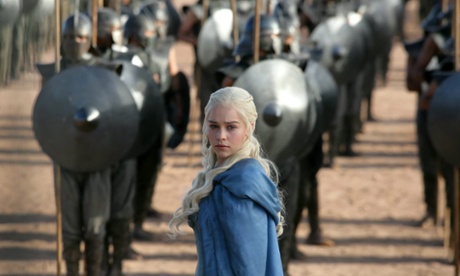
Ever since televisions started popping up in people’s households in the 50s, Hollywood has had to constantly adapt in order to persuade audiences to leave the comfort of their own homes and shell out for big-screen entertainment. Most of Hollywood’s innovations, from widescreen and Dolby stereo to 3D and CGI, have served to enhance the sensual spectacle, but the appeal of, for example, Game of Thrones and Breaking Bad lie more in storytelling and character, and the invitation to immerse yourself for hours in their distinct worlds.
Perhaps the rise of the cinematic universe is, to some extent at least, a reaction from Hollywood to the popularity of such TV shows. By planning far in advance to return to the same characters and settings, these sequels replicate the experience of anticipating a new TV season that picks up from where the last one left off, and satisfies a taste for long-term narratives. Similarly, the length of a trilogy of films, each lasting two hours-plus, comes close to that of the 12 45-minute episodes of a typical US drama, providing more time for characters to develop and stories to unfold.
There are still plenty of fundamental differences to how the two mediums are consumed. Although we tend to associate big-budget cinema with the sugar-rush sensations of noise and action, the experience of waiting for a big film to come out is more like going on a diet during Lent; fans feed lightly on the occasional teaser trailer and on-set images, before indulging in a huge feast come the release date. Modern TV, on the other hand, caters for instant gratification, with readily available box sets and streaming sites – or internet downloads – all encouraging us to indulge in gluttonous binge-watching.
Similarly, the way each is created varies substantially. Whereas American TV shows are helmed by a single showrunner, supported by a team of scriptwriters but with ultimate creative control, directors of multi-instalment films are more subservient to their producers, with only the biggest names such as Peter Jackson and Christopher Nolan allowed to leave a personal imprint on their work.
But would it be possible for these cinematic universes to combine the best of TV and film? Too often the benefits of longer-form storytelling has been wasted by an overemphasis on special effects (as in The Hobbit) or an overblown number of converging storylines (as in the most recent Avengers), but in theory the idea of self-contained films that form part of a larger narrative could offer something Hollywood has never before provided.
The dream scenario would be to see someone like Quentin Tarantino or Paul Thomas Anderson granted creative control and an ample budget to direct each instalment of a particular film series, with time to establish classic characters through some sort of juicy subject matter.
Juicy subject matter like, say Julius Caesar and the Romans. Who knows, maybe the Emperor series can deliver on its promise to combine “the sweep of 300 with the intrigue of Game of Thrones”.