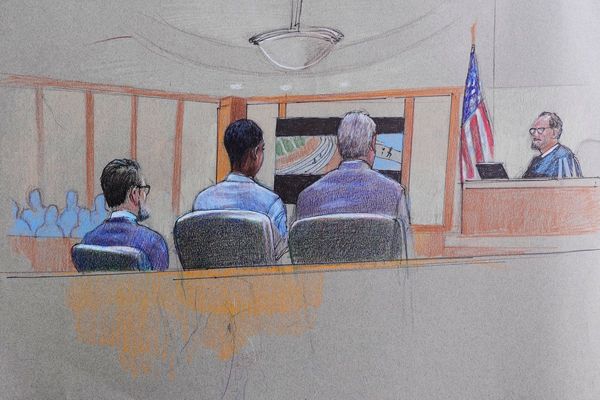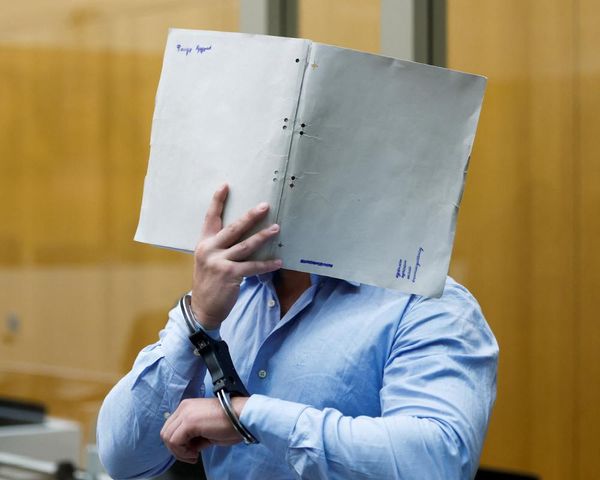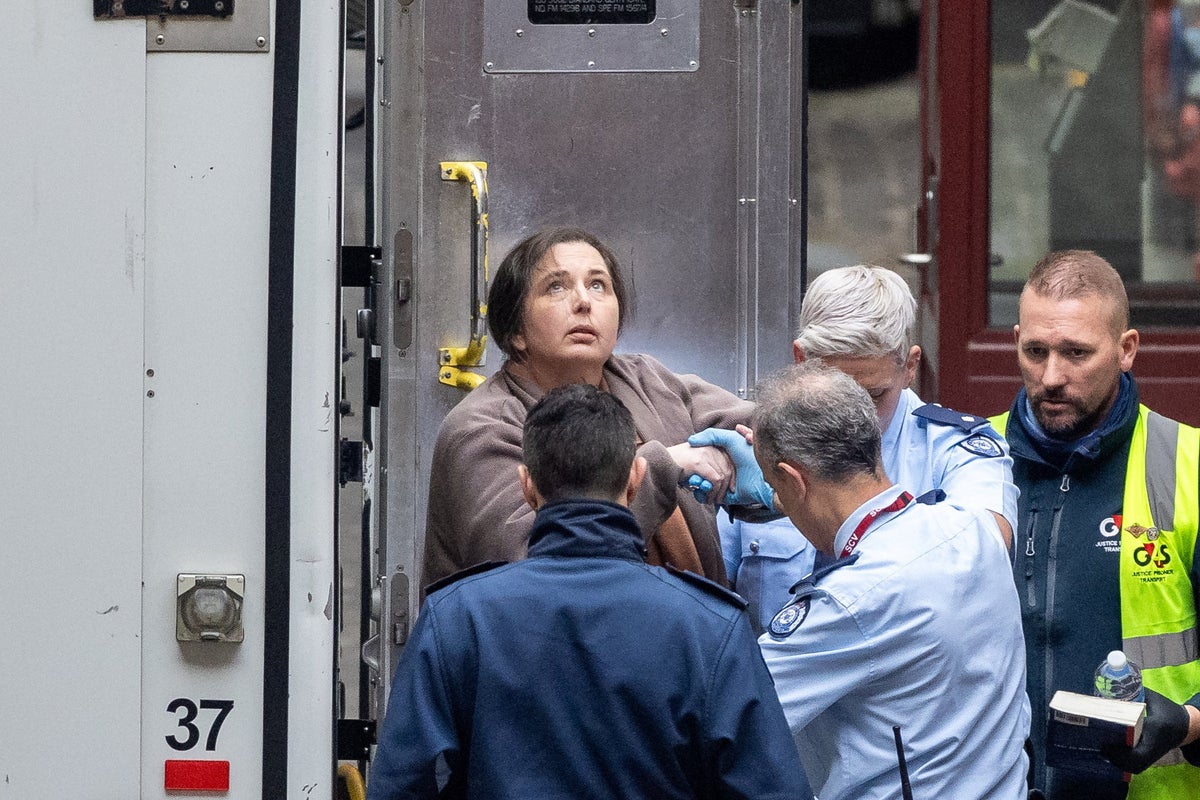
Erin Patterson, 51, who is serving a life sentence for murdering three relatives with death-cap mushrooms, has returned to court to appeal her convictions.
She was convicted of murdering her estranged husband’s parents, Don and Gail Patterson, and Gail’s sister, Heather Wilkinson and attempting to murder Heather’s husband, Ian Wilkinson, who survived after becoming seriously ill.
Patterson’s lawyer today argued that the jury sequestration was fundamentally flawed because jurors were housed in the same hotel as police, media and others connected to the trial.
Richard Edney has argued in court today that even if the jury did not actually interact with anyone involved, they had the opportunity to encounter people from one side of the case.
He calls the court’s failure to prevent this an “inexplicable” and “catastrophic” error in such a high-profile trial.
The case centres on a July 2023 lunch at Patterson’s home at Leongatha in Victoria, where she served beef Wellington containing poisonous death-cap mushrooms.
Key Points
- Patterson is appealing conviction on seven grounds
- Erin Patterson’s lawyer says jury’s sequestration arrangements were ‘catastrophic’
- Defence says ‘dangerous’ phone evidence unfairly prejudiced Patterson’s trial
Patterson’s lawyers complain of ‘unfair’ cross-examination
05:53 , Maroosha Muzaffar
Erin Patterson’s defence lawyer Richard Edney has argued that prosecutors subjected her to unfair and oppressive cross-examination during her trial in Morwell last year.
Presenting the fifth ground of appeal, Edney said the prosecution’s questioning of Patterson was repetitive.
“But also asking the applicant whether another witness was wrong, mistaken, or incorrect, in our submission, really diverted the jury from their proper task,” he said.
“The jury might have impermissibly thought or wondered why the applicant didn’t give an explanation, despite those directions that the jury got in relation to standard of proof and the burden of proof.”
Defence argues there was ‘selectivity’ of the evidence during trial
05:47 , Maroosha Muzaffar
Erin Patterson’s defence argued that the prosecution did not properly challenge medical evidence and that there was “selectivity” of the evidence.
Her lawyer, Richard Edney, said there was evidence Patterson had at least a mild diarrhoeal illness, but prosecutors largely dismissed her symptoms as self-reported and argued during the trial that she had faked being sick to conceal her role in poisoning her relatives.
Edney argues the prosecution should have questioned medical experts more thoroughly about evidence that could have supported Patterson’s claim that she was genuinely unwell.
However, Justice Peter Kidd pushed back, saying the defence may be mischaracterising the prosecution’s case and noting that the trial judge had already considered and rejected several of these arguments.
Defence says ‘dangerous’ phone evidence unfairly prejudiced Patterson’s trial
05:25 , Maroosha Muzaffar
Erin Patterson’s defence argued this morning that mobile phone tower evidence and online reports of death-cap mushroom sightings near Outtrim and Loch should not have been admitted at her trial because they were potentially “dangerous” and unfairly prejudicial.
Defence barrister Veronika Drago said expert evidence from digital forensics specialist Dr Matthew Sorell turned objective cell tower data into a more subjective interpretation.
She noted that trial judge Justice Christopher Beale had found the phone evidence did not prove Patterson visited either location, but only indicated the possibility that she may have been there on the dates in question.
The locations were significant because death-cap mushrooms had been reported there on iNaturalist – in Outtrim by fungi expert Dr Thomas May on 21 May 2023 and in Loch by former poisons information specialist Christine McKenzie on 18 April 2023.
The defence says presenting the two sets of evidence together risked creating an unfair impression about Patterson’s movements and her alleged access to death-cap mushrooms.
Patterson is appealing conviction on seven grounds
05:07 , Maroosha Muzaffar
Erin Patterson, 51, is challenging her convictions for the deaths of three relatives, but is not appealing her life sentence.
If the appeal succeeds, the convictions could be overturned, with the court able to order a new trial or acquit Patterson.
Her lawyers have put forward seven grounds of appeal. Among them is a claim that the jury’s sequestration was seriously flawed because jurors stayed at the same regional hotel as police and media representatives while considering their verdict.
The defence also argues Patterson faced an unfair and oppressive cross-examination during her trial.
Another ground concerns evidence about Patterson’s movements and death-cap mushrooms.
Her lawyers say mobile phone tower data and reports of death-cap sightings near her home should not have been presented to the jury.
Prosecutors had used phone data to suggest Patterson may have travelled to two locations after mushrooms were reported there.
The defence is also challenging evidence from people who knew Patterson through a Facebook true-crime group.
Her lawyers argue their evidence was irrelevant, including messages in which Patterson said she wanted “nothing to do” with her parents-in-law.
Defence says evidence ‘compromised’ Patterson’s right to silence
04:35 , Maroosha Muzaffar
Erin Patterson’s defence has argued that a trial judge’s decision to exclude evidence about her interest in mushrooms effectively forced her to testify about it.
Defence barrister Veronika Drago told the appeal court that photos and videos found on an SD card at Patterson’s home showed she had previously foraged for mushrooms.
The defence wanted to use the material to challenge the prosecution’s suggestion that Patterson’s claims about innocently picking mushrooms were untrue.
But the trial judge ruled the evidence inadmissible.
Drago argued this left Patterson having to testify that she had foraged for mushrooms before in order to explain her interest in them.
She said this “compelled” Patterson to give evidence and compromised her “right to silence”.
The defence also argued the ruling effectively shifted the burden of proof onto Patterson, rather than requiring the prosecution to prove its case.
Erin Patterson’s lawyer says jury’s sequestration arrangements were ‘catastrophic’
04:09 , Maroosha Muzaffar
Erin Patterson’s defence has argued that a decision to house jurors in the same hotel as police and prosecution figures during her murder trial was a serious failure that could have affected the verdict.
Defence barrister Richard Edney described the jury’s sequestration arrangements as a “fundamental irregularity” and called what happened “catastrophic”.
Patterson’s lawyers have acknowledged there is no evidence that jurors actually spoke to prosecutors or police at the hotel. But they argue that simply being around key figures from the prosecution could have created a risk of improper communication or subconscious influence.
Patterson is appealing her convictions for murdering three relatives and attempting to murder another relative using poisonous death cap mushrooms.