When bass-baritone and current New York Philharmonic artist-in-residence Eric Owens takes the stage at David Geffen Hall this Wednesday and Thursday, he’ll be simultaneously paying tribute to the history of American classical singing – and helping to shape its future, too.
While the programme, titled In Their Footsteps: Great African American Singers and Their Legacy, takes stock of repertoire that was dear to Marian Anderson, William Warfield, Betty Allen and George Shirley – four singers who enjoyed strong relationships with the Philharmonic – this week’s list of performers also features rising vocalists from a generation that is a touch younger than Owens himself. (That group includes tenor Russell Thomas and soprano Laquita Mitchell.) “I’m doing Ol’ Man River and I’m doing some of Porgy and Bess,” Owens says, but adds that he wanted “to throw it at them” and allow the younger musicians to carry a large portion of this week’s sets.
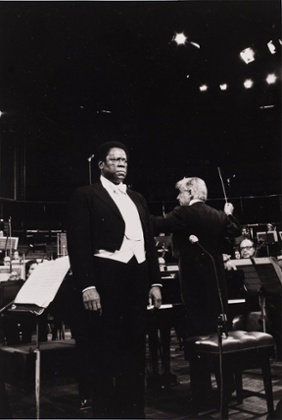
In addition to singing and hosting the concerts, Owens’s dates will also be making Philharmonic history in another, subtle way, as they will mark the first occasions during which New York’s home orchestra will play any of the music from ragtime innovator Scott Joplin’s opera Treemonisha. That debut has been a long time coming – especially when you consider that Joplin’s opus was in the repertoires of some of the singers whose associations with the Philharmonic are being celebrated at these very gigs. But better late than never. (And here’s hoping that the Philharmonic’s performances of Joplin’s ingenious prelude and the arias The Sacred Tree and Wrong is Never Right prime the pump for a complete performance of Treemonisha, down the road.)
A sense of patient, big-picture aesthetic activism also informs Owens’s appreciation of his forerunners in the classical sphere. He notes that the concert-singing world has historically offered more opportunities to African Americans than the opera world – if only because the former’s sacred-music bias has taken the conceptual threat of interracial romance off the boards. When discussing Anderson’s debut at the Metropolitan Opera, in Verdi’s Un Ballo in Maschera, Owens observes “it was in a role that didn’t require her to have any sort of romantic linkings with anyone. She basically played a witch, you know? At the time, that’s what was possible for people. And that’s how it had to happen – and that’s how it did happen … What’s so special about the concert realm, and this celebration, is that was where – for the most part – they were accepted.”
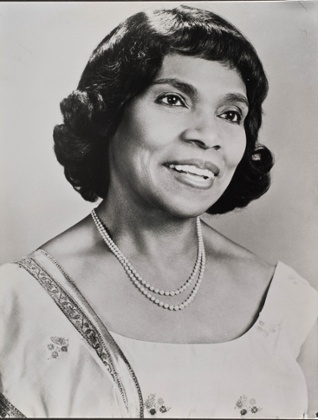
In a promotional video for the Philharmonic dates, you can see Owens choking back tears when thinking of the challenges faced by the singers being honoured this week. “We hear stories, but I’m sure there are a lot of things we haven’t heard about that were probably even more horrifying,” he tells the Guardian. “It’s a testament to them that they proceeded forward, despite having to deal with, I’m sure, amazing bigotry. You have a young male or young woman who loves the music and they want to lend their voice to it – and with a determination to be seen as an equal. I can’t help but feel gratitude that they were willing to put themselves out there.”
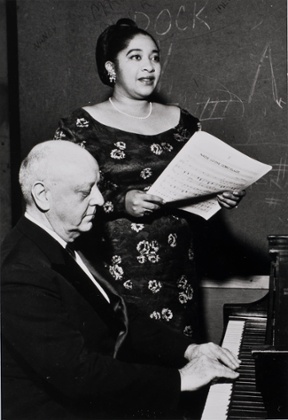
Owens remembers meeting Allen in his teenage years, when she was helping judge a singing competition that he participated in. It was the first time he had encountered an African American classical artist in such a position of authority. “And subsequent to that time, I developed this wonderful bond with her,” Owens recalls. “And she did have quite a relationship with the Philharmonic – especially around the time when Pierre Boulez was the director. So you know she was a no-brainer [to include].”
He lights up, too, at the mention of Allen’s recordings with composer Virgil Thomson. “Ah, yeah! That’s wonderful: Praises and Prayers! … You hear every word, and there’s deep meaning behind those words. There’s this wonderful bright, clarion sound that I just love.”
While Owens and his chosen collaborators will be looking back at some mid-20th-century repertoire, this week, this expert in the contemporary music of John Adams is also eloquent on the present-day nature of American racial battles, too. Citing the supreme court’s gutting of the Voting Rights Act – as well as Alabama’s recent move to shut down crucial, ID-granting DMV offices in majority-black counties – he says “here we are back again, talking about some of these things.”
That state of affairs, Owens says, makes it all the more necessary to perceive and celebrate the tradition of artists who wanted to share “something beautiful” while also “fighting the good fight”.