NEW YORK — Eric Adams appeared on the brink of winning the city’s Democratic mayoral race on Tuesday after a pivotal release of absentee ballot results placed him at the top of the pack by a razor-thin margin over Kathryn Garcia.
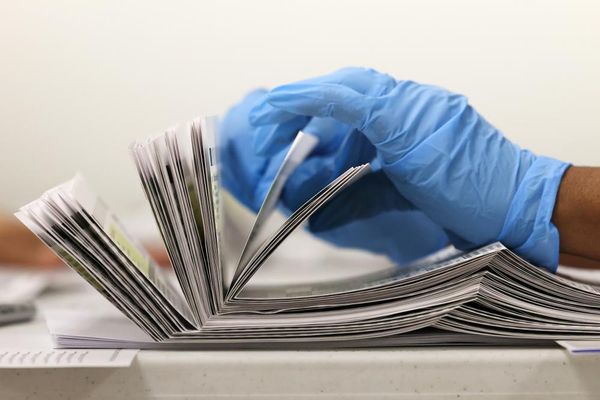
The Brooklyn borough president led Garcia by just 8,426 ballots after more than 120,000 newly counted absentee ballots were added to the unofficial Board of Elections tally.
When only in-person ballots were in the mix, Adams held a 14,755-vote lead over Garcia, meaning the ex-sanitation commissioner gained significant ground in the absentees.
However, the Board of Elections said earlier Tuesday that just 4,000 ballots remain outstanding because they include errors that voters are allowed to fix and send back, suggesting Adams’ lead is sizable enough to hold.
The Board of Elections — which is still reeling from accidentally including 135,000 “test” ballots in a since-scrapped mayoral race tally last week — didn’t drop the absentee results without a slight hiccup.
After first promising in a tweet to release the results around “brunch” time, the board didn’t unveil them until just before 7 p.m., sparking a fresh round of sardonic jokes on social media about the dysfunctionality of the error-prone board.
During a regularly held Tuesday afternoon meeting before the absentee dump, the board’s commissioners reiterated apologies for the test ballot bungle.
But Michael Michel, one of the board’s Republican members, also offered praise for BOE staff for carrying out what marked the first ranked-choice election in New York City history.
“All the things that happened with this new system, which has never been pulled off in a city as large as New York, and so your staff and everybody should be congratulated,” Michel said. “I’ll probably get beat up for saying that.”
The test ballot fiasco has prompted renewed calls for BOE reform, with state legislators in Albany already pushing bills that would overhaul the makeup of the board.
As it currently stands, the Republican and Democratic county chairs in all five boroughs appoint one member each to the board, with no requirements for picks having professional experience of running elections.
The winner in the Democratic primary is set to face Curtis Sliwa, a Republican, in the November general election. That race is widely expected to be a one-sided affair in deep-blue New York.
This is a breaking news story. Please check back for updates.
____