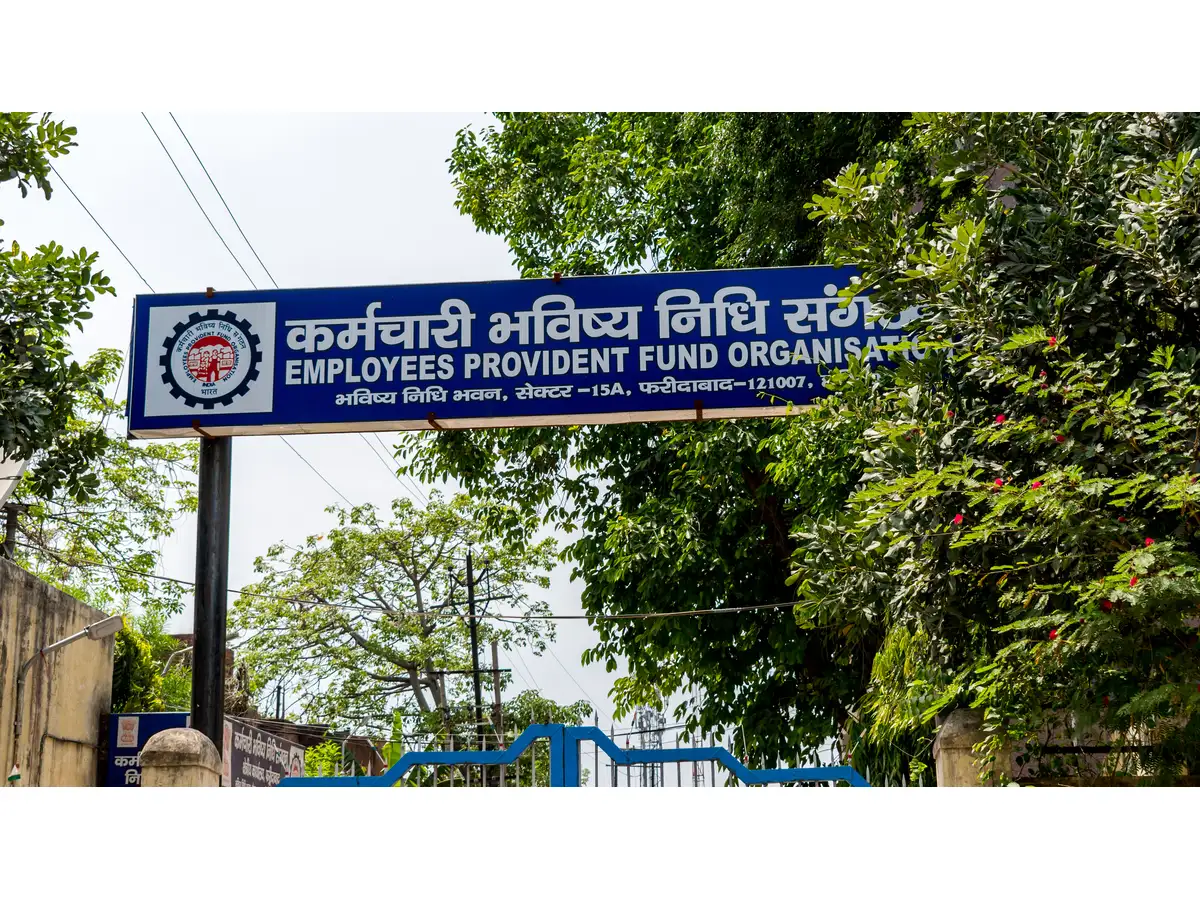
On April 15, 2026, Patna High Court Chief Justice Sangam Kumar Sahoo and Justice Harish Kumar invoked the doctrine of unjust enrichment and ruled that the Employees' Provident Fund Organisation (EPFO) authority can't retain appeal money deposited by an assessee for nearly 11 years, especially since the PF assessment itself was set aside.
The Patna High Court also said that by retaining Rs 10 lakh deposit money of the assessee, EPFO has deprived him of the use of his money, which he is legitimately entitled to. The court said if EPFO had returned this money to the appellant after the order of assessment was set aside, he could have invested it and earned interest.
Thus, by keeping the money, EPFO not only unjustly enriched itself and earned interest from it but also deprived the appellant the chance to earn interest. For this reason, the Patna High Court ordered EPFO to pay interest on this money.
Also read: Employee wins Rs 50,000 compensation from EPFO for 10-year delay in processing EPF transfer claim
Background
The situation arose from an PF assessment order passed under the Employees' Provident Funds and Miscellaneous Provisions Act, 1952, directing an assessee organisation to deposit over Rs 20 lakh towards provident fund dues.
The assessee decided to challenge this order at the EPF Appellate Tribunal but was directed to deposit this money. Initially he could not deposit this money but later, on Patna High Court's order, he deposited 50% of the money i.e. Rs 10,12,692 through four different challans within the time stipulated by the court.
Since the order passed by the Patna High Court in the writ petition was complied with, the EPF Appellate Tribunal, New Delhi on June 2, 2011, set aside the PF assessment order and remanded the matter back to EPFO with a further direction to determine the liability afresh.
However, after being sent back to EPFO, the case lingered in the Provident Fund department for nearly 11 years, with the provident fund authorities reportedly ignoring the requests from the organisation.
While the appeal was still pending, the Area Enforcement Officer, Nalanda, submitted its report on December 14, 2011 as well as on May 8, 2012, calculating the organisation's liability from September 4, 1999 to April 3, 2004 to be Rs 49,453.
The assessee paid the Rs 49,453 due by a separate demand draft as the PF officer told him that the issue of such adjustment and refund of his Rs 10.12 lakh previously deposited with EPFO would be taken up separately by the department.
After he deposited Rs 49,453 through demand draft No.710306 dated January 25, 2023, he submitted two letters to the Regional Provident Fund Commissioner-II mentioning that he had paid the assessed amount of Rs 49,453 and, therefore, the Rs 10,12,692 with interest which was lying with the Provident Fund Department, should be returned to him.
However, despite the assessment being set aside, the amount of Rs 10,12,692 deposited by the assessee following the previous Patna High Court order was retained by the EPF authorities for over a decade, as reported by LiveLaw.
According to the assessee, when the Regional Provident Fund Commissioner-II, Bihar, Patna, himself observed that the request for refund would be taken up separately, after deposit of the assessed amount of Rs 49,453, it should have been done immediately with interest. However, this did not happen.
Instead on February 22 and 23 of 2023, a new condition was imposed by EPFO that corresponding to penal damage and interest amount, if any, will be calculated and adjusted before processing the request for the refund of excess amount of Rs 10,12,692 deposited by the assessee.
According to the assessee, there was no valid reason or justification for the Provident Fund department not to refund the extra Rs 10,12,692 with interest to him which had been lying with them since October, 2009.
The amount was finally refunded to him in 2023.
Based on this, he took his case to the Patna High Court, arguing that the appeal process has dragged on for nearly 11 years and even though the final assessment in 2022 determined his total liability at only Rs 49,453, the excess amount was not refunded promptly and so according to him, EPFO owed him interest for the delay.
Patna High Court order and analysis
The EPFO's lawyer contended that there was no statutory provision mandating payment of interest on such deposits and that the amount had been deposited following court directions.
The Patna High Court rejected this contention of EPFO and said that it is an undisputed fact that Rs 10.12 lakh was deposited in 2009 and refunded only in October 2023, and that the EPFO authorities had retained and used the money during this period.
The Patna High Court said that the ratio laid down in the case of Sahakari Khand Udhyog Mandal Ltd. and other decisions cited are squarely applicable in the present case relating to the doctrine of unjust enrichment which postulates that no person can be allowed to enrich inequitably at the expense of another and unjust enrichment arises where retention of the benefit is considered contrary to justice or against equity.
The Patna High Court said that once the assessment order was set aside in 2011, there was no justification for the EPFO authorities to retain the deposited amount.
The Patna High Court also rejected the argument that the delay was due to quasi-judicial proceedings, and said that Tribunal Rules require disposal of appeals, as far as possible, within six months, whereas in the present case the matter dragged on for nearly 11 years without any fault attributable to the assessee.
Finding no infirmity in the Single Judge's order, the Court declined to interfere and upheld the direction to pay interest at 6% per annum, reported LiveLaw.