Interview with Viacheslav Yakovlev — Environmental Engineer and Representative of a Family Environmental Monitoring Company
In a world where ecological stability is not only a value but a necessity, both individuals and businesses face the challenge of proving safety. How clean is the air indoors? Does noise exceed permissible levels? Does water contain harmful components? Such data becomes a legally significant tool for protection, development, and accountability.
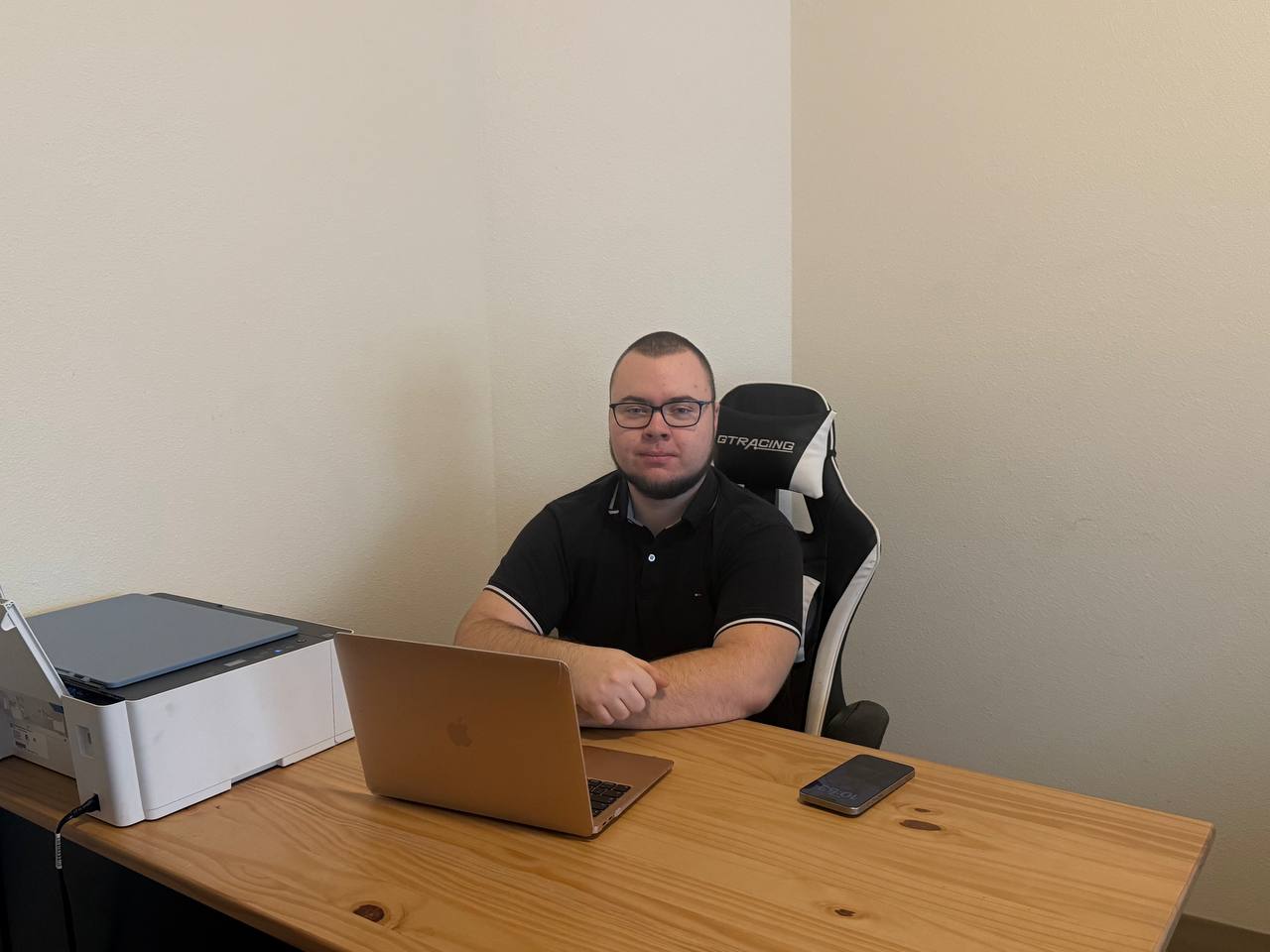
Viacheslav Yakovlev is an expert who works with this data daily. For eight years, his professional trajectory has been linked to environmental engineering and monitoring, and the Yakovlev family company serves dozens of clients monthly, measuring air quality, noise, wastewater, and other environmental parameters. In this interview, he shares his career path, the specifics of the industry, and a rare inside perspective on a field often overlooked but essential for any modern facility.
Viacheslav, let’s start with the basics. What exactly does your company do, and what is your role as a specialist?
— Simply put, we measure the actual state of the environment. I visit sites and take measurements from various sources — it could be anything: vents, furnaces, emission points. Sometimes it’s a large industrial facility, sometimes a restaurant kitchen, or even a private apartment where residents are disturbed by nighttime noise. The data then goes to our office, where we prepare reports. If there are no violations, the client receives a certificate of compliance. If there are, they receive a report of the violation. We are not a regulatory authority: our job is to measure and show the real picture, not to shut down facilities.
You’ve been working in environmental monitoring for eight years. Was this a conscious choice or a coincidence?
— It was a natural path — this is a family business. My parents were involved in environmental measurements for many years, and I gradually became fully engaged in the process. I have not worked in other fields; environmental monitoring has been my focus from the start, and I never planned to change direction.
Most people imagine an environmental engineer as someone who measures air pollution. But your scope is broader, isn’t it?
— Yes. We measure harmful substances in the air and at emission sources. Other specialists in our structure handle wastewater, radiation, and noise. Even wet snow on a site is monitored because meltwater can contain pollutants. There are many regulations, each linked to real risks for people.
How is demand formed? Do businesses or private individuals contact you more often?
— We have a wide range of clients. On average, we serve 20–60 clients per month. Sometimes it’s a large factory, sometimes a family living above a nightclub and unable to sleep due to noise. Restaurant chains are frequent clients because they have multiple emission points, each requiring documentation. We operate across Ukraine: Odessa, Donetsk, and other cities. The geography is broad, but the market is fragmented: sometimes only one company serves a city because demand is steady but specialists are few.
What about competition? Is this field too niche or attractive?
— There is competition, but it’s not aggressive. Usually, 1–2 companies operate in a city. A new, persistent company can capture part of the market by offering better conditions, being flexible, or handling non-standard requests. For example, we can measure at night — government companies cannot, and many measurements are needed precisely during nighttime. That’s our strength.
Many think environmental monitoring is highly scientific. Yet you work without a specialized degree. How important is formal education in this field?
— Formal education isn’t essential. Practice matters: you need to learn how to use equipment, follow methodologies, and calculate measurements correctly. Everything else comes with experience. No one in our company came from university with ready-made skills; we train internally.
Technologies have clearly evolved over eight years. Do you see changes in standards and approaches?
— Not significantly. The regulatory framework in Ukraine has been established for a long time, much inherited from the Soviet system. European standards are gradually integrated, and regulations are getting stricter; in some areas, our requirements are even tougher than in the EU. But there are no revolutions in methods. In environmental monitoring, consistency is valued — data must be comparable year after year.
Your company has received numerous awards. What does industry recognition mean to you?
— Every year, we receive the status of “Industry Leader.” It’s more than a decorative certificate — it confirms stable trust. When you work with dozens of sites monthly and remain reliable, the market notices. For us, it’s a marker that we are doing everything correctly.
You work with real ecosystems that can be vulnerable. Do you feel responsible for the quality of the surrounding environment?
— Definitely. We are not activists; we don’t carry placards, but our contribution is concrete. Without accurate data, you cannot prove sanitary violations, develop a site, protect residents, or start production. We provide a tool that influences decisions. It’s quiet but significant responsibility.
How do you see the future of the industry? Will it remain niche or expand?
— I think it will become even more in demand. Cities are growing, population density is higher, and people value quiet and clean air. The more civilized society becomes, the higher the demand for environmental measurements. This means the profession will grow.
If a young specialist approached you today saying, “I want to do this, where should I start?” what would you advise?
— Come and work. Observe how measurements are taken, understand why noise is higher in one location than another, see how fuel type, ventilation, and seasons affect it. This field cannot be learned theoretically — only through practice. With patience and attention, one can become a professional.
One philosophical question: what does environmental monitoring mean to you personally?
— It’s a way to see the world without illusions. No emotions, no “it seems like,” only numbers. They show where it is safe and where it is not. That’s the honesty of the profession.