Winner: Cardiff Metropolitan University
The centre for student entrepreneurship (CFSE), created in 2013, was set up to encourage students, graduates and staff to engage in entrepreneurship education. The CFSE works across all five of the university’s academic schools
A large part of CFSE’s role involves engaging with local businesses to raise the university’s profile within the community while providing the students with real-life experience of entrepreneurship.
Students are given the opportunity to have their own business start-up manager who can help them with business planning as well as provide advice on funding opportunities. In the autumn term, competitions such as the Innovation Challenge, which asks students to add value through innovation to a mystery object, help to engage students in entrepreneurship.
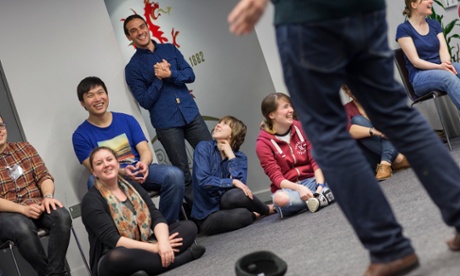
The spring term is about equipping students with the knowledge and skills needed to set up and run a business. It includes the Create programme, a five-week workshop series that brings in local drama companies to teach students valuable communication skills; web developers who help the students build web pages; and new start-ups who talk about their experiences of setting up a business.
The summer term focuses on the process of starting a business and includes a five-day course, the Countdown to Launch, in which budding entrepreneurs take part in a number of interactive workshops, delivered by industry professionals. On the final day, the entrepreneurs pitch their business plan to a panel of judges. This year, the centre invested £6,000 in six new start-ups, ranging from a clothing brand to an app development company.
In 2013-14the CFSE engaged with 1187 students in extra-curricular entrepreneurship activities. Of these, 54 students and graduates received one-to-one business start-up advice and guidance, 17 student and graduate start-ups were established and £7,000 was invested in start-up businesses. Julian Wreford, a student who benefited from one-to-one support and funding to start his app development company Wired Voltage, described the Countdown to Launch event as “a truly inspiring experience”.
Runner up: Ravensbourne University
The Self-Employment and Enterprise Diversity Scheme (SEEDS), launched in June 2014, is the first in the UK higher education sector to be aimed at dyslexic and dyspraxic students to help them become entrepeneurs. SEEDS is a nine-month programme of high-level industry mentoring, workshops and life coaching tailored to the learning styles of students who are not neurotypical.
SEEDS builds on research suggesting that people with dyslexia have stronger skills in oral communication and problem-solving, and provides an opportunity for ambitious neurodiverse students and graduates to take their ideas forward.
Eleven participants were selected for the programme, which involves a series of monthly meetings with high-profile mentors and group workshops on topics such as visual business planning. Students have already benefited: one is developing an app connecting media professionals, while another is shooting a pilot on his iPhone to pitch to the BBC, with feedback from his mentor. A third is developing a business plan for a 2D animation company.
Runner up: University of Southampton
The university has introduced a set of new, interdisciplinary study opportunities, including a module focusing on social enterprise. A few weeks after completing the module, a number of students travelled to India for the inaugural Spark India Boot Camp together with students from the Institute of Management, Ahmedabad (IIM).
Spark India focused on three specific business challenges, in partnership with social enterprises based in India. Southampton and IIM students developed a crowdfunding campaign and designed micro-finance solutions for Aakar Innovations, founders of the Freedom from Shame campaign, which supports women in rural India to overcome stigma associated with feminine hygiene and menstruation. Students also supported social ventures related to affordable roofing solutions and developing education through mobile-based technology.
Students found the experience life-changing. The students’ efforts on behalf of Freedom from Shame saw it become the country’s fastest campaign to attract 100,000 rupees via crowdfunding, and it is on course to increase that to 200,000 rupees.