A monster is lurking beneath the streets of a quiet seaside town in Devon.
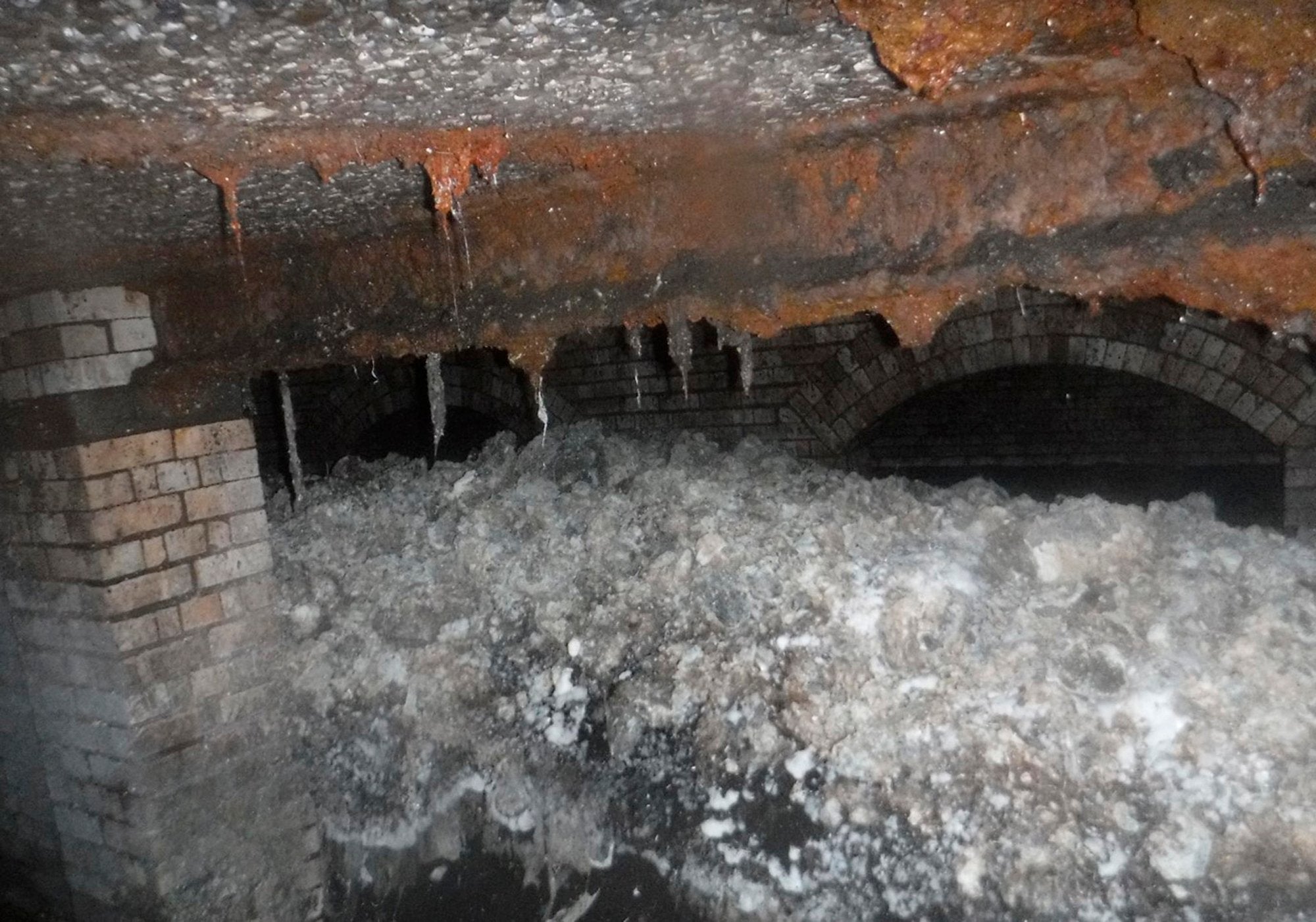
A gargantuan fatberg 64 metres long has been discovered blocking a sewer running along the seafront in Sidmouth.
The huge mass, roughly the size of six double-decker buses, is made up of a conglomeration of congealed grease and oil, and is brimming with food waste, wet wipes, nappies, condoms and other refuse.
It is expected to take two months to remove, according to South West Water, who said it was the largest they had ever come across.
SWW’s director of wastewater, Andrew Roantree, said: “It shows how this key environmental issue is not just facing the UK’s cities, but right here in our coastal towns.
“It is the largest discovered in our service history and will take our sewer team around eight weeks to dissect this monster in exceptionally challenging work conditions.”
Sidmouth Town councillor Paul Wright told The Independent: “We’re quite surprised by the sheer size of the thing. I thought I misheard last night when I heard the size, but it’s 60-plus metres.
“The question that sprung to my mind was when did they last check the sewers? It hasn’t grown overnight. It could be absolutely ancient. It could be the oldest fatberg as well as being so long. It’s quite incredible.”
South West Water has assured the public the discovery poses no health risk to swimmers in the seaside town, and work to remove the blockage is due to start on 4 February.
One local woman who did not want to be named told The Independent: “I haven’t seen it, or been down there. This is not Sidmouth’s idea of fun.”
Sidmouth’s discovery is however not the largest fatberg ever found in the UK. In 2017, a titanic 250-metre-long fatberg was revealed to have been spawned in sewers beneath Whitechapel, in east London.
Asked whether the town may consider displaying a chunk of the conglomeration, as the Museum of London did when the London fatberg was removed, Mr Wright said he thought it was unlikely, and one potential avenue was exploring whether the berg could be turned into renewable energy.
In 2017 Thames Water said it was turning London’s fatberg into around 10,000 litres of biodiesel, or enough to power 350 London buses for one day.
Additional reporting by PA