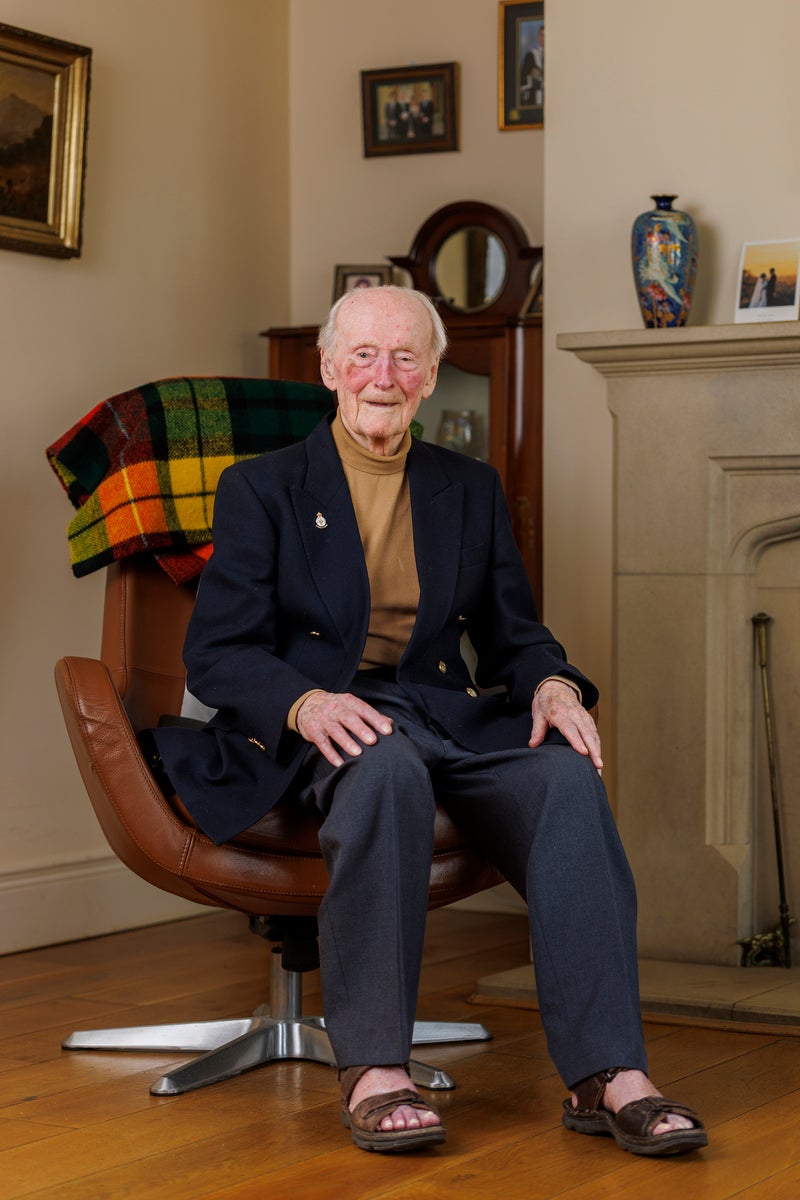
A D-Day veteran, set to celebrate his 100th birthday, has offered poignant life advice, urging people to embrace life but exercise caution in their friendships.
George Spencer, who served with the Royal Navy across the globe, will mark his centenary with family in Ballymena, Co Antrim, and shared a stark warning: "There are some nasty people around."
However, Mr Spencer, who considers himself fortunate, quickly added that there are also "very good ones". He expressed deep gratitude for his family, stating: "I’m very fortunate with my daughters. I’ve been very fortunate, they look after me well." Beyond that, his simple philosophy is to "enjoy all sorts of things."
Mr Spencer’s wartime service included a unique perspective on the D-Day landings, a pivotal moment in the Second World War. From the mast of HMS Nelson, he had a "bird’s eye view of everything that went on."
Armed with powerful binoculars, he recalled watching the landings unfold, noting the presence of HMS Rodney and an aircraft carrier alongside the Nelson. He also mentioned their involvement in the less-discussed Sicily landings the previous year.
Born in Nottinghamshire, Mr Spencer recounted his determination to avoid a life in mining. Instead, he sought an alternative path, securing a scholarship to the TS Mercury training ship, then a naval academy. This institution was famously overseen by the former record-breaking long jumper and cricketer CB Fry, who served as its captain superintendent.
"There was also manufacturing but I didn’t want that either, so I went and saw the headmaster who was a bit surprised as no one had ever done this before, and he was delighted so I got full support from him and then I was called for an interview on the Mercury," he explained.
He described the Mercury as a "hulk of a ship," where he slept in hammocks and scrubbed floors. "People said they always knew the Mercury boys from the smell of the soap they gave us, it was pretty strong stuff," he quipped, adding, "It somehow or other suits me quite well."
Following his distinguished naval career, which included a period with the Australian Navy where one of his daughters was born, Mr Spencer settled in Northern Ireland with his wife, whom he met after being stationed in Londonderry, and their family.
His daughter, Sally Ann Johnston, revealed that her father spoke "very little" about his wartime experiences during her upbringing. "We definitely heard a lot of stories recently," she said, explaining that commemorations and public interest in his D-Day involvement gradually encouraged him to share more.
"I suppose we’d heard a little bit, but generally, probably like most of the older generation, they didn’t talk a lot about it," she reflected. She recalled hearing snippets about his early days on the training ship Mercury, which always fascinated her and her sons. "My sons were totally amazed by the fact he went away to the training ship at the age of 12, he got a scholarship which he’d done on his own initiative, so we always threatened, ‘Oh, we’ll send you away at 12’."
Ms Johnston expressed her astonishment upon learning the full extent of her father’s D-Day experiences, particularly given his youth at the time. "I got the impression then that everybody just got on with it, and they didn’t complain, they just did what was required, and probably didn’t think so much of the fact that they may have been in danger themselves," she observed.
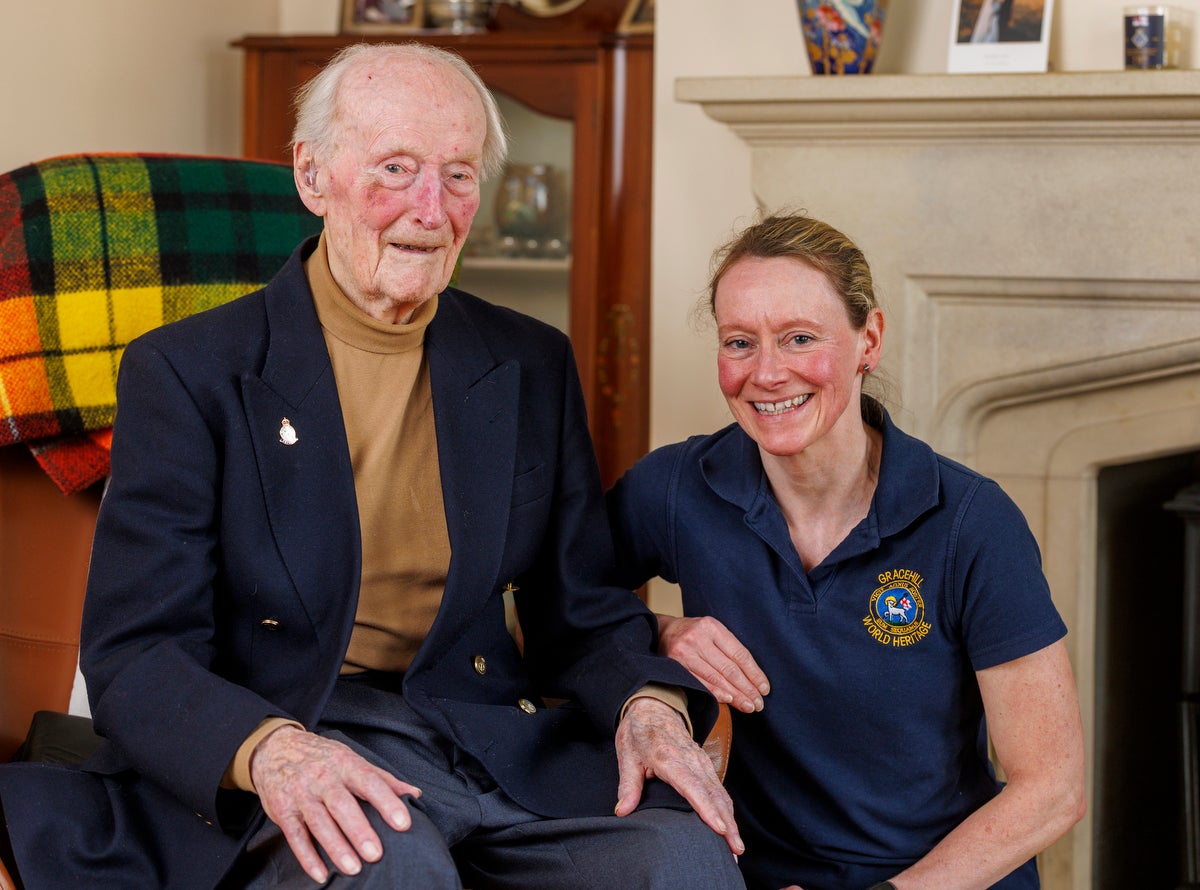
She recounted a recent story where her father described having to pull ships back in his convoy to avoid German guns.
It was through her own research that Ms Johnston discovered the HMS Nelson had been hit by a mine. Confronting her father about this untold detail, she recalled his nonchalant response: "‘Oh yes, we sat on a mine’, as if that was part of daily life."
She added: "It blew my mind because he was so nonchalant, obviously we might not have been here if it had been a bit worse, but they managed to go back, get repaired and go on."
Ms Johnston light-heartedly admitted to being envious of her sister’s Australian birthplace, as by the time she was born, her family had returned to the UK, and her father had taken a land-based job in Scotland.