"There is a good chance some FBI agents aren't reading that bestselling book series or watching that popular show depicting the FBI. They can be difficult to engage in without hurling the book across the room or wanting to throw a shoe at the TV."
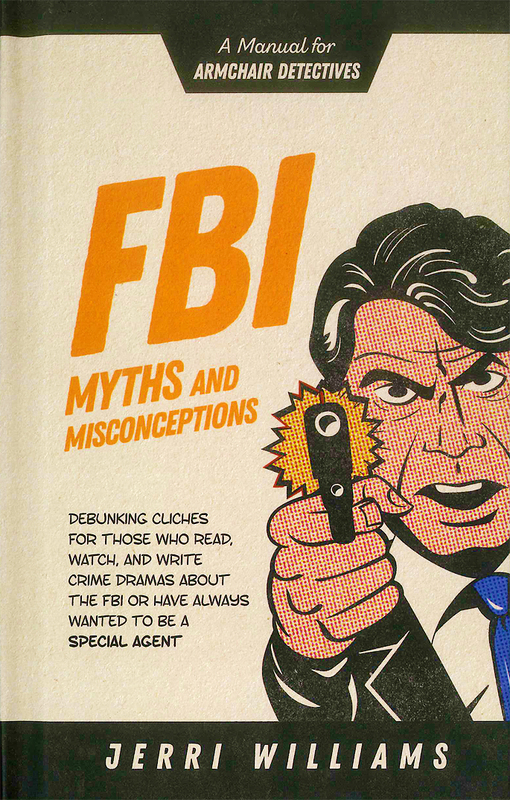
The reason Jerri Williams wrote "FBI Myths and Misconceptions: A Manual for Armchair Detectives" seems to be condensed into those two sentences.
The retired FBI agent, now a crime novelist and true crime podcaster, has a lot to say. She is on a mission to tell the public "who the FBI is and what the FBI does" by correcting numerous inaccuracies and cliches as books, TV and movies keep presenting erroneous ideas about the Federal Bureau of Investigation to the public.
To bolster her claims, she presents excerpts from FBI websites and interviews she has conducted with retired FBI agents on her podcast. She introduces real behind-the-scenes stories she learned in her 26 years of experience in the Bureau.
One fun part of this book is her reviews of FBI-related movies, dramas and books at the end of each chapter, as she uses her own rating scale -- keeping her shoelaces tight for good works, loosening them just in case for mostly acceptable ones, and throwing her shoes at the TV for awful ones.
Of the top 20 cliches and misconceptions she discusses, one of the most prevalent, she says, is that serial killers roaming the street are always a step ahead of the FBI profilers hunting them.
First of all, FBI agents do not hunt down serial killers, but they do conduct behavioral analysis to provide advice to local law enforcement agencies that request it, she writes. Profilers are investigative tools to solve cases, but are not actively involved in serial murder investigations.
Williams blames public's fascination with serial killers and FBI profilers on "The Silence of the Lambs" -- though she enjoyed the movie as entertainment and only loosened her laces for it.
Often depicted in movies and TV dramas are rude FBI agents with superior attitudes who come into local police offices and begin ordering officials around. But in reality, they need to team up with local agencies to fight crime. She claims that many writers use the FBI as a tool to create conflict in a story. Here I must admit that I also often fell into the trap of the cliche.
She reminds us to be wary of many other misconceptions, such as "Agents use intimidation and threats during interrogations," or "The FBI can wiretap anybody, anytime."
Given that some retired FBI agents tell her in interviews that they never watch FBI dramas, one can imagine how they must be annoyed and frustrated by such inaccurate portrayals. Williams may have helped them vent their pent-up anger by writing the truth about the Bureau.
While penning trenchant reviews of absolutely nonsensical works, however, she never intends to ruin TV or movie lovers' fun, as she knows fictional elements can be necessary for entertainment. Readers can sense her fandom after learning she binge-watched certain TV dramas for their entertainment value even though she rated them as "loosened the laces just in case."
Personally, I entirely agreed with her writing about "Criminal Minds," and burst out laughing while reading her "Quantico" review.
-- Yukiko Katsumi, Japan News Staff Writer
Read more from The Japan News at https://japannews.yomiuri.co.jp/