It is important to steadily build up defense capabilities in light of changes in the security environment and advances in military technology.
The Defense Ministry's budget request for fiscal 2021 totaled a record 5.4898 trillion yen. If the increased defense spending is approved, it will be the ninth year in a row the defense budget has increased. The emphasis in the request is on dealing with the new defense domains of space, cyber and electromagnetic waves.
China and North Korea are enhancing their capabilities in these new domains. If Japan's satellites and defense systems are attacked, Aegis-equipped vessels and fighter jets will be neutralized. It makes sense to strengthen cyber-defense and space surveillance systems.
For the space-related domain, the ministry is appropriating 72.4 billion yen. This includes costs for designing satellites to monitor space debris and other countries' satellites.
The budget request also calls for research on a satellite constellation, in which many satellites are launched to serve as a missile defense system. The aim is to detect and track hypersonic glide vehicles developed by China and Russia, which are considered to be difficult to intercept.
The concept of building a defense network in space has been proposed by the United States. The government is considering the possibility of joint operations between Japan and the United States. The feasibility and cost-effectiveness of this plan must be thoroughly assessed.
As for cyber-defense, the ministry plans to reorganize the existing organizations and create a joint force of the Ground, Maritime and Air Self-Defense Forces. There is an urgent need to develop specialist personnel.
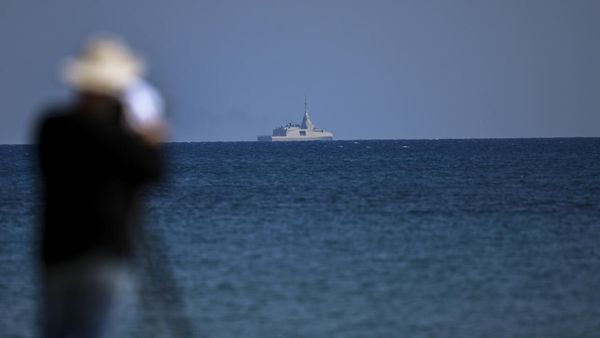
Meanwhile, in conventional domains, the ministry requested 66.6 billion yen for the purchase of state-of-the-art fighter jets. The cost of refurbishing the destroyer Izumo for operating fighter jets is included in this request.
The security environment around Japan is becoming increasingly severe. However, with the worsening fiscal situation, it is impossible to procure expensive equipment endlessly. The government needs to set priorities and introduce defense equipment in a planned manner. It is essential to review the equipment and improve efficiency.
The ministry intends to decide on alternatives to the land-based Aegis Ashore missile defense system at the end of the year. In addition to destroyers and merchant ships, facilities like oil rigs have been mentioned as candidates for installing radar and other equipment.
The deployment of new destroyers would increase the burden on the Maritime Self-Defense Force, which is short on personnel. There are still concerns about safety for vessels like privately owned merchant ships. Multifaceted studies must be done on this issue.
The United States has demanded Japan and other allies put defense spending at 2% of their gross domestic products. Japan's defense expenditures in fiscal 2019 equaled 0.9% of its GDP.
Japan's provision of bases keeps the United States in a dominant position in the Asia-Pacific region, contributing to the U.S. national interest. The Japanese government should tenaciously explain this fact to the United States.
-- The original Japanese article appeared in The Yomiuri Shimbun on Oct. 4, 2020.
Read more from The Japan News at https://japannews.yomiuri.co.jp/