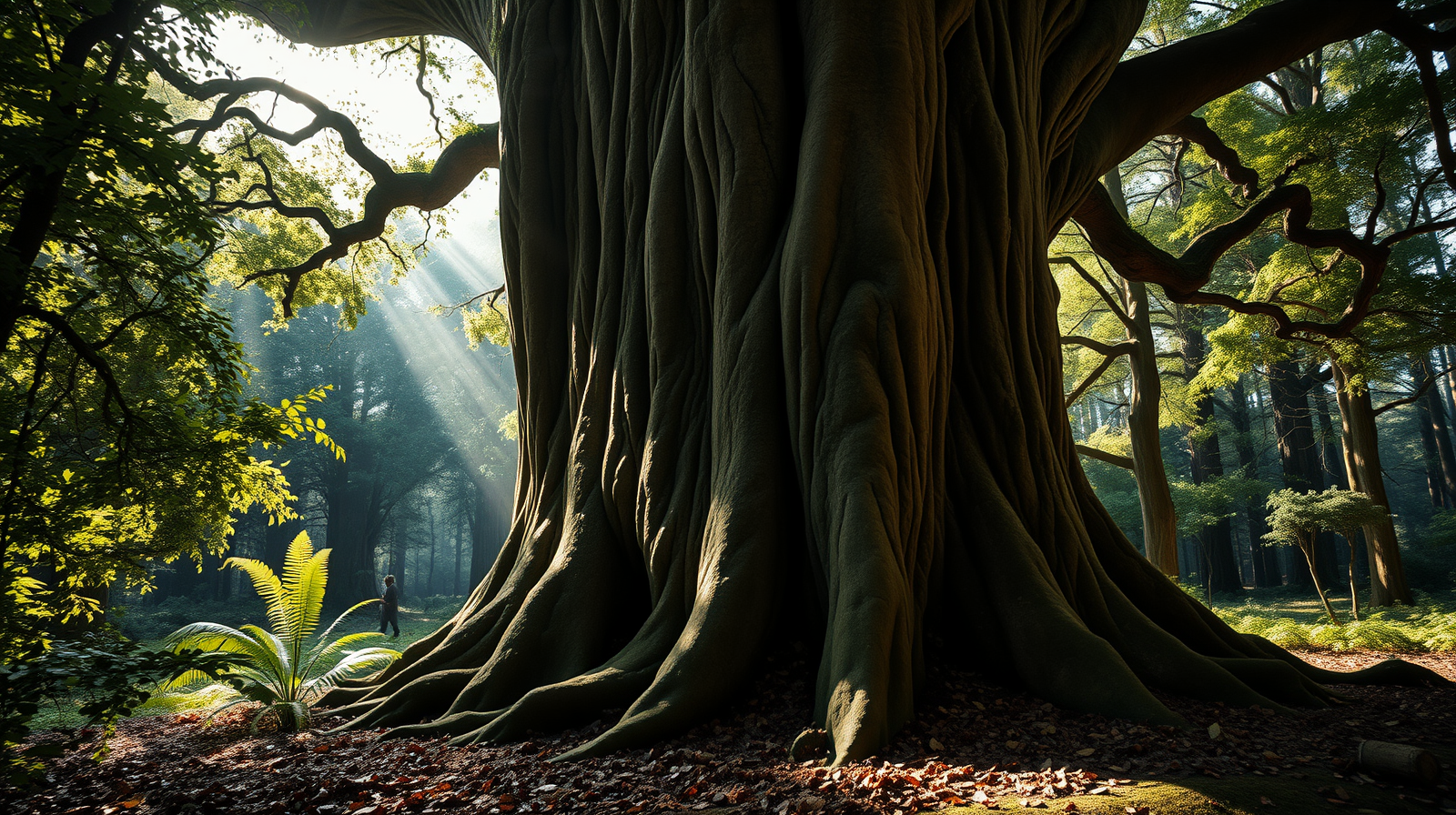
An ancient oak tree at the heart of Sherwood Forest in England, long linked to the legend of Robin Hood, has died after standing for as long as 1,200 years. The Major Oak, one of the most photographed and visited trees in the world, failed to produce any new leaves this spring, prompting conservationists at the Royal Society for the Protection of Birds to confirm that the tree had finally succumbed to years of visible decline. With a trunk circumference of around 11 metres and a canopy that once spread across 28 metres, the tree was among the largest and most celebrated oaks in Britain. Its death marks the end of a living landmark that had survived centuries of storms, fires and even wartime symbolism.
Get breaking news anytime, anywhere. Download the TOI app now!
Why the Major Oak became a symbol of Sherwood Forest
For generations, the Major Oak has been woven into the story of Sherwood Forest and the wider legend of Robin Hood, the outlaw said to have used the forest as his hideout. The tree won the Woodland Trust's Tree of the Year title in 2014 and was the very first tree ever recorded on the Woodland Trust's Ancient Tree Inventory, cementing its status as one of the most significant individual trees in the country. Sherwood Forest itself holds one of the largest concentrations of ancient and veteran oaks in Western Europe, and the region's oaks have a long documented history, having supplied timber for Royal Navy ships in the eighteenth and nineteenth centuries and for the roof of St Paul's Cathedral in London.
What ultimately caused the tree to die
According to the official statement released by the RSPB , investigations carried out with leading soil scientists and arboricultural experts found that the soil around the Major Oak had become extremely compacted and lacking in biological life, while its root system was far smaller and weaker than earlier scans had suggested. Decades of heavy footfall from visitors gradually compressed the earth around its base until it became almost as hard as concrete, making it increasingly difficult for water and nutrients to reach the tree's roots. This long term soil damage was then compounded by a run of hot, dry summers in recent years, including the record breaking heatwave of July 2022 when temperatures in the United Kingdom crossed 40 degrees Celsius for the first time, placing additional stress on a tree already struggling to sustain itself.
The role of human intervention in its decline
Conservationists say that some of the very measures introduced to protect the Major Oak over the past century may have inadvertently accelerated its decline. Support beams were first installed beneath its heavy branches in the early twentieth century to prevent them from breaking under their own weight, and the tree was fenced off entirely in the 1970s to keep visitors from compacting the soil directly beneath its canopy. However, the scaffolding designed to hold up its branches is believed to have forced the tree to direct water and energy toward propping up those limbs rather than allowing it to naturally shed weaker branches over time, placing further strain on its already weakened trunk. The RSPB took over management of Sherwood Forest in 2018 and has worked with soil and tree experts since 2021 to better understand the true condition of the ageing oak.
What happens to the tree now that it has died
Although the Major Oak is no longer a living tree, conservationists have been clear that this is not the end of its story. The RSPB has said the tree will remain standing at the heart of Sherwood Forest for years to come, continuing to provide habitat for the hundreds of species of insects, fungi, birds and mammals that depend on decaying wood, one of the key reasons the forest is protected by law. Acorns and cuttings collected from the Major Oak over the years have already been grown into saplings and planted at sites around the world, including at Winfield House, the residence of the American ambassador in London, ensuring that its genetic legacy continues even after the original tree has died.
Lessons for protecting other ancient trees
Experts say the slow decline and death of such a famous tree carries an important warning for the conservation of ancient trees more broadly. Ancient oaks, generally defined as those over 400 years old, are considered biodiversity powerhouses that support far more species than younger trees, yet most decline and disappear quietly without receiving anywhere near the same public attention as the Major Oak. The knowledge gained from years of studying the soil, roots and overall health of this single tree is now expected to inform how the RSPB and its partners manage other ancient and veteran trees across Sherwood Forest, the wider United Kingdom and beyond, offering a rare silver lining to the loss of one of the world's most recognisable trees.
.png?w=600)