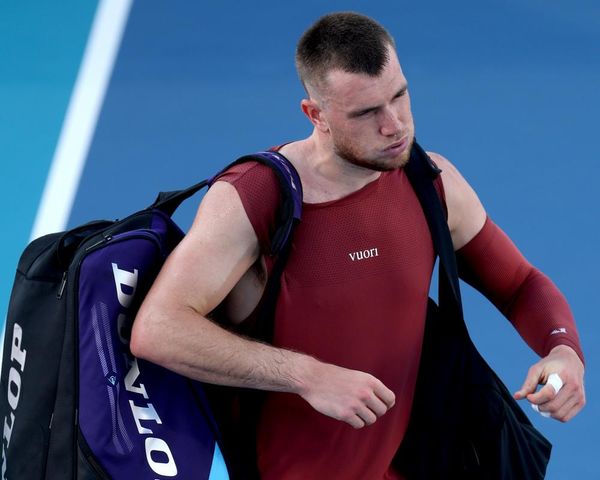
As the England side packed their bags at the end of their desultory 50-over campaign in the World Cup of 12 months ago, players from the rest of the world were sniggering at their ineptitude, though most of them were polite enough to do it in private. England, despite all their resources, had been timid and toothless and dispatched long before the quarter-finals had begun. The humiliation was so complete that change was inevitable.
A year down the line, what has changed? The captain remains the same along with a nagging preoccupation about his dearth of runs; the coach has been replaced; so has half of the team. But the language used by the coaching staff is not radically different. Before that dire World Cup there was plenty of talk of fearless cricketers playing with freedom. But it never happened.
In all probability, the players never really believed in what Peter Moores and Paul Farbrace were telling them. While the coaches were preaching fearlessness and a new absence of conservatism, they were selecting their side from different criteria. Hence on the eve of the first match they swerved revealingly. Gary Ballance, a fine and worthy batsman, was suddenly parachuted in at No3 and this betrayed how the selectors were really thinking. Ballance was the conservative choice, the man to shore up the top order (although it would have helped if he had been in some sort of form). The players must have sensed the contradiction.
Before this tournament a similar selection issue was at hand. It was easier to mount a stronger argument for the inclusion of Stuart Broad in 2016 than for the selection of Ballance 12 months ago. Broad is vastly experienced, having led England in two WorldT20 tournaments as well as playing in the other three. He had had an outstanding year with a red ball and in the absence of Steven Finn, England’s pace attack lacked teeth.
It must have been tempting to select Broad and his recall might well have worked. The decision to stick with the raw recruits – albeit Liam Plunkett has been around a while – was an expression of faith and reassurance in the post-World Cup squad. The selectors would not clutch at a comfort blanket as the tournament grew near. It seems their faith has been rewarded, although Trevor Bayliss is no doubt still mumbling somewhere in Kolkota “we haven’t won anything yet”.
There is an element of surmise here but an excellent witness offered confirmation about the new regime. Paul Collingwood, the victorious captain at the World T20 in Barbados in 2010, has been seconded by England for this tournament. “You have got to have a relaxed environment in the dressing room and the full backing of the coach,” he said after England’s semi-final win over New Zealand.
“I think Farbrace and Bayliss have been instrumental in that, first by getting the right personnel in the side, guys with real white-ball skills; then by building an environment that will allow them to go out and perform. They haven’t got a ceiling; they haven’t got any restrictions. They don’t have that kind of approach. If you have a couple of bad games, you’re not going to get cut automatically. To have that kind of security and backing from the hierarchy is so important to move the team forward”.
Collingwood is probably happier drawing parallels with England’s 2010 campaign than with the Word Cup last year – when he was assisting the Scotland effort, which was not flushed with success either. After England’s initial defeat here he mentioned to the squad they had lost early on to West Indies in the Caribbean in 2010 before improving along the way.
“Our win [in the semi-final against Sri Lanka in St Lucia in 2010] was similar to the match against New Zealand. We had a clinical win and it’s amazing when you have the same team, getting to know their roles and really focused on doing their jobs,” Collingwood said.
In St Lucia England achieved victory with four overs to spare. They did not hang around on Wednesday either. “In the past if we had 150 to chase down, we’d talk about keeping wickets in hand,” Collingwood said. “That’s now a very conservative approach. These guys don’t think that way. Jason Roy’s role is to apply pressure immediately, very similar to [Michael] Lumb and [Craig] Kieswetter in 2010.”
However, Collingwood thinks this team has more firepower. “Our lineup had one or two match-winners. Now almost the whole team can be match-winners. If one of them doesn’t come off we still have many opportunities to win the game.”
Inevitably there is one further point of comparison that requires Collingwood’s attention. “If you want to draw parallels with KP and Roy. Yes, he has a South African accent and hits the ball hard.”
Whichever campaign we are contemplating, Collingwood points to the appropriate 21st-century outlook. “Who dares wins is pretty much the motto,” he says. The only difference seems to be the players of 2010 and 2016 believed in that. They were not so sure in 2015.