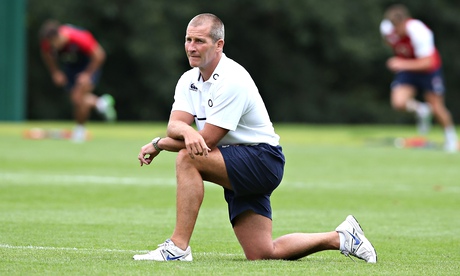
First the heat, than the warmups. After seven weeks in camp, including a fortnight high up in high temperatures in Colorado, the England squad have home and away matches against France before the 31 who will do battle in the World Cup are announced.
Stuart Lancaster intends to use the first encounter with France at Twickenham next Saturday as a means of helping the management decide the final places in the squad with more regular starters featuring in the return in Paris the following week.
For some players who do make the World Cup cut, Saturday may be their last start for a while. The head coach intends to pick his first-choice side in the final warmup match against Ireland next month and again for the first three matches in the tournament against Fiji, Wales and Australia.
“Deciding who will play in the first game against France is difficult because you want to give players an opportunity to play, especially those who have not played international rugby for a while, like Ben Morgan, but you want to get the balance right,” Lancaster said. “It will be a strong team and those who are not involved will get a game the following week.
“What we have to bear in mind is that when the World Cup starts, a number of teams will have the ability, because of the nature of their pools, to rotate their players. In our group, we will have to pick our best team against Fiji and stick with it because Wales and Australia follow. Of course we want to win on Saturday, as you do every game, but in 2003 England lost in one of the warm-ups. A priority as a coach is to give everyone an opportunity.”
One reason Lancaster cut seven players – Chris Ashton, Marland Yarde, Semesa Rokoduguni, Kyle Eastmond, Lee Dickson, Matt Kvesic and Matt Mullan – from the squad on Friday was that they would not have started one of the matches against the French. He has already decided the 31 will be split between 17 forwards and 14 backs and versatility will be a factor in the deliberations of the coaches.
“There will be five props, three hookers, four second rows, five back row forwards, three scrum-halves, two 10s I am going to say, four centres and five back three players, some of whom can cover centre and fly-half.
“The hardest part of the job, without doubt, is telling players that they have been dropped. It is hard enough when they have not been picked for a team, but particularly so when you have seen how hard they have worked and what it means to them. They know the importance of the event and they want to be a part of it. That said, I would be amazed if we had the 31 we have at the end is the same as the one we announce.”
England, like Wales, have pushed players to their limits physically and mentally in training to replicate the gruelling nature of a tournament that is played over six weeks and which, for those who make the last four, will involve seven matches. If the hosts are in the most demanding group with Australia and Wales semi-finalists in 2011, Lancaster is mindful of the threat posed by Fiji, who this month won the Pacific Nations Cup by defeating Samoa.
“Fiji are impressive,” said Lancaster. “You only have to look at the size and physicality of their athletes. They have a really good coach and they have had time together. Samoa are no pushovers and some of the top performers in the Premiership and Pro 12 are Fijian.”
For the players, rugby matches will provide some relief. “Denver was the toughest training I have ever done, heat combining with difficulty breathing,” said the second row Courtney Lawes. “The coaches never allowed us to settle into a rhythm. It seems a while since we played a game that was not training related and while it has been tough, we feel we are getting there.”