Over the past decade England have seen numerous false dawns. The victory over Wales was their ninth opening weekend victory in the Six Nations since 2003, yet they have not secured a grand slam in that period. Even in 2011, when they won the title on points difference after an initial Friday night win in Cardiff, they finished in a heap with a devastating 24-8 defeat in Dublin.
It is way too early, therefore, for England supporters to get carried away on the basis of 40 minutes of rugby against opponents who ultimately ran out of gas and ideas. Three of their side’s remaining four games will be at Twickenham but the portents for the key meeting with Ireland in Dublin on 1 March are, at best, mixed. Of their six away games on the tournament’s middle weekend since 2000 England have won one.
England’s coaches, nevertheless, know a crucial forward step has already been taken. With Saturday’s game against Italy next, their players have started a momentous year in precisely the way they would love to end it: playing smart, forceful, winning rugby with the promise of more to come. Occasionally England have looked a side waiting for something to happen without knowing quite how to engineer it. At the Millennium Stadium they were purposeful masters of their own destiny.
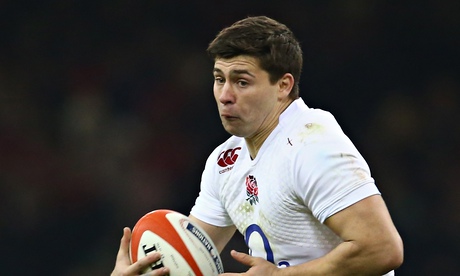
It is always tempting to single out individuals but the collective tempo set by England’s forwards and the scrum-half Ben Youngs after half-time was perhaps the most striking advance. Not only were there umpteen willing ball carriers queuing up but there was a dynamism and snap which contrasted starkly with the ponderous winning efforts of Ireland and France in Rome and Paris respectively.
James Haskell, Dave Attwood, Chris Robshaw and Dan Cole could be extremely proud of their contributions and behind the scrum Youngs and George Ford offered the generalship that all good sides need. The difference in attacking fluidity with Ford and Jonathan Joseph both in the starting line-up was striking, too. Finally there is light at the end of the dark midfield tunnel.
Which makes Stuart Lancaster’s life both easier and more complicated at the same time. What happens when Manu Tuilagi, Alex Corbisiero, David Wilson, Courtney Lawes, Joe Launchbury, Tom Wood, Brad Barritt, Kyle Eastmond, Ben Morgan, Ben Foden, Ed Slater and Owen Farrell are all fully match fit? Or when Danny Care, Christian Wade, Danny Cipriani, Alex Goode, Geoff Parling, Jack Nowell, Marland Yarde and Semesa Rokoduguni finish the club season like express trains? Lancaster can pick only 31 in his World Cup squad and some extremely talented players are going to be left disappointed.
That desire to be involved is already having an effect. Look at Billy Twelvetrees’ positive cameo in Cardiff, not to mention Nick Easter’s tangible enthusiasm and Tom Croft’s visible delight at being back in camp.
Against certain teams it will be more of a risk not picking a specialist lock on the bench but, on the other hand, the lineout prowess of Easter and Croft offers a tactical flexibility which may yet appeal in a World Cup pool context.
If Lancaster had to nominate his World Cup 31 now, would Croft definitely squeeze in ahead of Parling or the big, mobile George Kruis? Easter’s inclusion, similarly, would be dependent on Morgan’s recovery schedule and Steffon Armitage’s potential availability.
Behind the scrum there is room for probably one further utility back – Nowell, potentially – and one centre if Joseph, Barritt and Tuilagi are all assumed to be inked in. Another couple of convincing displays from Luther Burrell threatens to leave Eastmond, Twelvetrees, Cipriani, Shane Geraghty and Sam Burgess with their noses pressed to the dressing-room window.
Barritt, Eastmond and Parling, in the shorter term, are set to be fit to train fully for the Italy game, although Lancaster will not want to fiddle excessively. Soon enough his back-up options are going to rival anyone else’s. Against Italy in Rome in 2002 England had five past, present or future England captains on their bench – Martin Johnson, Lawrence Dallaglio, Jason Leonard, Matt Dawson and Dorian West – but a theoretical World Cup reserve list of Tom Youngs, Corbisiero, Wilson, Launchbury, Armitage, Richard Wigglesworth, Farrell and Tuilagi would also cause more than a few opposing palpitations.
Add that to England’s improving fitness levels and set-piece strength and Wales may not be the last team to find their legs buckling beneath them in the final quarter against Lancaster’s side this year. The Irish will surely play better than they did in Rome and France still have the individuals to cause problems but on the evidence of week one England have every reason to be at least cautiously optimistic. “I will be getting the players’ feet back on the ground on Monday because we need to be better against Italy,” Lancaster said. Privately, though, he and his coaches will scent a wonderful opportunity. Could this be the year England finally finish what they start?