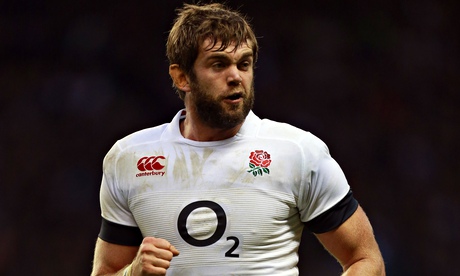
England are working with Leicester over the condition of the second-row Geoff Parling who is being monitored after being concussed twice in a month this season. He is unlikely to play again before November and will be closely monitored by club and country, but suggestions that he may be forced to retire from playing – he missed matches in November and the Six Nations last season after suffering blows to the head – are regarded as premature.
Parling, who played in England’s first two Tests in New Zealand in the summer, was concussed during a pre-season friendly in Edinburgh last month and, after being rested for three weeks, played two more matches before suffering another blow to the head against Bath on Saturday.
“It is a concern for his health. Playing is secondary to Geoff’s health,” said Richard Cockerill, Leicester’s director of rugby. “He had a concussion [during the November Test period], another at the end of the season and now he’s had two in very quick succession in pre-season and at the start of the campaign. The bigger picture is Geoff’s well-being more than playing.
“He came in yesterday and feels OK in himself but for all the right reasons we have to go through all the right protocols. I don’t want any of our players out there with potential brain injuries from concussions or whatever it may be because that’s not right.”
England draw a parallel between Parling and the New Zealand No8 Kieran Read who, after suffering repeated concussions during last season’s Super 15 with the Crusaders, was rested for six weeks and missed the first two Tests against England, during which time he was constantly assessed by head injury specialists. He has since played in every game for the All Blacks.
“We are in regular dialogue with Leicester Tigers about all their England players, including Geoff,” said an England spokesman. “We will work with the Leicester medical team and external specialists to assess Geoff and work collaboratively on his recovery and return to play.”
Parling missed the start of England’s autumn programme last year after tackling Billy Twelvetrees in training and his head came into contact with the centre’s knee. Concussion had then become a major talking point in sport, not just rugby union, and the decision to pull him out of the match against Australia was taken by a doctor.
“I had blurred vision, a headache and a bit of dizziness, but still I did my best to try and convince the doc I was fine,” said Parling at the time. “I was desperate to play a part in the game against Australia and convinced myself I would be OK to do so.
“Thankfully, I had a doctor who recognised some of the symptoms immediately and took the decision to pull me out of the game. I did my best to convince him otherwise. I’d just found out I would have to watch the game from the stands and had lost a chance to represent my country. The doctor took that chance away from me. But he was right. Player welfare should be paramount. This is serious stuff and I’m glad the issue is getting more attention.”
He added: “There is clearly a lot of good work being done to reduce the risk to players and we all accept that risks shouldn’t be taken with kids. The combination of good doctors and players who have a greater understanding of the risks will help us come to the right conclusions.”