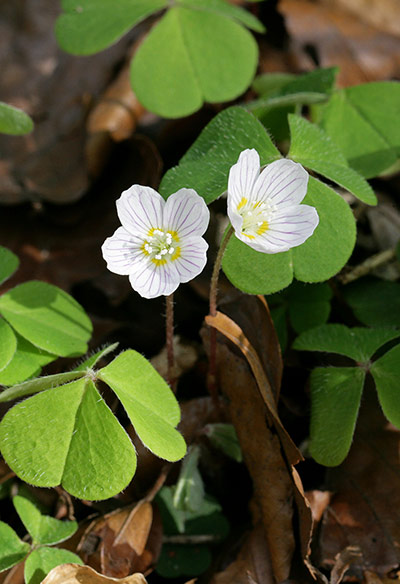
In April, flurries of these delicate flowers with drooping, clover-like leaves emerge in shady spots in deciduous and coniferous woodlands, such as Bellever Forest in Devon and Chopwell Woods on Tyneside. Wood sorrel leaves are edible in small quantities, and have a sharp, citrus flavour. Photograph: Alamy
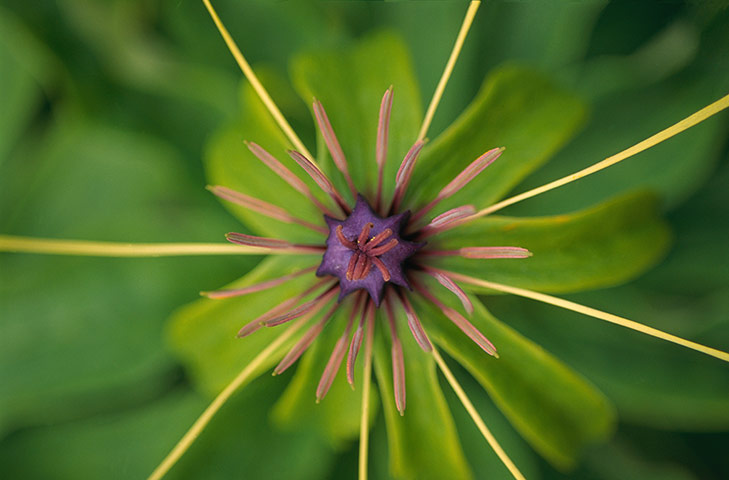
Hidden away in moist areas of old woodlands, including Alice Holt Forest in Surrey, is this unusual plant, which has a single flower surrounded by four large leaves. Its dark, jewel-like fruit is held aloft as though being offered to the gods. The plant was once thought to guard against malevolent spirits. Photograph: Alamy
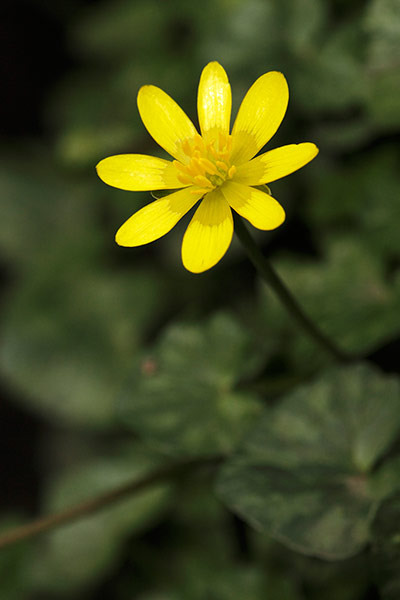
“There’s a flower that shall be mine, ’tis the little celandine,” wrote Wordsworth of these harbingers of spring. Swaths of glossy yellow flowers brighten woodland floors early in the year, delighting walkers and poets alike. Lesser celandines grow in many woodlands, particularly in damp spots. Try Great Wood in Somerset.
Photograph: Getty
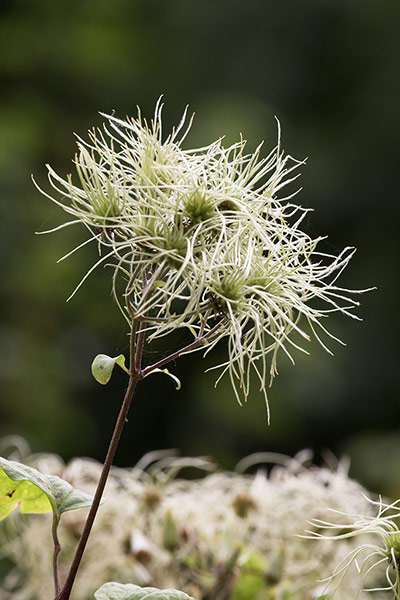
Draped over trees at the edge of woodlands, this vigorous climber (also known as “traveller’s joy”) is particularly conspicuous in autumn when its flowers become balls of silky seeds. It’s unmistakable and found widely in lowland woods such as Friston Forest in East Sussex. Photograph: Alamy
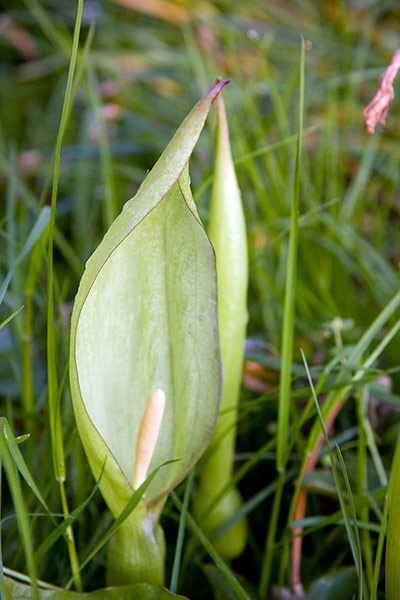
Also known as cuckoo pint, this striking and clever woodland plant is pollinated by little flies when they become temporarily trapped in the base of its flower head. As autumn beckons, its conspicuous brown spadix becomes a stem of luscious green berries that later turn a vivid scarlet. Seen in many woodlands, such as Cornwall’s Cardinham Woods and Kielder Forest in Northumberland. Photograph: Alamy
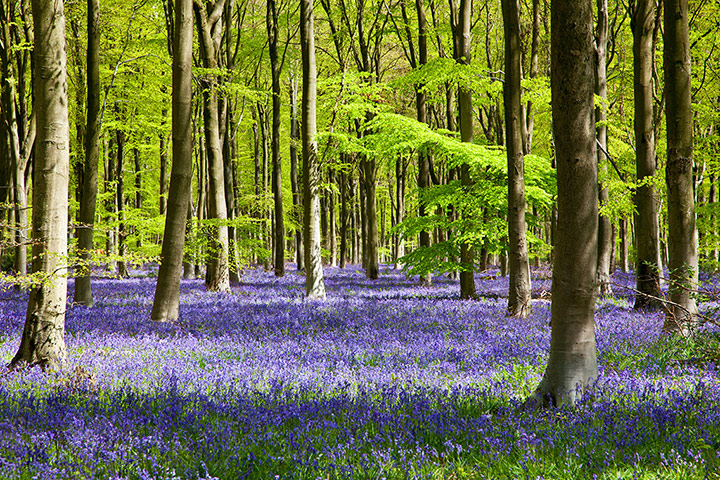
A bluebell wood in full bloom is one of the most uplifting events in nature’s calendar. Every April, they emerge in woodlands (especially beech woods) across the country with particularly memorable displays experienced at Wendover Woods in Buckinghamshire and Wiltshire’s West Woods. Photograph: Alamy
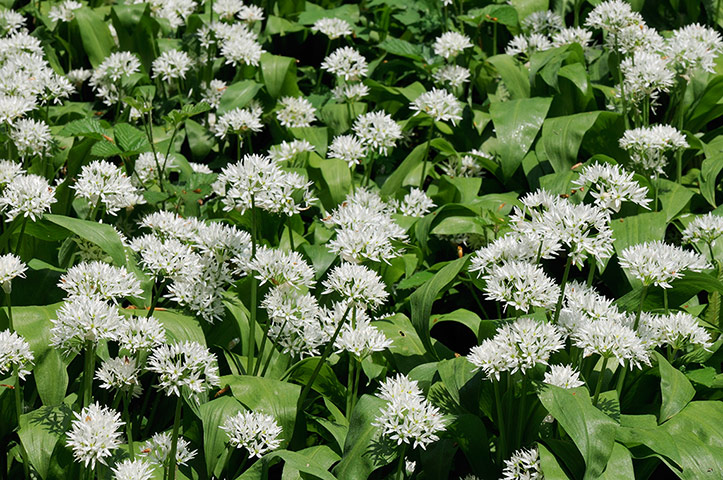
Also known as ramson, wild garlic carpets woodland floors in spring with cheerful white pompom flower heads. Its unmistakeable scent is sometimes overpowering, but the leaves, which are edible, do not taste as strongly of garlic as you might expect. Widespread throughout England including at Chambers Farm Wood, Lincolnshire and Silk Wood at Westonbirt, The National Arboretum in Gloucestershire.
Photograph: Corbis
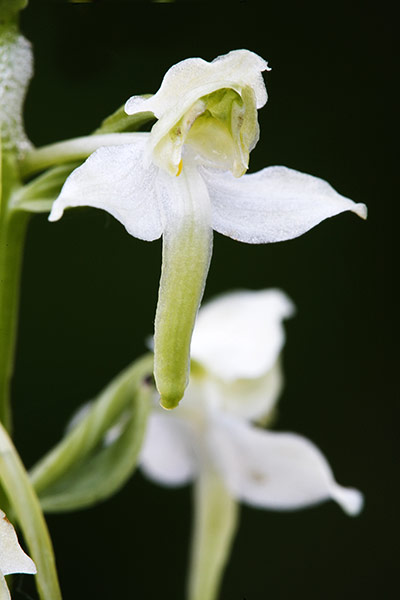
Come dusk, this strikingly tall orchid emits a heady vanilla scent, luring moths to its insect-mimicking flowers. Your best chance of finding this impressive creamy-green orchid is to look along woodland edges and glades from May to July, particularly ancient woods such as Wyre Forest in Worcestershire.
Photograph: Getty
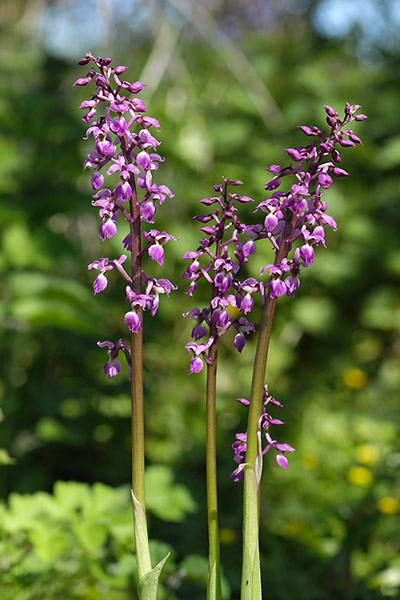
Not a plant easily missed when walking through a deciduous woodland in early spring, such is the deep pinky-purple colour of its flowers. You'll find it flowering around the same time as bluebells, in April and May, all over England, such as Dalby Forest in Yorkshire and Wyre Forest in Worcestershire. Photograph: Alamy
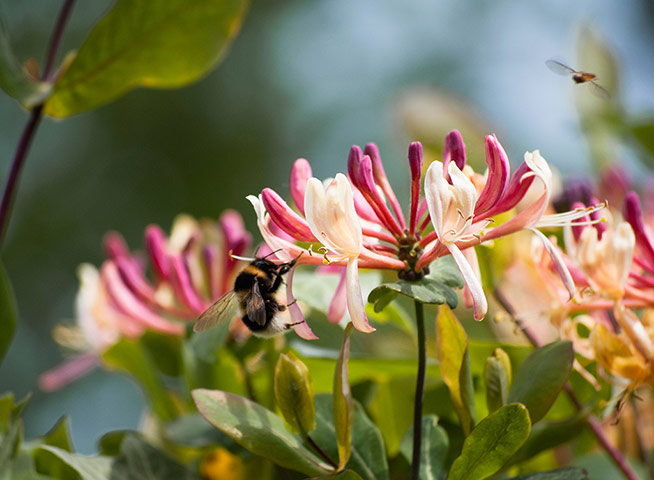
On warm summer evenings, the sweet scent of honeysuckle in hedgerows and trees draws pollinating moths to its creamy flowers. However, they’re not the only creatures lured by this common, well-known climber: the soft bark of its woody stems makes desirable nesting material for the dormouse. Photograph: Alamy