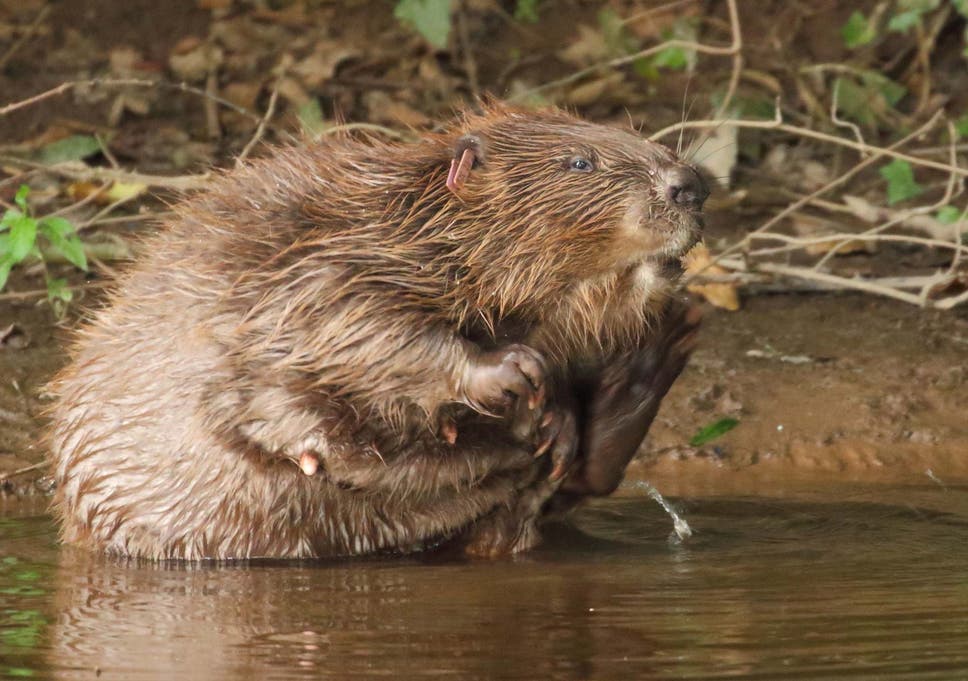
England’s first beavers to live in the wild in 400 years are positively affecting the community and the environment, experts have said.
The animals, who unexpectedly appeared along the River Otter in Devon more than a decade ago, are being monitored to determine whether they benefit the local area and should continue living there.
The beavers have significantly reduced water flow, a researcher has said, which means their dams can potentially reduce the risk of flooding.
Professor Richard Brazier from the University of Exeter said research shows plant and animal life is also flourishing in their ponds, which catch sediment and inorganic fertilisers washed from farmland.
The beavers have also drawn tourists to the area, helping local commerce.
Wild beavers became extinct from hunting in Britain about four centuries ago, until a colony – believed to have escaped from captivity in about 2005 – was spotted along the Devon river.
The Department for Environment, Food and Rural Affairs (Defra) was initially concerned as it had not sanctioned the release of beavers into the wild and was worried about disease.
After the animals were tested as healthy, Natural England allowed the beavers to live freely along the river as part of a five-year trial to assess whether they positively affect the environment.
A Defra spokesperson said: “We are committed to reintroducing formerly native species, including beavers, where there are clear environmental and socio-economic benefits. A decision on any future work following the River Otter project will be taken after its conclusion.”
Devon Wildlife Trust’s Mark Elliott said the mammals have created “beautiful areas of new habitat”, benefiting water voles, otters and wading birds such as snipe and woodcock.
“It’s been really beneficial from a conservation point of view,” he said.
However, Prof Brazier said there are some downsides, such as beavers targeting orchard trees and causing localised flooding for landowners.
Claire Robinson from the National Farmers’ Union said there are concerns about the “potential damage to farmland and the landscape caused by [beavers’] physical activities”.
She said: “It is crucial that farmers have the tools to manage any impacts a beaver reintroduction could have.”
The trial for the Devon beavers will come to an end this year.
Additional reporting by Press Association