Another year for England, another slam, that of the door marked “clean sweep” in their faces. After Cardiff in 2013 and Paris in 2014 came Dublin this year, capital fetters for the World Cup hosts. They had not lost to Ireland in the Stuart Lancaster era but the 19-9 defeat meant they had lost to all three countries above them in the world rankings since November.
Lancaster’s response to the end of another grand slam dream was measured, pointing out that at the same stage last year Ireland lost at Twickenham but went on to win the title from England on points difference.
Finishing first by beating Scotland and France at home while Ireland slip up in Cardiff or Edinburgh would still amount to something, but the doubts about their capacity to compete with the very best will persist until the start of the World Cup and a pool that includes Australia and Wales, who are both below the hosts in the world rankings.
Lancaster has said he is considering changes for the match against Scotland, who have not won at Twickenham since 1983. He has players returning from injury, Courtney Lawes, Tom Wood and Mike Brown among them, while in the midfield Luther Burrell’s place is in jeopardy even if he recovers from injury to be in the selection mix.
A rematch with Ireland would tell the head coach more than Saturday’s encounter with the side at the bottom of the table and he now has five fixtures before the start of the World Cup to settle on his best combinations. At a time when Ireland and Wales have largely settled sides, England, not least because of injuries, are still at the design stage. There were shades of Cardiff two years ago in the defeat at Dublin: indiscipline, especially at the breakdown, the opposition captain having the ear of the referee, the squandering of position and, in the words of Yeats, things falling apart when the centre could not hold. England have conceded first in their last six matches and never recovered from their slow start at the Aviva Stadium.
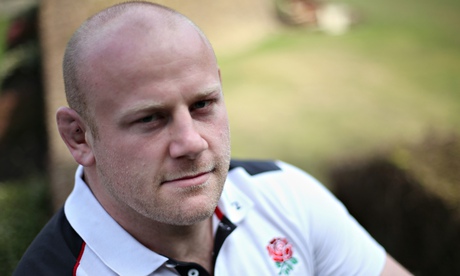
“We had an honest review of the game,” says the England prop Dan Cole. “Ireland controlled territory and the tempo of the game, keeping the ball away from our set piece. They bossed the breakdown for the first hour and it was our own fault with regards to discipline which cost us field position.
“We did not train to play like that and when we returned to camp there was frustration and anger from coaches and players: it is not just a cool, calm dissection of the 80 minutes. If a point needs to be talked about, it is talked about. You have to highlight what went wrong.”
England had intended to use the set piece to establish superiority, but they had only one put-in as Ireland minimised their mistakes and when they kicked a penalty to touch in the first half and had a lineout close to Ireland’s line, they were surprised by Devin Toner contesting the throw and blew the position. It highlighted the difference between the training field and a match: the element of surprise is present in the latter. “We are playing winning rugby and that is what it is all about at international level,” said the Ireland wing Tommy Bowe. “We are difficult to play against.”
England failed to score a try for only the second time since Cardiff 2013 and it was the first match since then that they had failed to reach double figures. They were pressing at the end, when Jonathan Sexton, Ireland’s pilot, had left the field, but there was little conviction in their play and Lancaster did not feel minded to remove Danny Cipriani from the bench to chase the game.
“We had a lot of experience in the pack but not so much behind,” Cole says. “We have a lot of talent in the back-line, but not many of them had been exposed to that type of game. Ireland’s gameplan was essentially kicking everything, competing hard in the air and on the floor. It is something unique to Ireland and you have to be prepared for it, but they were accurate.”
England were not. “The first attacking lineout we had was annoying because we practised the move during the week,” Cole continues. “Having looked at videos of Ireland, Toner normally chased in, defending in the middle or the front, and we were looking to go over the top of him. For the first time in the tournament he stood still. Looking back now, we would change the call, but given what we had seen of him it was the right one. I am not saying the game changed on that, but it was an emotional swing. We did not get another chance like it.”
Undone by surprise. England had little opportunity to show their own tricks, on the back foot until the point when the game had been lost. Their back three had been chosen with Ireland’s aerial threat in mind with Alex Goode, who replaced the injured Brown, Anthony Watson and Jack Nowell all having played at full-back, but when Ireland regained three kicks in the opening stages England became entangled in the home side’s web and the more they struggled to free themselves, the more stuck they became.
“It was a setback,” Cole says. “We wanted to win the grand slam and the championship, but long term you probably learn more in defeat than victory. You would prefer to go through that now than in the World Cup, but it hurts. We have to pick ourselves up in the next two matches. There is still a lot to play for.”