There is a parallel, albeit a simplistic one, between the state of English cricket and that of the nation: life goes on without too many dramas yet no one has a clue who will be in charge in the coming weeks.
It may be tempting to mull over further parallels between the various candidates for power – who is cricket’s equivalent of Nigel Farage? – but prudence had better prevail and keep the focus on cricketing matters.
In Barbados the Test team is seeking to seal the series in what has so far been a moderately successful excursion. On Friday another England side will be in Dublin to take on Ireland in a 50-over match. Rather than feel insulted by the make-up of an England XI, which will contain only three or four members of the World Cup squad, the Irish may sense an opportunity for another famous victory. Or perhaps they might regard this team, which could theoretically include seven debutants, as more of a threat than the lags that plodded morosely around the Antipodes a couple of months ago.
James Taylor will be in charge in Dublin and it is hard to be sure whether he is there as a stop-gap or as a serious contender for the one-day captaincy in the future. He replaces Eoin Morgan, who is not in the Caribbean but somewhere in India. Morgan has played two of Sunrisers Hyderabad’s seven matches in the IPL (unlike Ravi Bopara, who has played in every match for them). The ECB gave Morgan leeway to stay in India, which suggests that he is not necessarily an integral part of their one-day plans.
The bulk of those in the Caribbean still have one-day aspirations, though it would not be a surprise if Alastair Cook, Jimmy Anderson, Jonathan Trott and the increasingly fragile Stuart Broad restricted themselves – or were restricted by the powers that be – to be available for Test cricket only from now onwards.
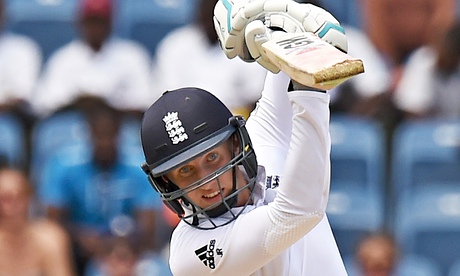
So there are limited options to lead the one-day side: Joe Root, currently in the form of his life, or Jos Buttler, surprisingly made vice-captain for the World Cup campaign.
Alternatively, Ian Bell might be able to hold the fort for a while to provide some breathing space since there remains the nagging concern that Root and Buttler, two players integral to England’s future in every form of the game, currently have enough on their shoulders without being burdened with the one-day captaincy.
Hence the notion of Taylor as a long-term skipper in one-day cricket, rather than being a one-match wonder in Dublin, has some logic. Like his two predecessors the critical factor may well be whether Taylor as captain could continue to justify his place in the side, which has recently been such a major problem for Cook and Morgan.
No doubt the selectors will be keeping a close eye on Taylor, as well as the fresh faces in Dublin. At the age of 30 Tim Bresnan is the grandad of the squad with 84 caps; Steven Finn has 56 and Taylor 17 while Alex Hales, Jonny Bairstow and Adil Rashid, who was added to the squad along with Mark Wood on Friday, have yet to reach double figures. The rest are unknown quantities at this level.
However, there is no guarantee that those selectors will be around for much longer. The appointment of a cricket director will bring changes to the current system; these are likely to include the director taking charge of the selection process while consulting reliable witnesses around the country to establish who are the likely lads for the future.
The new post, whose emphasis will be specifically on the England men’s team, will be an odd one. Alongside the business of selection the main function will be to establish the day-to-day leadership of the team, namely the identity of the captain and the coach. Then he has to be sensitive enough to give the chosen ones space to do the job. The post will be a breeze when England are winning (then he just has to mimic young Mr Grace with a “You’ve all done very well” before disappearing) and a bit of a nightmare when they are not (when he may have to be an amalgam of Mike Brearley and Red Adair).
The obvious candidates to take charge are all too familiar. Alec Stewart, Andrew Strauss and Michael Vaughan have all expressed interest in the post. Nasser Hussain, sounding like a politician, has said that he is not a candidate, though he has important advocates.
Meanwhile, if Stephen Fleming, the former New Zealand captain, hinted at any curiosity about the job, that news might be gratefully received at Lord’s. In this instance some form of coalition will probably not be necessary.