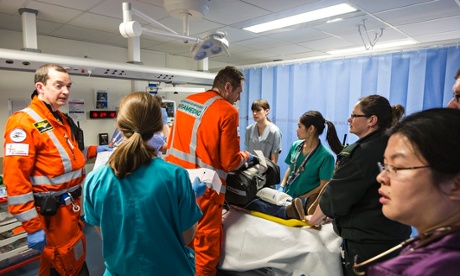
England’s biggest hospitals are refusing to sign off their annual budget deal with the NHS, claiming that the £1.7bn of cuts involved will mean they can no longer guarantee the safe care of patients.
In an unprecedented move, hospitals that together provide 75% of all NHS services have vetoed plans drawn up by Monitor, the NHS’s financial regulator, to reduce their income to help the service balance its books.
The hospitals said: “We have now reached the point where patient care is at risk.”
NHS Providers, which represents hospitals, said its members could no longer “achieve the impossible” by absorbing a fifth successive year of cuts to the payments they received for treating patients under the “tariff” system.
“After five years of unprecedented price cuts, with NHS providers realising more than £20bn of savings over this parliament, objecting to the tariff for many represents a last resort to have their concerns heard as they can no longer guarantee safe and effective care unless they are properly and fully paid for the patients they treat,” said Chris Hopson, the chief executive of NHS Providers.
Some patients could end up not being treated at all as a result of the public row over where the NHS’s money went, he warned.
If hospitals were not paid the full amount for the care they provided they may end up only providing as much care as they could based on their budget, he said.
The row leaves the NHS in uncharted waters because there is now no agreement over how much hospitals should be paid for work done from 1 April.
It could force ministers to agree an emergency cash injection for the NHS, on top of the extra £2bn a year the chancellor, George Osborne, promised it from April in his recent autumn statement.
NHS England, which distributes the service’s £97bn budget, said giving in to hospitals’ demands would mean less money for GP services, A&E units, mental health care and ambulance services.
“Since the overall NHS funding totals for 2015-16 are now agreed, any fundamental changes to benefit one set of providers would in practice mean robbing Peter to pay Paul,” a spokesperson said.
An estimated 80% of England’s 160 acute hospital trusts are either already in the red or at risk of ending the 2014-15 financial year in late March with a deficit. Hospitals are already facing the loss of another £1.9bn of their £40bn annual income to help fund the Better Care Fund, which starts in April and is meant to keep patients healthier at home to relieve the unprecedented pressure on hospitals.