A beech woodland in spring is not to be missed. When the sun filters through the canopy, it brings an intensity of colour to the forest floor – particularly where there are bluebells. Sublime beech woodlands include West Woods in Wiltshire and Abbot’s Wood, East Sussex. Photograph: Derek Croucher/Getty Images

Few trees stir the imagination more than the yew, so deep-rooted are its associations with places of worship and longevity (some British yews are well over 1,000 years old). Bedgebury Pinetum in Kent cares for the national collection of yews among its 10,000 trees. Photograph: Anne Hyde/Garden Picture Library RM

Larch forests are enchanting places – rich in insect and bird life and of great visual appeal with tall trunks and luxuriant, drooping boughs. Unusually for a conifer, the larch sheds its foliage in autumn. Fine examples are found in Thetford Forest, Suffolk and Dalby Forest, North Yorkshire. Photograph: Alamy

Many of England’s venerable oaks are protected within ancient royal hunting grounds such as Sherwood Pines in Nottinghamshire. Big Belly Oak in Wiltshire’s Savernake Forest is thought to be over 1,000 years old. Like all mature oaks, it supports an astounding number of creatures including several hundred invertebrate species. Photograph: Ashley Cooper/Corbis
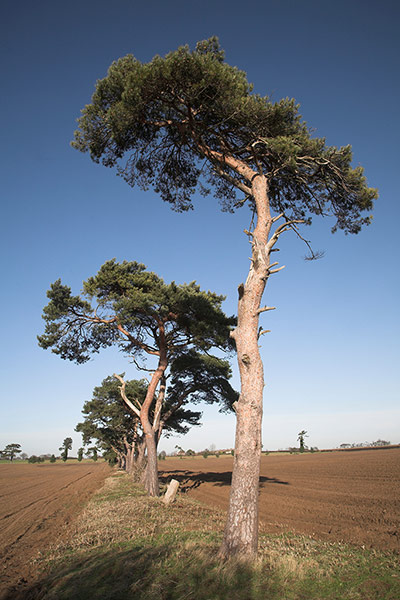
Admired for its height, fragrance and bushy fists of needles, this easily identifiable conifer once flourished in the great Caledonian forests of the Highlands. Today, you’ll find individual trees of a considerable age across England. Noble Scots pines grow within the Lake District’s Whinlatter and Grizedale forests. Photograph: Alamy
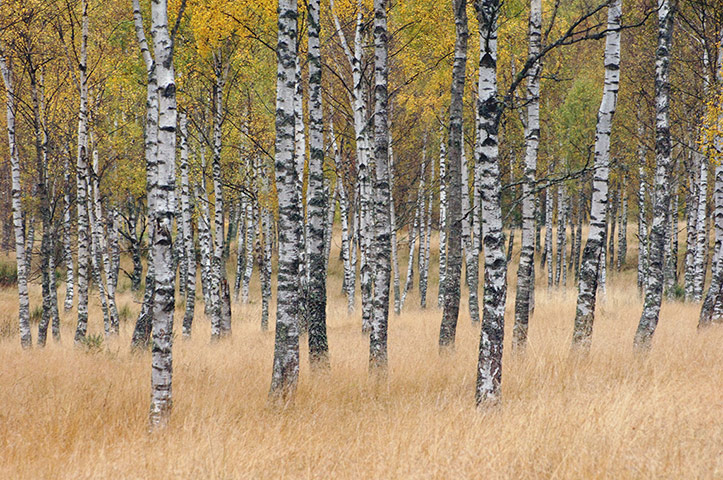
For such a delicate looking tree with dainty cascades of leaves and a relatively slim trunk, it’s surprising how many species make the silver birch their home (over 300 invertebrates alone). In turn, this makes it a magnet for small birds. Cannock Chase in Staffordshire has a beautiful birch woodland. Photograph: Forestry Commission

Fast growing and hardy, the Norway spruce is popular in plantations such as Hamsterley Forest in County Durham – and in living rooms at Christmas. Spruce trees are sometimes mistaken for firs, but you can tell them apart by rolling a needle in your fingers – if it turns smoothly, it’s a spruce. Photograph: Forestry Commission
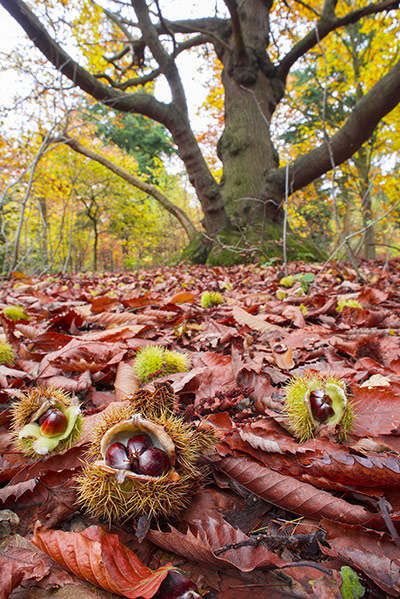
With deep furrows spiralling round a colossal trunk, an encounter with an ancient chestnut is not easily forgotten. Introduced to Britain by the Romans, chestnuts were widely coppiced and the wood used to make charcoal. There’s a wonderful example of a managed sweet chestnut coppice at Bedgebury Forest, Kent. Photograph: Alamy