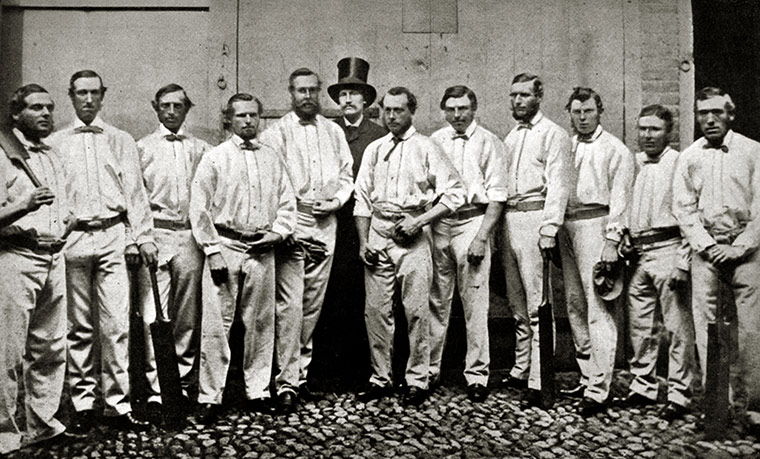
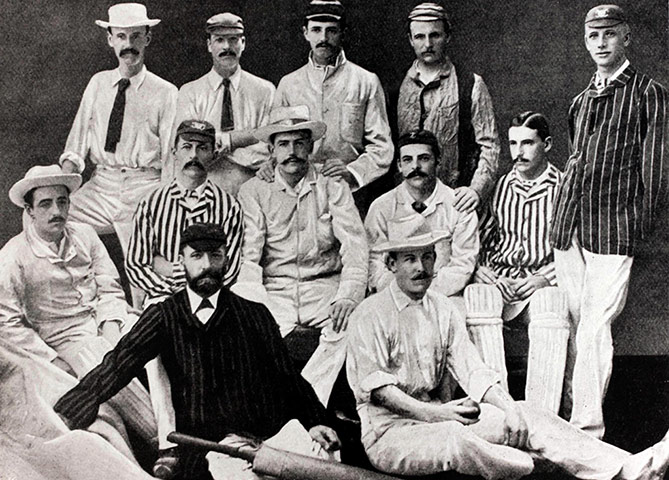
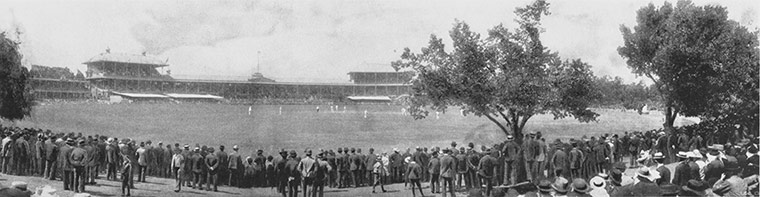
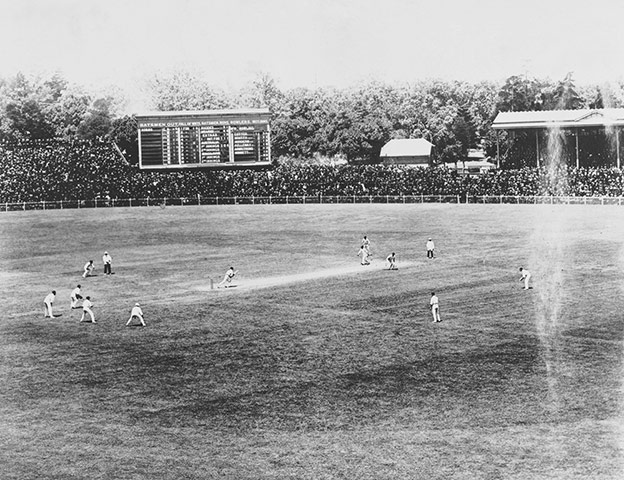
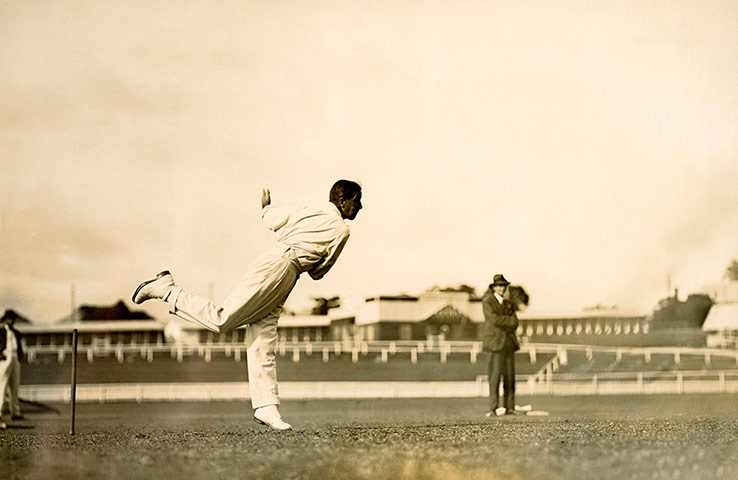
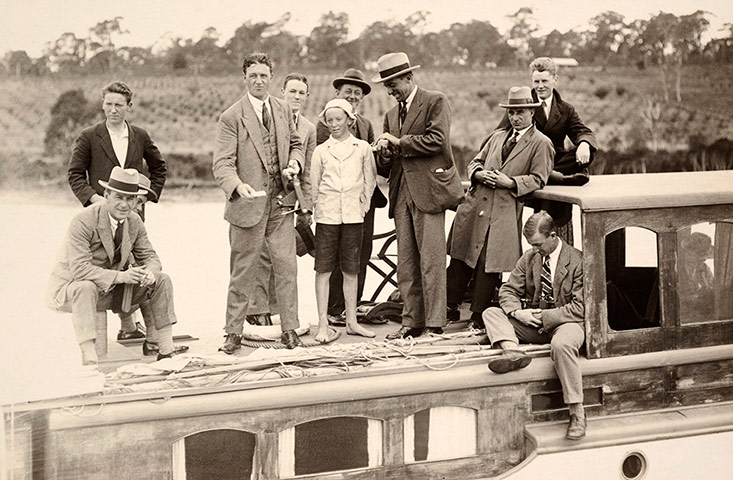
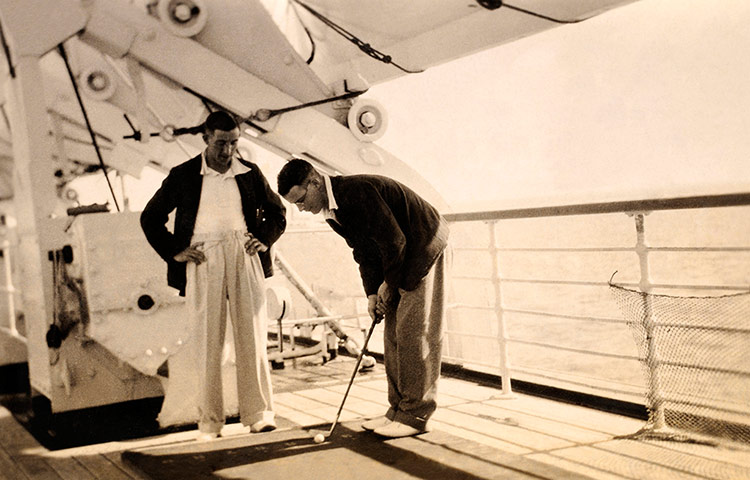
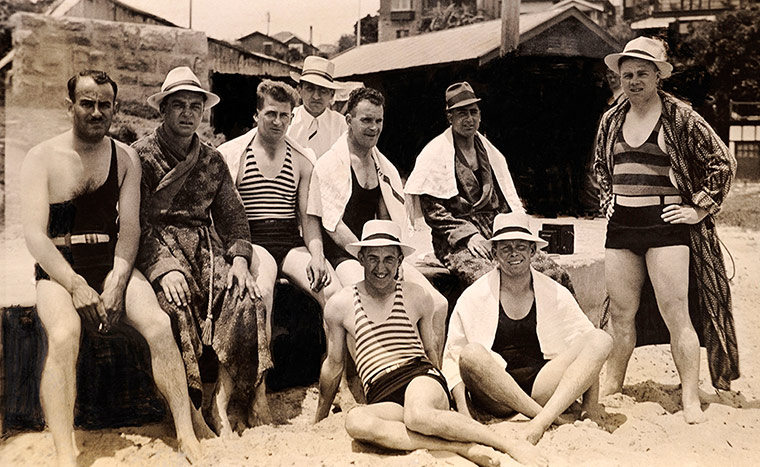
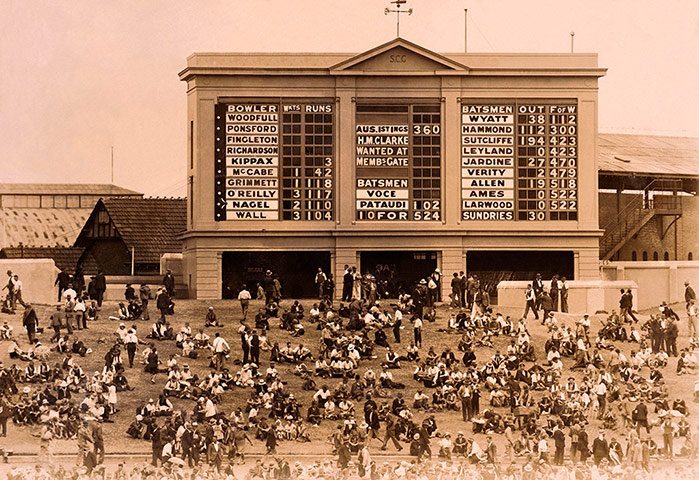
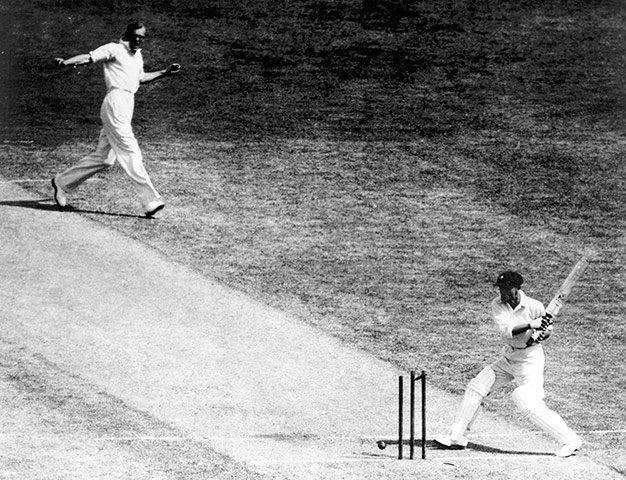
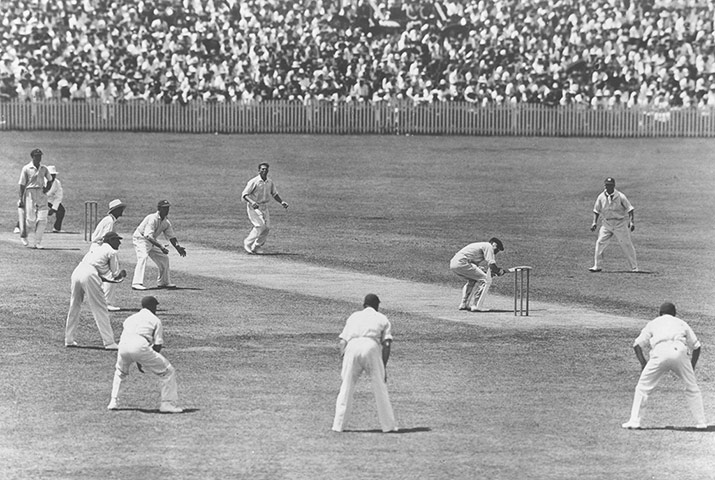
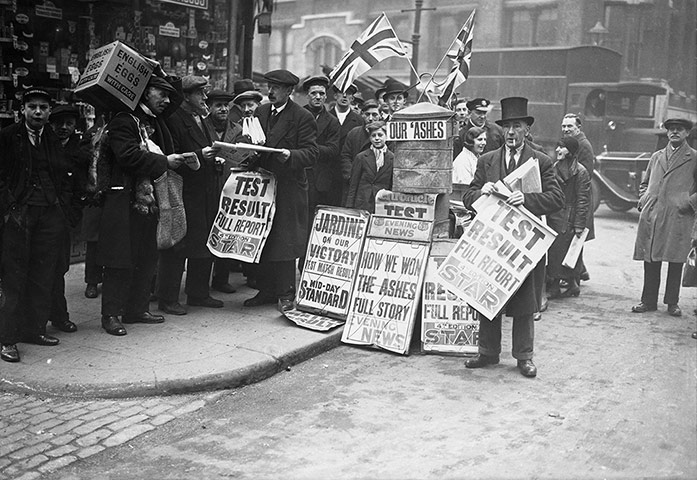
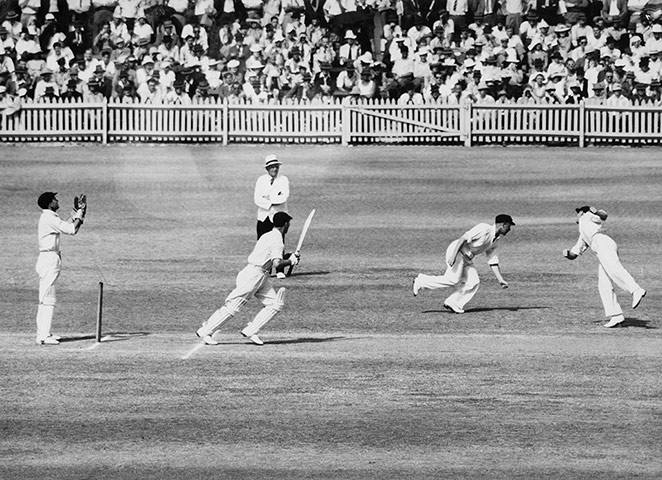
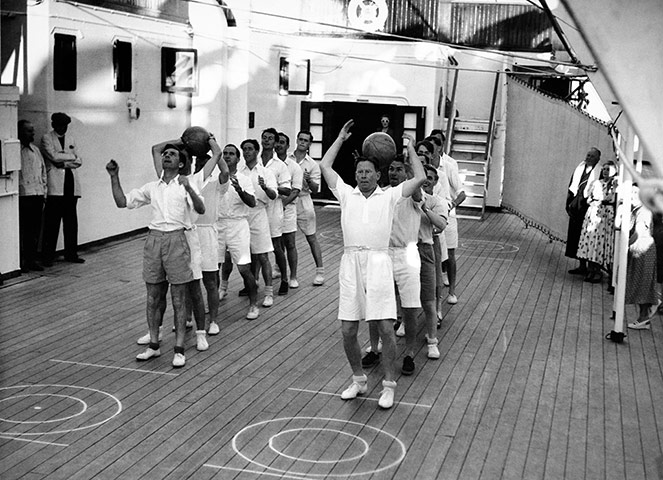
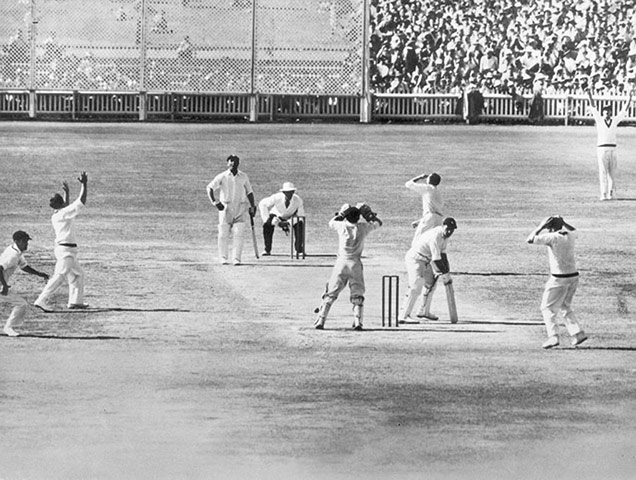
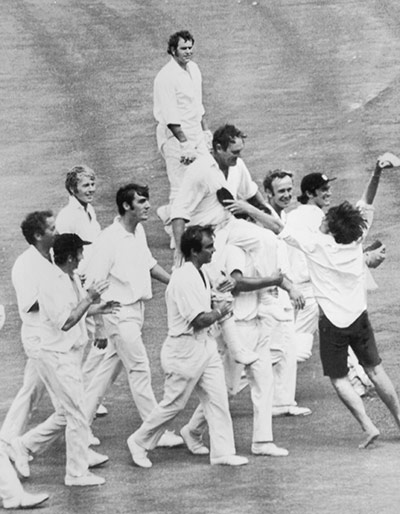
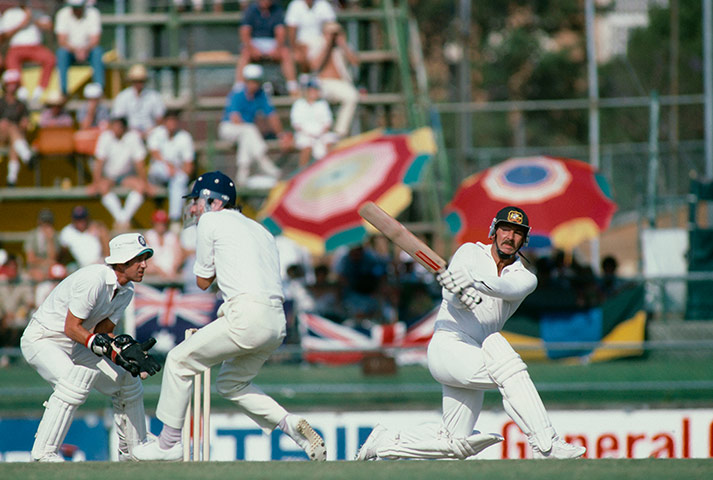
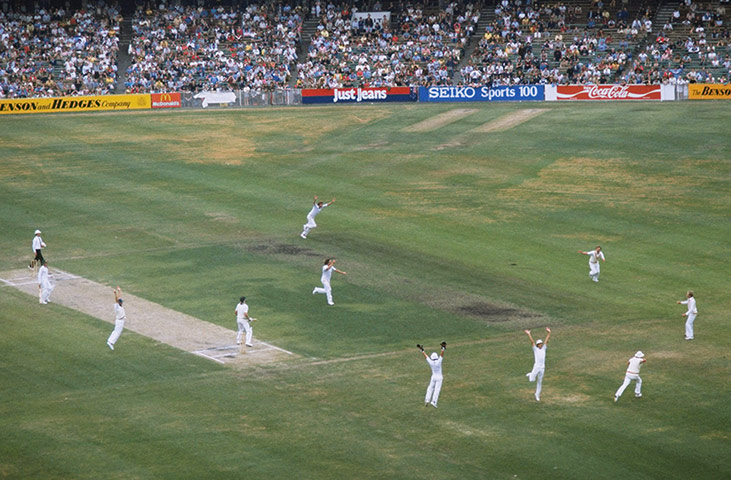
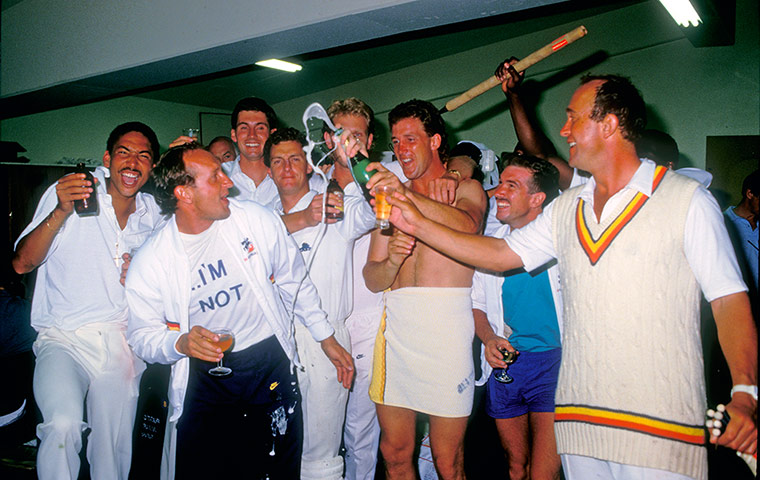
1861-62: The first England XI to play in Australia was the first-ever tour of Australia by any overseas team and the second tour abroad by an English team, following the one to North America in 1859. The team sailed from Liverpool on 20 October aboard the Great Britain, arriving in Melbourne on 24 December. As a team, they played 12 matches that were not first-class, winning six and losing two with four drawn. All but one of these games were against odds of at least 18 to 11. The exception was a one-day single innings match. The team was left-right, Mortlock, Mudie, Bennett, Lawrence, H,H,Stephenson (captain), Mr,W,B,Mallam (hat), Caffyn, Griffith, Hearne, Iddison, Sewell, E,Stephenson. Click here for more information on the first tour down underPhotograph: Popperfoto/Getty Images1882-83: Following Australia's 1882 victory at The Oval, their first Test win on English soil, The Sporting Times stated that English cricket had died and the body will be cremated and the ashes taken to Australia. England captain Ivo Bligh had vowed to "regain those ashes" and was good to his word with England winning the three-match series by two games to one. The England team for the tour were: Standing, l-r, W Barnes, F Morley, CT Studd, Mr,G,F,Vernon, CFH Leslie, Middle row, seated, l-r, CB Studd, EFS Tylecote, Hon Ivo Bligh, AG Steel, WW Reid, Seated in front, l-r, RG Barlow, W BatesPhotograph: Popperfoto/Getty Images1897-98: England play Australia on the first day of the second Ashes Test at Melbourne Cricket Ground. Australia won the match by an innings and 55 runs. Of the five Tests that were played, England won the first test comfortably by nine wickets, only to lose the next four Tests equally emphaticallyPhotograph: Illustrated London News/Getty Images
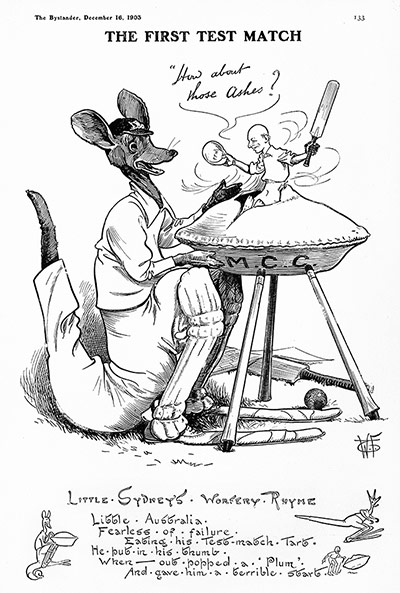
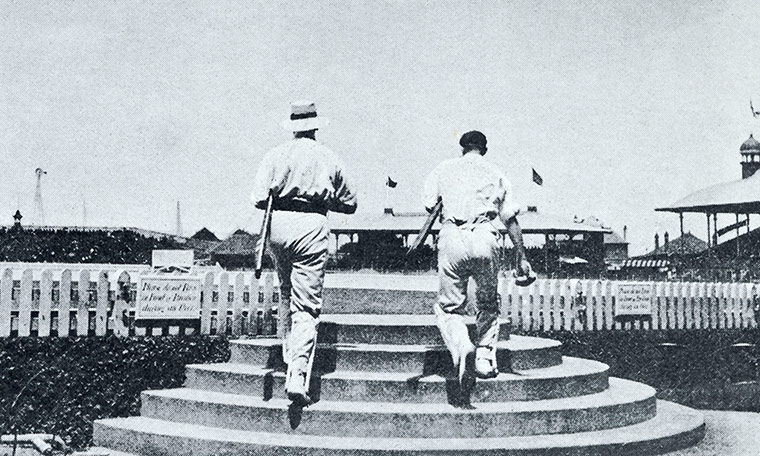
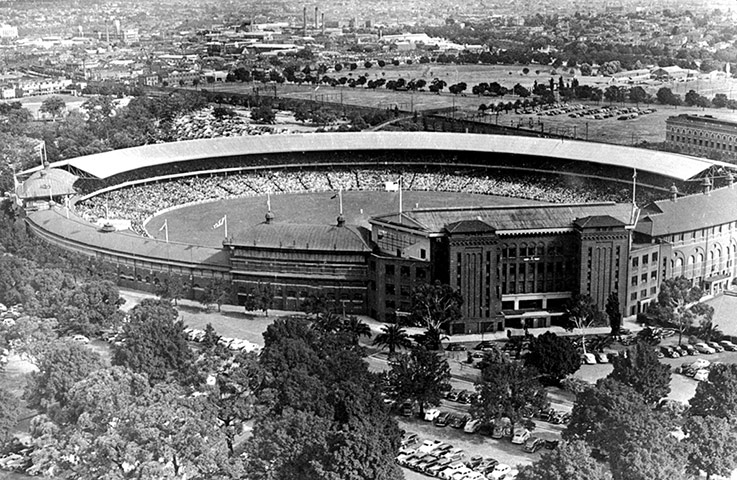
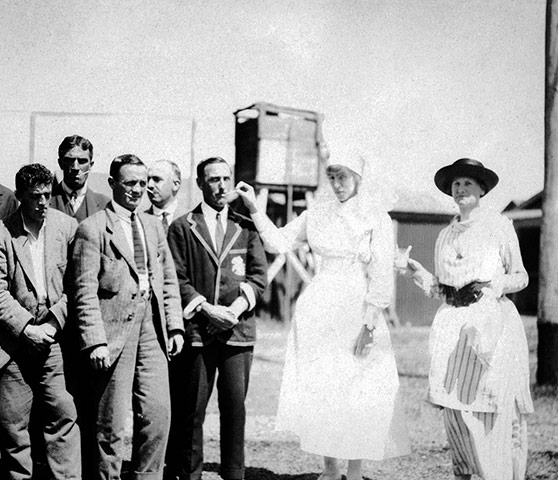
1903-04: In the 20 years following Bligh's campaign, the term 'Ashes' largely disappeared from public use. There is no indication that this was the accepted name for the series, at least not in England. The term became popular again in Australia first, when George Giffen, in his memoirs (With Bat and Ball, 1899), used the term as if it were well known. The true and global revitalisation of interest in the concept dates from 1903, when England Captain Pelham Warner took a team to Australia with the promise that he would regain "the ashes". As had been the case on Bligh's tour 20 years before, the Australian media latched fervently onto the term, and, this time it stuckPhotograph: Lordprice Collection/AlamyEngland captain Pelham Warner, left, and Tom Hayward walk out to bat during the fourth Test against Australia in Sydney in February 1904. England won the match by 157 runs to win the series and thus regain the AshesPhotograph: Popperfoto/Getty ImagesDespite the home side having already lost the series in 1904, Melbourne Cricket Ground is packed to the rafters to see Australia beat England by 218 runs for a consolation victoryPhotograph: PA Archive1911-1912: Tibby Cotter of Australia bowling to Wilfred Rhodes in the second Ashes Test at Melbourne Cricket Ground. England won the match by 8 wickets. Despite losing the first Test at Sydney, England hit back to win the remaining four Tests and thus regained the AshesPhotograph: Hulton Archive/Getty Images1920-21: Members of the England cricket team, including Wilfred Rhodes (centre), have their temperature taken by the nurses at Woodman's Point in Fremantle, during the period of quarantine forced upon them after an outbreak of typhoid on board RMS Osterley, the ship carrying the team to AustraliaPhotograph: Popperfoto/Getty ImagesOut of quarantine, Johnny Douglas gets in some bowling practice during a nets session. The tour was the first to have Test status after the First World War, the last Ashes series had been the 1912 Triangular Tournament held in England that year. Although the tourists were relatively successful in their first-class matches against the Australian state teams, losing only one, the Test series resulted in disaster and England became the first team ever to lose every match in a five-Test seriesPhotograph: Popperfoto/Getty Images1924-25: An informal snapshot showing some of the England cricket team enjoying a boat trip on their day off in Launceston, Tasmania on 26th January 1925. The England team was captained by Arthur Gilligan, fourth from right. Also named in this image is Percy 'Tich' Freeman, leaning third from right. However the tour wasn't plain sailing for the England team as Australia stormed to a 4-1 series winPhotograph: Popperfoto/Getty Images1932-33: Eddie Paynter, left, and Tom Mitchell pass the time on RMS Orontes during the long journey to AustraliaPhotograph: Popperfoto/Getty ImagesThings were just as relaxed once they got down under. Some of the players enjoyed a relaxing day at Watson Beach near Sydney. Back row (left-right): unknown, Wally Hammond, Harold Larwood, Nawab of Pataudi, Tom Mitchell, Bill Voce and George Duckworth. Seated in front: Eddie Paynter and Freddie BrownPhotograph: Popperfoto/Popperfoto/Getty ImagesThe scoreboard on the top of the hill at the Sydney cricket ground during the first Test which the tourists won by ten wicketsPhotograph: Popperfoto/Getty ImagesThings were far from relaxed on the pitch during the most infamous of England's tours to Australia - the Bodyline tour. Here, Don Bradman is out for a duck during the first innings in second Test at the MCG in Melbourne. He made up for with a 103 not out in the second innings to help Australia to a victory by 111 runsPhotograph: Hulton Archive/AllsportWM Woodfull of Australia ducks to avoid a rising ball from Harold Larwood during the fourth Test match at The Gabba in Brisbane which England won by six wickets. The tourists won the series 4-1, but there was much controversy by the manner of England's victoryPhotograph: Central Press/Getty ImagesBack home, the papers are full of stories about England's famous victoryPhotograph: Hulton-Deutsch Collection/Corbis1946-47: England batsman Joe Hardstaff slips a ball between Australian fielders Ray Lindwall and Colin McCool during the fourth Ashes Test at Adelaide Oval. The match ended in a draw and Australia won the series 3-0Photograph: Central Press/Getty Images1950-51: A fitness session for the England cricket team onboard the P&O cruise ship, Stratheden, en route to Australia. The team captain Freddie Brown, front right, led the daily sessions on deck at 5.30pm each evening. Few gave them a chance of regaining the Ashes and they lost the series 4–1 to Lindsay Hassett's Australian team, which had far greater reserves of talent. However England's victory in the fifth and final Test was their first over Australia since 1938 and ended their unbeaten run of 14 Tests against England, 26 Tests against all teams and 96 games in all cricket since the Second World WarPhotograph: Popperfoto/Getty Images1954-55: Despair for the Australians as their wicketkeeper Len Maddocks drops a catch from Colin Cowdrey during the fourth test in Adelaide. England went on to win the match by 5 wickets and retained the Ashes with a 3-1 series win. They were the only touring team to win a series in Australia between 1932–33 and 1970–71 Photograph: Fox Photos/Getty Images1970-71: A victorious England team carry their captain Ray Illingworth off the field after clinching the Ashes with a 62 run win in the seventh Test Match in Sydney. England won the series 2-0 and was the first Test series to have more than five TestsPhotograph: Central Press/Getty Images1982-83: Australia's Rod Marsh sweeps a ball from Geoff Miller during the second Test in Brisbane which Australia won by seven wicketsPhotograph: Adrian Murrell/Getty ImagesEngland won the fourth Test at the Melbourne Cricket Ground by three runs but a draw in the final Test in Sydney meant that Australia won the series 2-1 and thereby regained The AshesPhotograph: Adrian Murrell/Getty Images1986-87: England's emphatic victory by an innings and 14 runs in the fourth Test at Melbourne gave the England team an unassailable 2-0 lead in the series and meant they retained the Ashes. Celebrating the dressing room are (left to right): Phil DeFreitas, Bill Athey (front), Neil Foster, Jack Richards, Graham Dilley, Chris Broad, Bruce French, Wilf Slack (hidden) and Phil Edmonds Photograph: Patrick Eagar via Getty Images
Sign up to read this article
Read news from 100’s of titles, curated specifically for you.