The torture is over. For the past few weeks every World Cup hopeful in the northern hemisphere has been pushed bodily, at varying heights and temperatures, in distant parts. And taken mentally into even further-flung places, deep into a discomfort zone where mothers, already on high alert over concussion protocols, might fear for more mind alteration. The World Cup will not want for supremely conditioned specimens, rippled to the touch and devoted of purpose. The knack now is to make sure these mothers’ sons are in a state more Zen than zombie.
A little action will come as blessed relief. Except for those – it is statistically inevitable – who will be injured in the warm-up games. Or those on the cull list, the few that have suffered but not made, or will not make, the final squads. August will provide relief for most, but agony for a few – Kyle Eastmond, Lee Dickson and Chris Ashton, the tournament’s joint-top try-scorer in 2011, have already reached journey’s end.
What may be learnt from action at last? Precious little on the grand scale, their coaches will hope. Or precious little that might be visible to the forensics departments of opponents ahead. England and France, should they be winners – or be runners-up – of their respective pools, A and D, would meet, safe passage through the quarter-finals permitting, in the World Cup semi-finals. Innovation will wait until then.
This means that the two games against France, on the next two Saturdays, are likely to be downright peculiar. Just like, in that case, the last encounter between them, the final game of the Six Nations in March, a title-decider won by neither, but glorious in its own right. On that spring evening, the teams were obliged to cast aside traditional caution – it’s not called Le Crunch for nothing – and play without restraint. With nothing at stake now and with everything to conceal, the general instruction may be for more of the same.
If it sounds entertaining, the caveat is that the players have been up mountains – Rockies and Alps – and in their own company, rather than extending passages of play with increasing ease and discipline on flat fields against a variety of opponents. The last game with France had a fair element of chaos to it and perhaps there will be more in the two fixtures ahead.
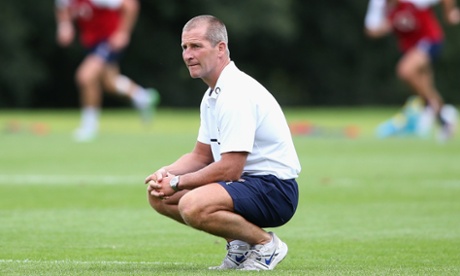
Stuart Lancaster will be looking more for glimpses of a greater order than total performances. There is no point in being outstanding in the summer. History shows that form in October is all that counts. England in the spring and summer of 2003 proved themselves the best team the northern hemisphere has ever produced by beating Ireland, New Zealand and Australia, all away. They went on to win the World Cup, but by the time of the final in late November they were quite a way over that peak.
The England team of 2007 were generally abject in the early stages of the tournament, yet they pulled themselves together in the knockout phases and came tantalisingly close to beating South Africa. The Springboks, by way of contrast, went from being imperious in the early stages to being sorely tested by Fiji and England. Form this far out counts for little.
The best teams still won those World Cups – as did New Zealand in 2011 – but there is enough drama and shock ahead to suggest that, besides not wanting to give too much away, these occasions should be used to prepare as much for crisis management as rational development. Perhaps France have been selected by Lancaster with care, for no team can sway quite like the French, from mutinously abject against Tonga to heroically hard-done-by against New Zealand. No doubt, at several stages over the next two Saturdays, England will be confronted by the two Frances, quite possibly in the same passage of play. It will be quite a disconcerting experience, given the timetable precision and attention to detail that has gone into England’s World Cup summer.
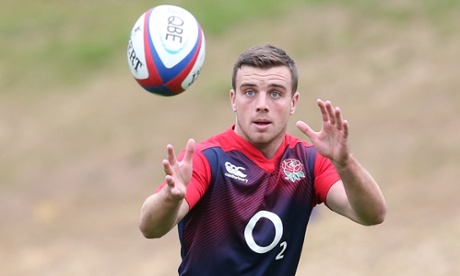
Perhaps it is the third warm-up game, against Ireland at home, that England will be truly serious. This game comes 13 days before the World Cup starts in earnest. Presumably at some stage – but not necessarily in the form so readily identifiable as the starting or finishing line-up – Lancaster will have his first-game first team on the field and will be looking for a few things to be absolutely in place. For Billy Vunipola (or Ben Morgan) to be taking the ball at speed, for Ben Youngs and George Ford to be playing with impish authority and the midfield to be forceful and inventive.
Until then, may chaos reign. Serious chaos, but chaos nonetheless, born of relief to be back on the field and having the chance to express themselves. Zen not zombie. Enjoy yourselves. And spare a thought for those whose World Cup trail has brought them this far, tantalisingly close to the real thing, but a journey about to end.