MEXICO CITY — This match didn't even start on schedule. Thunderstorms rolling through the capital pushed kickoff back a full hour, meaning the ball didn't roll until 7 p.m. local time — 2 a.m. in the UK . Once it finally began, nobody inside the stadium had any idea how much chaos the night still had in store.
England's blitz, then the long defense
England beat co-hosts Mexico 3-2 to book a quarterfinal date with Norway in Miami on Saturday. The final score undersells how violently the match swung. Jude Bellingham struck twice in barely two minutes — goals in the 36th and 38th minutes — putting England 2-0 up late in the first half. Julián Quiñones answered four minutes later, cutting the gap to 2-1 by the interval.


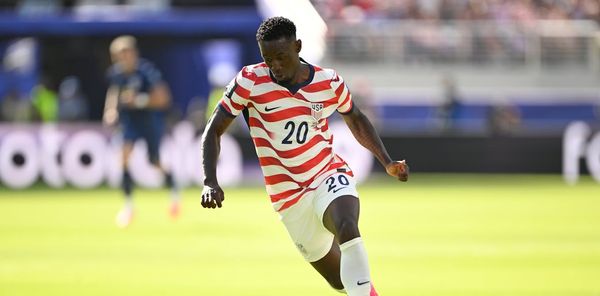
Everything shifted again early in the second half. A sliding challenge from Jarell Quansah caught Jesus Gallardo high on the leg in the 54th minute; play initially continued, but a video review reversed the call and sent Quansah off. Down to ten men, England still stretched their lead when Harry Kane scored from the penalty spot after Anthony Gordon was fouled, making it 3-1 in the 60th minute. Raúl Jiménez answered from the spot himself nine minutes later, and the Azteca crowd sensed a stunning comeback. England's back line held through a chaotic stoppage-time siege that ran well past the 11 minutes of second-half injury time originally signaled.


It's the sort of result that gets filed under "backs against the wall" in England folklore. It also ended a run in which Mexico hadn't allowed a single goal through their first four matches of this tournament — part of a push to join the short list of sides that have opened a World Cup with five straight shutouts, a feat only Italy managed, back in 1990, according to tournament notes compiled by England Football.
The strength: goals arriving in bursts
Under Thomas Tuchel, England have typically built attacks through patient possession, probing for gaps rather than striking suddenly. This match flipped that on its head. Bellingham's double had nothing to do with control of the ball and everything to do with seizing a half-chance the moment it appeared — a compressed, ruthless burst rather than a slow siege.
That's a different weapon than the one England usually rely on, and arguably a more dangerous one in knockout football, where ties often turn on two or three moments rather than ninety minutes of territorial dominance. Pairing their usual patience with this kind of instant killer instinct would make England considerably harder to defend against going forward.
The weakness: discipline once things get chaotic
The flip side is just as obvious. Quansah's dismissal turned a comfortable cushion into a backs-to-the-wall survival act. England spent the final half hour-plus a man down, conceded a penalty of their own along the way, and needed a heroic defensive shift just to close it out.
Fans watching England's next fixture should track exactly this: composure once a match stretches into chaos. Playing at altitude compounds the issue — Estadio Azteca sits roughly 7,200 feet (2,241 meters) above sea level — which saps legs late and makes split-second decisions harder. If England find themselves protecting a slim lead against Norway with tired legs, the same issues could resurface.
Who scores next?
Harry Kane, already one of the tournament's most reliable finishers and a penalty threat in his own right, looks like England's most obvious source of goals going forward. Bellingham, fresh off a two-goal outburst, is clearly finding space between opposition lines and should keep producing chances of his own. Anthony Gordon, who won the penalty that made it 3-1, and Bukayo Saka — who set up Bellingham's opener with a cross before being substituted in the 57th minute — give England width that should continue creating problems, particularly against a Norway side that will be more focused on stopping crosses than sending Erling Haaland forward.
A different kind of soccer, and a quote taken out of its original moment
England's approach in Mexico City looked less like the intricate, patient build-up associated with much of continental Europe, and further still from the improvisational, rhythm-driven dribbling that defines much of South American attacking soccer. Instead, England leaned on directness, set-piece efficiency, and a willingness to grind out results physically — a style that trades flair for control.
Speaking days before the match, after FIFA had briefly floated moving kickoff up six hours over storm concerns, England forward Marcus Rashford downplayed the disruption to his side's preparation: "We have to be focused, we have to be ready for anything," he said, according to Al Jazeera. It wasn't a pre-match rallying cry about Mexico specifically, but in hindsight it captured what England would actually need once the match kicked off. Afterward, manager Thomas Tuchel pointed to his team's resolve for getting them through: "We did it with pure mentality and heart," he told reporters.

Mexico's tournament, meanwhile, ends in heartbreak — their first defeat at the Azteca in this World Cup cycle, after entering the match having won all four of their group-stage and knockout games. Quiñones finishes among the most productive Mexican players in a single World Cup in decades, matching a joint-goal-involvement record last set in 1998, but it wasn't enough to get past an England side that found a way through despite its late wobbles.